Showing posts with label pollinator. Show all posts

Friday, January 24, 2020

The 2020 CSA Season is Unfolding!


By Richard & Andrea

Harvesting curly willow earlier this week
When winter sets in we always feel like we have “all this time” to tackle our projects, brainstorm, lay out plans, etc.  Here we are, approaching the end of January and believe it or not we’ll be packing our first CSA boxes of the 2020 season in less than 100 days!  We’re thankful to see the days getting longer—it’s still light outside at 5 pm when the crew is heading home!  Sign-ups are rolling in as are shipments of seeds.  This week our winter crew was in the field trimming curly willow as we take advantage of appropriate conditions to get the willow out of the field while it’s above zero degrees and the snow is not too deep.  We’ll spend the next few weeks trimming and bundling it in the greenhouse before we need to prepare that house for growing transplants.  Yes, we’ll be setting up our first greenhouse to start planting onions and celeriac next month!  It’s exciting to see another CSA season starting to unfold!

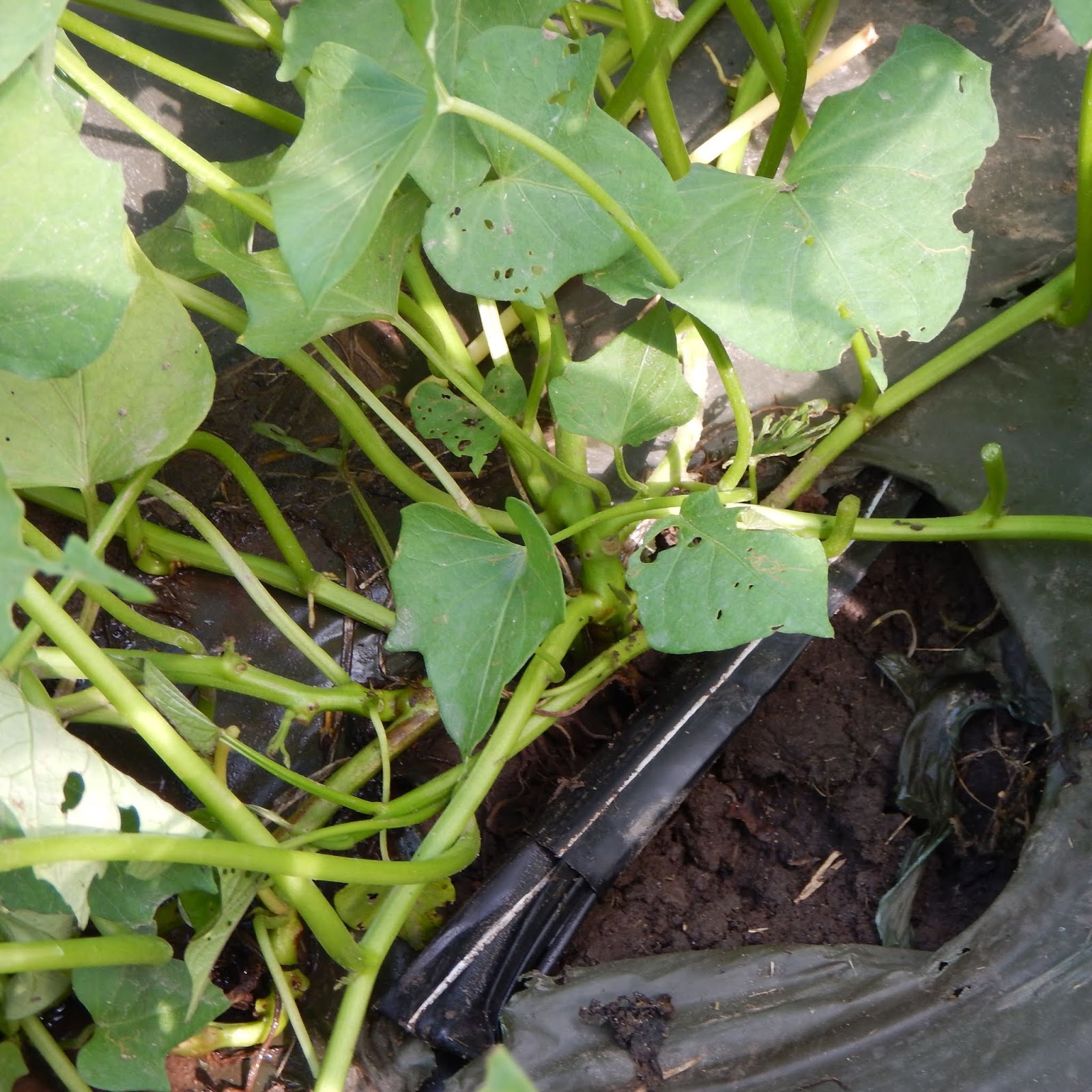
Drip tape line used to deliver nutrients to sweet potato plants.
As farmers, weather is always on our minds, so we might as well tackle this topic and get it out of the way!  There is some evidence that El Niño is finally turning to La Niña, which typically means less moisture and maybe even a bit of drought.  Since you just never know what you may get, we thought it prudent to update our irrigation permits and make sure our equipment is prepared and working well.  Whether we need irrigation as a means of delivering water to a crop or not, we use buried drip irrigation lines to deliver nutrients, microorganisms and trace minerals to our crops.  This year we are excited to expand our use of “sap analysis” to determine the specific nutrient needs of individual crops.  Sap analysis is kind of like a blood test for plants that allows us to better understand the plants’ nutritional needs at different points in growth.  Last year we saw some dramatic results when we used sap analysis to help us determine what support some of our crops needed in order to thrive.  We are planning to use sap analysis more proactively this year so we can be more aware of deficiencies and do what we can to correct them before they become a big problem.

As for crop planning, we’re laying out the plan and getting all the parts and pieces in place.  Sweet potato plants have been ordered, all 18,000!  We’ll be growing our two favorite orange varieties, Burgundy and Covington, and are also going to try a new variety called Bayou Belle.  We had better luck growing the white-fleshed Japanese sweet potatoes last year, so we’re going to expand that part of the planting a little bit.

Diana radishes, freshly washed!
We continue to appreciate the color and nutrition we get from our line-up of purple vegetables.  The color purple represents anthocyanins, plant compounds that play an important role in our physical health.  We’ll be doing one planting of the beautiful Amethyst beans and are considering growing the sweet and tasty purple tomatillos again this year.  Last year we also tried Diana radishes for the first time.  This is a spring radish that is shaped like a traditional red radish, but it has purple on the top and white on the root end.  We received positive feedback about this variety and we liked the way it looked in the field with regards to disease resistance, etc.  We have secured seed for our new favorite purple cauliflower, Purple Moon, and have our fingers crossed that we’ll get the Purple Majesty potato seed we have on order.  Lastly, we have to try a new bright magenta napa cabbage named “Scarrossa.”  We don’t typically grow napa in the fall, but that’s the recommendation for this variety so watch for this around October.

Fresh baby ginger with greens
We have been reviewing the results of our end of season survey that closed the fourth of January. We asked members for their input on which specialty produce items we should grow this year.  It’s clear that ginger is high on the list along with lemongrass!  We can’t make any promises at this point, but know we are trying to get some ginger “seed”.  Our supplier has closed ordering for now, but we’re on the list for an opportunity to purchase seed when they open ordering again sometime in February.  Wish us luck!  The other crop that had a lot of support was Egyptian Spinach.  This is a unique vegetable that grows in the heat of the summer when other greens struggle.  It is packed with nutrients and you just feel really good when you eat it!  It is a little challenging to grow, but we’re willing to give it a try!

Summer 2019:  Richard sampling and selecting
French Orange melon seeds
We continue to look for a personal-sized, yellow seedless watermelon, but there just isn’t anything available.  What about the French Orange Melons?  Good question.  For those of you who know the sweet, delicious, aromatic, one-of-a-kind French Orange melon, you may remember the sad story about how the producer has decided to drop the seed.  Richard has been working on saving seed for this melon for several years now.  This is not a quick or easy process.  The original seed was a hybrid.  When we plant the seed from melons produced from the original seed, we get a variety of results.  The sizing, color and characteristics of the melon are not always a direct reflection of the original seed.  As such, it takes several years of selecting the seed from the melons that most resemble the original set of characteristics and eliminate the off-types.  We feel like we are at a pretty good place with the quality of the seed we produced in 2019 and we finally have enough volume of seed that we can put in two nice sized plantings for actual production and harvest.  Richard will continue to carefully select seed and plant a separate seed production plot each year in an effort to refine our seed stock for this variety.  Wish us luck—we’re really hoping for a much better melon season than in 2019.  One of the problems we experienced last year was fewer pollinators.  We think the cold, late spring may have caused a decreased population of pollinator creatures.  It’s easy to take these little creatures for granted, but when something affects their population and they don’t show up, the results can be very dramatic!

Our crew happily putting together our first pollinator packs in 2016.
Speaking of pollinators, we are going to be planting pollinator packs again this year!  This is a project we started back in 2016.  In 2015 we published a series of newsletter articles we entitled “The Silent Spring Series.”  If you’re interested in reading these information-packed articles, you can find them all on our blog.  Basically the series took a look at the impact the use of agro-chemicals is having on our environment, ecosystem and our bodies.  The topic is pretty heavy and as we worked our way through the series we felt like we needed to create some light at the end of this very long tunnel.  We needed something positive to move the needle back to a point of hope.  We decided to plant pollinator packs, a garden pack with 9 different plants.  We started the seeds, transplanted them into the trays and delivered them to CSA members in the spring so everyone could use them to plant pollinator gardens in their own yard, on a patio space, in a community space or anywhere else they could think of where they would flourish, grow and serve to attract and support pollinator creatures (bees, butterflies, birds, wasps, etc).  We only intended to do it once, but it was so well-received, we get requests for them every year!  So, for those of you who already have an established pollinator garden, perhaps you’d like to add a few new plants to your space.  If you are just starting out, no worries!  We’ve included some plants in the pack that are easy to establish and will bloom in the first year!  Our order is nearly finalized and here is the list of seeds we ordered for this year’s packs.  Please note, the packs only hold 9 plants, but we’re ordering more than 9 different things just in case something doesn’t germinate very well and we can’t include it in all packs.  Here’s what we’re looking forward to:

Anise Hyssop, photo from Prairie Moon Nursery
Wild Bergamot, photo from Prairie Moon Nursery
Lance-Leaf Coreopsis, photo from Prairie Moon Nursery
New England Aster, photo from Prairie Moon Nursery
Brown-Eyed Susan, photo from Prairie Moon Nursery
Prairie Sage, photo from Prairie Moon Nursery
Lead Plant, photo from Prairie Moon Nursery
Little Bluestem Grass, photo from Prairie Moon Nursery
Blue Wild Indigo, photo from Prairie Moon Nursery
Leafy Prairie Clover, photo from Prairie Moon Nursery
Purple Coneflower, photo from Prairie Moon Nursery
Butterfly Weed, photo from Prairie Moon Nursery

We are looking forward to a great season and packing boxes for you and your families.  Once again we hope to strike a balance between supplying the staple items (onions, garlic, carrots, broccoli) and longtime favorites (sweet corn, tomatoes, green beans, strawberries) with some interesting and unusual selections to bring a little extra variety to your meals and challenge you, just a bit, to step out of your vegetable comfort zone and experience something new.  You never know, you just might discover a new flavor or vegetable you didn’t even know you liked!

In closing, we would like to share an excerpt from a note we received from a CSA family when they signed up for their second year with our farm.  Here’s what they shared:  “This past year was our first year getting a CSA share and it is not an understatement to say that it has changed our lives.  Thank you for doing what you do!  We love you guys!”  Thank you so much to all of you who send us notes like these.  We hope you understand how meaningful it is for us to read these and we also hope you understand that we think of you as we make our plans, select the varieties and pack your boxes each week.  Cheers to an awesome 2020 CSA season!

Wednesday, May 9, 2018

Pollinator Packs…Doing Our Part


By Farmers Richard & Andrea


This week is our first of two deliveries for our Pollinator Packs.   These are a garden pack of nine different native plants including grasses and flowers that have been carefully selected by Richard.  These plants are beneficial for our environment for many reasons including providing habitat and food sources for a variety of species that provide pollination services, help control pests, and contribute to keeping our ecosystem healthy and in good balance.  The idea for these Pollinator Packs came about back in 2015.  In May 2015 the White House released the National Strategy to Promote the Health of Honey Bees and Other Pollinators.  Many individuals felt this was a groundbreaking step towards acknowledging and mobilizing action around rapidly declining pollinator populations within North America.  The importance of setting a national strategy to guide the protection, restoration, and enhancement of pollinator habitats is largely undisputed among scientists and others operating within conservation circles.  However, this national plan failed to address a selection of key considerations that appeared to have been left out of the national plan.  Primarily, questions surrounding pesticide use—including that of glyphosate and systemic insecticides like neonicotinoids, which have been directly linked to the decline of bee and other wildlife populations. 

As organic farmers, we do not use these agrochemicals, but felt it was important that we fully understand the impact these chemicals are having on our pollinating creatures as well as our environment and human health.  So, we launched a series of newsletters that we called “The Silent Spring Series.”  Over the course of six articles, we sifted through a variety of resources, journal articles, etc in an effort to educate ourselves about some of these agrochemicals and the direct impact their use is having on the people, creatures and environments where they are being used.  Sarah Janes Ugoretz authored these articles and fearlessly attacked these difficult topics.  She reviewed the research and eloquently presented her findings in a way that we were all able to understand.  We encourage you to take a moment to go back and read this series of articles as the information contained in them is very important to understand for our own health as well as the health of our environment, etc.  Links to each of these articles are as follows: 


About half way through this series, the content was feeling pretty heavy and a bit depressing.  We started asking ourselves, “What can we do?”  Sometimes these problems seem so grand and out of our control that it’s hard to know where to start, but we know that even small, individual efforts can collectively create great change and can make an impact.  So the final article in our series focused on the future.  Our goal with these articles was to leave our members with a sense of empowerment and some motivation.  Empowerment in the sense that, if we’ve done our jobs well, our members would walk away with a deeper understanding of the issues surrounding the use of agrochemicals and the depth of their impact.  As a result of being better informed, our hope is that our members would then be motivated to look at ways they could bring about positive changes within their own circles. 

We have extensive plantings of native grasses and flowers on our farm that we’ve established because we want to provide habitat and a food source that will attract and support a wide variety of beneficial creatures including bees, wasps, birds, butterflies, etc.  These creatures help to support a healthy, balanced ecosystem on our farm, they aid our efforts in controlling pests in our vegetable crops, assist with pollinating our flowering crops such as squash, melons, cucumbers, etc and they are a joy to watch and observe.  We know how to grow plants, so we thought perhaps we could grow these Pollinator Packs to share with our members.  In this way we are able to expand the benefit these plants can offer beyond our own valley and into the neighborhoods where our members live, work and play. 

So that is how Pollinator Packs came to be!  We didn’t plant them last year and we had quite a few members asking for them, so we decided to do them again this year.  We’re offering these, free of charge, to our CSA members and encourage each of you to consider where you might be able to plant these in your community.  Some members have larger garden areas and are able to plant several packs while others are more limited in their space and do something as simple as plant them in pots on their balcony or patio.  Every little bit helps and we guarantee you’ll enjoy watching these plants become established, grow and come back year after year.  Of note, all of the plants in the pack are perennials.

This year the contents of the packs are different from two years ago and will be a good complement to the previous selections.  Some of the flowers may not bloom until next season, so don't get discouraged if you don't see flowers this year.  We purchased all of the seed from Prairie Moon Nursery, so if you’d like more information about any of these plants or others you can visit their website.  They have a lot of interesting and valuable information to share.   

If you did not request a Pollinator Pack(s) for this week’s deliveries, it’s not too late.  We still have plenty of packs available and will be delivering them again next week.  If you’d like to join in on the fun, please email Kelly at csa@harmonyvalleyfarm.com and let her know how many packs you’d like us to send with next week’s deliveries. 

Here’s a little more information about the plants in this year’s pack as well as a diagram and pictures to help you identify each one:  

Diagram of plants in your pack

Side Oats Grama


Side Oats Grama:  This is an interesting grass that produces tiny flowers during its summer bloom time in August and September.  When the seed heads dry, they have an oat-like appearance.  It is a food source or larval host for at least five types of skipper moths.  It grows to about 2 feet high. 


Great Coneflower


Great Coneflower:  This is a large plant that can grow up to 6 feet tall and produces yellow flowers in June & July.  It does best in full to partial sun.


Smooth Blue Aster


Smooth Blue Aster:  This plant has smooth leaves with a tough stem that sometimes has a shady blue appearance.  It stands 4 feet tall and produces beautiful blue flowers over a long time from August through October.  It does best in full to partial sun.


Purple Coneflower


Purple Coneflower:  This plant is also known as Echinacea purpurea and has a wide range of medicinal uses. It grows to a height of 4 feet and produces purple flowers from July-September.  This plant is very attractive to bees, so get ready to see some action!  It does best in full to partial sun.


Silky Wild Rye


Silky Wild Rye:  This is a common woodland grass.  It is a thicker grass than the others in our pack and actively grows during spring and fall when soil temperatures are cool.  It grows to a height of 3 feet and does best in partial sun to shady areas.


Blue Sage


Blue Sage:  This is an easy, beautiful plant to grow in areas that are a bit more dry.  It grows to a height of 5 feet and produces blue flowers in August and September that are very attractive to butterflies and bees.  Because of its height, it has a tendency to flop over, so it benefits from being in close proximity to other plants that can provide some support or you may want to tie it to a stake to keep it upright.  If you brush up against the leaves, you’ll pick up the typical scent of sage. 


Blue-Ridge Buckbean


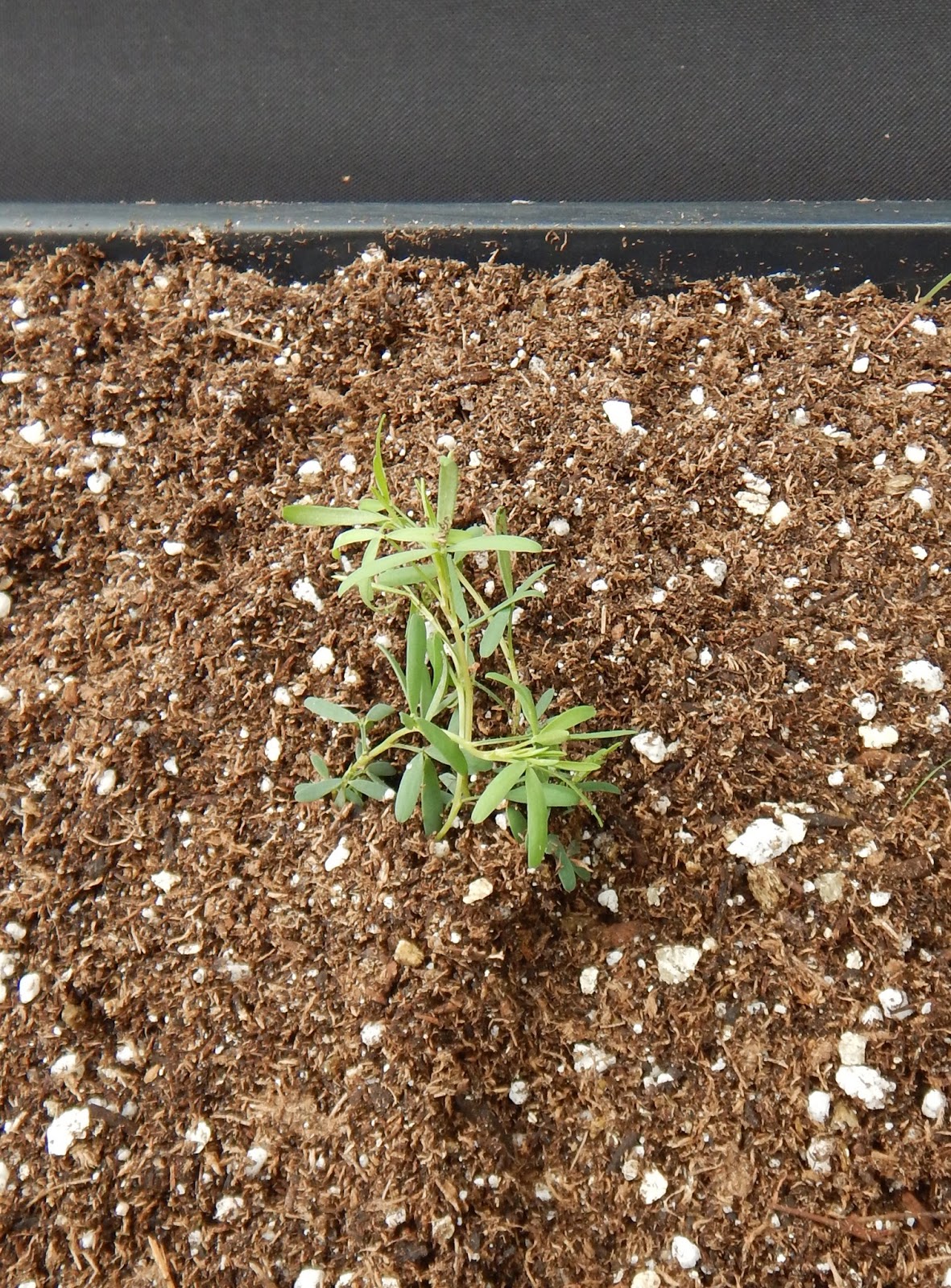
Blue-Ridge Buckbean:  This is a legume also sometimes referred to as Carolina Lupine.  This plant blooms early in the season in May and June when it produces bright yellow flowers.  It grows to a height of 4 feet, does well in full to partial sun and can thrive in drier soil.


Purple Prairie Clover


Purple Prairie Clover:  This flowering plant has a shorter stature growing to just 2 feet tall.  It produces purple flowers in July, August and September.  It does well in full to partial sun and drier soil.


Blue Grama Grass


Blue Grama Grass:  This is a drought-tolerant grass that will form a larger clump.  It actively grows during the summer when the soil is warm and only grows to a height of 12 inches.  It forms attractive blue seed heads in late summer to early fall.

Thursday, August 20, 2015

Silent Spring #6-The Challenge

by Sarah Janes Ugoretz
On the left: Mustard greens left to flower for beneficials.
Upper right: Harvest lane planted with rye & clover.
Lower right: Bumblebee on flowering vetch.
Well, here we are folks—at the end of our Silent Spring series. As you look back and reflect on what we’ve done here—the topics we’ve explored and the questions we’ve asked—I hope that you feel two things: empowerment and motivation. Empowerment in the sense that, if we’ve done our jobs correctly, you are walking away with an arsenal of knowledge and understanding which you can further develop as you continue to engage with these issues. And motivation because if you’re like me, you’ll be thinking of ways in which you can actively use what you’ve learned as a means of bringing about positive change. With this in mind, I want to use this space to share examples of a few ways in which our fellow humans have reacted to the widespread use of harmful pesticides. I’ll also suggest a number of things you and I can do in our own individual capacities in confronting these issues head-on.

Let’s look first to Portland, Oregon. For those of you familiar with Portland’s progressiveness (and perhaps the show Portlandia), it may not come as a surprise that in April 2015, the City Council voted unanimously to ban the use of neonic pesticides. In Portland—as remains the case in many hundreds of cities across the country—city parks, athletic fields, roadsides and other publicly shared green spaces were regularly treated with neonics, glyphosate and other pesticides. Just as residents were growing more and more concerned, the Oregon Department of Agriculture brought to the fore data they had been collecting over the past two years. Basically, they were able to directly link several large-scale bee death incidents to the application of neonics on public spaces. As such, when the ordinance banning neonics was put forward, it was categorized as a “public health issue requiring emergency action” (Anderson, 2015). Now, as the ban goes into effect, Portland’s parks are working to develop a pest management plan—a step intended to demonstrate to the general public that “successful pest management is possible with practices that protect bees and other pollinators” (Reuters, 2015a; Anderson, 2015).

In passing this ordinance, Portland joins eight other U.S. cities, including Spokane, Washington and Shorewood, Minnesota, which enacted their own bans in years previous. Meanwhile, our neighbor to the north has set forth its own inspiring example. Three Canadian provinces—Ontario, Quebec and New Brunswick—have banned the use of cosmetic pesticides on lawns, citing this law as a means of safeguarding humans, animal life and the environment from unnecessary exposures to harmful chemicals (David Suzuki Foundation, 2009). As the most commonly used insecticide in the world, neonics are not confined to agriculture. Rather, they are equally popular—and are applied at a much higher rate—in urban, non-agricultural settings (City of Boulder Colorado, 2015). Yards, trees, flowers and shrubs are often treated with neonics, some of which have a half-life as high as three years (Hunt & Krupke, 2012). Even the plants you purchase from nurseries and home improvement stores like Lowe’s and Home Depot are likely to have been grown from or treated with neonics (Keim, 2014). Primarily in response to public pressure, both of these stores have recently begun to explore the feasibility of removing neonics from their business operations (Reuters, 2015b).
Though all of the above actions are a step in the right direction, we don’t have to look too hard to see that politics and loopholes often go hand-in-hand. For instance, Portland’s ban allows for neonics to remain in use on a site-by-site basis, while Ontario’s ban continues to permit the use of glyphosate in certain circumstances. Lowe’s, although it has committed to eliminating neonics by 2019, has included the caveat that this will occur “as suitable alternatives become available” (Reuters, 2015b). Considering this and also referring back to last week’s conversation on the precautionary principle, we should acknowledge the very real possibility that our government is not going to act fast enough in addressing the growing use of and serious implications tied to these harmful pesticides. Therefore, it is people like you and I—in conjunction with conservation groups and other concerned actors—that are likely going to be the ones to accomplish real and lasting change.

Field Road Pollinator Habitat
As we consider what we can do in our day-to-day activities and throughout our communities, it is important to understand that we’re not alone in this. As trailblazing organizations like the Xerces Society for Invertebrate Conservation and the IPM Practitioner fight to protect pollinators and other beneficials, they’re also putting their time and energy into empowering us to serve as environmental stewards. In addition to their many opportunities for more formal involvement, the Xerces Society offers important reference publications that you can access from the convenience of your kitchen table. For instance, their guide on pollinator plants outlines which are among the best suited to our specific region of the country. As members of the Million Pollinator Garden Challenge, which was started in response to the White House’s National Strategy to Promote the Health of Honey Bees and Other Pollinators, they also outline the value that you can contribute through something as simple as a window or patio planter. The IPM Practitioner, on the other hand, publishes a quarterly that discusses various ways in which to address a wide number of pests—ranging from mice and roaches to carpenter ants—in a chemical-free manner.

We must also consider the power that we have as consumers. “Voting with your dollar” is a phrase that has been around for a while, but it remains an action that carries great weight. Much as we support farms like Harmony Valley through our organic food purchases, we can do the same in our home and garden purchases. As you shop, be discerning—read labels, ask questions, and do your best to make sure your purchases align with your principles. Don’t be afraid to take a stand—whether that be through putting a “Pesticide Free” sign up in your yard or, as a group of women did in Stoughton, Wisconsin, publicly organizing and drawing attention to the way your city deals with weed management (Livick, 2013).

As we draw our formal conversation to a close, I want to briefly return to Quarles, who has done incredibly important work around further demonstrating the importance of sustainable, chemical-free agriculture in the age of pesticides. Despite the rather serious dilemma in which we find ourselves, Quarles (2008, p.13) encourages us to regard this not as a cause for doom and despair, but as “an opportunity for change.” And so, with this in mind, Richard, Andrea and I—along with the rest of the Harmony Valley Farm family—want to pose to you a challenge. Throughout this next year, we’d like to ask you to share with us the ways in which you have joined us in this effort. Send your stories and share your photographs. Every action counts, no matter how small. In one year’s time, we’ll take a moment to share these wonderful actions as we reflect on what we’ve collectively accomplished as a Harmony Valley Farm community and as stewards of the earth.

References

Anderson, J. (2015, April 1). Portland bans ‘neonicotinoid’ pesticide. Portland Tribune. Retrieved from http://portlandtribune.com/pt/9-news/255515-125838-portland-bans-neonicotinoid-pesticide

City of Boulder Colorado. (2015). Protecting pollinators. Retrieved from https://bouldercolorado.gov/ipm/protecting-pollinators

David Suzuki Foundation. (2009, March 4). Ontario protects health and the environment through pesticide ban [Press release]. Retrieved from http://www.davidsuzuki.org/media/news/2009/03/ontario-protects-health-and-the-environment-through-pesticide-ban/

Hunt, G., & Krupke, C. (2012). Neonicotinoid seed treatments and honey bee health. American Bee Journal. Retrieved from http://www.extension.org/pages/65034/neonicotinoid-seed-treatments-and-honey-bee-health#.VdHpPjBViko

Keim, B. (2014). How your bee-friendly garden may actually be killing bees. Wired. Retrieved from http://www.wired.com/2014/06/garden-center-neonicotinoids/

Livick, B. (2013, April 8). Residents push city to stop using toxic chemicals in local parks. Connect Stoughton. Retrieved from http://www.connectstoughton.com/articles/2013/04/08/residents-push-city-stop-using-toxic-chemicals-local-parks

Quarles, W. (2008). Protecting native bees and other pollinators. IPM Practitioner: Monitoring the Field of Pest Management, 24(1-4), 4-13.

Reuters. (2015a, April 1). Portland bans neonicotinoid insecticides on city lands to protect declining honey bees. HuffPost Green. Retreived from http://www.huffingtonpost.com/2015/04/02/portland-insecticide-ban-bees_n_6989214.html


Reuters. (2015b, April 9). Lowe’s to stop selling neonicotinoid pesticides that may be harmful to bees. HuffPost Green. Retrieved from http://www.huffingtonpost.com/2015/04/09/lowes-pesticides-bees_n_7035208.html

Thursday, July 16, 2015

Silent Spring Series #3: Neonicotinoids, Part 2

By Sarah Janes Ugoretz

After a brief hiatus, we return this week to our Silent Spring series as we look deeper into the arguments surrounding the rapidly expanding use of neonics. Before we dig in, I want to mention that in August we’ll bring this series to a close by considering where we go from here. That is to say, although reading these articles might leave you with a deepening sense of despair, we promise to provide you with positive examples of individuals, communities, states and nations taking proactive steps to push back against the use of neonics and other similarly harmful agents. In the meantime, our goal is to present you with as much information as possible so that you have the knowledge and the resources from which to steer your own course of action.
In February 2014, Forbes ran a piece in which the author opines that those who are concerned about the connection between neonics and—in this case—the plight of the bees are comparable to “…the fictional parents in the edgy comedy show South Park who blame Canada for all of their woes” (Entine, 2014). In other words, this author would like for us to get over it and move on. After all, he assures us that compared to organophosphates, neonics have a “comparatively benign toxicological profile.” Fortunately for those of us who take empirical evidence seriously, we have a mounting collection of independent, science-based studies to counter with.
Going back to 1992—just one year after the first neonic compound was introduced—the U.S. Environmental Protection Agency (EPA) found that sparrows that consumed very small amounts of imidacloprid had difficulty flying. As this dosage increased, they quickly became immobile (Bittel, 2014). Fast-forward to today, and researchers have had decades to collect data and build an even stronger case against the use of neonics. Take, for example, the recent findings of the Task Force on Systemic Pesticides (TFSP), a group made up of 29 multi-disciplinary, independent scientists whose self-imposed mandate is to “provide the definitive view of science to inform more rapid and improved decision-making.” After reviewing more than 800 scientific, peer reviewed studies on the uses an
d implications of neonics, the TFSP concluded that: “…neonicotinoids…are causing significant damage to a wide range of beneficial invertebrate species and are a key factor in the decline of bees.” They further concluded that there is sufficient evidence to “trigger regulatory action” (TFSP, 2014). The peer reviewed report, entitled Worldwide Integrated Assessment of the Impact of Systemic Pesticides on Biodiversity and Ecosystems (WIA), lists bees, butterflies, lizards, earthworms, snails, fish, water fleas and birds as being among those at great risk.
If you do a 5-minute Internet search on this topic, you’ll quickly find that skeptics often point out that there are numerous factors that could be contributing to the deaths of pollinators and other beneficials like earthworms. Caspar A. Hallmann—an ornithologist and population ecologist with SOVON, the Netherlands’ Radboud University and lead author on a monumental new study recently published in Nature—says that “…when [his] team looked at the data, none of these [other possible] explanations held up.” Instead, Hallmann is confident that the evidence against neonics is mounting (Bittel, 2014).
But hang on a minute—we have good news! Spokespersons with Bayer CropScience assure us that we really have nothing to worry about, as long as we follow instructions. “Neonicotinoids have gone through an extensive risk assessment which has shown that they are safe to the environment when used responsibly according to label instructions” (Bittel, 2014). Of this point, Bayer is “convinced” (Bayer CropScience, 2013). Unfortunately for neonic advocates, independent peer reviewed studies have found the opposite.
Among the long list of neonics’ discontents, there is one characteristic that most others can be traced back to—their persistence in our environment. Let’s look to water contamination as an example. Researchers with the U.S. Geological Survey found that among sampled Midwest rivers and streams, imidacloprid was present at an average of 32.7 nanograms per liter. Research has confirmed that this compound is toxic to aquatic organisms at levels ranging from 10 to 100 nanograms per liter. Levels of clothianidin and thiamethoxam—the second and third most used neonic compounds—were measured at 257 and 185 nanograms per liter, respectfully (Henein, 2014). What this study suggests—that contaminated water is toxic to wildlife—is further corroborated by Caspar A. Hallman and his team of scientists. After gathering long-term data on farmland bird populations and surface water contamination, they found that in areas where water contained certain concentrations of imidacloprid, bird populations tended to decline by 3.5 percent each year (Bittell, 2014).
The persistence of these compounds in our environment equates to the ongoing exposure of target and non-target organisms to neonics. While exposure can be instantly lethal—as in the case with bees exposed to airborne neonic particles (Bittel, 2014)—it can also be chronic and sublethal, as we saw with the EPA’s 1992 study on sparrows. In the event of the latter, organisms typically experience a wide range of impairments. A range of outcomes may befall this toxic organism: it may be consumed by and contaminate another organism; the impairments—such as an inability to fly or an increased susceptibility to disease—may lead to death; or the cumulative build-up of neonics within the organism may eventually kill it. In emphasizing the gravity with which to approach even a sublethal dose of a neonic compound, scientists with the TFSP have stated that metabolites—the compounds which neonics break down into—are often “as or more toxic than the active ingredients” (TFSP, 2015). With this in mind, TFSP has reported that certain neonics are five to ten thousand times more toxic to bees than DDT (TFSP, 2015).
We must also consider one additional factor—non-agricultural applications. Hopwood et al. (2012), focusing their attention on the management of ornamental and landscape plants, outline another grave point of concern. Their research found that neonic compounds are often administered at an alarmingly higher rate—potentially 32 times higher—than those approved for agricultural crops. This data has led Lowe’s—a large retail chain—to plan for a complete phase-out (though not until 2019) of plants treated with neonic compounds (Reuters, 2015). Although we have focused primarily on the impacts of neonics on non-human organisms, it is certainly worth mentioning that we humans may not be immune to these compounds. While our own EPA does not draw firm connections between neonics and human health, the European Food Safety Authority has stated that these compounds may “…adversely affect the development of neurons and brain structures associated with functions such as learning and memory” (European Food Safety Authority, 2013).
Proponents of neonics have long argued that these compounds are a crucial component of farmers being able to control the various pest populations that threaten their crops. After the European Commission voted to impose—beginning in 2014—a two-year moratorium on the application of certain neonics throughout Europe, Bayer CropScience was quick to express its grave concern for what this would mean for European farmers. “Restricting the use of these neonicotinoids…will put at risk farmers’ ability to tackle the destructive pests that can severely damage crops and restrict their capability to grow abundant, high quality, affordable food” (Bayer CropScience, 2013).
Yes, it’s true—conventional farmers are struggling (Gray, 2014). Without the neonics they have come to rely upon, they’re scrambling to find ways to protect their crops and their livelihoods. This highlights what Quarles (2014, p. 3) has pointed out over and over again—that these pesticides “allow growers to ignore good farming methods and IPM [integrated pest management] approaches in favor of systemic protections.” In a troubling turn of events, some farmers—in their struggles to phase out neonics—have turned to alternative pesticides like pyrethroid sprays, which are generally recognized as being more environmentally damaging (Gray, 2014). Dave Goulson, a professor of biology at the University of Suffolk, recognizes that finding ways to support farmers in identifying less harmful pest control methods is a priority in need of immediate attention. “You have to sympathize with farmers who have lost their crop, [but you also] have to weigh up the damage of [using] neonicotinoids over many years” (Gray, 2014).
As we conclude for this week, I’ll leave you with a quote that I believe really gets to the heart of the matter for us as eaters and as environmentalists. Dr. Jean-Marc Bonmatin, one of the lead authors of WIA, states that: “Far from protecting food production, the use of neonics is threatening the very infrastructure which enables it, imperiling the pollinators, habitat engineers and natural pest controllers at the heart of a functioning ecosystem” (TFSP, 2014). When all is said and done, if we protect these pollinators and beneficials, we will essentially be taking strides to protect ourselves (Quarles, 2011).
In two weeks’ time, we’ll turn our attention to glyphosate (better known as Roundup) as we consider the impact this pesticide is having on our environment and our invaluable ecosystems.

Article Sources
Bayer CropScience. (2013). Decision to restrict use of neonicotinoid-containing products will not improve bee health [Press release]. Retrieved from http://beecare.bayer.com/media-center/press-releases/press-release-detail/decision-to-restrict-use-of-neonicotinoid-containing-products-will-not-improve-bee-health

Bittel, J. (2014, July 9). Second silent spring? Bird decline linked to popular pesticides. Retrieved from http://news.nationalgeographic.com/news/2014/07/140709-birds-insects-pesticides-insecticides-neonicotinoids-silent-spring/


Entine, J. (2014, Feb. 5). Bee deaths reversal: As evidence points away from neonics as driver, pressure builds to rethink ban. Retrieved from http://www.forbes.com/sites/jonentine/2014/02/05/bee-deaths-reversal-as-evidence-points-away-from-neonics-as-driver-pressure-builds-to-rethink-ban/

European Food Safety Authority. (2013, December 17). EFSA assesses potential link between two neonicotinoids and developmental neurotoxicity [Press release]. Retrieved from http://www.efsa.europa.eu/en/press/news/131217.htm

Gray, L. (2014, October 1). Neonicotinoid ban hit UK farmers hard. The Guardian. Retrieved from http://www.theguardian.com/environment/2014/oct/01/neonicotinoid-uk-farmers-rapeseed-crop-bees-pesticide

Hallmann, C.A., Foppen, R.P.B., van Turnhout, C.A.M., de Kroon, H., & Jongejans, E. (2014). Declines in insectivorous birds are associated with high neonicotinoid concentrations. Nature, 511, 341-352.

Henein, M. (2014, July 31). Contaminated water: Neonics detected in Midwest rivers. Honey Colony. Retrieved from http://www.honeycolony.com/article/neonicotinoid-pesticides-detected-major-midwest-rivers/

Hopwood, J., Vaughan, M., Shepherd, M., Biddinger, D., Mader, E., Hoffman Black, S., & Mazzacano, C. (2012). Are neonicotinoids killing bees? A review of research into the effects of neonicotinoid insecticides on bees, with recommendations for action. The Xerces Society for Invertebrate Conservation.

Pesticide Action Network UK. (2015). Neonicotinoids. Retrieved from http://bees.pan-uk.org/neonicotinoids

Quarles, W. (2011). Protecting bees, birds, and beneficials from neonicotinoids. Common Sense Pest Control Quarterly, 27, 1-4.

Quarles, W. (2014). Neonicotinoids, bees, birds and beneficial insects. Common Sense Pest Control Quarterly, 28, 3-10.

Reuters. (2015, April 9). Lowe’s to stop selling neonicotinoid pesticides that may be harmful to bees. Huffington Post. Retrieved from http://www.huffingtonpost.com/2015/04/09/lowes-pesticides-bees_n_7035208.html


The Task Force on Systemic Pesticides (TFSP). (2014). New four-year scientific analysis: Systemic pesticides pose global threat to biodiversity and ecosystem services [Press release]. Retrieved from http://www.tfsp.info/wp-content/uploads/2014/06/WIA-PR-REL.pdf