Showing posts with label weeding. Show all posts

Wednesday, June 17, 2020

June Farm Update—Welcome to Summer!

Gorgeous Potato Field under blue skies, HVF 2020
Here we are, just past the halfway mark in the month of June.  The first day of summer is approaching at the end of this week on Saturday, June 20.  So, as we do an official transition from spring into summer we thought it fitting to do a farm update so you know what’s happening in our valley!  This Sunday, June 21, is also the day we were scheduled to host our annual Strawberry Day event.  When the pandemic infiltrated our world back in March we hoped for a quick resolution and return to “normal,” however we quickly realized we had to be realistic that this wasn’t going to end as quickly as we hoped it may.  So, as the pandemic continues to persist we are cancelling Strawberry Day for the first time in HVF history!  While we’re still doing our best to minimize contact with the outside world, continue to wear masks and practice social distancing, continue daily cleaning and sanitizing, etc, we also continue to farm and do what we know how to do best—grow vegetables.  So while we can’t invite you to join us on a wagon tour to experience our fields and valley views for yourself, we’ll do our best to take you on a virtual tour through this week’s article, complete with pictures Andrea and Richard have been taking over the past few weeks!  So, get comfy and claim your seat on our virtual wagon as we take you through the fields and update you on farm happenings!

May 2020:  HVF CSA Box # 3
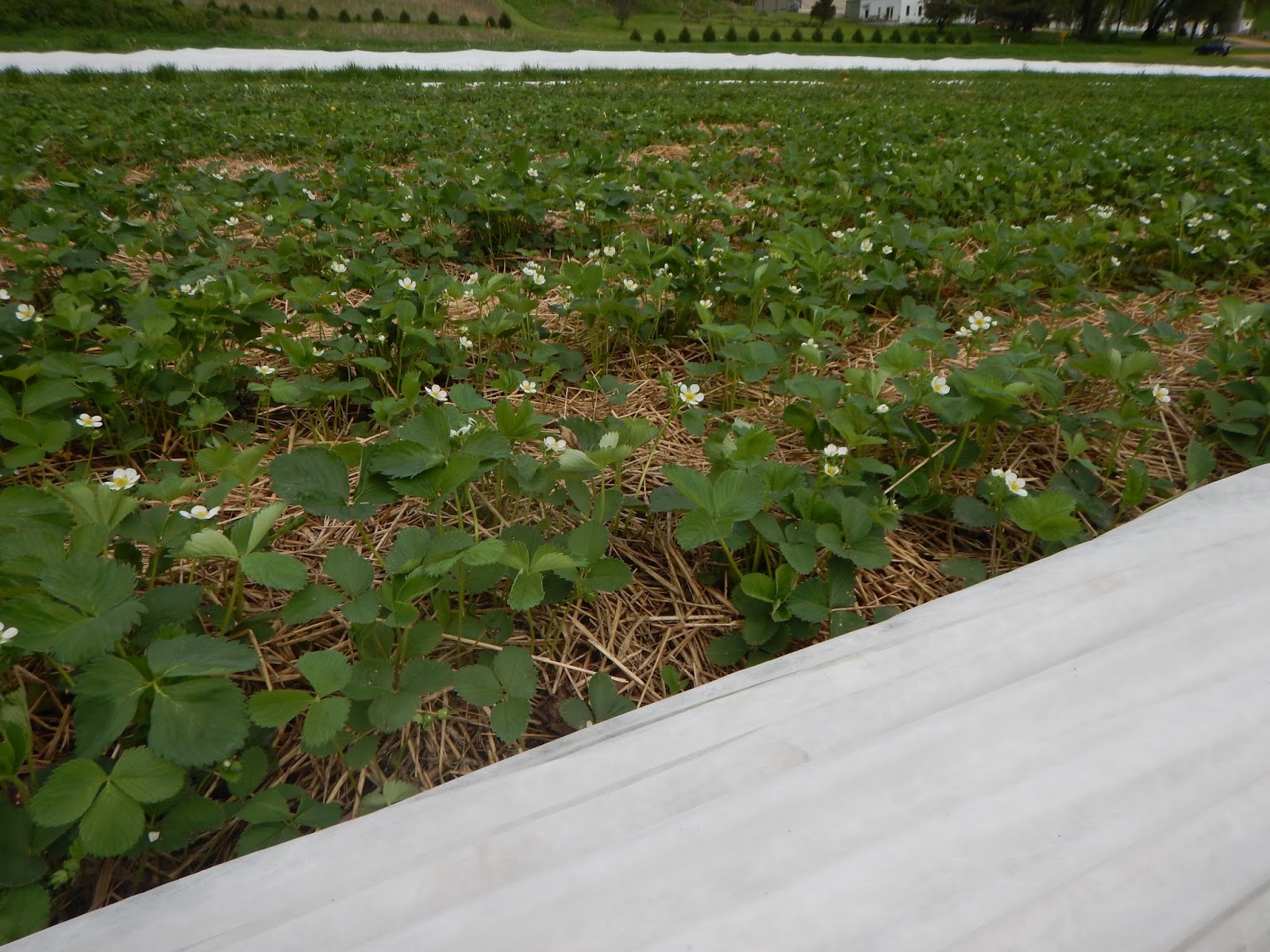
As we write this article we’re preparing to pack our 7th CSA box of the 2020 season and this week we’re welcoming our Peak Season Vegetable share members.  While our early season boxes were filled with a wide variety of greens, radishes, ramps and asparagus, we’re just starting to see the transition from spring crops to summer crops.  We started picking strawberries last week and while they taste quite delicious, we have to be honest with you that we are not going to see prolific yields as we have in previous years.  When we pulled the field cover back early this spring, and loosened the straw mulch, we found that some of the plants had not survived the winter.  What exactly was the cause?  It’s hard to say, but likely a combination of a warm March followed by a cold April.  This is our first year to harvest from this planting.  While it’s a bit disappointing, we’re hopeful that the plants will shoot out runners to help fill in the gaps.  If we manage the field correctly after we’re done picking this year, we may be able to establish more plants for next year’s’ harvests.  So, while we will still have strawberries, there won’t be as many as in past years.  Now that we have that bit of news out of the way, lets move on to some other fields!

Look closely and you'll see the cutest little Green Zucchini!
By the end of this week we’re hoping to start picking the first zucchini and in just one more week we’ll add cucumbers to the harvest list!  We had a field cover on these plants after we transplanted them back in May, with hopes that a little extra heat gain would encourage their growth.  We didn’t intend to take the cover off, but Mother Nature had a different idea when she sent high winds our way a few weeks ago!  So, we let her do her thing and once the cover was off we were pleased to see nice, healthy plants!  Right next to these crops we planted our first planting of melons and watermelons.  The plants are still small, but they look very healthy.  Manuel Morales and Jose Antonio have been working hard irrigating many crops.  Crops such as zucchini and melons are planted on beds covered with plastic mulch and have drip lines running underneath the plastic to deliver not only water but also nutrients and beneficial microbes to support the plant’s growth and fruit development.  Before the melon vines grow too much and extend into the wheel tracks in between the beds, we are trying to maximize every effort to control the weeds that seize every opportunity to grow in open spaces. 
Jamie & Felix running the Kult Cultivator
through the melon field
Last Saturday Jamie and Felix used our Kult cultivator set up to clean up this field. They are doing a great job as a 2-man weed killing team!  Thanks to the efforts of all these guys, we’re hopeful we’ll have some delicious melons to send your way in July and August!

We are very thankful all of our crew members remain healthy and well.  At the end of May we greeted two more crew members who returned from Mexico after receiving their visas! Juan Pablo and Alfredo are brothers and have worked at our farm for many years.  They had to take last year off, but were ready to come back this year and we are so glad they did!  Once they arrived we greeted them from a distance at the airport where we left a vehicle for them along with keys to a house we had kept vacant and reserved for “quarantine” needs.  With a tank full of gas, a cell phone so we could communicate with them, and a fully stocked kitchen, they quarantined themselves away from the rest of the crew and the community.  
Juan Pablo & Alfredo spending time together
as brothers weeding our onions!
They did have a very productive quarantine spent going between their house and whatever weeding mission they were assigned to for the day.  Over the past two weeks they have spent a lot of quality time together bonding as brothers and as yet another 2-man weed killing team!  They have managed to hand weed horseradish, early beets and carrots, parsnips and the entire onion field!  Thankfully they reached the end of their quarantine healthy and well, still thankful to be brothers, and they by no means put themselves out of a job—the weeds continue to grow!
Saturday, June 13--Mulching and Transplanting Tomatoes!
Summer isn’t summer without tomatoes and basil!  We’re happy to report we now have two fields of tomatoes planted!  The first planting has already been staked and tied to keep the plants growing upright both to keep the fruit clean as well as to allow airflow through the foliage.  Pretty soon we’ll need to add another string to the stakes and will continue to weave the plants into place as they grow upward.  Last weekend the mulching crew had the transplanting crew right on their heels as we worked hard to achieve our goal of getting the second tomato field planted.  We had some rain the week before as well as about 2 inches earlier in the week.  The fields were too wet to work in, but the tomato plants were growing quickly in the greenhouse turning from small plants to tomato trees right before our eyes!  They really needed to get to the field before they got much bigger or we would risk breaking them when we tried to plant them.  The crew pulled it off and the field looks great! 

Basil Planting #1 looking quite beautiful
after the cover was removed!
As for the basil, we have planted two of our five plantings in the field and have a third one in the greenhouse that will be ready to take to the field in a week or so.  The early plantings of basil also get covered with a field blanket to protect the delicate leaves from chilly spring nights, but also to trap heat to accelerate growth.  We pulled the cover off at the end of last week and were pleased to see beautiful basil plants underneath!  If you look closely at the plants you can see them smiling, now fully exposed to the sun and emitting a sweet, herbal fragrance in the air all around them!  We should also mention the pepper and eggplant fields look quite nice and we’re hopeful they’ll produce well come late summer.

While we’re just beginning summer, we’re already looking ahead to fall.  After a two week delay in getting our sweet potato slips from North Carolina due to poor weather conditions, we were able to get the last shipment of plants last week and by the end of the week the sweet potato field was completed.  The winter squash field has also been planted and we’ll be transplanting and planting the first of our fall broccoli, cabbage, rutabagas, etc later this week.  We also have a gorgeous field of celeriac that the guys have done an excellent job of cultivating and hand weeding.  I have a feeling summer is going to fly by and fall will be here before we know it!

Precision cultivating of cilantro
Cilantro, dill and red radishes are pretty important crops for our farm, not only because we like to include them in CSA boxes from time to time, but also because they are important wholesale crops for us.  We’ve had some very abundant crops this spring which we’re very thankful for!  Our harvest and washing crews have been bringing in about 15,000 bunches or more of cilantro each week for the past few weeks.  In order to keep a constant supply of these crops we have to plant them every week, which means Amy stays busy keeping the seed containers filled and managing inventory.  Tomas, Manuel, Luis and Rafael have helped not only plant the crops, but also have been doing a good job with timely flame weeding and mechanical cultivation to kill weeds.   Did we mention the weeds continue to grow?

One thing we can hardly wait to eat are freshly dug new potatoes!  It won’t be long before those tender-skinned new potatoes with red skin and creamy white flesh are ready for harvest.  If you’ve never eaten a freshly dug potato, you are in for a special treat!  The potato field looks quite nice and we spotted the first potato blossom at the end of last week!  What else goes nicely with fresh potatoes?  How about some of those tender little carrots with their green tops still attached?  Or maybe the first beets of the season?  Yes, those are all coming within the next few weeks as well.
Immature Broccoli head hidden amongst the leaves
In the meantime, we have our eyes on the second half of our first crop of broccoli and there are three more very nice crops coming up behind it!  Within the next week or two we’ll be cutting one of our favorite early season cabbages, the beloved sweetheart salad cabbage.  Cauliflower will also be coming soon.  We anticipate we’ll need to tie the first planting by the end of this week.  Why would we do that?  When we “tie” cauliflower we wrap a rubberband around the leaves to hold them together.  This keeps the plant closed in order to keep the head of cauliflower from being exposed to the sunshine thereby blanching it so it’s snowy white.

Lupe planting Ginger in the cold frame greenhouse

You asked for ginger, and you will get ginger!  On last year’s survey this was one of the most frequently requested crops you asked us to grow this year.  Last weekend Jose Antonio, Simon, Tomas, Lupe and Jorge worked hard to get the ginger planted in our cold frame greenhouse.  Hopefully we’ll have some nice baby ginger to send your way in October or November!

We can’t give a field report without mentioning garlic!  Can you believe we’ll be harvesting this year’s garlic crop in less than one month!?!  Yikes!  We’re hopeful that we’ll have a bountiful harvest and so far things are looking good.

We hope you continue to enjoy this journey through the seasons with us, embracing each week and the bounty in each box.  We have so many more delicious things to share with you, so get ready to have some fun!   Thus concludes our virtual wagon tour.  We hope you enjoyed the fresh country air, the wind in your hair, blue skies and a little time in nature.  Until the next time…….Farmers Richard, Rafael and Andrea

Tuesday, July 2, 2019

Dealing With Weeds At Harmony Valley Farm


By:  Richard de Wilde

“What we call a weed is in fact merely a plant growing where we do not want it.”
 —E.J. Salisbury, The Living Garden, 1935

Leeks after cultivation using "The Lilliston"
As organic farmers we do our best to understand and work with the natural world.  Nature is wise and knows the value of keeping soil in place and covered with plants which maximize each day of sunshine, capturing carbon and nitrogen from the air while exhaling oxygen that we need to live.  In nature, soil is never left bare to be wasted or eroded by wind and water.  Weeds have a purpose, and it really is a good one!  So why are we so set on killing and eradicating them from our fields?  Weeds can be very aggressive and can inhibit the potential of a crop by competing for sunlight and nutrients.  They impede our harvest efficiency and produce thousands of seeds which will haunt us for years.  Most weeds have accompanied agriculture from its beginning.  They moved around the world as early settlers brought their grain seed along with some tag along weed seeds and today they hitchhike with the global grain trade and then further spread by way of wind, animals, equipment, etc.

Potato field cultivated with "The Lilliston" 
Weed plants are very adaptive.  They can lie dormant in soils for 10-30 years, just waiting for their time of need to germinate.  Some weed seeds  only germinate at certain times of the year, such as in cool spring or fall temperatures.  Others are triggered in times of excess moisture, while others only germinate in summer heat or extreme drought.  Weed seeds are also triggered to geminate by exposure to light, usually caused by tillage.  Tillage is any disruption of the soil, which in our case could be cultivation or other work to prepare the soil for planting.  As the soil is stirred and disrupted, even just a flash of sunlight is enough to trigger some weeds to germinate!  In fact, I’ve read that in Europe some farmers even started cultivating at night to avoid triggering weed seeds!  Weed seeds may also be triggered by fertility needs in the soil.  Some weeds have the ability to correct soil nutrient deficiencies.  For example, if soil is deficient in phosphorus, a seed for a plant that has the ability to scavenge phosphorus may be triggered to germinate and grow.  As we try to minimize weeds in our crop, one thing we do is to provide balanced nutritional needs for the soil to prevent the need for weeds to correct the deficiency.

Cilantro:  Cultivated with "Basket Weeder" with shields & Kult Kress Duo.
There are really only two kinds of weeds, annual or bi-annual weeds and perennial weeds.  Annual or bi-annual weeds grow rapidly from seed, but only under the right conditions.  In order to thrive once they germinate, they need to grow and develop their green structures above ground to capture sunlight and utilize photosynthesis for energy.  When these types of weeds die at the end of the season, they are dead and won’t grow again.   Thus their main way to propagate themselves is to produce seeds that drop back into the soil and are available for a future season.  In contrast, perennial weeds survive from year to year and their main strength and the key to their survival is their underground root storage system which holds nutrients and energy.  When a new year rolls around, they don’t have to wait for the right conditions to germinate a seed and start photosynthesizing, rather they draw their energy from their roots.  The key to eradicating these types of weeds is depleting their root reserves.  Up until the plant is six inches tall, it is drawing its energy from its root reserves.  When it is about six inches tall, it starts utilizing photosynthesis to put energy back into the roots and replete the reserve.  One way we can battle this type of weed is to repeatedly mow it off when it is about six inches tall. This takes persistence, but after time the root reserves will be depleted and the plant will die.

Rafael using disc cultivator in the cilantro field.
By now you may be wondering if there is a silver bullet for weed control.  Valid question and one farmers have been asking for years.  In a recent article in Acres U.S.A. written by Anneliese Abbott, she commented about the onset of agricultural herbicide use.  “It seemed so easy:  forget about plowing…and just spray chemicals to kill the weeds.  No tillage, no erosion and no weeds:  what could be better?  Unfortunately, herbicides caused as many problems as they solved. They polluted water, harmed non-target organisms and sometimes posed a threat to human health.  Worst of all, they only worked well for a short period of time.  Weeds quickly evolved resistance to every major type of herbicide, forcing farmers to spray more and more chemicals with less and less success every year.”   Sadly, as organic farmers there is no easy way to deal with weeds.  Rather we try to understand how weeds work, the conditions they thrive in, and then we utilize multiple methods to kill them and prevent their growth.  Aside from the occasional use of 30% vinegar, chemicals are not our answer.  So lets talk about the methods and tools we can use.

New weed control technique:
Low growing cover crops between rows of melons.
One of our weed control tools is planting cover crops of grains, grasses and clovers.  If we can satisfy the need to cover the soil, there’s no need for dormant weed seeds to germinate.  It helps that most grasses and cereal grains, such as rye, also exude chemicals to inhibit other seeds from germinating.  Historically we have planted most of our cover crops in the fall, which can serve to prevent the growth of bi-annual weeds.  Bi-annual weeds germinate in fall, but do their growing in the spring.  If we can inhibit germination with a fall cover crop planting, we won’t have those weeds in our spring planted crop.  We are also perfecting a new and exciting technique we’ve developed for controlling weeds that grow in the space between the beds where crops are planted.  Immediately after preparing the beds, we plant two very fast germinating cover crop plants, creeping red fescue and white Dutch clover.  Both grow fast and inhibit weeds.  They are also short in stature, only 6 inches tall at most, so they do not compete with our crop for sunshine.

Using Flame Weeder to kill small weeds before crop emerges
We can also deplete the “weed seed bank” in the soil by triggering weeds to germinate, then killing them when they are small with very shallow cultivation or flaming.  We typically utilize this method before we plant the crop, but it requires us to prepare the beds one week ahead of planting.  Then, just before we plant, we “basket” the beds.  A “Basket Weeder” is an implement mounted on a small tractor.  It has horizontal wires that flip small weeds out as they roll across the surface of the bed.  We can also utilize a “Flame Weeder” to kill weeds that germinate and emerge after the crop has been planted, but before it comes up.  In order for this to work, the timing and conditions have to be just right.  The flame weeder is a tank of propane mounted on the back of the tractor with burners that carry just over the surface of the bed.  The flames burn the weeds off, thereby killing them.  If you flame too soon, you won’t maximize the number of weeds you kill.  If you wait too long, the crop may start to emerge and you risk burning off your crop.  We utilize flame weeding for crops such as cilantro and dill that we plant every week for over twenty weeks.  Typically we have to time the flaming about 4-8 days after the crop is planted, depending on temperature.  We also use this technique on carrots and parsnips and the difference between a crop that has been flamed and one that has not is dramatic!!  We have a significant reduction in weeds with timely flaming.  When we do get weeds in our field, it is critical that “bad” weeds to go to seed in the field or areas around our fields.  If they do, they’ll make a deposit into the “weed seed bank” that we’ll pay for in years to come!

Vicente using "The Lilliston" to "hill" sweet corn
We have a few more tools in our collection of things for weed control.  Sometimes we use a tool called “The Lilliston” which aggressively throws dirt in one direction and can be used to smother weeds by throwing dirt on them.  We use this to smother weeds within the rows of crops such as potatoes, leeks and sunchokes when the plants are big enough to get partially covered by dirt without damaging them.  Another tool we use is called a “Lely Tine Weeder.”  This tool has little tines that rake out very small weeds.  This is a more gentle tool and can be used on small transplants and fast growing crops that are direct seeded, as long as the crop is larger than the weeds.  The “Basket Weeder” is also extensively used with tunnel shields that we put on the implement to carry over the rows of crops to protect them from dirt flying into the row and smothering the crop when the crop is too small.  While this method preserves the crop and kills weeds in between the rows, it doesn’t do anything to remove weeds that are in the row.  Later, when the crop is bigger and can take a little more aggressive cultivation, we remove the shields.

Jaime and Felix G using "The Kult" in celeriac
In more recent years we’ve started using a steerable cultivator that we call “The Kult.”  It requires a team of two people to operate it.  One person drives the tractor and the other rides on the cultivator to steer the machine.  This tool is more effective at killing weeds within the rows of crops and it is indispensable at killing new weeds in larger, more established crops where we have to be careful not to disturb the crop’s root system or damage the plants.  It’s also adaptable and can be set up in a variety of ways to best meet our needs.  We have even more cultivating tools, but I think you can see we try to utilize mechanical options as they are our most efficient and cost-effective means of killing weeds.

Ascension using a hoe and his hands to remove weeds
in the strawberry field
We can also smother weeds by covering the soil with plastic or straw mulch.  Some of our crops are planted on plastic covered beds.  We use the plastic mulch for a variety of reasons, one being weed control.  As a last resort, when we’ve exhausted all other methods, we turn to old-fashioned hand weeding.  Yes, we do still do more than our fair share of hand weeding and this too is a skill.  We try to avoid weeding by hand because it is time consuming, but sometimes that’s the only option.

Will we ever kill all the weeds in our fields?  No, but the sum total of all our efforts will pay off this year and in years to come as we minimize the impact weeds have on our crops.

Wednesday, June 6, 2018

June Farm Update


By:  Farmer Richard

It’s been 7 weeks since the last farm update we shared with you on April 19, written with a foot of snow on the ground!  In that update we reported that this year sets the record for the coldest and wettest spring in the forty plus years since I started farming!  Despite that crazy, wet, snowfall in late April, we were able to do our first spring planting on April 24 which is one full week later than any other year I’ve had farming.  The late start to the season would suggest that all of the crops would be later and heat loving crops like tomatoes, sweet corn and peppers would be equally late and have a short season, barely making it before the first fall frost!  Well folks, keep reading as I have some good news!!

Onions in the greenhouse
We had to plan our greenhouse transplants for a “normal” year.  We started planting in late February and actually had some really nice, sunny days in March.  We have new plastic on all the houses, so our early seeded crops took off nicely and even when the days became more cloudy, the crops continued to grow and were ready pretty much on schedule.  As soon as the skies cleared (and the snow melted away), we seized the few dry days we had to prepare ground, lay plastic (for some of our transplants like onions and tomatoes) and tried to keep our field plantings on schedule.  When greenhouse transplants are ready, they really need to get to the field!  However, just because you get a plant to the field it doesn’t mean it’s going to take off and grow, especially when it’s cold as it has been this spring.  


Antonio, Jose Luis & Carlos laying out hoops to cover zucchini
We decided to invest the time and energy into covering some crops with row covers to help trap heat and accelerate plant growth.  We cover some crops every year, but this year we had so many fields to cover that we had to fill an extra 1,000 sandbags and cut 1,000 new wire hoops to put over the beds to keep the covers from damaging the transplants under them.  Without the hoops we risk giving the plants cover abrasion and we need the sandbags to hold all the covers in place!  We couldn’t have covered all of these crops without our amazing crew!  When we had only a few dry days to plant and cover, they were asking “can we work late to finish?”  They repeatedly tell me, “if we don’t plant it and take care of it, we don’t have a crop to harvest!”  It’s important to get the big picture! 

Strawberries right after the covers were taken off.
We are well aware that it is our crew’s dedication to getting the crops planted on time, covered for protection from cold and storms and willingness to work late some nights that has changed the picture from coldest/latest spring to bring us pretty much back on schedule!  Does anyone remember that heat wave we had at the end of May?  We went from cool growing weather to blazing hot!  Those covers we had on everything…..most of them had to come off because now we ran the risk of the crop getting too hot!  We had to uncover the zucchini, cucumbers, tomatoes, peppers and eggplant.  When we did, we were really happy to see beautiful plants that now appear to be growing at a normal rate!

Zucchini plants thriving after being uncovered!
Vicente and the irrigation crew members receive some acknowledgement here as well.  They have worked diligently to set up all the drip irrigation making it possible to give many of our new transplants a small drink of water mixed with fish and kelp fertilizer shortly after they were planted.  The combination of water and nutrients followed by a week of unseasonable, warm temperatures and we really saw some growth under those covers!  We are now ahead of schedule for zucchini, cucumber, melons, tomatoes, eggplants and peppers!! 

We have two crops of sweet corn and beans up and growing and one planting of edamame.  We lost about 25% of the first planting of corn to the Red Wing Black Birds.  Unfortunately they found that they could dig up the corn seed that was planted shallow because the soil was cold and we wanted the seeds closer to the surface so they would receive heat from the sun.  These were pretty determined birds that didn’t seem to mind the “scare eye” balloons and shiny streamers we put in the field to try to deter them.  They ignored our tactics and continued to dig up the seeds.  So our solution was to feed them organic corn on the edge of the field.  That actually did work as a decoy and and we still have 75% of the crop!  It’s hard to get upset with these birds, after all they have babies to feed and we’re always encouraging parents to feed their young ones more organic vegetables! 

Luis and Felix G mastering the new cultivator
If the weather cooperates we can still have a great year!  Right now we’re working really hard to battle the weeds.  Rafael has done a superb job of flaming crops to kill weeds just before a crop comes up.  Our local Cenex crew has been super cooperative in keeping our flamer filled and repaired.  A few gallons of propane used on the precise day saves hours and hours of weeding later!  The result of being diligent and staying on top of flaming is the main reason we have two beautiful crops of early carrots and five acres of parsnips, cilantro & dill!  Rafael has also done a lot of mechanical cultivating and has been instrumental in directing other cultivating crews.  Luis and Felix G have become masters at operating our new Kult/Cress German cultivator.  They’ve learned how to work together to use this machine to mechanically kill a lot of weeds! 

HVF crew hand weeding parsnips.
Andrea gets huge credit for keeping ahead of our frantic spring planting schedule.  Simon has also been a key player in helping us keep the greenhouse plantings on track and has helped with our “hot water” seed treatment for some seeds and biological seed treatments for others.  Andrea has also worked hard to maintain our seed inventory and provides planting plans for each crew every time they go out to plant.  Gwen is now learning the ropes of managing our records once a planting is done.  It’s super important that we have good, complete records both for our own use as well as for maintaining our ability to trace crops back. 

Our Strawberry Day event is coming up on June 17, and yes it looks like we’ll have strawberries!  We hope to see you at the party, or join us for the weekend and do some camping!  We have had a few CSA member visitors this spring and we welcome more.  If you’re interested in camping, we’d love to offer you a spot in one of our two campgrounds or reserve our cabins for your stay. 

Bee pollinating the strawberries
As I write this article on my back porch, I have marveled at the dozens of hummingbirds and the many bumblebees that I see coming to visit the columbine flowers in our yard.  Our strawberries are being pollinated by small bees I collectively call “sweat bees.” As the light dims and the day turns to night, I am in awe of the whippoorwills singing to me.  After a five year absence when we didn’t hear them in our valley, we’re very thankful that they’ve returned!  Every night we listen as they sing us to sleep and every morning they wake us up like an alarm clock, right outside our window.  Despite a challenging spring, life is good!