Showing posts with label Amaranth greens. Show all posts

Wednesday, August 9, 2023

August 10, 2023 - This Week's Box Contents Featuring Amaranth


Cooking With This Week's Box

Amaranth:  
Summer Vegetable & Amaranth Shakshuka (See Below)

Desert Sunrise Red Cipollini or Sierra Blanca Onions:  

Italian Garlic:  

Green and/or Italian Zucchini:  
Thai Cucumber & Tomato Salad
Photo from www.explorecookeat.com
Zucchini Blueberry Baked Oatmeal

Silver Slicer and/or Green Slicer Cucumbers: 

Edamame:  

Green Beans:  
Italian Fried Potatoes & Peppers
Photo from www.panningtheglobe.com
Green Bean & Quinoa Casserole 

Sweet Corn:  

Italian Frying Peppers:  

Jalapeño Pepper:

Red Grape, Chocolate Sprinkles or Sun Orange Tomatoes:  

Variety of Tomatoes:  
Cilantro Tomato Bruschetta
Photo from www.tasteofhome.com
Simple Summer Tomato Salad 

Cilantro:  

Fresh Melons:

Orange Carrots:  

Roasted Garlic Caprese Dip
Photo from www.halfbakedharvest.com
No one in any CSA household should hear any other household member mutter “There’s nothing to eat” this week! We’re in the time of the season when we have more vegetables on the list than there is room in the box! This week we managed to pack 16 items in the box, with a wide variety from corn to melons to tomatoes and peppers.  We also have a gorgeous summer green to greet you as you open your box. Let me introduce you to the stunning, and often underappreciated, Amaranth Greens. We struggle with the timing for growing this green, ok it’s my struggle.  I really enjoy eating amaranth with sweet corn, peppers, tomatoes, etc., so this week is the perfect timing to harvest it! Try this week’s featured recipe for Summer Vegetable & Amaranth Shakshuka (See Below). Shakshuka is a breakfast dish from the Middle East that features a vegetable stew of sorts that is traditionally made with a tomato base.  Eggs are poached in the hot vegetable stew, making it a one-pot meal of sorts that’s very vegetable centric.  This is a great breakfast or brunch item served simply with fresh bread. I also included links to two past recipe features for Summer Rice & Cheese Gratin with Zucchini & Amaranth and Black Beans with Amaranth. If you’re not familiar with Amaranth, I really hope you’ll be brave and give it a try.  It really has a mild flavor and is very versatile in its use.

We’re officially in tomato season which means we have tomato recipes scattered throughout the entire Cooking With the Box article this week!  Check out this Roasted Garlic Caprese Dip.  This is a great “sit on the patio in the evening and sip wine” kind of recipe. You might also choose to pair some of this week’s tomatoes with cucumbers in this Thai Cucumber & Tomato Salad or make this summery meal of Burst Tomato Pappardelle with Zucchini, Sweet Corn & Pan-Fried Chicken.

If you’re looking for something unique to do with some of our staple vegetables that are frequent fliers in the CSA boxes, check out this recipe for Baked Red Lentil & Carrot Falafel with Lemon-Herb Tahini Dipping Sauce.  These falafel are gluten free and vegetarian and sound excellent!  Or you could use the carrots to make this sweet Pistachio Carrot Cake with Whipped Cream Cheese Frosting.  And as for this week’s zucchini, perhaps you want to try incorporating it into breakfast with this Zucchini Blueberry Baked Oatmeal.

I really hope you have fun brainstorming and creating magnificent meals with all of the many selections in this week’s box.  As always, we encourage you to share your creations in the group, along with any recipes that are keepers!

Have a great week & Happy cooking!
Andrea 

Vegetable Feature: Amaranth

by Andrea Yoder

Red Amaranth is a stunning “green” with dark, burgundy-colored leaves.  Amaranth greens have become an important part of our seasonal diet because of their ability to grow in the heat of the summer when other greens, such as spinach and lettuce, do not thrive. Amaranth is adaptable to variable conditions with little impact from weather or disease.  It can survive in extreme heat or drought conditions because it is able to convert twice the amount of solar energy using the same amount of water as most other plants! It is also worth mentioning that amaranth is a nutritional powerhouse.  The leaves are rich in calcium, phosphorus, protein, vitamin C, carotene, iron, B vitamins, and trace elements including zinc and manganese. Compared to spinach, amaranth leaves have three times more vitamin C, calcium, and niacin! Amaranth is also known by other names including callaloo in the Caribbean and pigweed. 

Amaranth is an ancient plant that was part of the diets of Aztec civilizations in Mexico up to 7,000 years ago. It was also an important staple food for the Incas of South America and the people of the Himalayan region of Asia. In these ancient cultures, amaranth was also used medicinally and in cultural rituals. It was held as a symbol of immortality and means “never-fading flower” in Greek. Amaranth has made its way around the globe as people have immigrated. Amaranth became an integral part of the cuisine in some parts of Africa and later spread more extensively around the world to the Americas, Caribbean, Brazil, India, and Asia in part facilitated by the slave trade. Thus, there are many different options for preparing amaranth depending upon the culture. 

While amaranth may be eaten either raw or cooked, I think it tastes best when cooked when it is at this stage of maturity.  The flavor of cooked amaranth is similar to spinach, except better!  You can prepare it as you would spinach or other similar greens such as chard. The stems and leaves are both edible. Previously I had discarded the thick main stem and only used the thinner more tender stems. However, you can peel the thick stems and you’ll find the inner part of the stem is quite tender and delicious.  It’s a bit of a tedious job, but if you use a small paring knife, it’s manageable and will maximize the yield.   Amaranth greens may be steamed, sautéed, added to soups, stews, wilted and stir-fried and cook quickly in just a few minutes. Amaranth pairs well with so many other summer crops including onions, fresh garlic, zucchini, peppers, corn, green beans, edamame, basil, oregano, and tomatoes.  

Store amaranth greens in the refrigerator in a plastic bag until you are ready to use them. Remove the twist tie and wash well in a sink of cold water before using.  Shake or spin off excess water.


Summer Vegetable & Amaranth Shakshuka

Yield:  4-6 servings

Photo from Andrea Yoder
2 Tbsp olive oil
1 medium onion, small dice
1 medium Italian frying or green bell pepper, small dice
4 cloves garlic, minced
1 ½ tsp paprika
1 tsp smoked paprika
2 tsp ground cumin
¼ tsp chili powder
1 tsp salt, plus more to taste
Freshly ground black pepper, to taste
3 cups fresh, diced tomatoes 
1 ½ cups fresh corn kernels
1 bu amaranth greens
6 large eggs
Cilantro or parsley, coarsely chopped (to garnish)
Feta Cheese (optional)
  1. Heat olive oil in a large sauté pan over medium heat. Add the diced onion, peppers, and garlic and sauté for 5-7 minutes or until the vegetables are soft. 
  2. Add the paprika, smoked paprika, cumin and chili powder plus 1 tsp salt. Stir to combine and cook for about a minute, stirring frequently. 
  3. Add the fresh, diced tomatoes to the pan and stir to combine while also making sure you scrape all the spices off the bottom of the pan and incorporate them into the sauce. Add the fresh corn kernels and bring the mixture to a rapid simmer. 
  4. Simmer the sauce for 8-10 minutes, stirring periodically. As the liquid from the tomatoes reduces, the vegetable sauce will start to thicken. You don’t want it to be watery, but you do want it to be saucy and remember it will continue to cook and reduce further as you finish cooking the dish.  
  5. While the vegetable sauce is simmering, prepare the amaranth greens. Wash the greens well and separate the thin stems and leaves from the main stem. Cut the leaves into thin slices. Finely chop the tender stems and, if you wish, peel the thicker stems prior to chopping. Add the amaranth to the pan and stir to combine until the greens are wilted. Simmer for another 5 minutes.
  6. At this point, reduce the heat to low and taste the sauce. Adjust the seasoning to your liking by adding additional salt, black pepper, or spices. Once the sauce is seasoned to your liking, use a large spoon to make small wells in the sauce. Crack the eggs, one at a time, into the wells. Cover the pan and simmer for 3-8 minutes, or until the eggs are cooked to your liking.
  7. Remove the pan from the heat and serve immediately, garnish with chopped cilantro and/or parsley and feta cheese if you would like.
This recipe was adapted from a similar shakshuka recipe found at www.downshiftology.com. Shakshuka is a dish originating in the Middle East and North Africa. The traditional preparation consists of tomato sauce seasoned with spices in which eggs are poached. This dish is often served for breakfast with pita bread. Of course, many cooks have used this traditional recipe concept to create their own spinoff recipes. Feel free to adapt your version of this recipe based on the vegetables you have available. 

Wednesday, August 10, 2022

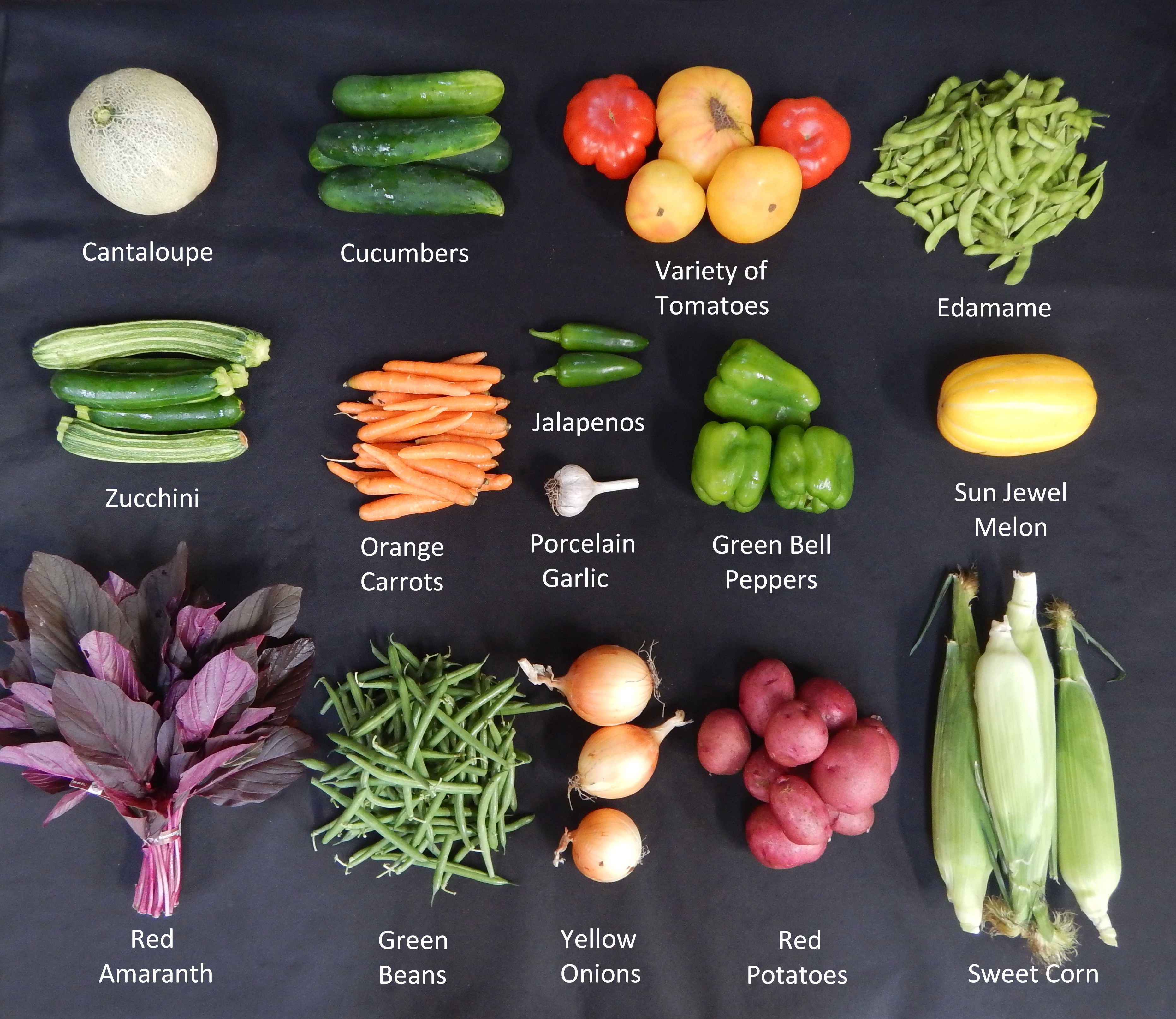
August 11, 2022 - This Week's Box Contents Featuring Amaranth


Cooking With This Week's Box

Amaranth Greens: 
Photo from ambitiouskitchen.com
Jamaican Amaranth (See Below)

Red Cipollini or Sweet Spanish Onions:   

Orange Carrots:

Zucchini:

Green and/or Silver Slicer Cucumbers:

Red New Potatoes:
Photo from poshinprogress.com

Porcelain Garlic:

Variety Bag of Tomatoes:

Green Beans:

Edamame:

Sweet Corn:

Jalapeño Peppers:

Green Bell Peppers: 

Sweet Sarah or Sugar Cube or French Orange Melon:

Sun Jewel Melon:

Hello All!

Red Lentil South with Amaranth Greens
This is the time of the season when we have a very challenging time getting everything in your boxes!  We are so blessed with produce and want to share it with you, but the box is packed full and we can’t fit it all in!  We realize this is a lot of food, but if you feel like you may not be able to eat through everything while it’s at its’ peak, there are some simple things you can do to preserve some of this week’s produce for use later.  Peppers are easy to freeze.  Just cut them up and freeze them in their raw state.  You can pull them out later and add them to chili or casseroles or sauté them for use in scrambled eggs or egg bakes.  They also make a nice addition to winter pizzas.  Green beans and edamame are also easy to freeze.  These two vegetables do need to be blanched before they are frozen.  This means you should cook them in boiling salted water for several minutes, or until you see a change in their color.  Once the color changes, remove them from the boiling water and put them in cold water to stop the cooking.  In the case of green beans, they are now ready to be bagged and frozen.  You may want to pop the edamame beans out of their shell prior to freezing, just to conserve space.  Tomatoes may be frozen raw or chop them up and cook them into a sauce that may be frozen.  You can also slice them and dehydrate them.  These are just a few suggestions I thought I would mention.  No one wants to waste produce dollars and you’ll be thankful to have these things squirreled away to use once the CSA delivery season is finished!

Ok, now let’s move on to this week’s featured vegetable which is Amaranth Greens.  If you’re not familiar with this vegetable, please refer to this week’s feature article and don’t be intimidated by it!  You can prepare it similarly to spinach and I think it is best prepared in a cooked manner when it’s at this stage of maturity.  This is one of our favorite summer greens and it is packed with nutrition!  This week’s featured recipe is for Jamaican Amaranth (See Below), which is a very simple, traditional way amaranth is prepared in the Caribbean and usually eaten as a side dish for breakfast or lunch.  I consider this recipe to be a good base recipe, but if you’re not afraid to stray from tradition it may be adapted by adding additional vegetables such as green beans, edamame and sweet corn!  Basically, this dish consists of quick-cooking stewed summer vegetables.  It’s delicious served with scrambled eggs and/or rice.  I also included several links to other recipes we’ve published previously that highlight Amaranth.  

Another new vegetable in this week’s box is edamame!  If this is your first time using this vegetable, you may want to take a moment to read our past Edamame Vegetable Feature 
which includes cooking instructions.  Once cooked, edamame are easy to use and can become quick and healthy snacks and meals.  Check out these recipes for 5-Minute Edamame Snacks and Edamame Hummus, two good recipes for late summer travel food, lunch at work or back to school lunch options!

We’re in the peak of tomato and sweet corn season and there’s never a shortage of recipe ideas for ways to put these two summer favorites to use.  Fresh Sweet Corn Salsa is a tasty use of corn and may be served with chips or use it to top off beef tacos or grilled fish or chicken.  Double Bean & Corn Enchiladas is a family-friendly dinner option that could be assembled in advanced and then baked on the night you want to serve it.  Roasted Tomato & Garlic Risotto is a dish you’ll want to make and serve, but will really showcase the fresh garlic and tomato flavors.  Remember, tomatoes are actually a fruit so don’t be afraid to pair them with other fruit such as in this Tomato and Stone Fruit Salad!  

If you want to try something a little different, creative and a taste from another culture, check out these recipes for 3-Ingredient Korean Melon Ice Cream Bars and Korean Melon Jam & Cream Cheese Pastries.  Of course you can also just cut the melon and eat it right out of the rind!

I want to also mention there have been some great recipe shares in the Facebook Group over the past week, some of which I included in this week’s list of suggestions.  If you’re feeling stuck and not sure what to do with a vegetable, check in with the group and I’m certain other members will offer suggestions for recipes to help you out!

Looking ahead, we’re hoping to include tomatillos and poblanos in your box very soon and possibly even next week!  Of course, we’ve only just begun with sweet peppers, so you can expect some Italian Frying peppers and other sweet varieties very soon.  In the meantime, have a great week and I hope you enjoy this week’s box of summer goodness!

-Chef Andrea 

Vegetable Feature: Amaranth

by Andrea Yoder

Red Amaranth is a stunning “green” with dark, burgundy-colored leaves. Amaranth is also a grain. While the plant that produces grain is in the same family, they are not the same plants. Amaranth greens have become an important part of our seasonal diet because of their ability to grow in the heat of the summer when other greens, such as spinach and lettuce, do not thrive. Amaranth is adaptable to variable conditions with little impact from weather or disease.  It can survive in extreme heat or drought conditions because it is able to convert twice the amount of solar energy using the same amount of water as most other plants! It is also worth mentioning that amaranth is a nutritional powerhouse. The leaves are rich in calcium, phosphorus, protein, vitamin C, carotene, iron, B vitamins, and trace elements including zinc and manganese. Compared to spinach, amaranth leaves have three times more vitamin C, calcium, and niacin! Of course, we know vegetables that have rich colors like the magenta leaves of amaranth are also packed with important phytonutrients and antioxidants. While we choose to grow this stunning dark red variety, there are other varieties of amaranth that have all green leaves and some that have green and red variegated leaf patterns. Amaranth is also known by other names including callaloo in the Caribbean and pigweed. 

Amaranth is an ancient plant that was part of the diets of Aztec civilizations in Mexico up to 7,000 years ago. It was also an important staple food for the Incas of South America and the people of the Himalayan region of Asia. In these ancient cultures, amaranth was also used medicinally and in cultural rituals. It was held as a symbol of immortality and means “never-fading flower” in Greek. Amaranth has made its way around the globe as people have immigrated. Amaranth became an integral part of the cuisine in some parts of Africa and later spread more extensively around the world to the Americas, Caribbean, Brazil, India, and Asia in part facilitated by the slave trade. Thus, there are many different options for preparing amaranth depending upon the culture. This week’s featured recipe is actually a traditional way amaranth is prepared in the Caribbean where it is a staple vegetable cooked very simply and eaten as a side dish for breakfast or lunch.  

While amaranth may be eaten either raw or cooked, I think it tastes best when cooked when it is at this stage of maturity.  The flavor of cooked amaranth is similar to spinach, except better!  You can prepare it as you would spinach or other similar greens such as chard. The stems and leaves are both edible. I learned something new this year in my research. Previously I had discarded the thick main stem and only used the thinner more tender stems. However, several different sources indicated the thick stems should be peeled.  I did this and was surprised to find the inner part of the stem is quite tender and delicious. It’s a bit of a tedious job, but if you use a small paring knife it’s manageable and will maximize the yield.   Amaranth greens may be steamed, sautéed, added to soups, stews, wilted and stir-fried and cook quickly in just a few minutes. Amaranth pairs well with so many other summer crops including onions, fresh garlic, zucchini, peppers, corn, green beans, edamame, basil, oregano, and tomatoes.  

Store amaranth greens in the refrigerator in a plastic bag until you are ready to use them. Remove the twist tie and wash well in a sink of cold water before using.  Shake or spin off excess water.


Jamaican Amaranth

Yield:  4 servings

1 bunch amaranth greens
1 Tbsp vegetable oil
1 medium onion, small dice
1-2 cloves garlic, minced
½-1 jalapeño pepper, minced
2 cups diced fresh tomatoes
2 Tbsp water
2-3 sprigs fresh thyme or 1 tsp dried thyme
1 tsp Salt, plus more to taste
Black Pepper, to taste
  1. First, prepare the amaranth greens.  Remove the leaves and tender stems from the thicker main stem.  Cut the leaves into thin, bite-sized pieces and finely chop the stems.  Using a small paring knife, carefully peel the outer layer off the thicker stems to reveal the tender green inside.  Finely chop the stems.  Place the chopped amaranth in a bowl and cover with cold water.  Stir in 1 tsp salt and mix it in.  Set aside while you prepare the remaining vegetables.
  2. In a large sauté pan, heat the vegetable oil over medium heat.  When the oil shimmers, add the onion, garlic, and jalapeños to the pan.  Sauté until the onion is softened and translucent.  Add the tomatoes, 2 Tbsp water and thyme.  Drain the water off the amaranth and rinse them in a colander.  Add the amaranth to the pan.  Season with salt and black pepper.
  3. Simmer the vegetables over medium to medium high heat for 5-10 minutes or until all vegetables are tender and some of the liquid has reduced.  Add additional salt and black pepper to your liking.
  4. Serve hot as a side dish for breakfast or lunch.  You may also wish to eat it with cooked rice or steamed fish.
Note from Chef Andrea:  I adapted this recipe slightly from www.healthiersteps.com/recipe/jamaican-callaloo The original recipe called for a Scotch Bonnet pepper instead of a jalapeño.  I am not brave enough for a Scotch Bonnet and we have jalapeños right now, hence the substitution.  You can adjust the level of spice to your liking by using an appropriate quantity of jalapeño.  This is a simple dish, but I consider it a good base recipe that you can build upon.  While it may not be traditional to Jamaican cuisine, this dish would also be good with the addition of other summer vegetables including fresh sweet corn, green beans and/or edamame.  Don’t be afraid to add to it!  

Wednesday, August 4, 2021

August 5, 2021 - This Week's Box Contents, Featuring Amaranth!

Cooking With This Week's Box

Amaranth:
Summer Rice & Cheese Gratin with Zucchini & Amaranth (See Below)

Porcelain Garlic:

Yellow Onions:

Green and/or Italian Zucchini:

White Cauliflower or Broccoli:

Sun Jewel Melon:

Green and/or White Cucumbers:

Orange Carrots:

Gold Potatoes:

Green Beans or Mixed Yellow & Green Beans:

Lilac Bride Eggplant:

Sweet Corn:

Sun Orange, Chocolate Sprinkles or Red Grape Tomatoes:

Green Bell Peppers:

Edamame:

Hello Everyone!

We’ve reached that point in the season where we have so many good things we want to send in your box, but there’s not enough room!  This week’s box is packed pretty tight, so I hope you’re ready to get cooking!

Red Lentil Soup with Amaranth Greens
This week we’re featuring the beautiful mid-summer green, amaranth.  If this vegetable is new for you, take a minute to read this week’s vegetable feature (See Below) first.  You may not find too many recipes if you do a search on the internet, so I am going to steer you to this week’s featured recipe for Summer Rice & Cheese Gratin with Zucchini & Amaranth (See Below).  We also have some tasty recipes we’ve featured in previous years including this recipe for Black Beans with Amaranth which has been a member favorite.  This recipe for Red Lentil Soup with Amaranth Greens is one of my personal favorites.
Summer Succotash Salad with Orzo Pasta

We have a few new items in this week’s box including Sun Jewel Melons and Edamame!  Sun Jewel melons are unique and may be eaten as a sweet item or you can turn them into something savory such as this recipe for Cucumber and Melon Salad with Chile and Honey or this simple Melon Wrapped in Prosciutto.  As for edamame, if this is your first time working with this vegetable I encourage you to read our 2020 Edamame Vegetable Feature Article.  This recipe for Summer Succotash Salad with Orzo Pasta includes edamame was well-received by members when we featured it previously.

Ginger Miso Glazed Eggplant
photo by Ashley Rodriguez for bonappetit.com
Eggplant can be a challenging vegetable for some to embrace, but hopefully you can appreciate this week’s Lilac Bride eggplant in a simple Vegetable Thai Green Curry (methods for stovetop and Instant Pot), or make Ginger Miso Glazed Eggplant.

This week’s box has just a few ears of corn.  Don’t worry, there will be more sweet corn coming and hopefully as soon as next week!  We’re also looking forward to picking tomatillos and some of our larger varieties of tomatoes for your upcoming boxes.  Oh, I almost forgot to tell you we had the first taste of watermelon this week!  One of the trial watermelon’s Richard picked was so sweet and juicy.  Aside from a few bites Richard enjoyed, I managed to finish off the entire thing myself!  Hopefully we can start picking very soon so you can get in on some of this summer fun as well.

Ok, time to sign off.  Have a great week and I’ll see you back again next week!—Chef Andrea

Vegetable Feature: Amaranth

By:  Chef Andrea Yoder

Description: Red Amaranth is a stunning “green” with dark, burgundy colored leaves.  Amaranth greens have become an important part of our seasonal diet because of their ability to grow in the heat of the summer when other greens, such as spinach and lettuce, do not thrive.  Amaranth is adaptable to variable conditions with little impact from weather or disease.  It can survive in extreme heat or drought conditions because it is able to convert twice the amount of solar energy using the same amount of water as most other plants.

Preparation & Use: Amaranth is similar in flavor to spinach, except better!  You can prepare it as you would spinach or other similar greens.  While amaranth may be eaten raw, the more mature leaves and stems are best when cooked.  The stems and leaves are both edible, however the stems might need a little longer cooking time so it is best to separate the leaves from the stem.   Amaranth greens may be steamed, sautéed, added to soups, stews, wilted and stir-fried.  Amaranth pairs well with so many other summer crops including onions, fresh garlic, zucchini, peppers, corn, green beans, basil, oregano and tomatoes.

Summer Amaranth & Quinoa Salad with Chickpeas
Amaranth is thought to have originated in Central and/or South America, but has made its way around the globe.  It can be found in Europe, Asia, and the Americas, which means there are many options for finding ways to use this vegetable.  Season it with cumin, coriander, oregano and serve it with black beans for more of a Mexican approach.  Stir-fry it with garlic, onion, ginger and a drizzle of sesame oil for more of a Chinese influence.  Mix it with pasta, tomatoes, oregano, basil and Parmesan for an Italian flair, or take it in more in the direction of Indian cuisine by choosing curry spices & lentils.

Storage: Store amaranth greens in the refrigerator in a plastic bag until you are ready to use them.  Remove the twist tie and wash well in a sink of cold water before using.  Shake or spin off excess water.

Health & Nutrition: Amaranth is a nutritional power house.  The leaves are rich in calcium, phosphorus, protein, vitamin C, carotene, iron, B vitamins, and trace elements including zinc and manganese.  Compared to spinach, amaranth leaves have three times more vitamin C, calcium and niacin!  Of course, we know vegetables that have rich colors like the magenta leaves of amaranth are also packed with important phytonutrients and antioxidants.

Cultural & Historical Background: Amaranth is an ancient plant that was part of the diets of Aztec civilizations in Mexico up to 7,000 years ago.  It was also an important staple food for the Incas of South America and the people of the Himalayan region of Asia.  In these ancient cultures, amaranth was also used medicinally and in cultural rituals.  It was held as a symbol of immortality and means “never-fading flower” in Greek.  Like many other vegetables, amaranth was a multi-use vegetable.  The seeds were used as a winter staple and the young leaves were eaten as a fresh vegetable.  There are about 60 different varieties of amaranth, some grown to harvest seeds, others for the leaves, and several ornamental species.

Summer Rice and Cheese Gratin with Zucchini & Amaranth


Yield:  6 servings

Butter for dish
2 cups shredded zucchini (about 1 pound) 
1 cup raw corn kernels
1 bunch amaranth greens
4 Tbsp olive oil, divided
1 cup minced onion
2 large cloves garlic, finely minced
½ cup plain, uncooked white rice
½ cup broth, milk or water 
6 oz Monterey Jack or Pepper Jack cheese, shredded
1 ½ tsp salt
Freshly ground black pepper, to taste
2 Tbsp cold butter
  1. Heat oven to 325°F.  Oil or butter a 2-quart baking dish.
  2. Wash zucchini and trim ends.  Halve lengthwise, and if seeds are particularly large, core them out.  Coarsely grate and place in a large bowl.  Add the raw corn kernels to the bowl with the zucchini.  Set aside.
  3. Vigorously wash amaranth greens in a sink of cold water.  Remove from the water and shake off some of the excess water.  Remove the leaves from the stems.  You will need 4 cups of moderately packed leaves.  Once you’ve measured that quantity, roughly chop the leaves into bite sized pieces and set aside.
  4. Heat 3 Tbsp oil in a large sauté pan over medium heat.  Add the onions and garlic and sauté for 5-8 minutes or until softened.  Add the amaranth greens and season with 1 ½ tsp salt and freshly ground black pepper.  Cover and allow the greens to cook just enough so they are wilted.  Once the greens are wilted, stir to combine and then add to the bowl along with the zucchini and corn. 
  5. Return the sauté pan to the heat and add 1 Tbsp oil.  Add the rice to the pan and saute for 1-2 minutes while stirring continuously.  This is a quick process that will lightly toast the rice.  Remove from heat and add the rice to the bowl of vegetables.  
  6. Turn your attention to the bowl of vegetables.  Stir to combine the mixture, then add ½ cup liquid of your choice and ¾ of the grated cheese (reserve ¼ of the cheese for the very end of the recipe).  Transfer to prepared baking dish.
  7. Cover tightly with foil and bake for 50 to 60 minutes.  The rice should be tender and fully cooked, but not mushy.  If the rice is still a little undercooked after 50-60 minutes, you may need to add a few more tablespoons of liquid to the baking dish, cover tightly and return it to the oven for another 10-15 minutes or until the rice has absorbed the liquid and is tender. 
  8. Once the rice is cooked appropriately, remove the pan from the oven.  Either increase oven temperature to 450 °F or turn on the broiler.  Remove foil from the pan and dot with the 2 Tbsp of cold butter.  Sprinkle on the remaining cheese and bake uncovered until the cheese is browned on top.  Remove from the oven and serve hot.  
Recipe by Chef Andrea Yoder 

Wednesday, July 8, 2020

July 9, 2020 - This Week's Box Contents, Featuring Amaranth!

Cooking With This Week's Box


Amaranth: Chinese Amaranth & Garlic Soup (see below); Summer Amaranth & Quinoa Salad with Chickpeas (see below)
Green Scallions: Summer Amaranth & Quinoa Salad with Chickpeas (see below); Creamy Charred Scallion Dip; Skillet Chicken and Zucchini with Charred Onion Salsa
Fresh Porcelain Garlic: Chinese Amaranth & Garlic Soup (see below); Summer Amaranth & Quinoa Salad with Chickpeas (see below); Beet Green Pesto
Green and/or Silver Slicer Cucumbers: Cucumber WaterCucumber Mint & Basil Soda
Green and/or Yellow Beans: Summer Amaranth & Quinoa Salad with Chickpeas (see below); Stove Top Green Bean “Casserole”
Beautiful amaranth greens on their way to becoming dinner!
I don’t know what it is about amaranth that makes me so happy, but I have to admit—I love this vegetable!  Maybe it’s the stunning color or perhaps it’s the nutrition nerd coming out in me.  There’s just something about eating a beautiful vegetable that I know is benefiting my health.  To all the naysayers who think “healthy” food doesn’t taste good—quite the opposite.  So lets jump into this week’s box starting with amaranth.  This week I’m sharing two simple recipes with you.  The first is a Chinese Amaranth & Garlic Soup (see below).  You might be thinking, “Seriously Andrea, soup in July?”  I couldn’t help it—it’s such a simple recipe I had to see if it was good.  When I first tasted it, I actually said out load “Wow, this is really good!”  The key is making sure you have good quality vegetables (check—you do) and a good quality stock or broth.  If you have these things along with about 15 minutes you can make this simple, nourishing soup.  Serve it with steamed rice or perhaps the Soy-Pickled Eggs that were part of the recipe for Spicy Pork & Turnip Soup featured back in May.  Don’t be afraid to eat this soup for breakfast too.  I know this might seem odd to some of you, but I actually do like to eat soup for breakfast, especially nourishing ones like this.  It is a good way to get a nutrient boost to start your day without weighing you down.  The second recipe is for Summer Amaranth & Quinoa Salad with Chickpeas (see below).  The ingredient list is a little long, but don’t let that intimidate you.  There are several components to this recipe, but once you have everything prepped it comes together quickly.  The point of this recipe is to let the simple flavor of the vegetables come out.  If you want more flavor, you could add some ground cumin or coriander or serve it with a bit of hot sauce.  The quinoa and chickpeas contribute additional protein, so this can be served alone as a main dish salad or you could serve a smaller portion as a side dish.  This is also a good “prep in advance” salad that you can make on the weekend and then pull out during the week for a quick dinner.  You could also make it in advance and portion it into containers that will make a quick “grab-n-go” lunch option to take with you to work (if you’re going to work) or for a picnic!
Creamy Charred Scallion Dip
photo from kitchenstories.com

We’re nearing the end of our spring-planted scallions, maybe just one more week before we move into the next onion selection.  While scallions are often used in smaller quantities to accent a dish, you can also use them as more of a main, featured item.  Check out this recipe for Creamy Charred Scallion Dip.  This would be another good item to take on a picnic or enjoy on the patio for an evening snack with a cold beverageI also want to try this recipe for Skillet Chicken and Zucchini with Charred Onion Salsa.

Since I mentioned zucchini, we might as well check out a few more zucchini recipes such as Fudgy Zucchini Brownies or Flourless Almond Butter Zucchini Bars.  Life is too short to not indulge in dessert now and again. 
Spiralized Zucchini with Beet Balls
photo from veggiedesserts.com
What shall we do with this week’s beets?  How about Spiralized Zucchini with Beet Balls.  This is a vegan recipe utilizing zucchini as a “noodle” tossed with pesto and served with little baked beet balls on top.  The recipe just calls for pesto, so you could go with a standard basil pesto or consider using the beet greens to make this Beet Green Pesto, which is also vegan.  If you’re looking for another use for beet greens, check out this Red Lentil Soup with Beet Greens.  If you’re not into pesto and beet balls this week, refer back to Last Week’s Vegetable Feature Article about beets for more recipe suggestions!

The first cauliflower of the season is finally ready!  I have to admit, I’ve never made Cauliflower Rice, so this might be the week to give it a try!  So here’s a new use for cauliflower I never would’ve dreamed up on my own.  Cauliflower Buns!  That’s right, this recipe uses cauliflower as one of the main ingredients to make gluten free buns, or bagels if you want to shape them differently.  This is one of those “Really, does this work” kind of recipes that I just have to try.  If you beat me to it, post your results in our Facebook Group!
Cucumber Mint & Basil Soda
photo from bonappetit.com
Moving on, lets talk about cucumbers….which are coming out of our ears this week (figuratively)!  Cucumbers are nature’s hydration vegetable.  Check out this article featuring Cucumber Water.  The article talks about the health benefits of adding cucumbers to your water, especially in the heat of the summer.  There’s also a recipe at the end of the article.  You can jazz up a basic recipe by adding other ingredients such as herbs or fruit.  I also want to try this refreshing recipe for Cucumber Mint & Basil Soda.  This might just be the “cold beverage” to enjoy on the patio with a bowl of that Creamy Charred Scallion Dip!

We’re nearing the end of this week’s box, but we have a few more items to play with!  Last week in the Facebook Group there were quite a few good recipe suggestions including Fennel Orange Muffins.  This recipe comes from the Fairshare CSA coalition’s cookbook, From Asparagus to Zucchini.  If you’re looking for more fennel recipes, I’ll refer you to last year’s Fennel Vegetable Feature Article on our blog.  Go to the end of the article and you’ll find a long list of suggestions for utilizing all parts of the fennel!

Summer isn’t summer without fresh green beans!  Here’s a recipe for Stove Top Green Bean “Casserole,” a riff on a classic American recipe minus the canned onions and cream of mushroom soup.  Please note this recipe calls for 2 pounds of beans, but there is only 1 pound in your box so you’ll need to cut the recipe in half.

Ok, I think that’s a wrap for this week.  In case you’re wondering what’s coming next, I have my eyes on fresh, green top carrots and Richard’s been doing some test digs to decide when we can dig new potatoes!  I don’t know when we’ll be able to start picking, but tomatillos are almost ready and some of the tomatoes have set on fruit!  Have a great week!—Chef Andrea


Vegetable Feature: Amaranth Greens


By Chef Andrea


This week’s featured vegetable is not only gorgeous, but it’s also packed with nutrition!  We’re talking about Amaranth Greens!  While this is a “green” type vegetable, the leaves on this beauty are actually a dark burgundy red color.  When you’re driving by the fields, the bed of bright red amaranth greens is a site to behold, and it makes it easy to find in the field!

Amaranth is thought to have originated in Central and/or South America, but has made its way around the globe.  It can be found in Europe, Asia, and the Americas, which means there are many options for finding ways to use this vegetable.  Amaranth is used in Indian cuisine, paired with a variety of lentil and curry dishes.  It’s also used in the Carribean where it’s known as callaloo and is used in soups laced with coconut and chiles.  You’ll also find amaranth in Chinese cuisine, either lightly stir-fried with garlic, etc or incorporated into a simple soup such as the one featured in this week’s newsletter!  As I mentioned, amaranth is thought to have originated in Central and/or South America, so it also pairs well with flavor combinations from the cuisine of these regions.  One of the reasons we choose to include amaranth in our line-up of “CSA Vegetables” is because it thrives in the heat of the summer when other greens and lettuce really struggle.  As such, it goes well with all those other summer vegetables including zucchini, eggplant, peppers, potatoes, tomatoes, corn, onions and garlic.


Amaranth greens could be called one of our own “superfoods.”  While I’ve never sent a sample to the lab to test nutrient levels, we know “greens” in general are packed with nutrients and foods with vibrant colors are such because of antioxidants and phytochemicals in them.  Amaranth is thought to have high levels of iron, potassium, magnesium, vitamin C and vitamin E…to name just a few of its nutrient attributes.  Do yourself a favor and eat this vegetable if for no other reason than that it’s good for you!

The variety of amaranth we grow is referred to as “Polish Amaranth.”  We purchased the seed from Wild Garden Seeds (WGS), which is kind of funny because our own Farmer Richard is the one who actually gave them the seed originally!  For those of you who haven’t heard the story, it goes like this: One day Richard was driving to LaCrosse, WI and saw this beautiful red amaranth growing in a garden along the way.  He stopped and asked the people who lived there about this plant.  They said their Aunt May brought the seed with her from Poland and they were happy to share it with Richard.  So Richard collected some seed and started growing it, mostly as a baby green to mix into his gourmet salad mix.  It didn’t do so well as a salad mix ingredient, but in later years we found success growing it as a mid-summer bunching green used for cooking.  Since we aren’t in the business of seed production, Richard passed the seed onto Frank Morton at WGS and he has been maintaining this variety of amaranth.   Thanks Frank!

Spicy Amaranth with Zucchini & Black-eyed Peas
While amaranth may be eaten raw, at this stage where it is more mature we recommend enjoying it as a cooking green for optimal flavor.  The stems are often tender enough to be eaten as well. The stems will need just a little extra cooking time so I like to separate the stems and leaves.  Cut off about one inch of the lower portion of the stem and then finely chop them.  When cooking, add the stems to the pan a few minutes ahead of the leaves.  Amaranth can be simply boiled, steamed or sautéed with garlic and onions for a super-simple preparation.  You can also wilt it into soups, grain dishes, curries, and bean dishes.  Many of the nutrients in amaranth, including the phytochemical that gives it its pink color, are water soluble.  Thus, you’ll notice when you cook amaranth the leaves will often turn green and the cooking liquid or other ingredients you’re cooking with the amaranth will turn pink!  Always try to use any cooking liquid (eg if you choose to simmer or boil amaranth) so you retain the nutrients.  I almost forgot to tell you what it tastes like!  Amaranth is similar in flavor to spinach, except it’s even better!

Store amaranth greens in the refrigerator loosely wrapped in a plastic bag or a storage container with a lid.  If you want to enjoy their beauty before you eat them, you can also put them in a vase and leave them at room temperature where you can see them!  Be sure to change the water daily.  Enjoy!


Chinese Amaranth & Garlic Soup


Yield:  4-6 servings

1 bunch amaranth greens
3 small or 1-2 large cloves garlic, sliced thinly
2 Tbsp peanut or sunflower oil
32 oz chicken stock
16 oz water (optional)
Salt, to taste
Freshly ground black pepper, to taste
Freshly ground white pepper, to taste (optional)

1. Separate the amaranth leaves from the stems.  Cut the amaranth leaves into thin strips.  Cut the bottom one inch off the stems and then chop finely.

2. Heat a wok or 2-3 quart saucepot over medium heat.  Add the oil and once it shimmers, add the garlic.  Stir carefully and cook until the garlic is very fragrant and even turning just a little golden brown.  Add the amaranth stems and cook an additional 1-2 minutes.  

3. Stir in the amaranth greens and continue to stir-fry just until the greens have wilted.

4. Add the chicken stock and additional water if needed (if the stock or broth you are using is concentrated, you may want to use additional water).  Season with a bit of salt, black pepper and white pepper (optional).  Bring the soup to a simmer.  

5. Simmer for 3-5 minutes, just until the broth is pink and the amaranth is tender.

6. Remove from heat and adjust the seasoning to your liking with additional salt and pepper as needed.  Serve hot.

Recipe adapted from www.thehongkongcookery.com.


Summer Amaranth & Quinoa Salad with Chickpeas


Yield:  5-6 servings

1 ½ cups quinoa
3 cups water
1 ½ tsp salt, plus more to taste
1 tsp ground turmeric
¼ tsp freshly ground black pepper, plus more to taste
¼ cup raisins
2 cups cut fresh green beans
1 bunch amaranth, leaves and stems separated
1 Tbsp sunflower or olive oil
1 Tbsp minced garlic
1 Tbsp lemon juice
1 tsp honey
1 tsp Dijon mustard
¼ cup extra-virgin olive oil
1 can (15 oz) chickpeas
1 cup finely sliced scallions (green tops and bottoms)

1. In a medium sized pot, combine quinoa, water, 1 tsp salt, turmeric and ¼ tsp black pepper.  Place over medium-high heat and bring to a boil.  Reduce the temperature to medium, enough to maintain a gentle simmer.  Cover the pan and simmer for 13-15 minutes or until all the water has been absorbed and the quinoa is tender.  Remove the pan from the heat, add the raisins and gently stir the quinoa with a fork to release some of the steam.  Place a clean dish towel over the pan and put the lid back on.  Set aside for 8-10 minutes.  The towel will absorb excess steam as the quinoa begins to cool.

2. Place the cooked quinoa in a large mixing bowl and set aside to cool to room temperature.

3. While the quinoa is cooking, prepare the green beans and amaranth.  Remove the stem end from the green beans and cut into ½-inch pieces.  Separate the stems and leaves of amaranth.  Roughly chop the amaranth leaves into bite-sized pieces.  Set aside.  Cut the lower 1 inch of stem off and discard it.  Finely chop the remaining stem.

4. In a medium sauté pan, heat 1 Tbsp sunflower or olive oil over medium to medium-high heat.  Once the oil is hot, add the garlic and saute until fragrant.  Add the cut green beans and ½ tsp salt to the pan.  Stir to combine, then continue to sauté just until the green beans turn bright green.  Add the amaranth stems and sauté an additional 1-2 minutes, then add the leaves to the pan, cover and allow the leaves to wilt.  This will take 3-4 minutes.

5. Once the greens are wilted, remove the lid and continue to cook until all the moisture is gone and the leaves are fully wilted and tender.  Remove from heat and set aside.

6. In a small mixing bowl, combine lemon juice, honey and Dijon mustard.  Drizzle in ¼ cup olive oil while continuing to stir.  

7. Now it’s time to compile all the salad ingredients.  To the bowl containing quinoa, add the chickpeas, amaranth and green bean mixture and scallions.  Drizzle the lemon vinaigrette over everything and stir gently to combine.  Let set for 5-10 minutes and then taste it.  Adjust the seasoning with additional salt, pepper and/or lemon juice as needed.  Serve at room temperature or slightly chilled if you prefer.

Additional Notes: Don’t be afraid to add to this recipe if you are inclined to do so.  Serve it with a little hot sauce or stir in a large handful of coarsely chopped fresh herbs (mint, basil, parsley, or cilantro) if you wish.

Recipe by Chef Andrea Yoder