Showing posts with label baby white turnips. Show all posts

Wednesday, May 22, 2024

May 23, 2024 - This Week's Box Contents Featuring Baby White Turnips


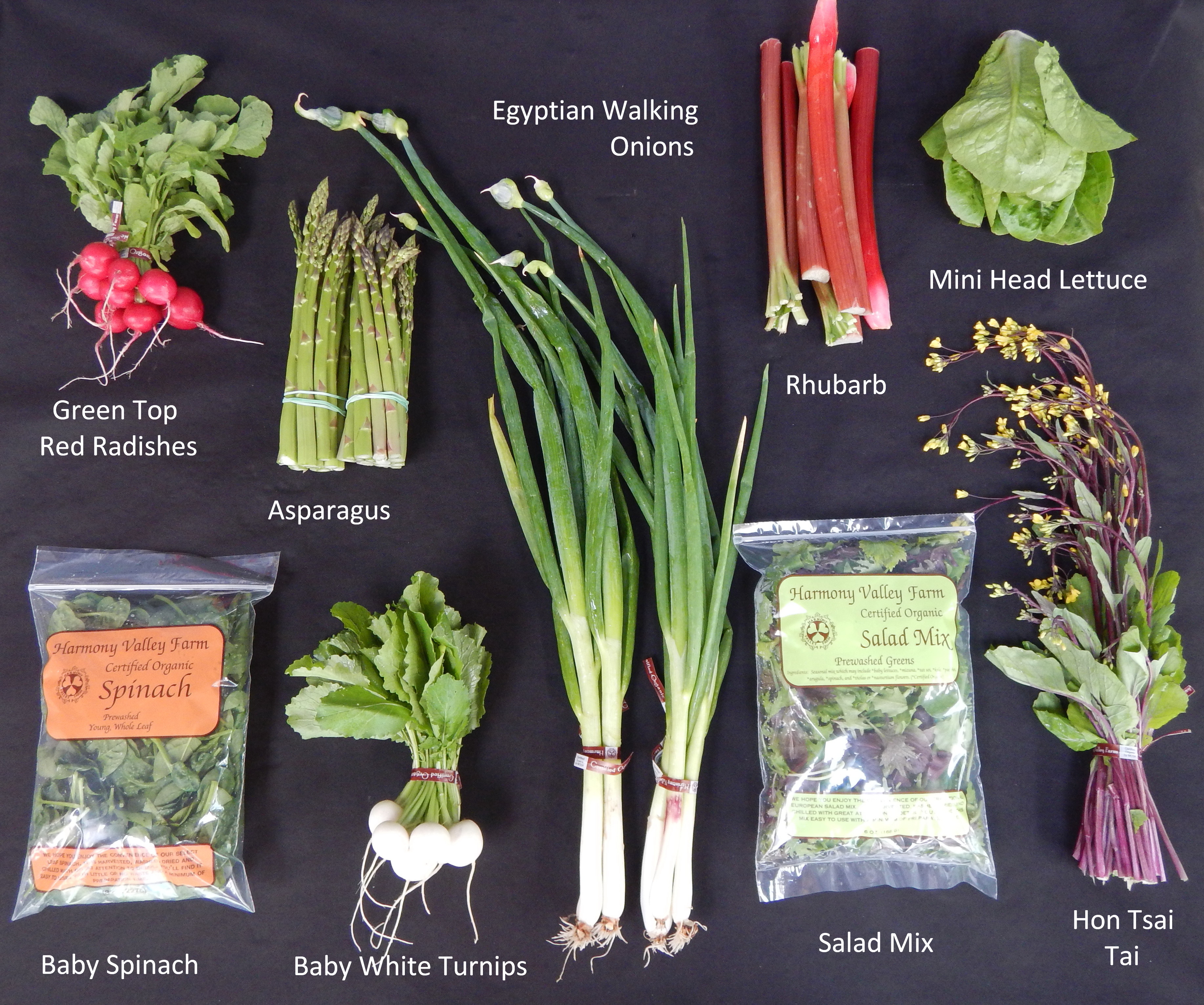
What's In The Box

Baby White Turnips:  These little turnips are also known as “salad” or “hakurei” turnips. Read more about this, our featured vegetable, in this week’s vegetable feature article. You’ll find them to be tender, sweet and do not need to be peeled.  The greens are also edible and may be used in salads or wilted down in soups, stir-fry, soup, etc.

Egyptian Walking Onions:  This week you will receive 2 bunches of this overwintered spring onion.  Use the green tops and white bottoms in any recipe calling for green onions or scallions.  Take note that you may have an onion that is starting to form a top set. The green stalk/leaf that this grows out of may become rigid and tough as the top set matures. If you find this to be the case, discard that portion of the onion or use it to flavor a soup, stock, or broth. Aside from this scenario, the greens are edible.

Asparagus:  This week your box will contain two bunches of asparagus, approximately 0.75# per bunch. We are coming up to the end of asparagus season with maybe one or two more deliveries after this one.

Green Top Red Radishes:  To get the most out of this bunch of radishes, eat the green tops and the roots! The tops maybe made into pesto, stir-fried, added to soup and eaten in a salad.

Little Gem Head Lettuce:  These little mini heads of lettuce are compact varieties that may be grown in small spaces, such as our tunnel greenhouse!  Use this lettuce to make a salad or use them as a “scoop” for other dips and fillings.  

Rhubarb:  These bright red stalks are often used as a “fruit” in desserts and baked goods, but rhubarb is really a vegetable! Take advantage of its sour/tangy flavor where it shines in savory dishes, such as last week’s featured recipe for Persian Rhubarb Stew.

Salad Mix: This is a mix of baby lettuce varieties and greens including tat soi and red Russian kale. Take advantage of the convenience of this item to put together a spring salad very quickly! Use a vinaigrette or light creamy dressing to dress these greens. The key to longer shelf life is to keep this product cold, so return any remaining portion to the refrigerator as soon as possible!

Baby Arugula or Baby Spinach:  Both of these items make a great base for a salad, but both may also be used in other ways aside from salads. Use the arugula as a topping for pizza or pasta.  Blend the spinach into soup or pasta dishes, such as are listed below!

Hon Tsai Tai:  This is a unique spring green that is in a class of vegetables known as a “flowering brassica.”  It is characterized by green leaves, purple stems, and beautiful yellow flowers. You may enjoy this green either raw or cooked. The stems are mostly edible when they are young and tender and the flowers are edible as well!  

Recipe Suggestions & Inspiration For This Week’s Box Contents

Sesame-Soy Hon Tsai Tai Chicken Salad (See Below)

Vegetable Feature: Baby White Turnips

Freshly washed Baby White Turnips
Baby white turnips are a classy little vegetable we often describe as being “pristine.” They are classified as a salad turnip and are tender with a sweet, mild flavor. Both the roots and the green tops are edible and may be eaten raw or lightly cooked. Compared to the common purple top turnip or other storage turnips we grow in the fall, salad turnips are much more mild and subtle in both flavor and texture. So if you think you don’t like turnips, at least give these a try!

Preparation & Usage:
To prepare baby white turnips for use, separate the roots from the greens and wash both well to remove any dirt. Salad turnips have such a thin exterior layer, they do not need to be peeled. They are delicious eaten raw in a salad, or just munch on them with dip or hummus. You can also cook these turnips, but remember to keep the cooking time short as it doesn’t take much to cook them to fork tender. You can simply sauté them in butter, stir-fry or roast them. The greens may be added to raw salads, or lightly sauté or wilt them in a little butter.

Storage Tips:
To prolong the shelf life, separate the greens from the roots with a knife and store separately in plastic bags in your refrigerator.

Growing Information:  
Baby White Turnips in the field
We plant baby white turnips for harvest early in the spring and again in the fall when the growing conditions are cooler.  We harvest them while they are still small and tender, when the sweet flavor matches their delicate appearance.  The other turnips we grow in the fall are meant for storage purposes and have a thicker skin compared to the thin skin of a salad turnip. Baby white turnips also mature much faster than beets, carrots and fennel, etc. so they are a very important part of our spring menus until the other root vegetables are ready for harvest.


Sesame-Soy Hon Tsai Tai Salad with Turnips & Chicken

Hon Tsai Tai
This week’s recipe comes from the Harmony Valley Farm archives. It’s the perfect recipe for this week’s box and over the years has been a favorite amongst members for this time of the season.  This is an entrée type salad that can be served as a meal on its own. This is a recipe you can do all the prep for in advance and then assemble it just before eating. It is best to dress the greens just before serving, so if you are not going to eat it all in one meal, separate the portion you need and only put dressing on this portion.  This recipe makes more dressing than you will likely need for the quantities of vegetables.  Save any extra dressing and use it to make a quick salad to accompany another meal using some of the other greens in your box. You can also repurpose any extra dressing and use it as a marinade for steak or mushrooms. Enjoy!

Yield:  2-4 as an entrée

2 Tbsp soy sauce
4 Tbsp rice vinegar
2 Tbsp honey
3 Tbsp toasted sesame oil
4 Tbsp sunflower oil
2-4 green onions and/or green garlic
1 Tbsp fresh ginger, minced
Black pepper, to taste
½ tsp salt, plus more to taste
½-1 bunch hon tsai tai
4-5 baby white salad turnips, with greens
3-4 red radishes, with greens
1 ½ cups cooked chicken, small dice
1 Tbsp sesame seeds, toasted
  1. In a small mixing bowl, combine the soy sauce, rice vinegar, honey, and sesame oil. Stir well to combine and incorporate the honey. Stir in the sunflower oil.
  2. Thinly slice the lower white portion of the green onions/green garlic. Add the white portion to the bowl containing the dressing mixture. Set aside the green tops. Stir in the onions/garlic, as well as the minced ginger and ½ tsp salt. Set the mixture aside until you are ready to use it.
  3. Prepare the vegetables. Start by removing the leaves from the hon tsai tai stems. Cut or tear the leaves into bite-sized pieces and put them in a mixing bowl. Mince or thinly slice the remaining tender stems and flowers. You can use the entire stem except for the lower 1-2 inches and/or any stems that may be more mature and feel tough. Put the minced stem and flowers in a separate medium sized bowl.
  4. Cut the green tops off of both the turnips and the radishes.  Wash and dry well. Cut or tear both of the greens into bite-sized pieces and add them to the bowl with the hon tsai tai greens.  
  5. Cut the turnips and radishes into quarters and then thinly slice them and add them to the bowl with the hon tsai tai stems. Thinly slice the remining green onion/garlic tops and add them to this bowl as well. Stir to combine all the vegetables.
  6. Add the chicken and half of the dressing to the bowl with the hon tsai tai stems, turnips, and radishes. Stir to combine.
  7. Drizzle some of the remaining dressing over the greens, using just enough to lightly coat the greens. Divide the greens onto 2-4 plates.  Top with the chicken and vegetable mixture. Finish each plate by sprinkling them with toasted sesame seeds.
Recipe by Andrea Yoder, originally published in June 2014.

Wednesday, May 31, 2023

June 1, 2023 - This Week's Box Contents Featuring Baby White Turnips


Cooking With This Week's Box

Baby White Salad Turnips:  
Maple-Glazed Baby White Turnip & Shiitake on Soba Noodles (See below)
Roasted Baby White Turnips & Radishes (See below)
Smoked Salmon Dip with Green Onions
Photo From www.razzledazzlelife.com

Overwintered Potato Onions:  

Hon Tsai Tai:  

Asparagus:  

Green Garlic:  
Spring Lettuce Salad with Roasted Asparagus
Photo from www.foodandwine.com
Roasted Green Garlic & Asparagus Pasta with Greens 

Baby Arugula:  

Salad Mix:  

Green Top Red Radishes:  

Rhubarb:  
Grilled Chicken and Radish Salad
Photo from www.cuisineathome.com

Mini Green Romaine Head Lettuce:  

Pea Vine:  

We’re moving into the month of June, and it is definitely heating up!  Hopefully, that means a strong finish to our asparagus season, but it also means we have a lot more vegetables coming in very soon! This week we’ve added Baby White Turnips to the lineup.  These delicate turnips are a real treat in the spring and they’re gorgeous!  If you’re not a turnip lover based on your experiences with purple top or other fall storage turnips, I hope you’ll give these a try as they are a totally different eating experience!  This week’s featured recipes include Maple-Glazed Baby White Turnip & Shiitake on Soba Noodles (See below) and Roasted Baby White Turnips & Radishes (See below). Of course, they’re also delicious simply cooked lightly in butter or olive oil!

Pea vine is another new vegetable in this week’s box. When pea vine is younger, the stems are tender enough to eat, however they have a tendency to get more tough with time.  I recommend you taste a little bit of the stem. If you find it to be a little stringy, strip the tender leaves off the stems. Don’t throw the stems away though!  They are packed with flavor and may be used to add flavor to vegetable stock or soup. Just steep the stems to extract the flavor and then discard. I included a few of our favorite recipes from the past including Pasta with Asparagus and Avocado-Pea Vine Cream Sauce,  Pea Vine Cream Cheese, and Pea Vine Pesto Pasta Salad.

Fresh red radishes are back in the box and I’ve given you a few ideas for ways to use them in more non-traditional ways.  Check out these two chicken recipes for Pan-Seared Chicken with Crispy Radish Salad and Turmeric Chicken with Lemon Radish Salad.  

These are just a few of this week’s recipe highlights, but I know you’ll find plenty of quick, easy ways to put this week’s vegetable ingredients to use in quick salads as well as some breakfast/brunch appropriate recipes.  I know you always like to know what’s coming up, so I’ll whet your appetite by telling you that we’re likely going to start picking strawberries this week!  Kohlrabi is also very close to harvest as well as more heads of lettuce from the field.  The garlic scapes are also starting to form in the garlic field and we’re hoping to add some cilantro to the upcoming boxes!  Lots more to look forward to as we start to transition from Spring to Summer!

Have a great week and happy cooking!!
-Chef Andrea 

Vegetable Feature: Baby White Turnips

by Andrea Yoder

Baby white turnips are a classy little vegetable we often describe as being “pristine.”  They are classified as a salad turnip and are tender with a sweet, mild flavor. Both the roots and the green tops of baby white turnips are edible and may be eaten raw or lightly cooked. We plant baby white turnips for harvest early in the spring and again in the fall when the growing conditions are cooler. They are intended to be harvested when they are still small and tender. The other turnips we grow in the fall are meant for storage purposes and have a thicker skin compared to the thin skin of a salad turnip. Baby white turnips also mature much faster than beets, carrots, and fennel, etc. so they are a very important part of our spring menus until the other root vegetables are ready for harvest.

While we call them “baby white turnips,” they are often referred to as Hakurei or Tokyo Turnips as they were actually developed in Japan.  As I was researching this week, I found a new tidbit of information about this vegetable. These salad turnips were developed in Japan in the 1950’s at a time when there were food shortages due to World War II.  This vegetable was a good option at that time because they mature in just 5-6 weeks. 

To prepare baby white turnips for use, separate the roots from the greens and wash both well to remove any dirt. Salad turnips have such a thin exterior layer, they do not need to be peeled. They are delicious eaten raw in a salad, or just munch on them like an apple! You can also cook these turnips but remember to keep the cooking time short as it doesn’t take much to cook them to fork tender.  You can simply sauté them in butter, stir-fry or roast them. The greens may be added to raw salads, or lightly sauté or wilt them in a little butter. 

To prolong the shelf life, separate the greens from the roots with a knife and store them separately in plastic bags in your refrigerator. 


Roasted Baby White Turnips & Radishes

Yield:  4 servings

1 bunch radishes
1 bunch baby white turnips
3 Tbsp olive oil
1 tsp kosher salt
Freshly ground black pepper
  1. Move the rack in the oven to the lower middle position. Place a roasting pan in the oven and preheat the oven to 425°F. 
  2. Remove the greens from the turnips and radishes.
  3. Scrub the turnips and radishes well and wash the green tops of both in a sink of cold water. 
  4. Cut the turnips and radishes into wedges. Halve the small ones, and quarter or sixth the larger ones. 
  5. In a large bowl, toss the root vegetables with 2 tbsp of olive oil and ½ tsp of salt. Remove the hot roasting pan from the oven and spread the vegetables into the roasting pan, arranging them so most have a flat side down in the pan. 
  6. Return the pan to the oven and roast for 15 minutes, stirring and turning the vegetables at 7 minutes.
  7. Dry the washed greens to remove excess water. Roughly chop the greens into bite-sized pieces, then toss them in the large bowl with the rest of the olive oil and salt.
  8. Pull the roasting pan out of the oven, turn, and stir the vegetables again and then make a space for the greens. Spread out the greens in the space and return the pan to the oven.
  9. Roast for 5 minutes more or to your liking.
Recipe sourced from www.justalittlebitofbacon.com.


Maple-Glazed Baby White Turnip and Shiitake on Soba Noodles

Yield:  2 servings
Photo from www.pbs.com

1 bunch baby white salad turnips
2 oz shiitake mushrooms (about 8 medium)
¼ cup light, un-toasted sesame oil or neutral vegetable oil
1 ½ Tbsp maple syrup
¼ tsp salt
½ pound buckwheat soba noodles
2 Tbsp tamari or soy sauce
1 Tbsp rice vinegar or mirin
1 Tbsp fish sauce
Optional:  Fresh cilantro and toasted sesame seeds for garnish
  1. Separate the turnip leaves from the turnips and wash both well. Pat the leaves dry and then finely slice the leaves. Cut the turnips into bite-sized pieces. Remove the tough stems from the shiitake mushrooms. Slice the shiitake tops thinly. 
  2. In a skillet, warm 2 Tbsp of light sesame oil or other neutral vegetable oil over medium heat.  Add the chopped turnips, mushrooms, and salt into the warmed oil and sauté for about 1 minute. Add the 1 ½ Tbsp maple syrup and 2 Tbsp of water.  After about 5 minutes, the water will have evaporated, and the turnips and mushrooms will be nicely glazed.  At this point, add the sliced turnip greens and cook until wilted, about 1 more minute.  Remove from heat.
  3. While you prepare the glazed turnips and mushrooms, place a large pot filled with 8 cups of water on high heat.  Once the water is boiling, add the soba noodles. Cook according to package directions. Do not overcook the noodles. As soon as they are done, drain all the water out and rinse the noodles in cold water to remove excess starch (this gives the noodles a lovely texture and ensures they won’t clump).  If the noodles are too cold after rinsing, quickly dunk them in a fresh pot of boiling water.
  4. In a medium-sized bowl, mix the remaining 2 Tbsp sesame oil, the tamari or shoyu sauce, the rice vinegar, and the fish sauce. Stir well and then add the drained noodles, tossing gently to coat the noodles well.
  5. Serve the noodles with the glazed turnips and mushrooms and garnish with a little cilantro and sesame seeds.
Recipe sourced from wwwpbs.org with original recipe credit given to Aube Giroux from Kitchen Vignettes.

Wednesday, May 26, 2021

May 27, 2021 - This Week's Box Contents, Featuring Baby White Turnips!

Cooking With This Week's Box

Green Garlic:

Potato Onions:

Asparagus:

Baby Spinach:

Rhubarb:

Salad Mix:

Purpella Radishes:

Hon Tsai Tai:

Baby White Turnips:
Vegetarian Carbonara with Baby White Turnips & Greens (See Below)

Baby Bok Choi:

Mini Romaine Head Lettuce:

Welcome to another week of Cooking With the Box!  This week our focus is still on looking for more ways to utilize greens, especially the greens on this week’s baby white turnips.  This week’s featured recipe for Vegetarian Carbonara with Baby White Turnips & Greens is a vegetarian take on the traditional Italian pasta dish called Carbonara.  Carbonara is a pasta dish that utilized beaten eggs and cheese along with lemon juice to create a sauce that lightly coats pasta.  Traditionally it also includes some type of cured meat such as pancetta or bacon, which adds significant richness to the dish.  While I really like traditional carbonara, I feel like it can be a very heavy dish.  This is why I was intrigued by the bacon-free version I came across at alexandracooks.com.  I used her base recipe and adapted the recipe to include turnips, mushrooms, and smoked paprika.  I like to use smoked paprika in dishes where I want a little bit of smoky richness without using smoked pork products.  If you have greens building up in your refrigerator or if you are not sure what to do with the tops on the turnips and radishes, this is a great recipe.  You’ll turn a big pile of greens into hardly anything!

We’re excited to welcome rhubarb into our spring line up this week!  While it’s most commonly used to make rhubarb pie, it can be used in a whole host of other applications, both savory and sweet.  In addition to the lentil dish I provided a link for, rhubarb can also be used in stir-frys, barbecue sauce and so much more!  You’ll find some of these types of recipes if you visit our searchable recipe database.  Rhubarb is also an easy vegetable to preserve, so if you aren’t in the mood to use it this week, consider checking out the link for how to freeze it.

Cannellini Beans with Spinach
photo by Eva Kolenko for epicurious.com
We continue this week with our greens-rich selections.  If you didn’t have a chance to read last week’s article entitled “It’s Time To Eat Your Greens!” I would encourage you to do so this week.  Greens are packed with nutrients and give us energy and vitality.  In this article I share some tips and tricks for how you can include them in your meals and diet.  Last week we also featured a simple recipe for Greens & Green Garlic Pesto that we used to make a pasta dish.  This base pesto is very tasty, especially the second day.  Last week I used it throughout the week as a spread on our sandwiches for lunch, in scrambled eggs for breakfast, and just spread on crackers!

I hope you enjoy another tasty week of spring cooking.  It won’t be long before we start moving into some of our late spring/early summer selections.  Last Sunday we picked the first (and only) slightly pink strawberry.  Depending upon the weather, there’s a chance we’ll be picking strawberries within the next week or two.  We also have our eye on more head lettuce, cilantro, garlic scapes and spring scallions.  If you have not yet joined our private CSA Facebook Group, I encourage you to do so now!  So far this year there have been some excellent posts with great ideas for recipes and how to use all the items in the box.  It’s also a great place to ask questions and get input on recipes and cooking ideas.

Ok, that’s a wrap for this week!  Have a good week and I’ll see you again soon!---Chef Andrea

Vegetable Feature: Baby White Turnips

By:  Chef Andrea Yoder

Description: Baby white turnips are a classy little vegetable we often describe as being “pristine.”  They are classified as a salad turnip and are tender with a sweet, mild flavor.  Both the roots and the green tops are edible and may be eaten raw or lightly cooked.  Compared to the common purple top turnip or other storage turnips we grow in the fall, salad turnips are much more mild and subtle in both flavor and texture.  So if you think you don’t like turnips, at least give these a try!

Preparation & Use: To prepare baby white turnips for use, separate the roots from the greens and wash both well to remove any dirt.  Salad turnips have such a thin exterior layer, they do not need to be peeled.  They are delicious eaten raw in a salad, or just munch on them with dip or hummus.  You can also cook these turnips, but remember to keep the cooking time short as it doesn’t take much to cook them to fork tender.  You can simply sauté them in butter, stir-fry or roast them.  The greens may be added to raw salads, or lightly sauté or wilt them in a little butter.

Storage:  To prolong the shelf life, separate the greens from the roots with a knife and store separately in plastic bags in your refrigerator.

Growing Information:  We plant baby white turnips for harvest early in the spring and again in the fall when the growing conditions are cooler.  We harvest them while they are still small and tender, when the sweet flavor matches their delicate appearance.  The other turnips we grow in the fall are meant for storage purposes and have a thicker skin compared to the thin skin of a salad turnip. Baby white turnips also mature much faster than beets, carrots and fennel, etc. so they are a very important part of our spring menus until the other root vegetables are ready for harvest.

Vegetarian Carbonara with Baby White Turnips & Greens

Yield:  4 servings

12 ounces pasta (fettucine, papparadelle, linguini, or any small pasta that holds sauce well) 
2 Tbsp olive oil
1 ½ cups baby white turnips, medium dice
1 ½ cups cremini or white button mushrooms, medium dice
½ cup thinly sliced green garlic
½ tsp red pepper flakes (optional)
½ tsp smoked paprika
8-10 cups greens, roughly chopped*
1 tsp salt, plus more to taste
Freshly ground black pepper, to taste
2 large eggs
½ cup grated Parmesan cheese, plus more for serving
1-2 Tbsp fresh lemon juice, plus more to taste

  1. Boil a large pot of salted water and cook pasta to al dente according to package instructions.  When the pasta is cooked, remove 1 cup of the pasta water and set it aside before you drain the pasta.  
  2. Meanwhile, heat the olive oil in a large sauté pan over medium heat.  When the oil shimmers, add the turnips, mushrooms and green garlic.  Sauté for 5-7 minutes or until the vegetables are tender but not completely cooked.  Add the red pepper flakes and smoked paprika.  Stir to combine and sauté an additional 30 seconds.  
  3. Add the chopped greens to the pan and sprinkle with 1 teaspoon of salt and freshly ground black pepper.  Continue to cook over medium to medium-high heat until the greens wilt down. Use tongs to flip the greens around periodically to help them wilt.  
  4. While the greens are cooking down, prepare the carbonara sauce.  In a medium bowl, beat the eggs, then whisk in the parmesan and 1 Tbsp lemon juice.  Slowly whisk in ¼ cup of the reserved pasta water.
  5. Once the greens are wilted down, reduce the heat to low and add the drained pasta to the pan.  It’s important to reduce the heat before adding the egg mixture.  If the pan is too hot the eggs will scramble instead of making a nice, smooth sauce.  
  6. Pour the egg mixture over the pasta and vegetable mixture.  Stir to combine and simmer, stirring frequently for 5-7 minutes or until the eggs and cheese have formed a light sauce that evenly coats the pasta.  Taste and adjust the seasoning with additional lemon juice, salt and freshly ground black pepper.  You may also wish to add a little more pasta cooking liquid if the sauce seems too “tight” or thick.  
  7. Once seasoned to your liking, serve warm with grated Parmesan as desired.
*Note:  You may use any greens you have available.  I suggest using the green tops from the turnips along with spinach, radish tops, hon tsai tai, bok choi or sauté mix.  Basically, anything that will wilt down into this pasta dish will work!  It will seem like there are a lot of greens, but once they wilt down the quantity will be appropriate for this dish.

Recipe based on “Weeknight Carbonara: No Bacon, Loaded with Greens” from alexandracooks.com.

Wednesday, May 27, 2020

May 28, 2020 - This Week's Box Contents, Featuring Baby White Turnips!

Cooking With This Week's Box


Baby Spinach: Spinach & Filo Feta Bundt Cake; Bright Spring Salad; Mini Ham & Cheese Spinach Breakfast Pies

Egyptian Walking Onions: Miso Butter Brothy Beans with Scallions; Korean Spicy Green Onion Salad

Green Garlic: Spicy Pork & Turnip Soup with Soy-Pickled Eggs (see below); Radiant Bok Choy Soup; Korean Spicy Green Onion Salad

Asparagus: Bright Spring Salad; Asparagus Ribbon Salad

Red Radishes and/or Diana Radishes: Bright Spring Salad; Buttered Radish Tartines

Baby Arugula: Bright Spring Salad; Asparagus Ribbon Salad; Arugula Gimlet

Hon Tsai Tai: Radiant Bok Choy Soup; Hon Tsai Tai & Shiitake Potstickers with Sesame Honey Dipping Sauce

Little Gem Head Lettuce OR Baby Bok Choi: Bright Spring Salad; Radiant Bok Choy Soup

Saute Mix: Bright Spring Salad; Mini Ham & Cheese Spinach Breakfast Pies

Baby White Turnips: Spicy Pork & Turnip Soup with Soy-Pickled Eggs (see below); Turnip Greens Pesto Pizza


Turnip Greens Pesto Pizza
A little rain and some heat means things are happening fast around here!  You can almost see the radishes and asparagus growing as you watch them!   This week we have another hearty box of greens to enjoy along with gorgeous little baby white turnips!  So lets get started cooking!  This week’s featured recipe comes from Andrea Bemis’ Dishing Up The Dirt blog.  If you haven’t checked out Andrea’s blog, you really should.  Her recipe collection is an awesome resource for finding seasonal recipes you can make from a CSA box.  She herself is a farmer and grows vegetables for CSA and market customers.  She gets it!  This week’s recipe for Spicy Pork & Turnip Soup with Soy-Pickled Eggs (see below) is very easy to make and full of flavor.  Soy-Pickled Eggs might seem a little odd, but I’m telling you they are delicious.  Really, it’s the combination of the soup, the egg and a little kim chi that makes this soup a keeper.  Several years ago I featured Andrea’s recipe for Turnip Greens Pesto Pizza.  That’s right, use the greens to make a pesto which is the sauce for the crust.  It’s delicious!


Arugula Gimlet, photo by Alex Lau for bonappetit.com
Once again, I’m excited to see so much great interaction in our Facebook group!  Way to find some good uses for our greens!  This Spinach & Filo Feta Bundt Cake is a masterpiece that will blow you away, both in appearance and taste.  Someone also shared this recipe for an Arugula Gimlet.  Arugula in a cocktail?  Why not?!

We’ve seen pretty hearty harvest numbers for asparagus this week, so enjoy the big bunch!  I have two asparagus salad recipes to share this week.  The first is from loveandlemons.com and is called Bright Spring Salad.  Take your pick as to what you want to use for the base of the salad.  Baby arugula, lettuce, saute mix or spinach would all work.  Top it off with asparagus, radishes, roasted chickpeas and a light vinaigrette.  The other asparagus salad I want to recommend is this Asparagus Ribbon Salad.  This is a creation by Sarah Britton from My New Roots blog.  She uses baby arugula tossed with light honey lemon vinaigrette as the base and tops it off with shavings of asparagus spears, pecorino cheese and toasted hazelnuts!


Mini Ham & Cheese Spinach Breakfast Pies
photo from runningtothekitchen.com
I like to work as many vegetables into breakfast as I can.  I also like things that are easy to eat on the go, such as these Mini Ham & Cheese Spinach Breakfast Pies.  This recipe calls for shallot and garlic cloves, but you can sub in green onions and green garlic.  You can also use saute mix or spinach as the green.

This week we are sending one of our favorite spring specialty greens, hon tsai tai.  This green is related to bok choi, so you can really substitute it for bok choi in any recipe.  I came across this recipe for Radiant Bok Choy Soup.  There is a lot of nutritious goodness in a bowl of this soup!  The broth is based on coconut milk flavored with garlic, ginger, onions and turmeric.  You can also add mushrooms and tofu if you like.  If you’re looking for a fun weekend cooking project, consider making Hon Tsai Tai & Shiitake Potstickers with Sesame Honey Dipping Sauce featured in last year’s newsletter!

This week we’re harvesting overwintered Egyptian Walking onions as well as Potato Onions.  Both of these are multiplier onions that we plant in the fall when we plant garlic.  You can use them as you would any other green onion, but do notice their unique flavors.  Both of these onions have a very distinct oniony flavor and are very savory.  I like this simple recipe for MisoButter Brothy Beans with Scallions which really lets the onion stand out.  I also like this recipe for Korean Spicy Green Onion Salad.  Serve this as a little condiment or side salad alongside grilled meats or other barbecued items.

Do you have any radishes hanging out in the refrigerator?  If so, you’re lucky!  Use them to make these simple, but very tasty, Buttered Radish Tartines.  There is nothing like the combination of butter, salt and fresh radishes in the spring!

That brings us to the bottom of another box!  As we take a glimpse into the next week, it looks like we’re going to start harvesting rhubarb and likely salad mix!

Have a good week—

Chef Andrea

Vegetable Feature: Baby White Turnips


By Chef Andrea

We call them Baby White Turnips, but they are also often referred to as Hakurei or salad turnips.  Every year I gravitate back to the same adjectives to describe this vegetable.  Simply put, they are pristine with their bright white roots and contrasting green tops.  You’ll find these turnips to be mild flavored, tender & slightly sweet.  The edible greens have a mild mustard flavor and are delectable, so make sure you get your money’s worth and put them to use!  Both the greens and the turnips are tender enough to either eat raw or just lightly cook them.

Baby white turnips thrive in the cool of spring and again later in the fall.  If you think you don’t like turnips, I encourage you to give these a try.  Likely your opinion was based on improperly cooked storage turnips.  Compared to the common purple top turnip, or other storage turnips, salad turnips are much more mild and subtle in both flavor and texture.  The storage turnips we grow in the fall are meant for storage purposes and thus have a thicker skin compared to a salad turnip.  Baby white turnips also mature much faster and are ready ahead of other early season root crops such as beets and carrots. 
To prepare the turnips for use, wash both the roots and greens well to remove any dirt.  You can prolong the shelf life by storing the greens separate from the roots.  These turnips have such a thin exterior layer, there is no need to peel them.  They are delicious eaten raw in a salad, or just munch on them with dip or a little salt.  You can also cook them, but remember to keep the cooking time short and the preparation simple.  One of our favorite ways to eat them in the spring is simply sautéed or steamed in butter with the greens wilted on top.  They are also delicious stir-fried or roasted.  The greens may be added to raw salads, turned into pesto, or lightly sautéed, steamed or wilted.

Creamy Turnips, Grits & Greens
Baby white turnips have become more popular in recent years, so the likelihood of finding some interesting recipes is greater now than when I was first introduced to them over 10 years ago!  For starters, check out our recipe archives where you’ll find other recipes such as Creamy Turnips, Grits & Greens; White Turnip Salad with Miso Ginger Vinaigrette and Turnip Greens Pesto Pizza.  If you’ve been with us in past years you may know these are amongst my favorite things to make with these turnips!  Another great place to find more recipes is Andrea Bemis’s blog, Dishing Up the Dirt .  I’ve sourced recipes from Andrea’s blog for several years and keep going back because she has a lot of good ones!  She’s also a vegetable farmer who develops seasonal recipes for her own family and her CSA members.  She just might have the largest original collection of recipes using baby white turnips on the internet!  I popped over to her blog last week looking for a specific recipe only to find she recently posted a new recipe featuring baby white turnips!  I couldn’t resist, so one of this week’s featured recipes is Andrea’s Spicy Pork & Turnip Soup with Soy-Pickled Eggs.  Whatever you end up making, I hope you enjoy these pretty little beauties as much as I do!

Spicy Pork & Turnip Soup with Soy Pickled Eggs


Yield:  6 servings

Soup:
1 pound ground pork
2 Tbsp finely grated fresh ginger
¾ tsp crushed red pepper flakes
½ tsp ground cumin
Hefty pinch of salt and black pepper
1 Tbsp olive oil
3 stalks green garlic, finely chopped (white and green parts), or garlic cloves
1 bunch baby white turnips, with greens
4 cups water
2 Tbsp low sodium soy sauce + additional to taste
1 tsp fish sauce

Optional (But highly Recommended) Toppings:
1-2 Tbsp kimchi
1 Tbsp fermented chili paste

Soy Pickled Eggs:
6 eggs
2 cloves garlic, peeled and left whole OR 1 stalk green garlic cut into ½” pieces
½ tsp crushed red pepper flakes
¾ cup low sodium soy sauce
2 Tbsp rice vinegar
  1. Gently lower eggs into a large saucepan of boiling water.  Cook 7 minutes.  Using a slotted spoon, transfer to a bowl of ice water and let cool until you can easily handle them.  Peel the eggs and set aside.
  2. Meanwhile, bring garlic, pepper flakes, soy sauce, rice vinegar and 2 cups of water to a boil in a medium size saucepan.  Reduce the heat and simmer for about 5 minutes.  Remove from the heat and add the eggs.  Let the eggs marinate in the mixture for at least one hour or in the fridge overnight.
  3. Prepare the turnips by separating the green tops from the turnips.  Wash both well, then cut the turnips into ½-inch chunks.  Roughly chop the greens into bite-sized pieces.  Set both aside.
  4. Mix the pork, ginger, red pepper flakes, cumin, salt and pepper in a large bowl until combined.  Set aside.
  5. Heat the oil in a large Dutch oven or soup pot over medium high heat.  Add the green garlic and cook for about 1 minute, stirring often.  Add the pork and use a wooden spoon to break up the meat a bit.  Cook until lightly browned and no longer pink.  About 5-7 minutes.  Add the water, turnips (reserving the greens for later) and bring to a boil.  Reduce the heat and simmer until the turnips are fork tender, about 10 minutes.  
  6. Add the turnip greens, soy sauce and fish sauce and give the pot a good stir.  Simmer for about 5 minutes longer to let the flavors meld.  Taste for seasonings and adjust as needed.
  7. Cut the soy pickled eggs in half.  Portion the soup into bowls and serve with the quick pickled eggs and fermented chili paste and/or kimchi.  
Recipe borrowed from DishingUpTheDirt.com, a blog by Andrea Bemis!