Showing posts with label Strawberry Day. Show all posts

Wednesday, June 17, 2020

June Farm Update—Welcome to Summer!

Gorgeous Potato Field under blue skies, HVF 2020
Here we are, just past the halfway mark in the month of June.  The first day of summer is approaching at the end of this week on Saturday, June 20.  So, as we do an official transition from spring into summer we thought it fitting to do a farm update so you know what’s happening in our valley!  This Sunday, June 21, is also the day we were scheduled to host our annual Strawberry Day event.  When the pandemic infiltrated our world back in March we hoped for a quick resolution and return to “normal,” however we quickly realized we had to be realistic that this wasn’t going to end as quickly as we hoped it may.  So, as the pandemic continues to persist we are cancelling Strawberry Day for the first time in HVF history!  While we’re still doing our best to minimize contact with the outside world, continue to wear masks and practice social distancing, continue daily cleaning and sanitizing, etc, we also continue to farm and do what we know how to do best—grow vegetables.  So while we can’t invite you to join us on a wagon tour to experience our fields and valley views for yourself, we’ll do our best to take you on a virtual tour through this week’s article, complete with pictures Andrea and Richard have been taking over the past few weeks!  So, get comfy and claim your seat on our virtual wagon as we take you through the fields and update you on farm happenings!

May 2020:  HVF CSA Box # 3
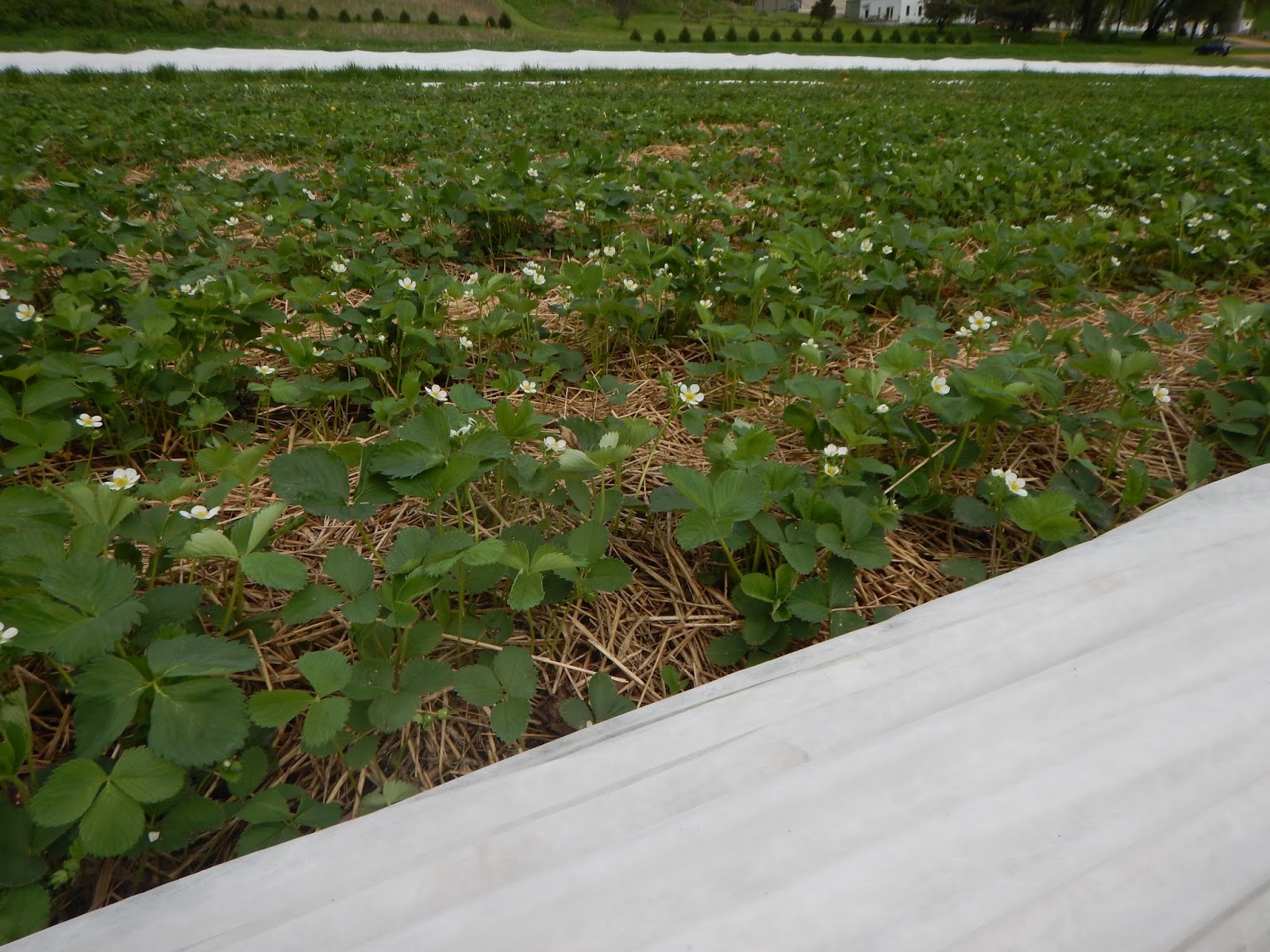
As we write this article we’re preparing to pack our 7th CSA box of the 2020 season and this week we’re welcoming our Peak Season Vegetable share members.  While our early season boxes were filled with a wide variety of greens, radishes, ramps and asparagus, we’re just starting to see the transition from spring crops to summer crops.  We started picking strawberries last week and while they taste quite delicious, we have to be honest with you that we are not going to see prolific yields as we have in previous years.  When we pulled the field cover back early this spring, and loosened the straw mulch, we found that some of the plants had not survived the winter.  What exactly was the cause?  It’s hard to say, but likely a combination of a warm March followed by a cold April.  This is our first year to harvest from this planting.  While it’s a bit disappointing, we’re hopeful that the plants will shoot out runners to help fill in the gaps.  If we manage the field correctly after we’re done picking this year, we may be able to establish more plants for next year’s’ harvests.  So, while we will still have strawberries, there won’t be as many as in past years.  Now that we have that bit of news out of the way, lets move on to some other fields!

Look closely and you'll see the cutest little Green Zucchini!
By the end of this week we’re hoping to start picking the first zucchini and in just one more week we’ll add cucumbers to the harvest list!  We had a field cover on these plants after we transplanted them back in May, with hopes that a little extra heat gain would encourage their growth.  We didn’t intend to take the cover off, but Mother Nature had a different idea when she sent high winds our way a few weeks ago!  So, we let her do her thing and once the cover was off we were pleased to see nice, healthy plants!  Right next to these crops we planted our first planting of melons and watermelons.  The plants are still small, but they look very healthy.  Manuel Morales and Jose Antonio have been working hard irrigating many crops.  Crops such as zucchini and melons are planted on beds covered with plastic mulch and have drip lines running underneath the plastic to deliver not only water but also nutrients and beneficial microbes to support the plant’s growth and fruit development.  Before the melon vines grow too much and extend into the wheel tracks in between the beds, we are trying to maximize every effort to control the weeds that seize every opportunity to grow in open spaces. 
Jamie & Felix running the Kult Cultivator
through the melon field
Last Saturday Jamie and Felix used our Kult cultivator set up to clean up this field. They are doing a great job as a 2-man weed killing team!  Thanks to the efforts of all these guys, we’re hopeful we’ll have some delicious melons to send your way in July and August!

We are very thankful all of our crew members remain healthy and well.  At the end of May we greeted two more crew members who returned from Mexico after receiving their visas! Juan Pablo and Alfredo are brothers and have worked at our farm for many years.  They had to take last year off, but were ready to come back this year and we are so glad they did!  Once they arrived we greeted them from a distance at the airport where we left a vehicle for them along with keys to a house we had kept vacant and reserved for “quarantine” needs.  With a tank full of gas, a cell phone so we could communicate with them, and a fully stocked kitchen, they quarantined themselves away from the rest of the crew and the community.  
Juan Pablo & Alfredo spending time together
as brothers weeding our onions!
They did have a very productive quarantine spent going between their house and whatever weeding mission they were assigned to for the day.  Over the past two weeks they have spent a lot of quality time together bonding as brothers and as yet another 2-man weed killing team!  They have managed to hand weed horseradish, early beets and carrots, parsnips and the entire onion field!  Thankfully they reached the end of their quarantine healthy and well, still thankful to be brothers, and they by no means put themselves out of a job—the weeds continue to grow!
Saturday, June 13--Mulching and Transplanting Tomatoes!
Summer isn’t summer without tomatoes and basil!  We’re happy to report we now have two fields of tomatoes planted!  The first planting has already been staked and tied to keep the plants growing upright both to keep the fruit clean as well as to allow airflow through the foliage.  Pretty soon we’ll need to add another string to the stakes and will continue to weave the plants into place as they grow upward.  Last weekend the mulching crew had the transplanting crew right on their heels as we worked hard to achieve our goal of getting the second tomato field planted.  We had some rain the week before as well as about 2 inches earlier in the week.  The fields were too wet to work in, but the tomato plants were growing quickly in the greenhouse turning from small plants to tomato trees right before our eyes!  They really needed to get to the field before they got much bigger or we would risk breaking them when we tried to plant them.  The crew pulled it off and the field looks great! 

Basil Planting #1 looking quite beautiful
after the cover was removed!
As for the basil, we have planted two of our five plantings in the field and have a third one in the greenhouse that will be ready to take to the field in a week or so.  The early plantings of basil also get covered with a field blanket to protect the delicate leaves from chilly spring nights, but also to trap heat to accelerate growth.  We pulled the cover off at the end of last week and were pleased to see beautiful basil plants underneath!  If you look closely at the plants you can see them smiling, now fully exposed to the sun and emitting a sweet, herbal fragrance in the air all around them!  We should also mention the pepper and eggplant fields look quite nice and we’re hopeful they’ll produce well come late summer.

While we’re just beginning summer, we’re already looking ahead to fall.  After a two week delay in getting our sweet potato slips from North Carolina due to poor weather conditions, we were able to get the last shipment of plants last week and by the end of the week the sweet potato field was completed.  The winter squash field has also been planted and we’ll be transplanting and planting the first of our fall broccoli, cabbage, rutabagas, etc later this week.  We also have a gorgeous field of celeriac that the guys have done an excellent job of cultivating and hand weeding.  I have a feeling summer is going to fly by and fall will be here before we know it!

Precision cultivating of cilantro
Cilantro, dill and red radishes are pretty important crops for our farm, not only because we like to include them in CSA boxes from time to time, but also because they are important wholesale crops for us.  We’ve had some very abundant crops this spring which we’re very thankful for!  Our harvest and washing crews have been bringing in about 15,000 bunches or more of cilantro each week for the past few weeks.  In order to keep a constant supply of these crops we have to plant them every week, which means Amy stays busy keeping the seed containers filled and managing inventory.  Tomas, Manuel, Luis and Rafael have helped not only plant the crops, but also have been doing a good job with timely flame weeding and mechanical cultivation to kill weeds.   Did we mention the weeds continue to grow?

One thing we can hardly wait to eat are freshly dug new potatoes!  It won’t be long before those tender-skinned new potatoes with red skin and creamy white flesh are ready for harvest.  If you’ve never eaten a freshly dug potato, you are in for a special treat!  The potato field looks quite nice and we spotted the first potato blossom at the end of last week!  What else goes nicely with fresh potatoes?  How about some of those tender little carrots with their green tops still attached?  Or maybe the first beets of the season?  Yes, those are all coming within the next few weeks as well.
Immature Broccoli head hidden amongst the leaves
In the meantime, we have our eyes on the second half of our first crop of broccoli and there are three more very nice crops coming up behind it!  Within the next week or two we’ll be cutting one of our favorite early season cabbages, the beloved sweetheart salad cabbage.  Cauliflower will also be coming soon.  We anticipate we’ll need to tie the first planting by the end of this week.  Why would we do that?  When we “tie” cauliflower we wrap a rubberband around the leaves to hold them together.  This keeps the plant closed in order to keep the head of cauliflower from being exposed to the sunshine thereby blanching it so it’s snowy white.

Lupe planting Ginger in the cold frame greenhouse

You asked for ginger, and you will get ginger!  On last year’s survey this was one of the most frequently requested crops you asked us to grow this year.  Last weekend Jose Antonio, Simon, Tomas, Lupe and Jorge worked hard to get the ginger planted in our cold frame greenhouse.  Hopefully we’ll have some nice baby ginger to send your way in October or November!

We can’t give a field report without mentioning garlic!  Can you believe we’ll be harvesting this year’s garlic crop in less than one month!?!  Yikes!  We’re hopeful that we’ll have a bountiful harvest and so far things are looking good.

We hope you continue to enjoy this journey through the seasons with us, embracing each week and the bounty in each box.  We have so many more delicious things to share with you, so get ready to have some fun!   Thus concludes our virtual wagon tour.  We hope you enjoyed the fresh country air, the wind in your hair, blue skies and a little time in nature.  Until the next time…….Farmers Richard, Rafael and Andrea

Wednesday, June 5, 2019

June 2019 Farm & Crop Update

By Farmer/Chef Andrea

A sunny day in the valley & a view of our gorgeous garlic crop!
Here we are in the first week of June and it’s FINALLY starting to feel like early summer!  Strawberries will be ripening soon and the zucchini plants have the cutest little fruit on them.  We’ve had a good, yet cold and wet start to this year.  Every good chat with a farmer should include some talk about the weather, so here’s our report.  In April & May we had 8 inches of snow plus some hail, 11.25 inches of rain and only 12 dry days!  Through it all, our crew has been fantastic!  We had some days when it was too wet to do field work, so some crew took a little time off.  As soon as the weather cleared and the fields dried out just a bit, they were back out working hard with focus and determination to get things planted, cultivated, etc.  They’ve worked some longer days when necessary as well as some weekends to help keep us on track.  In Richard’s own words, “Considering the conditions we’ve had, I think we’ve done darn good!”

Despite a few weather delays, we’ve been able to get things planted in a timely manner.  Our greenhouses are pretty empty right now, which is exactly as it should be if we’re on schedule with transplanting.  Last week we were biting our nails as our beautiful tomato plants grew taller and taller in the greenhouse while it rained outside.  It’s easiest to transplant them when they are short or we risk breaking them.  Thankfully, we were able to get them in the field by the end of last week and we didn’t lose too many to breakage!  By the end of the day Saturday they were standing up tall and looking perky with a nice bed of straw mulch lining the wheel tracks.

There's a wolf in the field!  Oh wait, that's a pumpkin!
Last Friday, we pulled out our second water-wheel transplanter and had a second crew to transplant our first melons and watermelons.  As if we didn’t already have enough to transplant, we also knew our first shipment of sweet potato plants was on its way.  When they come in, they need to be transplanted as soon as possible.  UPS delivered them late Friday afternoon and within less than an hour the tomato planting crew was ready to move on to their next mission.  Tomas came in to get the first few boxes of sweet potato plants and they hustled to get some planted before the end of the day.  On Saturday morning, the other transplanting crew joined them and collectively they were able to plant them all with a little extra time to also plant jicama and pumpkins!  We’re expecting another shipment of plants to arrive this Thursday, so hopefully we’ll have the field totally planted by the end of the week! While they don’t look like much right now, we’re crossing our fingers for an awesome sweet potato crop!

This year's potato field, freshly cultivated!
While we’re talking potatoes, I might add that our potato field looks awesome!  We were able to utilize the dry fertilizer applicator on the planter this spring which allowed us to apply fertilizer in the furrow as the seed was being planted.  It was worth the extra effort as the plants are growing nicely and look very healthy.  The cultivating crew has stayed on top of weed control, which also makes this a lovely field to see.  Look for some delicious early potatoes in your box coming up in July!

Speaking of lovely fields, I need to mention our onion field.  Not only are the onions looking really healthy, but we’re already on top of hand weeding so the field is clean.  When you see the field you might say, “Well it still looks like there are a lot of weeds in between the beds!”  Wrong! The green in between the beds is actually white Dutch clover and creeping red fescue, short stature cover crops intentionally seeded  between the beds.  This is a new technique Richard is implementing with crops planted on beds covered with plastic mulch.  There are several reasons for this.  First, it’s always challenging to control weeds in between the beds.  If it gets too wet, we can’t get in to cultivate.  If the onions get too tall, we can’t pass through with a tractor or we risk damaging onion tops.  So one reason is to compete against weeds.  Another reason is to establish a good root system to hold the soil in place.  If we get hard rains, the water drains off the fields by running down the wheel tracks between the beds.  Unless we have something to hold the dirt in place, the water will wash it away.  Lastly, any cover crop will add to the health of the soil.

Onion Field with Interseeded Cover Crop
What else do we have to report on?  Well, the first crop of green beans are up, fenced to keep the deer out and look like a really good stand.  It’s always challenging to germinate the first crop when the soil is cold and wet, but we managed to get a good stand the first time out!  Our first crop of sweet corn is also up, although it’s a bit of a thin stand.  Some of the seed simply didn’t germinate in the cold, wet soil.  Don’t worry, we have second plantings of corn, beans and edamame already planted and up!

This week's cilantro crop....as far as the eye can see!
While we’ve been busy getting crops planted, we’ve also been harvesting early season vegetables for your boxes as well as selling what we have available to our wholesale and retail partners.  We’re happy to have more to offer and are pleased our first few crops of radishes and cilantro are yielding well! These are some of our major “bread and butter” crops.  In addition to harvest, it’s also haymaking time!  Over the weekend we cut our first planting of hay, got it dried and baled before Tuesday morning’s rain.  In addition to hay, we have some other nice fields of cover crops that are ready for their next phase.  Some of the cover crops we planted last fall will be harvested for use as mulch in other vegetable fields.  In other fields, we’ll chop the cover crop plants back onto the field and then incorporate the plant matter back into the soil.  This is called “green manure.” 
Richard standing in a field with four different cover crop plants

I walked through one field with Richard and the rye grass was nearly as tall as him!  In addition to rye grass, there were also thin stalks of cereal rye as well as hairy vetch and mammoth clover.  Why so many plants in the mix?  Well, each plant has a purpose.  Vetch and clover are nitrogen fixing which means they extract nitrogen from the atmosphere and convert it to nitrogen that is bioavailable to plants.  Rye serves as a scavenger crop meaning it takes nitrogen from the soil and stores it.  Before the cover crop was planted last fall, we applied compost to the field.  At that time, only half of the nitrogen potential was bioavailable.  The rye, through its root system, scavenged and took up the remainder and stored it for us.  Now, when we chop the plant and put it back in the soil, it’s there for us to use!  Thankfully, even some of our late planted fields of cover crops did really well and have produced very rich crops.

Strawberry Blossoms and Tiny Strawberries on Healthy Plants
Well, this is by no means the entire report of what’s going on at HVF, rather a little glimpse of what’s happening here.  If you’d like to see it for yourself, join us for our upcoming Strawberry Day event!  Our annual event is on Sunday, June 16.  We’ll enjoy a potluck lunch before we do field tours which will end in the strawberry field.  You can pick (and eat) strawberries to your heart’s content.  Of course, we’ll celebrate the day with our traditional strawberry ice cream.  You can mosey around the farm, visit with the animals, and just enjoy a little time in nature.  We hope to see you soon!

Wednesday, June 20, 2018

Strawberry Day 2018!

By Farmer Richard

We plan for working around the weather every day, and party days are no different!  This past Sunday we hosted our annual Strawberry Day event and it was a hot one!  We had planned for about 200 people, but the forecast for a hot day with the possibility of thunderstorms must’ve deterred our visitors.  We did have about 100 people in attendance with just two brave families camping.  Were we disappointed?  No!  We enjoyed the smaller numbers which allowed us to have more personal contact with those in attendance.  We had a great crowd of interested members and some of them brought extended family and friends as well.  We had a great day! Thankfully the weather cooperated.  Hot?  Yes, but we had a nice breeze, traveled on covered wagons, parked in the shade and drank lots of ice water.  Our campers enjoyed their night in the valley.  Did the choir of frogs keep them awake?  No, they had the best night’s sleep they’d had in weeks!

Headed through the fields on the wagon tour!
After enjoying a delicious potluck picnic lunch, everyone found their place on the wagons and we started off down the road for the field tour.  Given the heat, we decided to stay close to the home farm and had intended to cut the field tour a little short.  Even though we only traveled from one end of our home farm to the other, we still had a lengthy field tour as everyone was interested in learning about the crops along the way, stopped to harvest some for themselves and asked great questions!  At our first stop we harvested celtuce, a new crop in this week’s box that originated in China.  We were thankful that Christopher, a member from Madison, brought his parents with him to the party and they are from China!  We considered them to be our guest “experts” about celtuce and they shared some of their uses for preparing it.  We really appreciated their contributions and one young CSA member even had a chance to practice speaking Mandarin Chinese with them!  While we were hanging out in the celtuce field, some members wandered into the adjacent field to pick baby dill, arugula, turnips, radishes, cilantro and some baby lettuce while learning more about which crops we plant every week as well as some of the opportunities and challenges associated with growing these vegetables.

Richard explaining what we look for in ripe garlic.
We jumped back onto the wagon and continued on to the far end of the garlic field.  We had to stop and dig a few garlic just to see how they were doing.  Garlic harvest will be happening within the next month, so we learned how to read the signs of the plant to make the decision about when to harvest.  We also learned a little bit about how we irrigate the garlic crop from our lead irrigation crew member, Vicente.  As we left the garlic field and headed to the other end of the farm, we got a good look at the second planting of tomatillos and tomatoes.  They look really nice and will be ready for staking and tying very soon!

On our way to the strawberry field we made a brief stop in the zucchini and cucumber field.  We are just starting to pick these crops, but we had to stop and see how many full-sized fruit we could find.  The cucumbers are a solid mass of beautiful vines.  I asked for only a few volunteers to help me and Vicente find some cucumbers and zucchini to cut.  Our helpers did a good job, but couldn’t resist harvesting a few themselves!  Their squeals of excitement when finding the hidden jewels was a joy to hear.  As we pulled away from the field, most of the people on my wagon were eating a juicy, cooling cucumber.  That’s one way to beat the heat!

Stawberry fields filled with guests!
Our final stop along the tour was the strawberry field.  In less than one hour we had collectively picked quite a lot of beautiful ripe berries.  A few committed pickers stayed late to pick more.  Lisa, Carol and Paul were on a mission to pick their annual quota of strawberries and collectively walked out of the field with 50# of berries altogether!  Overall we estimate that we picked about 235 pounds of strawberries.  Of course we can’t weigh the berries that we ate in the field, so this is just an estimate.

We were all happy to enjoy a bowl of cold strawberry ice cream when we returned to the packing shed.  While the day was hot, we were grateful that the thunderstorms held off until later in the evening after everyone was well on their way home.  We had a great day and personally, I really appreciated the opportunity to connect with this group of cool CSA members and families of all ages.  Hearing people say “Thanks, we had a great time!” as they left was music to my ears.  A visit to the farm can be a very special thing.  If you weren’t able to join us for Strawberry Day, we hope you’ll consider coming to our Harvest Party in the fall.  In the meantime, enjoy the strawberries in your CSA boxes!

Wednesday, June 13, 2018

Celebrating & Growing Strawberries at Harmony Valley Farm


By Farmer Richard


Immature Strawberries
Strawberry Day is upon us and we hope you are making plans to visit our valley to celebrate this year’s strawberry harvest.  We are only in our first week of strawberry picking, which is about 10-14 days behind our “normal” strawberry season due to the cold, wet spring.  This year’s strawberries are looking good, and taste great!  In most years our Strawberry Day is near the end of the season whereas this year we’re just beginning the season.  Before we go any further, I want to mention a few important things for this year’s Strawberry Day event.  Normally we don’t worry too much if the kids (or adults) crawl, roll or run through the patch.  They are having a great time and we’re usually done picking most of the berries so there isn’t too much harm that can be done.  This year, we need to limit the amount of frolicking through the field.  We are proud of this beautiful field and really need to make sure we treat the plants gently and tread lightly so we don’t damage the plants or the immature berries that we want to preserve for picking over the next few weeks.  We’ll limit the traffic to our early varieties including Earliglow and our new early variety called Galletta.  These two early varieties will be in full production.  Some of our mid-season varieties are starting to produce some beautiful berries, but we need to try to stay out of this section of the field so we can continue to have abundant berries for two more weeks! 

This year's strawberry field--streamers to deter the birds!
As you prepare for your trip to the farm this weekend, please remember to pack your ballet shoes (tutu not required) so you can walk gracefully through the field like a ballet dancer and watch where you step! While I understand many members really enjoy participating in the “Heaviest Berry Contest,” we will not be able to host this activity this year.  Many of the big berries that are going to be tempting to pick will be in the part of the field that will not be open for picking.  The competition can get pretty intense some years and we often have excited participants leap off the wagon so they can run through the field in search of the winning berry.  Remember, ballet dancers don’t run.  While they do leap, we ask that you only do maneuvers such as these if you are professionally trained to do so.  Aside from the professional ballet dancers in attendance, we should all consider ourselves amateurs and limit our activity to gentle walking.  Please, do not run through the field this year!  If you do feel a sudden burst of joy coupled with the desire to run, feel free to do laps around the perimeter of the field.  Thank you in advance for your attention to these details.  If we all work together and treat the field with respect, we’ll be able to maximize our harvests this year and preserve the field for another great year in 2019!

Strawberry plants right after planting last spring.
While there won’t be a quiz about strawberry production when you come for Strawberry Day, we thought it might be interesting for our members to understand a little more about how we produce our strawberries.  We use a matted bed system of strawberry production.  This means we plant bare root dormant strawberry plants in early spring.  We space them about 12-16 inches apart.  The field we’ll be picking from this year is actually in its second year of growth, but this is our first year picking from it.  We planted the field last year, spring 2017.  The first year we do not harvest fruit.  The plants will produce blossoms, but we snip them off to shunt the energy in the plant towards producing runners for daughter plants instead of producing fruit.  Generally the amount of fruit a first-year plant would produce is not that great, thus it is more productive to forego the fruit for the sake of encouraging the plant to grow and spread.  The main strawberry plant will send off new growth called runners.  These runners will produce daughter plants that will set their roots into the soil thus propagating our strawberry crop.

Covering strawberries to protect from frost.
Over the course of the first year, we focus on controlling weeds with mechanical cultivation and hand weeding and make sure the plants have adequate water and nutrients to support their growth, health and development.  We bury drip tape under the beds before we plant so we can easily and efficiently provide water as well as nutrients when needed through these water lines. In the fall, the plants will start to produce the embryos or buds in the crown or base of the plant for the following year.  We then cover the plants heavily with straw mulch to protect this new growth from freezing and thawing over the course of the winter.  In the spring, the plants are uncovered and the mulch fills in between the plants to help choke out any weeds and to provide a clean bed for the strawberries.  The mulch isn’t removed too soon though or the plants will start blossoming and are at greater risk of being damaged by frost.  We also cover the field with large row covers, basically a huge blanket to keep the strawberries warm and protected on nights when we anticipate freezing temperatures. 

We select the varieties based on their ripening season, flavor, color, disease resistance and production potential.  Flavor is one of our most important characteristics and we typically only choose varieties that are rated as having “Excellent” flavor by Nourse Farms, the farm that produces our strawberry plants.  Genetics plays a very big role in flavor, which is why we’ve learned to trust Nourse Farms and their expert recommendations.  Every year we evaluate the plants and the characteristics of their fruit to decide which varieties we like best and want to plant again.  In California and Florida, two major strawberry producing states, the varieties they plant are “ever-bearing.”  These varieties have longer ripening seasons and have been bred to be a firmer berry with a longer shelf life to hold up to shipping.  While these strawberries often look pretty, their flavor is no comparison to any local berry you will get in early summer.  The berries we plant are “June-bearing.”  While our season is shorter in comparison, we select varieties that ripen at different times so we can extend our season as long as we can.  We have some early berries (Earliglow and our new Galetta), some mid-season, and some late ripening varieties.

After the harvest is done, we will renovate the field.  This means we will destroy some of the plants to promote more runners and daughter plant production for the next year.  We only harvest off our field for 2 years before it is destroyed and we start a new field in a different location. Why do we do this when the field is still producing?  Well, we like to keep our patch as clean as we can and free from perennial weeds.  The older the patch, the greater the chance that weed seeds such as dandelion and thistle will make their way into the patch.  This is also a means of controlling any leaf disease we may see on a variety.  A young, clean patch will usually have greater production and yields.

The best way to eat a strawberry is while standing in the patch with the sun overhead and a gentle breeze blowing across your face. While I hope you have the chance to do this, the second best option is to eat locally grown berries in season.  Sliced berries are a great topper for a bowl of cereal, ice cream, pancakes, waffles, or added to a spinach salad.  You can also preserve them to eat later in the year in the form of frozen berries, strawberry jam or syrup.  Other popular ways to enjoy strawberries include strawberry shortcake, pie, or chocolate covered berries! 

The weather looks good for this weekend’s festivities.  We have lots of other crops to show you and there may be an opportunity to pick some crops including onions and zucchini!  Of course we’ll have plenty of nice strawberries, delicious strawberry ice cream, and lots of good company as well! 

Our cabins are spoken for, but we still have lots of room in our two campgrounds if you’d like to turn your farm visit into a weekend adventure. 

We hope you enjoy your strawberries this season and we look forward to seeing you at Strawberry Day!

Wednesday, June 6, 2018

June Farm Update


By:  Farmer Richard

It’s been 7 weeks since the last farm update we shared with you on April 19, written with a foot of snow on the ground!  In that update we reported that this year sets the record for the coldest and wettest spring in the forty plus years since I started farming!  Despite that crazy, wet, snowfall in late April, we were able to do our first spring planting on April 24 which is one full week later than any other year I’ve had farming.  The late start to the season would suggest that all of the crops would be later and heat loving crops like tomatoes, sweet corn and peppers would be equally late and have a short season, barely making it before the first fall frost!  Well folks, keep reading as I have some good news!!

Onions in the greenhouse
We had to plan our greenhouse transplants for a “normal” year.  We started planting in late February and actually had some really nice, sunny days in March.  We have new plastic on all the houses, so our early seeded crops took off nicely and even when the days became more cloudy, the crops continued to grow and were ready pretty much on schedule.  As soon as the skies cleared (and the snow melted away), we seized the few dry days we had to prepare ground, lay plastic (for some of our transplants like onions and tomatoes) and tried to keep our field plantings on schedule.  When greenhouse transplants are ready, they really need to get to the field!  However, just because you get a plant to the field it doesn’t mean it’s going to take off and grow, especially when it’s cold as it has been this spring.  


Antonio, Jose Luis & Carlos laying out hoops to cover zucchini
We decided to invest the time and energy into covering some crops with row covers to help trap heat and accelerate plant growth.  We cover some crops every year, but this year we had so many fields to cover that we had to fill an extra 1,000 sandbags and cut 1,000 new wire hoops to put over the beds to keep the covers from damaging the transplants under them.  Without the hoops we risk giving the plants cover abrasion and we need the sandbags to hold all the covers in place!  We couldn’t have covered all of these crops without our amazing crew!  When we had only a few dry days to plant and cover, they were asking “can we work late to finish?”  They repeatedly tell me, “if we don’t plant it and take care of it, we don’t have a crop to harvest!”  It’s important to get the big picture! 

Strawberries right after the covers were taken off.
We are well aware that it is our crew’s dedication to getting the crops planted on time, covered for protection from cold and storms and willingness to work late some nights that has changed the picture from coldest/latest spring to bring us pretty much back on schedule!  Does anyone remember that heat wave we had at the end of May?  We went from cool growing weather to blazing hot!  Those covers we had on everything…..most of them had to come off because now we ran the risk of the crop getting too hot!  We had to uncover the zucchini, cucumbers, tomatoes, peppers and eggplant.  When we did, we were really happy to see beautiful plants that now appear to be growing at a normal rate!

Zucchini plants thriving after being uncovered!
Vicente and the irrigation crew members receive some acknowledgement here as well.  They have worked diligently to set up all the drip irrigation making it possible to give many of our new transplants a small drink of water mixed with fish and kelp fertilizer shortly after they were planted.  The combination of water and nutrients followed by a week of unseasonable, warm temperatures and we really saw some growth under those covers!  We are now ahead of schedule for zucchini, cucumber, melons, tomatoes, eggplants and peppers!! 

We have two crops of sweet corn and beans up and growing and one planting of edamame.  We lost about 25% of the first planting of corn to the Red Wing Black Birds.  Unfortunately they found that they could dig up the corn seed that was planted shallow because the soil was cold and we wanted the seeds closer to the surface so they would receive heat from the sun.  These were pretty determined birds that didn’t seem to mind the “scare eye” balloons and shiny streamers we put in the field to try to deter them.  They ignored our tactics and continued to dig up the seeds.  So our solution was to feed them organic corn on the edge of the field.  That actually did work as a decoy and and we still have 75% of the crop!  It’s hard to get upset with these birds, after all they have babies to feed and we’re always encouraging parents to feed their young ones more organic vegetables! 

Luis and Felix G mastering the new cultivator
If the weather cooperates we can still have a great year!  Right now we’re working really hard to battle the weeds.  Rafael has done a superb job of flaming crops to kill weeds just before a crop comes up.  Our local Cenex crew has been super cooperative in keeping our flamer filled and repaired.  A few gallons of propane used on the precise day saves hours and hours of weeding later!  The result of being diligent and staying on top of flaming is the main reason we have two beautiful crops of early carrots and five acres of parsnips, cilantro & dill!  Rafael has also done a lot of mechanical cultivating and has been instrumental in directing other cultivating crews.  Luis and Felix G have become masters at operating our new Kult/Cress German cultivator.  They’ve learned how to work together to use this machine to mechanically kill a lot of weeds! 

HVF crew hand weeding parsnips.
Andrea gets huge credit for keeping ahead of our frantic spring planting schedule.  Simon has also been a key player in helping us keep the greenhouse plantings on track and has helped with our “hot water” seed treatment for some seeds and biological seed treatments for others.  Andrea has also worked hard to maintain our seed inventory and provides planting plans for each crew every time they go out to plant.  Gwen is now learning the ropes of managing our records once a planting is done.  It’s super important that we have good, complete records both for our own use as well as for maintaining our ability to trace crops back. 

Our Strawberry Day event is coming up on June 17, and yes it looks like we’ll have strawberries!  We hope to see you at the party, or join us for the weekend and do some camping!  We have had a few CSA member visitors this spring and we welcome more.  If you’re interested in camping, we’d love to offer you a spot in one of our two campgrounds or reserve our cabins for your stay. 

Bee pollinating the strawberries
As I write this article on my back porch, I have marveled at the dozens of hummingbirds and the many bumblebees that I see coming to visit the columbine flowers in our yard.  Our strawberries are being pollinated by small bees I collectively call “sweat bees.” As the light dims and the day turns to night, I am in awe of the whippoorwills singing to me.  After a five year absence when we didn’t hear them in our valley, we’re very thankful that they’ve returned!  Every night we listen as they sing us to sleep and every morning they wake us up like an alarm clock, right outside our window.  Despite a challenging spring, life is good!

Wednesday, June 21, 2017

Strawberry Day 2017…What a Fun Day!


 By Farmers Richard & Andrea

Last Sunday we hosted our 24th annual Strawberry Day event at the farm. While this day is sometimes a scorcher, we were pleased to have a very pleasant day for the party. With just a little rain overnight and a few clouds passing through, we made it through the day with just a few sprinkles of rain. The cloud cover and temperatures in the 70’s was the perfect backdrop for comfortable strawberry picking. We had an estimated 120-130 members in attendance. One member referred to our visitors as members of our “fan club.” Our “fan club” included people ranging in age from the very little ones riding in carriers with their moms to seasoned veterans returning to the farm for another visit to check in on us and make sure we still know what we’re doing!  


We started off the event with our annual potluck. We enjoy seeing our vegetables return to the farm in various forms. Jars of fermented vegetables and salsas preserved from last year’s bounty, pasta tossed with garlic scape pesto garnished with sugar snap peas and baby white turnips, and strawberry-rhubarb lemonade were just a few of the foods that made their way to this year’s potluck. We also enjoyed a delicious and refreshing batch of Strawberry Basil Kombucha made with our strawberries and basil by NessAlla. Of course a farm party isn’t complete without Iced Maple Latte made with cold brew coffee from Kickapoo coffee!


Image may contain: 2 people, people standing, mountain, sky, outdoor and nature
After the potluck, we loaded up the harvest wagons and made our way to the fields to check out some crops.  We enjoy taking members to the fields every year and feel that it makes your CSA experience so much more personal and meaningful when you can see for yourselves what it takes to grow and care for your vegetables.  Field tours have also proven to be a very meaningful and formative experience for children who visit the farm, and this year was no different.  On our first stop, Richard took a group over to check out the onions.  He showed them how to pull the purple scallions, clean them, and then of course you have to eat them!  This year’s purple scallions are pretty pungent, but that didn’t deter some of the kids and adults alike to try eating them raw right there in the field.  Richard was afraid the hot onions might leave a negative impression on one young member, but quite the contrary.  She did acknowledge they were hot, but described it as a “good hot.”  Not the kind of heat you get from hot salsa, but rather a healthy kind of hot.  She didn’t even fall victim to onion crying!  On the other side of the field, Andrea showed a group of members how to pick basil and rainbow chard.  Everyone commented about how fresh the basil smelled when it was picked right there in the field!  A few people who had never tasted fresh basil were able to pick some and get their first taste right there in the field.  Next to the basil we found the rainbow chard.  There were a few children and adults who were not familiar with this vegetable, so we found some big leaves to pick and sample.  Everyone who tried it agreed that it was pretty tasty.  What a sight to see children munching on a chard leaf in the field!  Awesome!

Image may contain: plant, sky, tree, bridge, house, grass, outdoor, nature and water

The next stop on our tour was the potato field.  One member made an observation when we were in the field that when Farmer Richard picks up a carrot fork and starts walking, everyone follows in anticipation of what he might find!  We wanted to stop at this field so we could dig some potato plants and check the progress.  First we had to identify the early variety, Red Norland.  Once we found that variety in the field we looked for plants with blossoms and hopefully some cracking on the ground around the plant which would indicate potatoes swelling and growing underneath.  We dug a few plants, and did find some potatoes, but they were tiny!  We did make the assessment that we need to give them a few more weeks before we start harvesting them, but we observed great potential on the plants we took a look at!  There were as many as 10 potatoes forming on one of the plants. With a few more weeks to grow, we should get pretty good yields on our harvest.  As we walked back to the wagons we took a look at the winter squash crop which looks pretty nice.  At this point we paused to take a vote as to where to go next and the consensus from the group was to move on to STRAWBERRIES!  

Image may contain: 1 person, standing, tree, child and outdoor

As we approached the field, we could smell the scent of the berries wafting our way.  Even though we were at the tail end of the season, there were still nice berries in the field.  It just took a little more time and patience to find them, but we didn’t have the hot sun beating down on our backs so everyone just settled into picking and took their time.  There was plenty of sampling in the field, but no one declared themselves too hungry for strawberry ice cream!  There were over 200 pounds of strawberries picked on Sunday.  We didn’t weigh any children or adults before and after picking, so this is just an estimate of the berries picked and eaten in the field as well as those that were taken home.  

When the wagons returned to the farm, we all enjoyed a bowl of strawberry ice cream.  This is a highlight of every Strawberry Day as this is one-of-a kind ice cream made for us by Castle Rock Organic Dairy using our very own strawberries in a higher ratio than normal.  It was described as the “best ice cream ever” and many people commented about how creamy it was….as they ate a second serving!

Over the course of the day we enjoyed our conversations with members, both those we have known for years as well as new members visiting the farm for the first time!  We watched children playing together throughout the day.  Some used their imaginations to pretend the wagon was their pirate ship and they showed us handfuls of their “gold,” which we usually just call gravel.  We had some runners in the group too.  When they got off the wagons they started at one end of the field and ran the entire length of the field and back!  What energy!  It must be all the organic vegetables they are eating!  It’s wonderful to see children feeling free to run, play, experience and enjoy their day on the farm.  


We are grateful to everyone who took the time to come and spend the day with us.  We appreciate the opportunity to visit with you, show you our farm, and get to know you more personally.  Your faces and stories stay with us and we think of you throughout the year as we work.  We would also like to thank our crew members who volunteered to help us set up, clean up, assist in the strawberry field, drive the tractors, etc.  We couldn’t do this all by ourselves and we appreciate their willingness to participate in making this a fun and memorable day for everyone.


Image may contain: one or more people, grass, tree, sky, plant, outdoor and nature

If you weren’t able to make it to the farm for Strawberry Day, we hope you’ll consider joining us for the Harvest Party in the fall.  We’ll have field tours, pumpkin picking, live music, games and another delicious potluck!