Showing posts with label CSA shares. Show all posts

Wednesday, May 29, 2024

May 30, 2024 - This Week's Box Contents Featuring Baby Bok Choi


What's In The Box

Baby Bok Choi: Read more about this week’s featured vegetable on our blog. Enjoy baby bok choi either raw in salads or lightly cooked. Wash it well before use, especially the base where the leaves attach as there may be dirt in the lower ribs.


Asparagus: We are nearly finished with asparagus for the season. We’re hoping for one more week of harvest, but no guarantees. The lower portion of the stems can be tough and “woody,” but this part still has flavor! Save these pieces to make vegetable broth!


Rhubarb: Pies, cakes, cookies, and desserts are the typical “go-to” for rhubarb. But don’t forget rhubarb is a vegetable and may also be used in soups and stews, chutney and sauces. Plus, rhubarb may be cooked down and incorporated into a variety of beverages!


Salad Mix AND Baby Arugula OR Baby Spinach: All of these delicate baby greens have had a bit of stress given the amount of rain they’ve experienced over the past two weeks. As such, the shelf life on these items may not be as long as usual. We encourage you to keep these bags in the refrigerator as the cold will prolong their life. However, it may be best to prioritize using these items within a few days of receiving for optimal outcomes.


Hon Tsai Tai: We are harvesting our second and final crop. This week’s bunches are a little younger than what we were harvesting last week thus the stems should be more tender. You may eat this green raw or cooked and it may be used interchangeably with bok choi or other cooking greens in many recipes. Don’t forget to eat the flowers too!


Baby White Salad Turnips: These tender, sweet turnips do not need to be peeled and require minimal cooking time. The greens are also edible, so don’t throw them away! Rinse them well, pat dry, then rough chop them and add them to pasta dishes or soup.


Pea Vine: Pea vine is a pea plant that is harvested while young and before it starts to blossom. The leaves and tender stems may be used in salads, sauteed or stir-fried, incorporated into soup, or blended into cream cheese or pesto. Sometimes the lower to middle part of the stem can become tough. If you find this to be true, remove the tender leaves and use the stem to flavor soups, stews, and broth.


Cilantro: This is the first of our spring-planted cilantro. Cilantro is not only flavorful, but it also serves as a powerful detoxifier for the body. Enjoy it in salads, blend into smoothies and juices, turn it into a dressing, or use it as a garnish for curries and dishes from other cultures.


Garlic Scapes: Scapes grow out of the top of a hard neck garlic plant as nature’s way of propagating a new plant. We remove them to encourage the plant to shunt its energy into making a bulb of garlic. You’ll find Scapes to be nearly entirely usable, up to the bulbil on the end which can be tough. They may be eaten raw, sautéed, grilled, roasted, or stir-fried.


Mini Bibb Head Lettuce: These little heads of lettuce have endured several inches of rainfall over the past few weeks; thus, they are more delicate and should be used sooner than later. You may notice some rust-colored blemishes on the bottom of the head. Just trim off this portion and use the rest. Wash the leaves well in a sink of cold water. Pat or spin off excess water before using.


CHOICE: Herb Packs—This week we have sent one herb pack per vegetable share. See below for more information!


Recipe Suggestions & Inspiration For This Week’s Box Contents

Bok Choi Salad with Sesame-Almond Crunch

Asparagus Mimosa

Greek Asparagus Salad

Tortellini Pasta with Asparagus, Spinach & Ham

Canal House Shaved Asparagus-Arugula Salad

Chana Saag (Chickpeas & Spinach Cooked with Warm Spices

Cilantro Lime Dressing

Citrus Cilantro Smoothie with Spinach

Hon Tsai Tai & Shiitake Potstickers

Cashew Chicken Lettuce Wraps

Garlic Scape & Cilantro Pesto

Garlic Scape Hummus

Stir Fried Garlic Scapes with Eggs

Creamy Turnips, Grits & Greens

Turnip Greens Pesto Pizza

Rhubarb Soda

Rhubarb Cordial

Salty Rhubarb Almond Crisp

Pea Vine Cream Cheese

Pea Vine Pesto Pasta Salad

Fettucine with Pea Vine Cream Sauce


Vegetable Feature: Baby Bok Choi


Originating in China, Bok choi is a member of the Brassica, or cabbage family. It is sometimes referred to as “Chinese Cabbage.” Bok Choi does have a hint of a cabbage-like flavor, but the vegetable itself bears no resemblance to cabbage. Its thick, white stems and dark, green leaves are all edible.


Preparation & Usage
Bok Choi in the Field
Before using the Bok choi you will need to take a moment to clean it. Fill a sink with cold water and trim the base of the Bok choi to allow the leaves to separate from the main stem. Swish the leaves in the water, and then check the base of each leaf. You may need to wash a little dirt off the base of the stem. If you are cooking the Bok choi, remove the greens from the water and shake off excess water. If you are going to use the Bok choi in a salad, you’ll want to dry them a little more in a salad spinner or put them in a kitchen towel and carefully shake them to remove excess moisture.

Baby Bok choi is tender enough to be eaten both raw in salads and cooked.  It is one of nature’s fast foods as it only takes a few minutes at most to stir-fry, sauté or steam it. I usually slice the stems of baby Bok choi separate from the leaves. If cooking, I give them a few additional minutes of cooking time before adding the leaves. Bok choi may be added to seasonal stir-fries, lightly steamed or sautéed and eaten alongside steamed rice and fish, or even cut in half and lightly cooked on a hot grill. If you’d prefer to eat Bok choi raw in a salad, simply dress the greens with a light vinaigrette.
Freshly Washed Bok Choi

Storage Tips
Store baby Bok choi loosely wrapped in a plastic bag in the crisper drawer of your refrigerator until ready for use.

Additional Fun Facts 
We added baby Bok choi to our repertoire of vegetables several years ago and it quickly became one of our “staple” crops that we now plant every week for as many as 20 weeks during our growing season.


Herb Pack Information


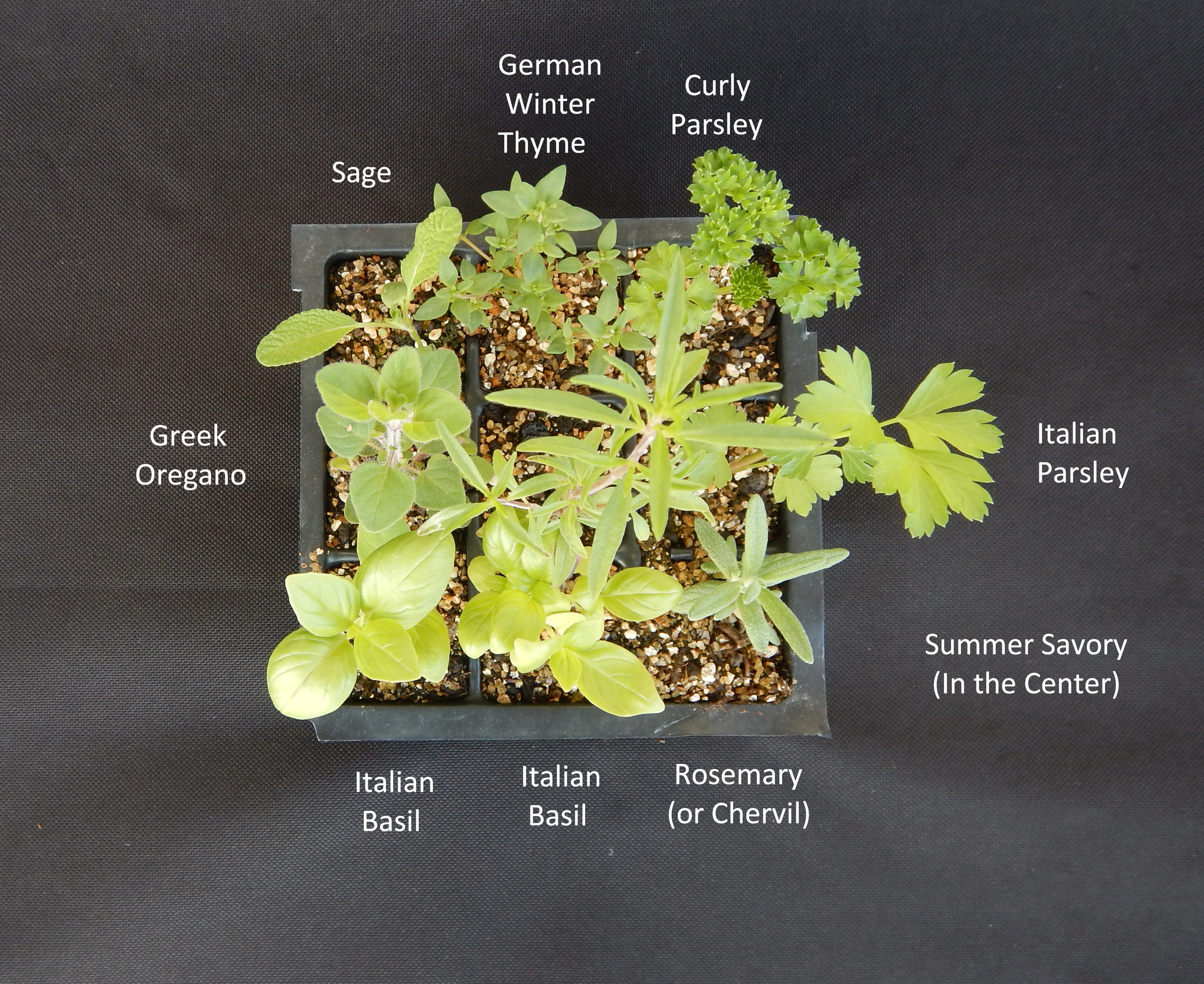
There are four perennial herbs in your pack:  Greek Oregano, Sage, German Winter Thyme & Rosemary (please note some packs may receive chervil in place of rosemary)Oregano, sage and thyme are more cold hardy and have a pretty good chance of surviving our cold winters.  Consider where you would like to establish these herbs in your garden as they will likely come back year after year.  Sage and oregano will get quite large, so it is best to give them about 2 square feet of space in the area you plant them in.  Thyme is a bit smaller and only needs about 1 square foot of space.  While rosemary is a perennial herb, it is not quite as cold hardy.  To ensure it survives into the next year, it is best to bring it indoors in the fall. If you have planted it in the ground, you can dig it up and put it in a pot to keep inside over the winter. 

Oregano


Sage


German Winter Thyme


Rosemary


The remaining plants in your pack are annuals and include Italian Basil, Italian Parsley, Curly Parsley, Summer Savory, and Chervil (included in some packs in place of Rosemary).  Annuals will only produce for this season and will not survive the winter outdoors. Italian basil needs to be cut back regularly to delay flower and seed formation, so they continue to produce usable leaves.  If you see even the earliest sign of flowering in either of these plants, cut them back to keep them vegetative. Parsley will continue to produce throughout the season, so don’t be afraid to cut these plants back too.  If you can’t use your herbs as fast as they are growing, cut the extra herbs anyway and preserve them.  When harvesting your herbs, use a sharp knife or scissors so you can make a clean cut.

Italian Basil


Italian Parsley

Curly Parsley


Summer Savory


Grilled Bok Choi with Peanut Sauce

Bok Choi is a vegetable most commonly associated with Asian cuisine, but within the broad region of Asia it may be used in many different ways depending upon the cuisine.  This week’s recipe is not necessarily indigenous to any particular country, but it is reminiscent of flavors from Thai and Vietnamese cuisine.  The thing I like about this recipe is just how simple it is to prepare, but very flavorful and tasty!

Yield:  3-4 servings

4 small-medium baby bok choi, split length wise (about 1 pound)
¾ cup vegetable stock or water
 cup peanut butter
1 Tbsp oyster sauce
1 Tbsp soy sauce
1 tsp rice wine vinegar
¼ cup raw or roasted peanuts
Salt & Black Pepper, to taste
1 tsp finely sliced fresh red chili OR ¼-1/2 tsp dried red chili flakes
2 Tbsp crispy fried shallots (optional, when in season)
Freshly chopped cilantro, for garnishing (optional)
Fresh lime wedges (optional)

  1. Heat a grill pan or outdoor grill until smoking. (Alternatively, you can use a large cast iron frying pan)
  2. Meanwhile, soak the bok choi in a big bowl of water, agitating to help dislodge any grit, paying particular attention to the outer layers. Run under cold water, using your thumbs to push the leaves apart for one more gander, but try to leave the stems attached to the base if possible.  If you can’t remove all the dirt in this way, it’s ok to take the outer leaves off and just grill them individually.  Cut each head of bok choi into halves or quarters, allowing the base to hold all of the stems together. 
  3. Once the pan or grill is hot, shake excess water off the bok choi and press each piece face down into the pan. Leave over medium-high heat for about 10 minutes, then flip face-side-up for another 3 minutes or so, until the stalks are mildly translucent.
  4.  Meanwhile, combine the stock/water, peanut butter, oyster sauce, soy sauce and vinegar in a saucepan and mix to combine. If you are using dried red chili flakes, add them to the sauce now. If you are using fresh chilis, you may wish to add them as a garnish just before serving. Place the sauce mixture over medium heat and bring to a simmer, stirring, and adding more stock of the sauce needs to be thinned slightly. Season with salt and black pepper to your liking.
  5. If using raw peanuts, toast these in a pan until golden, then roughly chop.
  6. Arrange the bok choi across a platter. Pour over plenty of the sauce, then garnish with the peanuts, and seasonal garnishes as desired.
  7. Serve as a side dish all on its own, or pair it with steamed rice or noodles and a protein of your choosing (e.g., grilled steak or chicken, tofu) to make a complete meal. Give it a squeeze of fresh lime just before serving if desired.

NOTE:  If you do not have Oyster Sauce, you may substitute it with fish sauce, hoisin sauce or just add additional soy sauce.

Recipe borrowed and adapted from In Praise of Veg:  The Ultimate Cookbook for Vegetable Lovers by Alice Zaslavsky.

Wednesday, December 28, 2022

Time to Wrap Up 2022 and Get Ready for CSA 2023!

By Richard de Wilde

It’s time to wrap up another year and move into the next!  While we’ve already been planning and planting for the 2023 growing season, this is the time of year when we simultaneously reflect on where we’ve been as we lay out plans for the year ahead.  We look back on 2022 and are grateful for all the things we were able to accomplish on our farm, the families we were able to feed, the tons of vegetables our fields produced and the 45 plus families our farm supported through bi-weekly paychecks.  Overall, it was a pretty good year and we close out 2022 knowing we did the best we could, learned new things and will come back ready to do a better job in 2023!  Before we officially close out the year, we wanted to share a bit of our reflections with you as well.  

Row covers laid out for
frost protection spring 2022
You know farmers like to talk about the weather and I am known to check the weather multiple times a day, so let’s start there.  We have come to accept that weather challenges are now the norm, and we continue to find ways to be resilient as we navigate whatever hand we are dealt! Looking back at our 2022 growing season, we started the year with the latest spring ever in my 40 plus years of farming.  Not only was it a cold, late spring, but it was one of the windiest springs as well!  It is not uncommon to for us to use row covers for heat gain in the spring, but this year we found ourselves using more than usual to protect some of our vulnerable early spring crops and transplants from a late frost.  It’s very difficult to put out covers in high winds, but there were times when we had no choice but to struggle through the process as the window of opportunity to get the cover on before the temperatures dropped was pretty narrow.  We also had to use more hoops under the covers to prevent abrasion injury to the plants and had to secure the covers in place with extra sandbags.  In fact, we had to fill over 1,000 more sandbags just to secure covers on the most essential crops!  

Manuel, one of our head irrigation guys--doing
his rounds to check for leaks in irrigation systems
(Summer 2022)
Once the season got going, we switched from cold to very hot temperatures!  Our late summer months were characterized by very dry, drought-like conditions.  While dry periods can be very intense and demanding as we try to get enough water to plants to keep them alive and producing, we actually prefer dry conditions over wet.  We had to invest a lot of crew time into irrigation, but thankfully we were able to keep all of the crops in the game.  One plus to having dry conditions is decreased disease pressure.  Humid conditions, especially in our valley, breed leaf disease which affects the health of the plant in the field, and, by default, production yields are usually lower.  When disease pressure is low, yields are high, and harvests are typically more efficient.  

Brussels Sprouts plants in early summer
All in all, 2022 was as good as we can expect.  We had some crop losses, as we will every year, but thankfully we did not experience any devastating losses.  As with every growing season, we had some shining star crops (such as our fall Brussels sprouts!) and some crops we’d prefer to forget (Parsnips).  We were prepared to put out covers when we needed to, had equipment ready to irrigate when it was necessary, and did the best we could to prepare for weather events to minimize the impact.  We had a very productive fall and left our fields in good condition as we tucked them away for the winter.  Most of our fields went into winter with an established cover crop in place and we were able to execute fall applications of minerals as well.  We planted garlic, horseradish and sunchokes which means we’ve already made significant investments into another year!  Our strawberry field looked great going into winter with a nice rye straw mulch cover.  We also mulched the garlic field and covered it with row cover for the winter.  Our overwintered spinach field is covered and fenced to keep the deer from nibbling on it over the winter.

Last year we acquired 40 acres of new land that we were able to certify for organic production.  Some of this land we were able to purchase, and the remainder is leased.  Any time we acquire new land there is likely some work that needs to be done before we can put a crop on it, but thankfully we were able to put much of it in production by the end of the season.  We spent a lot of time this fall trimming trees around the fields, which yielded greater access to the sun and gave us a year’s supply of firewood along with enough brush piles to create several tons of biochar for next year!  We still have a lot of improvements to make on this new property, but have made significant headway in a relatively short period of time.  Our hope is to secure better resources for irrigation options for this land which will offer us more flexibility in what we can plant on this property in future years.

After weather, the next topic of conversation in many business circles these days is likely something around the topics of inflation and the economy as well as labor. These are big topics for us as well and linger at the forefront of our minds as we try to forecast what the new year will hold.  As we reflect on this past year, it will come as no surprise to you that we are still experiencing obstacles in the supply chain that have made it difficult at times to source supplies, fertilizer, etc.  Thankfully, we did ok without too many issues, and we were able to get the majority of what we needed.  We tried to order early to allow for delays and did our best to manage tight inventories.  We’ve always tried to take advantage of volume discounts when purchasing supplies but have pushed the limits on this over the past 1-2 years in an effort to get the best pricing possible in the face of very steep increases in the cost of supplies.  In 2022 Andrea invested in a 5-year supply of the twist ties we use to bunch vegetables and purchased 3-4 years’ worth of other supplies in order to bump up to the next level of volume discounts.  Thankfully we have appropriate storage space to keep these supplies clean and in good condition, so they’ll be just like new when we take them out for use in 2025!  

Black gold....the potting soil we use to 
grow transplants in the greenhouse
Part of being able to weather the inflation is by trying to continue to take advantage of any discounts available to us by paying in advance for seeds, supplies, fertilizer and fuel.  We already purchased and accepted delivery on the potting soil that we’ll need to produce transplants in the greenhouse and by doing so we were able to secure 2022 pricing!  We are closing out 2022 in a pretty good place financially despite experiencing inflated input costs ranging from as little as 3% to as much as 43%!  

But our biggest challenge for 2023 appears to be labor!  The majority of our farm crew is comprised of seasonal workers who come on H2A visas.  Over the past few years, they have been contributing more by offering suggestions for new production improvements and by building their skills so they are able to achieve record setting harvest metrics!  We have one of the very best crews we could hope for!  They are dependable, skilled, efficient, timely, willing and eager to learn, and are overall very respectful, pleasant, positive people to work with.  Our situation is unique in that the Department of Labor (DOL) sets our wage rates because we participate in the H2A visa program.  The DOL has generally raised the wage by 3% per year for many years.  However, this year they are requiring an 11% raise for Wisconsin H2A employers!  The wage rate will be increasing by about $2 per hour to $17.43 per hour, in addition to our obligation to provide housing, transportation and visa expenses.  Our crew members work hard doing physical labor that many others cannot and do not want to do, but someone has to do this work or we don’t have food to eat!  

Most of our vegetables are harvested by hand, 
including bunched herbs, greens, radishes and more!
Farmworkers deserve a raise and should be compensated fairly for the work they are doing.  However, as employers we are faced with an extreme challenge as labor represents about 40% of our expenses and is by far the largest expense, we incur in vegetable production.  We also hope to hire two individuals to fill two vacant support positions, one in the packing shed and one to assist with office work.  One of these positions remained vacant for the entire of 2022, which was not ideal.  We could really use the help to assist with record keeping, social media management, and other office-related tasks that are necessary to help us meet the requirements for government programs and general good business practices.  

Harvesting ginger in early November
As we look ahead to 2023, we do so with optimism.  Yes, we face challenges, but we also know that the work we do is important and valued by you, our CSA members and our community of eaters.  We take pride in being the best growers in the Midwest and we are committed to continuing to offer our CSA members a level of freshness, quality and variety that is not readily available.  We also remain committed to supporting you by providing community, transparency and dependability.  Local food systems are essential to the sustainability of both farms and eaters.  Participating in CSA is one of the most economical ways to purchase food as the value you receive is nearly always greater than the price you pay.  That’s part of the relationship we share—you take care of us and we take care of you.  We plan to continue our unique potato, squash, tomato and pepper varieties as well as abundant sweet potatoes and sweet corn that prove to be member favorites year after year!  We are also planning to continue growing our carefully selected variety of edamame and hope to grow baby ginger for you again.  We are in the midst of ordering our seeds right now and are contemplating growing some special dried beans, globe artichokes or something else of interest that catches our eye and will keep things interesting.  

We are now accepting CSA Sign-ups for the 2023 CSA season and hope you will be joining us for a spectacular year of vegetables!  You’ll find current pricing and a list of all of our CSA pick up locations on our website.  Speaking of website, we are currently working on a new website which we hope to take live early in 2023!  Not only will we have a fresh, new look, we’ll also be able to offer you the convenience of signing up online along with the option to pay using a credit card.  We are also planning to enhance our vegetable resources to help you when you may have questions or need a little help learning about a new vegetable.  

Enjoy the final days of 2022 and we will see you in the new year!  

Friday, January 21, 2022

Reflections on Value As We Celebrate the 30th Year of CSA at Harmony Valley Farm!

By Andrea Yoder

Strawberry Day 2011:  Farmer Richard in the field
discussing the details of farming with CSA kids

2022 will be our 30th year of CSA deliveries.  Folks, that is a reason to celebrate!  Over the course of the past 29 years we’ve watched young families join our CSA, raise their children on CSA vegetables and farm visits, send those kiddos off into the world with a value (and palate) for “real” food with connection to the place from which it came.  We’ve received reports from these families about how appalled these kids are when they get their first exposure to dorm food at college, “Can you believe they served me asparagus in September and didn’t even know where it came from!?”  Many of those kids have now grown into lovely adults with their own families, careers, contributions to society and their own CSA memberships.  

CSA Vegetable Shares
at a Pick Up Site

While times may have changed, the basic concept of CSA has not.  It continues to be a model that feeds and enriches communities, builds relationships and connection, and serves both farmers and eaters at a time when support and nutritious food is paramount.  There really is something to connecting members of a community to the agriculture that produces their food.  It was important 30 years ago and it’s important now.  In fact, it may be one of the most important contributors to our business that has allowed us to even reach this milestone!  Perhaps CSA could also stand for “Community Sustained Agriculture!”  So before we go any further, we want to say “Thank You” for coming along with us on this journey, whether you’ve been with us for 30 years, 3 years or you are looking forward to your first year with our farm in 2022.  This is not our accomplishment alone, it is a reflection of the strength of the CSA model and its ability to remain sustainable over time.  It’s evidence that changing “Me” to “We” makes a difference and is a key component to a sustainable, resilient food system that can withstand the test of time.

Packing CSA boxes in 2018

It’s no secret that the world around us is shifting and changing.  These changes are catalyzed by a variety of factors but the largest one being the global pandemic we’ve all been living with for nearly two years now.  I think for many people it’s been a time to pause and really think things through, to figure out the “whys” behind actions and decisions, to consider the pieces of life that one is grateful for and to imagine a better future.  When all the noise around us is tuned out, what really matters?  What are our core values?  What do we want to invest our time, money and energy in?  

The past two years have brought a lot of uncertainty for our society, and we too have faced that uncertainty at the beginning of the past two growing seasons.  With the onset of the pandemic, we didn’t know what was going to happen.  All of our plans for crops and markets were in place, but when the world shut down we didn’t know if we’d be able to grow, have employees, or even who we were growing for or if we’d even have any customers to feed!  We kept on going and, thankfully, there were many mouths to feed!  As our industrial food system began to fracture, the need for local producers rose to the forefront and our phone was literally ringing off the hook.  We kept moving forward, doing what we do best, growing food for our community.  Our mission didn’t change even if our policies and appearances did.  The basic human need to have access to food hasn’t changed, despite the changes in the world over the past 30 years.  


2021 Harmony Valley Farm Crew

But two years later, we still enter this year with a bit of uncertainty.  Our CSA membership more than doubled back in the Spring of 2020.  We were thankful to have a very high retention rate for 2021, allowing us to attain higher levels of efficiency, defer the costs of the overhead to operate a CSA program over more shares, and most importantly to have the opportunity to grow healthy food for the members of our community.  What will this year hold?  Will our members value their CSA shares as much this year as they did two years ago when the pandemic first started?  Are people tiring of cooking at home and ready to return to the convenience of prepared foods, eating out, etc?  Of course, we want every member to believe in CSA as much as we do!  We want CSA to impact every person and family in positive ways and for each person to realize CSA is so much more than just a box of food.     

CSA Box Contents, September 2018

My job is not to convince anyone of anything.  I’m simply here to lay it all out and bring attention to it.  I’ll leave it up to you to decide if and how CSA fits your personal values for this new year.  So on that note, there are two ways to approach the word “Value.”  As a verb, we can say, “The value of a Weekly CSA share is $1,110.”  In terms of dollars, that is what it will cost you to purchase 30 CSA boxes for 2022.  Is it really worth the expenditure?  Well, let me tell you what last year’s boxes looked like.   In 2021, the cost of a Weekly Vegetable share was $1,050.  Each year we have a CSA member who gathers price comparison data each week from a food coop as well as a natural foods grocer.  Last year’s price comparison data demonstrated that if the contents of the CSA share were purchased at either of these retail stores, an individual would have paid 27-43% more than our actual cost of the share.  That translates to $280-$450 more dollars of produce delivered than was actually paid for.  How is this possible or sustainable?  This is where it pays to go direct, which reduces the costs associated with distribution.  As a CSA member you also share in both the risks and the bounty of each and every growing season.  When we have a productive year, you benefit!  Even in a challenging year where we may have crop losses, members typically still receive a value of produce greater than what they paid for because we have flexibility with what we pack in the box.  We are able to cover the loss of one vegetable by packing something different that is available.  

CSA Box Contents, August 2021

But the conversation about value doesn’t just stop with the dollars conversation.  As a noun, the word “value” means “a person’s principles or standards of behavior;  one’s judgment of what is important in life.”  We always encourage CSA members to look beyond just the dollar value of the produce received, but this is where you have to reflect on what is important to you personally.  Here are a few points to consider.  First of all, based on last year’s boxes, a CSA member who received our weekly vegetable share received over 85 different vegetables!  That doesn’t even account for the fact that within some general selections, such as winter squash or head lettuce, we sent more than one variety.  We have heard from members over the years that they value the wide diversity of foods they eat simply because they show up in their CSA box, including things they would never have selected for themselves or thought they didn’t like. When it’s in their kitchen they are more likely to try it and sometimes even find they really like things they didn’t think they liked!  We also know that consuming a diet with a wide variety of plant foods is beneficial for your health and we’ve had members tell us they eat far more vegetables when they are participating in a CSA than they do when they make their own selections at a grocery store or farmers’ market.  

Wild Rice & Butternut Squash Salad 
with Tat Soi (November 2021)

Having a refrigerator full of vegetables doesn’t do you any good unless you eat them, which is why we also feel it’s important to provide support and resources for you with each week’s deliveries.  In 2021 we provided more than 54 recipes in our weekly newsletters over the course of the delivery season.  But we didn’t stop there!  Each week we provided additional links to even more recipe ideas on our blog with the weekly “Cooking With the Box” article.  On top of these resources, I also received calls and emails from members from time to time who had specific cooking or preparation questions and utilized the option to tap into my culinary expertise.  That’s right, you can pick up the phone and call me.  Ask me any question and I’ll do my best to answer you.  I have been cooking seasonally now for over 15 years and am a professionally trained chef.  I do my best to combine my culinary skills and insights with day-to-day practicality in the recipes and resources I provide.  Of course, you can also reach out to other CSA members too if you choose to be a member of our private Facebook Group created and facilitated solely for the purpose of sharing recipe ideas, asking questions and engaging in communication with other members!

While these are tangible resources that come along with each CSA share at no additional cost, there are some other less tangible benefits that add value to your experience with eating out of a CSA box.  Some of these values may not be as obvious to you until you spend a little time reflecting on your own experiences.  As you consider the value you get from your CSA experience, here are a few reflective questions you may ask yourself:

How has my health or the health of my family members changed since I/we started participating in a CSA?

How have my eating practices changed since starting to participate in a CSA?  Do I prepare more of my own meals and buy less prepared foods, take out, etc?  Have I incorporated more vegetables into my day, including even breakfast?  Do I enjoy eating my own food more than the prepared foods or restaurant meals I previously purchased?

Has participating in a CSA changed the way my family members interact?  Do we spend more time together preparing meals and/or eating together?  What benefits have my children received as a result of CSA?  Do they simply eat more vegetables now?  Are they more likely to try new foods and experience new flavors?  Have we been able to use CSA as a way to teach our children and each other about different cultures, different things in nature, seasonality, etc?

Do I appreciate the transparency of knowing where my food came from and who worked to grow it?

Lorenzo & Ascencion
Working in the Tomato Field

Is it important to me that the dollars I spend on food support a local economy?  

Is it important to me that the farm that produces my food also has extensive food safety practices to ensure my food is safe and wholesome to eat?

Do I value knowing that my farm invests in caring for the health of the soil and plants so the food I am eating is nutrient dense?

Do I want my food dollars to support a growing system that is safe and regenerative for the environment, promotes biodiversity and supports pollinating creatures?

How do I feel about the people who work to produce my food?  Do I care if they are treated fairly, paid fairly, have a safe working environment and are respected?

If CSA has been a valuable part of your life, we would love to hear your thoughts and experiences.  Your stories are our connection to you and they fuel our work on days that may be less than ideal and are what will keep us going for another 30 years!

If you’ve already signed up for your 2022 CSA share, thank you for your commitment!  We are grateful for the opportunity to grow for you this year and hope you’ll share your experiences with others in your circles who may be interested in participating in a CSA.  Every year we have some members who do not return, for a variety of reasons, but also welcome new members.  For our CSA program to continue into the future for another 30 years, we need to continue to maintain our membership.  Honestly, the most effective "advertising" we've observed over the years is simply when members share their experiences with others!

HVF Co-Owners:  Rafael, Richard & Andrea
If you are still considering whether or not you want to participate in our CSA this year, we hope you’ll weigh your options with a broad view and perhaps a bit of reflection about the value CSA can offer you beyond just the box of vegetables.  But rest assured, we have learned a few things over the past 29 years and we are pretty good at what we do!  With our experience to back us and the humility to know we'll never stop learning and improving, we'll do everything we can to make sure that box of vegetables will not disappoint! 


Wednesday, December 1, 2021

Wrapping up 2021 and Rolling Out 2022!

By Farmer Richard

Rolling out row covers on the Strawberry Field!
Here we are, ushering in the final month of the year and wrapping up yet another bountiful CSA season.  We have already started working towards the next growing season and as we look ahead to 2022, it’s a promising outlook.  We have had a very busy, but very productive fall.  About 90% of our fields are going into winter with established cover crops.  We value cover crops greatly and rely on them to keep our soil in place over the winter while also building fertility for next year!  We are hopeful for next year’s garlic crop which was planted using very nice bulbs we selected from this year’s harvest.  We are confident we’ve given it a good start and we’re happy to report it already has 2 inches of roots protected under a nice layer of mulch!   We also have a nice field of spinach to overwinter for harvest next spring.  It is covered with a big field blanket for a little extra protection over the winter and we anxiously await that day in the spring when we can peel it back and look for that sweet, new growth!  Nearby we also have a very nice, new field of strawberries that we will harvest for the first time in only about 7 ½ short months!  That crop is also nicely mulched and all of these fields are surrounded by deer fencing to deter our four-legged friends from entering them over the winter!

Compost Temperature Reading
We’ve also spent a considerable amount of time doing some field and land maintenance in preparation for next year.  Earlier this year we had the opportunity to purchase a new piece of land that gained us a very nice 12-acre organic field.  Having a secure land base upon which to grow vegetables well into the future is always at the forefront of our minds.  As we go into next year we will be losing some land that we have leased for many years, but we also have some new land we’ll be leasing.  We’ve invested some time this fall into cleaning up the perimeters of some of these new parcels of land as well as making sure roads are accessible for the work we’re going to need to do early in the spring.  We did soil tests this fall and will use that valuable information to formulate a solid management plan we’ll implement next spring including applications of compost, minerals, etc.  On that note, Silvestre has been diligently managing our compost windrows this fall.  He’s closely monitored the temperatures and has been very timely in turning the rows to keep the piles “hot” to make some very nice compost.  These are just a few of the many things we’ve been working on in the luxury of this very nice, mild fall.  We know the snow will be flying soon, so we’re just trying to maximize every nice day!

Compost Turning

The pace of the farm is changing as we slowly say good-bye to our H2A visa crew.  We’re down to the final group of crewmembers who will help us put the finishing touches on this year with our final CSA deliveries before they return to their homes in Mexico for the winter.  We are hopeful that each and every one of them will be returning to work with us again next year.  Labor shortages are a very real struggle in the produce industry and have only become worse in recent years.  We hear stories about produce rotting in the field because there aren’t enough hands to pick it and we are even more grateful to have a skillful, experienced, longtime crew that is dependable and an overall joy to work with.

As we prepare for the new growing season, of course it’s time to also start signing up for the 2022 CSA Season!  This week our “Rollover” email will go out to all of our CSA members who pay through our monthly electronic withdrawal option.  If you are one of those individuals, watch for that email to land in your inbox!   As we put together our offerings for 2022, we are not making too many changes.  The majority of our CSA site hosts will be working with us again next year, however there are a few changes to our delivery sites.  We are also not making any changes to our Vegetable share offerings and a few minor changes to our meat share packages.  While most things will remain consistent with this year, we have decided to increase pricing for both our vegetable shares and meat shares for the 2022 growing season. This is the time of year that we have to assess profitability as we project (guess) what next year will hold.  It’s very difficult to set a price and make a one-year commitment to deliver on that price and it’s no secret that the cost of many things in our economy have increased, and in some cases may continue to rise.  In our business, we’ve seen significant increases in packaging costs this year, but also fuel, fertilizer, and the list goes on.  Just this week I saw reports coming from AgWeb that fertilizer costs are up 43% and seed cost is up 7%.  We don’t want to fuel inflation with increased prices, but we also want to remain profitable and viable so we can continue to feed families into the future.  

It is also worth mentioning that labor is almost half of our annual expenses.  I mentioned earlier how much we value our crew members and they deserve to earn a fair wage for the work they do.  Their wages are set by the government and have increased each year since 2018 with annual increases ranging from 2% to 6.3%.  The 2022 wage rates will be announced soon, but initial thoughts in the industry based on labor surveys are that we’ll see another significant wage increase of as much as 6% for 2022.  This next wage increase will take them over $15 per hour, plus with the H2A visa program we are also responsible for providing free housing, cover all their visa fees and transportation.  

2020 Fall CSA share box

The last time we increased our vegetable CSA share prices was in 2018.  Each year since then we’ve chosen to hold our price and instead focus on building efficiencies and increasing our membership so we can defer the overhead costs of operating a CSA program over more shares.  While we didn’t plan for a pandemic to be the catalyst that brought our CSA numbers back up to a sustainable level, it did make a huge difference in the profitability of the CSA portion of our business.  Unfortunately, we can’t absorb wage and input costs forever and still remain viable.  Thus, for the 2022 season we did increase our vegetable share prices by 5%.  While we haven’t finalized our meat share pricing for 2022 yet, we are planning to increase our meat prices as well.  We are thankful to have a dependable processor, but they raised their processing costs earlier this year and we anticipate we’ll see another increase after the first of the year.  

As we confidently move forward into another growing season, we acknowledge there is a big unknown on our shoulders.  We know the pandemic brought us many new customers and, thankfully, many of you stayed with us for a second season!  But the unknown we face is whether those members will come back for a second or third season.  Will people continue to value CSA as a safe, reliable way to source their food and recognize the value in sourcing locally or will a large percentage of individuals choose to go back to “business as usual?”  We also hope members will consider the actual value of produce packed in the boxes this year.  Based on our secret shopper pricing data to date, if you were to purchase the items in your CSA box at a local food co-op or a national natural food store, you would have paid an average of 32% more for the same quantity of food.  Of course, some items are not always available organic and there are some items we include in boxes that you will seldom to never find on a store shelf.    This is the nature of CSA—when there is bounty, members reap the benefits of a bountiful year by receiving full boxes packed with so much goodness!  Plus, you receive weekly communications, recipes, the opportunity to take advantage of special offers, and most importantly a connection with the source of your food.  This is a very precarious time for our business, but it is also a precarious time for our nation, our economy and our supply chain.  The pandemic has shown us the vulnerabilities in our supply chain and, at the same time, it has become even more evident that a local food system is a more sustainable and reliable system to support.

Gerardo packing CSA boxes 2021!

I suppose any conversation about a new growing season and a new year would not be complete with out mentioning COVID.  What will 2022 hold for us from the perspective of the pandemic?  It’s been a long and challenging two years for all of us.  As business owners, the amount of pandemic-induced decisions, considerations and costs has been overwhelming at times.  Thankfully, we have been able to move forward in good health and continue to do the best we can to make decisions that are in the best interest of our employees as well as our customers.  We’ve done due diligence in minimizing risks of exposure on the farm, but also at our CSA sites.  We know there are differing levels of comfort and opinions about what is necessary.  We continue to assess our practices on the farm as well as the protocols for our CSA sites.  We will be sending out a short survey within the next week or two and would value a few minutes of your time to gather your input.  We want to get your feedback about our COVID related protocols for CSA sites and what your opinions are about what is necessary moving forward into a new year.  

We know many of you would like to see the use of the plastic liner bag be discontinued.  We agree and hope we can resume our previous method of packing vegetables directly into the boxes with members doing a quick transfer of the contents to their own reusable bag, cooler, etc when they pick up their box.  Over the past two years we’ve received some emails from members who are concerned about the amount of plastic and packaging we use to pack our CSA shares.  Couple this with the worldwide use of single-use plastic due to the pandemic and we agree, we can do better.  Over the winter we will be looking at ways we can decrease plastic use in our CSA shares as well as other ways on our farm.  There are some new packaging products available now that are more eco-friendly and may be appropriate for packaging some items we now put in plastic.  One example is a new recyclable cardboard clamshell some growers are using to package small items like grape tomatoes and berries.   Of course, if you have suggestions for packaging vegetables in a CSA box, we’ll gladly consider your input!  

Every year holds a new set of opportunities and I am certain 2022 will not disappoint.  Regardless of what evolves with the pandemic, wage rates, the cost of fuel, etc, we plan to remain steadfast to our goal.  That is to produce the healthiest food we can for our community so all of you can continue to contribute to our world in positive ways.  We hope you enjoy the final deliveries of 2021 and we look forward to growing for you again in 2022!