Showing posts with label habitat. Show all posts

Thursday, June 1, 2023

2023 Pollinator Packs!

Pollinator Packs:  Supporting our Pollinator Creatures Since 2016!
By Andrea Yoder


Eight years ago we had an idea to publish a series of educational articles entitled “The Silent Spring Series.”  These articles are available on our blog and we encourage you to take some time to read them.  You’ll find links to each article in the series at the conclusion of this article.  This idea was preceded in May 2015 by the White House’s release of the “National Strategy to Promote the Health of Honey Bees and Other Pollinators,” an important groundbreaking step towards acknowledging and mobilizing action around our rapidly declining pollinator populations within North America.  However, the report was not considered complete by many individuals in conservation circles who raised concern about the impact pesticide use was/is having on our declining pollinator and wildlife populations.  Over the course of the summer of 2015 we reported more in-depth about the impact the use of these chemicals was having on our environment, human health and the health of our pollinator populations.  As the articles started to stack up, the topics got heavier and heavier!  As we neared the end of the series, we found ourselves asking “But what can we do to take positive action?”  As we sat around the kitchen table and discussed how we were feeling, we found ourselves brainstorming.  Out of this brainstorm session the idea to introduce Pollinator Packs was born!  

Pollinator Garden at Harmony Valley Farm
In 2016 we planted our first Pollinator Packs to share with our CSA membership.  This is our way of investing in positive change to benefit our own farm and the areas where we work and live, but we wanted to bring all of you along in the effort as well!  This is where the “C” in CSA comes into play.  We don’t make any money on these pollinator packs, rather we invest our time and resources to put them together for you.  But it’s not about making money.  It’s about coming together as a community to support positive changes and make an impact where we can.  As we partner together as a community on this project, we’re able to broaden the reach and multiply the impact.  Not only do we have some very nice, well-developed pollinator habitat areas on our farm and around the fields where we grow your vegetables, but now many of our CSA members have their own gardens and spaces that are supporting pollinator populations in their communities as well! 

Rattlesnake Master,
Harmony Valley Farm

 So this year I’d like to put out a request to anyone from our CSA community who is willing to contribute.  Later this season I would like to compile an article that reports on the positive changes happening in your/our communities.  We want to know how your pollinator gardens are growing and developing since we introduced this concept back in 2016.  Send us pictures of your plants and spaces, but also let us know what creatures and wildlife these plants have attracted and supported.  Have others in your community or friends and family members seen what you are doing and started to ask questions?  My vision is to share these stories and reports with our CSA membership, but also to send the article out into the world to be shared with others as a way of encouraging them to take responsibility and invest in similar projects.  Of course, in a world that is full with quite a lot of “bad news,” it would be nice to have some positive contributions! 

Now on to this year’s packs.  We always try to plant a variety of native wildflowers and grasses that will bloom across the season so as to provide a steady supply of food.  We also try to balance some easy to establish plants with ones that are a bit more unique and sometimes a challenge to start.  This year Richard went crazy when he was ordering and ordered a lot of different things! (Ok, I’ll take responsibility for contributing to that list as well).    While every seed does not germinate and take off, we had more plants than would fit into our Standard Pollinator packs.  Thus we planted two different packs this year--Standard Pollinator Packs & Enhancement Packs.  We've included the photos and diagrams below to assist you in identifying your plants.  If you position your pack as it is positioned in the picture, your pack will match the diagram and make it easy for you to identify each plant.  

All of the seeds we used were sourced from Prairie Moon Nursery.  If you click on the name of the plant below, it will take you to their website where you can get more information about how and where to plant these packs, how to care for them, etc. Please note, we did have to make a few substitutions to some packs.  Thus, your pack may differ slightly from the contents below.  See your "What's In the Box" email from the week of June 1/2/3 or June 8/9/10 for details about substitutions.

 STANDARD POLLINATOR PACK CONTENTS:

Standard Pollinator Pack Diagram

Blue Ridge Buckbean, Harmony Valley Farm

Blue Ridge Buckbean

Rose Milkweed

Smooth Blue Aster 

Purple Lovegrass 

Silky Wild Rye 

Wild Bergamot 

Brown-Eyed Susan 

Butterfly Weed 

Lance Leaf Coreopsis 


ENHANCEMENT POLLINATOR PACK CONTENTS:

Enhancement Pollinator Pack Contents Diagram

Wild Lupine, Harmony Valley Farm

Wild Lupines 

Partridge Pea 

Prairie Dropseed 

Silky wild Rye 

Blue Wild Indigo

Side Oats Grama  


Silent Spring Series, Part 1--Introduction 

Silent Spring Series #2—The Rise of Neonicotinoids 

Silent Spring Series #3—The Rise of Neonicotinoids, Part 2

Silent Spring Series #4—Glyphosate, Roundup’s Best Friend,Part 1

Silent Spring Series #5—Reflections on the Precautionary Principle 

Silent Spring Series #6—The Challenge 


Wednesday, July 28, 2021

Perspectives on Irrigation Practices At Harmony Valley Farm

By Richard de Wilde

Welcome to Harmony Valley Farm!
I am writing this article in hopes of communicating with a wide audience that includes our CSA members with whom we communicate on a regular basis.  While many of our CSA members are very familiar with who we are and have been with our farm for many years, we recognize we also have  newer members who are still getting to know us.  However, I also am writing this article for the purpose of sharing some information about our farm and our practices with members of our community who may not be familiar with who we are, specifically as it relates to the recent comments submitted by some in response to our pending irrigation permit application with the DNR.  Before I address some of the specific concerns raised, I’d like to provide a little background to bring us all together on the same page.

Uncovering our garlic field ahead of schedule
this past March due to an unseasonably warm spring! 
Nearly every conversation related to farming in some way also relates to weather, so lets start there!  This year we have seen a little bit of everything starting with a warm and dry spring followed by a late May frost.  After that cold snap, the weather pattern shifted and it got very hot!  The El Niño drought cycle that started last August and persisted most of the winter hit us hard!  We had planted our first carrots, beets and all of the parsnips on fields that we could not irrigate.  The moisture dissipated in an unusually hot April and seeds sat there for weeks before a light rain provided enough moisture to germinate some of them.  Thankfully, those carrots made it and we have been harvesting them this month!  We did not get a full stand of parsnips, but we will have some for harvest this fall.

A natural spring that
feeds the creek on
our land


This year has been a challenge for us as well as other farmers in the Midwest.  We have, thankfully, had some rain which has definitely helped and we are very grateful to have received it.  However, we have also gone for long stretches of time without rain, which makes it difficult to germinate seeds and establish crops.  Some crops also have higher water needs to keep them productive and thriving.  One of the challenges we face is that we are limited on land we have the ability to irrigate, which can often help bridge the gap until the next rain.  Access to irrigation can, in situations such as these, be the difference between having a crop or not.

Unlike some growing regions in the west, our area of southwest Wisconsin is typically blessed with an abundance of moisture from rains, natural springs and small to large creeks and rivers.  The Bad Axe River, which runs through our property as well as land we lease and farm, and our spring fed creeks are able to hold their water levels well, even in a drought.  We know this is true because we monitor water levels regularly when we are pumping water for irrigation.  Our last severe drought was in 2012, and we remember it well.  Our current El Niño drought event started last year and despite a couple of timely rains this spring and summer, overall still continues.

Sweet corn setting on ears
If you have driven through the countryside recently you may have seen corn and soybean fields that  look pretty good.  Our beans and edamame (edible soybeans) crops also look pretty good, despite the fact that we have not irrigated them.  These crops have large seeds that can be planted up to 2 inches deep to get enough moisture to germinate and send down a root as deep as needed to find moisture.  This is a good attribute to have in a drought year when you are trying to get seeds into enough moisture to germinate.   However, we raise a wide variety of vegetables and many have very small seeds that are shallow rooted (e.g. carrots, red radishes and rutabagas).  Seeds for crops such as these can only be planted ¼- ½ inch deep and if that top portion of the soil is dry, we need to either time the planting just before a rain or we have to add moisture to the soil to get the seed to germinate.

Irrigation has made a huge difference and, thankfully, our crops look quite good this year overall.  While we have manageable options to irrigate on most of the land we use to produce crops, irrigating from waterways requires a permit from the Department of Natural Resources (DNR) and we are not permitted to irrigate on some of the land we are currently farming.  Some may ask, “Why don’t you just drill a well?”  Well, we do have two low capacity wells on land that we own, but we farm many small fields spread out over six miles.  Many of our fields are on leased land where this is not an option due to the permanency of the structure, need for electrical access to run the pump, and the significant financial investment.  So, our more practical option is to pump surface water from a nearby waterway using equipment that can be moved and used only when necessary.

This is the time of year when we are planting some of our fall storage crops, but we are running out of land with access to irrigation and it is proving to be a challenge to get these crops to germinate, let alone take them to harvest should we continue to experience extended periods of dry conditions with only intermittent rain.  We currently have an irrigation permit application pending with the DNR for access to irrigation on a piece of land we lease on the North Fork of the Bad Axe River.  We actually started the process in March 2020 by asking for an amendment to our existing permits, but the process was held up due to the pandemic.   We tried again in March of this year, but we were told we cannot amend our current permit and needed to start the application process from the beginning.  The permit process is quite lengthy and involved.  We have had irrigation permits with the DNR since the drought of 1988.  These permits are very specific as to the pumping rate, dates and total season capacity.  We record each time we pump, including calculating the gallons per minute (GPM) that we are using.  Every year we are then required to report our annual totals pumped for each permit.  This information is then made available to the public.

Blanding's Turtle passing through one of our 
vegetable fields!
As part of the DNR permit process, they post a notice allowing the public to comment on the application for the permit before they make their final decision.  The public comment period for our application is now closed, however we had the opportunity to read the public comments that were submitted to the DNR, as well as some of the informal comments individuals made regarding our application through a variety of social media outlets.  We realize some individuals and conservation organizations are concerned about the environmental impact associated with withdrawing water for the purposes of irrigation.  Specifically we are aware of the concern for a negative impact on trout populations and endangered and rare species of wildlife including cricket frogs and Blanding’s turtles.  We have actually found both cricket frogs and Blanding’s turtles on our farm and fully understand and respect their fragile state.  Our entire application for this irrigation permit is accessible on the Wisconsin DNR website, so anyone who wishes to review the documents we were required to submit is welcome to do so.  There is some irrigation jargon that we use that may be difficult to put into context if you are not familiar with the terms and volumes we are representing.  Additionally, it is difficult within the application to fully represent “the big picture” of how we manage irrigation activities in the context of our entire farming operation along with our own values and conservation efforts.  Thus, I thought it may be helpful to provide the public and those who are not as familiar with Harmony Valley Farm with some basic background information.

An irrigation pump and sand filter
at an irrigation site
First of all, the proposed rate of water withdrawal for the property we are requesting a permit for is 150 gallons per minute (GPM) from the North Fork of the Bad Axe River.  On June 8, 2021, a team of ten DNR staff members came out to take a look at our operation and the land represented in our application.  Based on the volume of flow they measured on June 8, 2021, our withdrawal of 150 GPM represents 0.53% of the water volume.  This is clearly not enough to negatively impact any wildlife, including trout or other game fish. The DNR staff was very thorough in their assessment and they spent several hours examining the pumping site, the equipment we use, location of the pipes we would lay and the surrounding wetland areas.  They measured the river flow at our requested pumping site.  They looked at our pumps that are double screened to prevent any small fish or tadpoles from getting sucked into the system.  I would like to comment that the DNR staff deserves credit, not criticism, for the thorough job they do with reviewing irrigation applications.

Hooded Merganser mother duck and her babies
spotted swimming on the Bad Axe River!
While 150 GPM may seem like a lot of water, it is important to put this volume into context.  When we  look back at our overall water usage for irrigation, our annual withdrawal amounts always come in well under the maximum volume we are allowed to pump based on our existing permits for other land we farm.  In fact, I looked back to see what our overall annual water usage was for irrigation in 2012, our last official drought year.  We actually only used one-third of the allowable volume of water we were permitted to withdraw, and that was in a drought year!  Another point I’d like to make is that our current permit includes irrigation access for land we are no longer farming.  Over the past several years, and with repeated flood events, we have stopped farming some land that is too prone to flooding, have transitioned some to pasture, and have sought other options on land that is less vulnerable.  If our pending irrigation application is approved, we would not be increasing the overall water we are withdrawing from the Bad Axe River.  Rather, we are only requesting to withdraw in a different location.

A planting of native wildflowers in full bloom 
on our farm this summer
 
Some of the public comments expressed concern with maintaining the waterways and surrounding ecosystems.  These concerns are valid and ones we also share.  It is for this reason that we employ practices that allow us to do the best we can to deliver water efficiently and only as needed.  Based on my more than 40 years of organic farming experience, it is evident that soil that is cared for with annual applications of cover crops and compost is rich in organic matter which helps absorb rainwater and increases water-holding capacity.  This means the soil is more resilient and is able to more efficiently utilize water, thus requiring less irrigation volume.  We have been managing some parcels of land we farm for 15-30 years and continue to utilize these same farming practices, investing in nutritive inputs on land we own as well as land we lease with the intention of building soils that are resilient.  We also use moisture sensors, as well as observation, to help us make decisions about when to water and how much water a crop needs.  Excessive water use is not only unnecessary, but it is also not good for plants.  Additionally, over the past few years we have transitioned to more extensive use of underground drip irrigation which is a much more efficient way to deliver water than by using overhead irrigation (e.g. sprinklers) where more moisture is lost due to evaporation.  We do still use overhead irrigation in some situations, but only when that is our only option.  So yes, we do irrigate, but we do so in the most responsible manner and the nature of how we are utilizing irrigation is much different than in some areas such as a “Central Sands” pivot system where they are irrigating crops on sandy soil which is not able to hold moisture well.

Blanchard's Cricket Frog found 
hanging out in the pumpkin field!
(photo by Kyle Lindemer)
In the public comments, several individuals also questioned the validity of self-reporting.  We have had a “public interest benchmark” from the beginning when we received our first irrigation permit in 1988.  I personally have dropped a measuring tape off the bridge deck where this benchmark is measured many hundreds of times to check the depth of the water.  Even in the worst drought the water level has stayed well above the benchmark.  When measured on June 8, 2021 by DNR staff after 6 months of drought, we were still more than six inches above the benchmark and it has not dropped since then.  The DNR staff confirmed the same observation we have made over the years which is that the creeks and rivers in this area, being mostly spring fed, are very stable year round.  Is the public interest benchmark enforceable?  Yes, the DNR could come out and measure at any time.  If the water level drops below the benchmark we would not be able to irrigate.  Aside from a visit from the DNR, it is up to the permit holder to be honest and do the right thing.  As I mentioned before, our historical water usage, even in a drought year, is well below the maximum volumes we are permitted to withdraw.  We accurately report each and every hour that we pump and record these volumes both for the purpose of reporting to the DNR, but also because we need to have a record of this information to help us make decisions related to managing crops.  We have absolutely no reason to under report as our actual usage is well under what we are permitted to withdraw.

Creek bank erosion caused by the flood of 2007

I, along with my partners, am very clear about our intention which is to produce wholesome, nutrient dense, certified organic food for thousands of people in our region.  I chose to be an organic farmer in the early 70’s because I felt it was the responsible way to grow food, both for the impact on human health as well as for the environment.  There were very few who thought I would succeed, and in fact the extension agent in my area told me “it cannot be done.”  I have always had an appreciation for nature and the preservation of our land, waterways, pollinator populations, wildlife and ecosystem as a whole as these are all integral components to a healthy organic farming system and a healthy community.  We have been irrigating out of the Bad Axe River with a permit for more than thirty years.  We are still the only irrigator on the Bad Axe River and in those thirty years there has been no detriment to the fish populations as a result of our activities.  In fact, we have invested a lot of time, effort and resources into improving the waterways and try to be good stewards of the land we own and manage.  Every time we have heavy rainfall or a “100 Year Flood,” there is cleanup that has to be done in the aftermath.  We have spent literally hundreds of thousands of dollars riprapping eroded stream banks, cleaning up debris washed down the river that is blocking the flow of water as well as plugging up culverts and blocking bridges.  Yes, we benefit from these efforts, but so do others downstream as well as those who enjoy these areas for fishing every summer.  We value biodiversity on our own land as well as in the areas surrounding our fields.  We have planted acres of pollinator habitat, establishing beautiful stands of native wildflowers and grasses as well as fruit and nut trees which provide nesting habitat and food for our pollinating creatures and wildlife.  In some areas we have cleared nearby woods of invasive species.  We make significant contributions to the local economy in wages as well as through our support of other local businesses with our purchases.  Additionally, over the last five years we have donated on average 20,000 pounds of produce from our farm annually to Community Hunger Solutions for distribution to food pantries in our local area who serve community members in need.

Clover cover crop established in between rows
of kale late in the fall
As certified organic farmers, we do not utilize genetically modified (GMO) seeds or the chemicals, such as glyphosate and neonicotinoids, that are used in conjunction with these crops.  If you are interested in learning more about the impact GMOs and the aforementioned chemicals have on human and environmental health, I encourage you to read a series of six articles we published on our blog in May-August 2015. These articles were entitled “The Silent Spring” series and are complete with citations for sources referenced.  The use of these chemicals is directly related to human health concerns as well as the single biggest reason for the decline of bird, bat and pollinator populations.  Additionally, we do not apply raw manure to our fields for fertilizer, thus we never present the problem of raw manure runoff into waterways.  We also use grass filter strips along waterways and stream buffers along with extensive use of cover crops to prevent erosion.

Lastly, I’d like to address one individual who expressed concerns about the impact water diversion for the purpose of irrigation may have on the preservation of archeological sites in our county.  I have been aware of the cultural significance of the effigy mounds in Vernon County and the Driftless region for quite some time.  In fact, I had the privilege of learning more about the Mound Builders who inhabited this area some 1500 years ago when we discovered effigy mounds on our land.  I was able to work with a local archeologist who confirmed our discovery and helped us register our mounds so they may be preserved into the future. If you’re interested in reading more about my interest in preserving this archaeological site, I encourage you to read an article entitled “Our Ancestors…Who Walked This Land Before Us?”  This is an article we published on our blog shortly after this discovery. We have a great deal of respect for the Mound Builders as well as the native inhabitants of this region who cared for this land for thousands of years before us.  We consider it a privilege to now be caretakers of this land, including doing our part to preserve the mounds they built here.

In closing, I think many of the concerns expressed by those in the community are ones we share as well.  I believe it is possible to responsibly utilize the Bad Axe River for the purpose of irrigating vegetable crops without causing disturbance or detriment to the ecosystem, cultural treasures or others downstream.  For many of the reasons laid out in this article, anything we can do to keep good, organic farmers on the land is a win-win situation for all.  To those of you who were kind enough to read this entire article, I thank you for listening.  If you should have any further questions, I would be happy to converse with you and welcome you to reach out to me.

Thursday, August 6, 2015

Silent Spring #4 - Glyphosate-Roundup's Best Friend Part 2

by Sarah Janes Ugoretz

This week, we’ll keep our attention squarely focused on glyphosate, the active ingredient in commonly used herbicides like Roundup. While we considered the potential as well as the demonstrated implications glyphosate has on human health in the previous article, this week we’ll explore what glyphosate’s widespread proliferation has meant for animal life and for our environment in general.
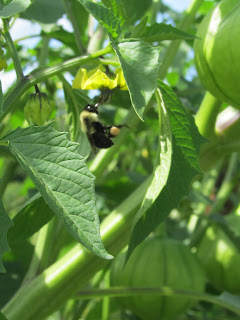
Bee in Tomatillo field.
Thirty years ago, the U.S. Environmental Protection Agency (EPA) declared that glyphosate might be a cancer-causing agent. By 1991, however, the agency had reversed its stance, citing—rather ironically—the same study on which it had based its original, precautionary decision. Fast-forward to March 2015 and this study has once again found itself in the crosshairs, as a 17-member panel of researchers compiled by the International Agency for Research on Cancer (IARC) listed it as supporting evidence in its declaration of glyphosate as a human carcinogen.

In exploring glyphosate’s potential as a human carcinogen, IARC panelists examined circumstances under which glyphosate might cause cancer. While Monsanto and others have pointed to a preponderance of negative studies, the IARC stands firm in its insistence that even a handful of positive studies—those that suggest there is a linkage—can justify naming a substance as hazardous. In the case of this highly cited study, three of the 50 mice exposed to a specified amount of glyphosate developed an unusual type of kidney cancer. According to Dr. Aaron Blair, a retired National Cancer Institute epidemiologist and chairman of the IARC researchers, “that type of tumor is rare…they literally don’t occur, but they occurred when rodents were dosed with this stuff” (Pollack, 2015).

Researchers’ sights are not solely set on understanding the connection between glyphosate exposure and cancer, however. In general, the primary question guiding many is more broad and centers on understanding the potential health effects of low dose exposure over an extended period of time. This is a question we do not yet have an answer to. Yet as studies continue to develop—especially longitudinal studies—we may begin to put more of the puzzle pieces into place. In Germany, for instance, researchers found glyphosate in the urine of dairy cows, rabbits and humans at levels ranging from 10 to 35 parts per million (ppm) (Krüger et al., 2014). Recall from our discussion last week that chemicals like glyphosate are biologically active at parts per billion (ppb) levels (Hemmelgarn, 2015). Upon dissection, the tissues of each cow’s kidneys, liver, lungs, spleen, muscles and intestines were found to contain similar amounts of glyphosate residue as their urine. As Leu (2015, p. 91) explains, “this means that glyphosate is not being passed through urine without affecting the organism, and that meat and dairy are an additional source of glyphosate for humans.”

Bee in strawberry blossom.
A number of studies have also documented the various ways in which glyphosate has resulted in teratogenicity (birth defects) in animals. In 2003, researchers found that of those tadpoles exposed to glyphosate at rates commonly found in the environment, 55 percent experienced deformities to their tails, skulls, mouths, eyes and vertebrae (Lajmanovich, Sandoval, & Peltzer, 2003). Meanwhile, Dallegrave et al. (2003) found that rats that were exposed to glyphosate produced offspring that were more likely to have skeletal abnormalities. Perhaps most significantly, a 2010 study demonstrated the ways in which glyphosate actually causes teratogenicity (Paganelli, Gnazzo, Acosta, López, & Carrasco, 2010). Paganelli et al. found that at levels as low as 0.5 ppm, glyphosate is able to disrupt the retinoic acid signaling pathway—a crucial biochemical mechanism. All vertebrates (yes, that includes humans) use this mechanism in order to ensure that bones, organs and tissues develop at a specific time and in the correct place within embryos. If malformations begin to occur, the mechanism enables corrective action. Disrupting this mechanism is akin to scrambling a motherboard—essentially, signals may be sent at the wrong time, resulting in the incorrect formation of organs and tissues and leaving malformations uncorrected.

Much like neonicotinoids, research suggests that glyphosate also has sub-lethal impacts on honeybees. Honeybees that were fed sub-lethal doses of glyphosate spent more time—and more often took indirect paths—returning to their colonies. As the authors note, the navigation of these honeybees appears to be impacted by consuming concentrations of glyphosate that are commonly found in agricultural settings—a factor that may have “long-term negative consequences for colony foraging success” (Balbuena et al., 2015).

Bee in melon blossom.
Environmentally speaking, glyphosate residues—primarily glyphosate’s degradation product, aminomethylphosphonic acid (AMPA)—have been detected in soil, air, surface water and seawater. Studies show that these residues persist and accumulate over time with ongoing agricultural use (Leu, 2015). While glyphosate attaches firmly to soil initially, these particles eventually migrate throughout the environment until they finally dissolve in water (Grossman, 2015). The U.S. Geological Survey (USGS) recently sampled a collection of rivers, streams, ditches and wastewater treatment plant outfalls in 38 states. Their findings revealed that a majority of those waterways tested contained glyphosate residues, as did 70 percent of rainfall samples (Grossman, 2015).

Though glyphosate’s weed-killing capabilities have had a number of major environmental impacts, one has received a great amount of attention as of late: the decimation of milkweed plants.  As the usage of genetically modified (GM) Roundup Ready crops have proliferated throughout the Midwest, the application of Roundup has wiped out enormous tracts of this plant, which serves as the monarch caterpillar’s sole source of food (Pleasants & Oberhauser, 2012). In the last 20 years, it is estimated that the North American monarch butterfly population has declined by 90 percent. This decline coincided with the loss of over 165 million acres of habitat—owing primarily to the pervasive use of glyphosate (The Xerces Society for Invertebrate Conservation, 2014). The U.S. Fish and Wildlife Service is currently conducting a review to determine whether to place the North American monarch population under Endangered Species Act protection. Tierra Curry, a senior researcher with the Center for Biological Diversity, believes that this is the “most powerful tool” we can leverage to save America’s monarch population (The Xerces Society for Invertebrate Conservation, 2014).
In agricultural applications, glyphosate has been touted as a tool that will ultimately assist in reducing pesticide use, as Roundup ready crops will theoretically thrive with fewer applications of only one herbicide throughout the growing season. However, as many conventional farmers have come to rely almost exclusively on Roundup year-in and year-out, weeds that have been able to survive have spread their seeds. Now, what we’re left with is an evolutionary inevitability—Roundup resistant weed species. Facing this new dilemma, agro chemical companies are looking to develop the next GM varieties of corn and soybeans that can withstand chemical formulations like those that make up 2,4-D and dicamba, which can be described as potentially more dangerous than glyphosate (Bohnenblust, Vaudo, Egan, Mortensen, & Tooker, 2015). Unsurprisingly, this has been embraced as a “new era,” representing “a very significant opportunity” for chemical companies like Dow Chemicals (Johnson, 2013).

We opened our first Silent Spring article with news that The White House had taken an historic step in revealing the National Strategy to Promote the Health of Honey Bees and Other Pollinators. Investing in the protection, restoration and enhancement of pollinator habitats is a critical piece in proactively responding to the rapid decline of various pollinator populations within North America. In a similar vein, designating North American monarchs as an endangered species would, in theory, work to protect them and increase their odds of long-term survival. However, without a rigorous plan to curtail the use of harmful pesticides like neonicotinoids and glyphosate—classes of compounds and chemicals which we now know more than ever are undeniable points of concern for the health of humans, animal life and our environment more broadly—these efforts may ultimately be for naught. Even with the establishment of widespread tracts of native prairieland, pollinators and other beneficials will continue to be exposed to these harmful chemicals for the simple fact that they are not sedentary organisms. They move. They pollinate. As Dr. May Berenbaum says, “pollinators are [a]…keystone species. You know how an arch has a keystone? It’s the one stone that keeps the two halves of the arch together…If you remove the keystone, the whole arch collapses” (PBS Nature, 2007).


Next week, we’ll turn our attention to the precautionary principle and how it has—or has not—been applied in relation to the adoption and widespread application of such substances as neonicotinoids and glyphosate.

References

Balbuena, M. S., Tison, L., Hahn, M., Greggers, U., Menzel, R., & Farina, W. M. (2015). Effects of sub-lethal doses of glyphosate on honeybee navigation. The Journal of Experimental Biology. doi: 10.1242/dev.117291.

Bohnenblust, E.W., Vaudo, A.D., Egan, F., Mortensen, D.A., & Tooker, J.F. (2015). Effects of the herbicide dicamba on non-target plants and pollinator visitation. Environmental Toxicology & Chemistry, online 17 July.

Dallegrave, E., Mantese, F.D., Coelho, R.S., Pereira, J.D., Dalsenter, P.R., & Langeloh, A. (2003). The teratogenic potential of the herbicide glyphosate-Roundup in Wistar rats. Toxicology Letters, 142(1-2), p. 45-52.

Grossman, E. (2015, April 23). What do we really know about Roundup weed killer? National Geographic. Retrieved from http://news.nationalgeographic.com/2015/04/150422-glyphosate-roundup-herbicide-weeds/

Hemmelgarn, M. (2015). Little things, big impacts. Acres, U.S.A.

Johnson, N. (2013, October 14). Roundup-ready, aim, spray: How GM crops lead to herbicide addiction. Grist. Retrieved from http://grist.org/food/roundup-ready-aim-spray-how-gm-crops-lead-to-herbicide-addiction/

Krüger, M., Schledorn, P., Schrödl, W., Hoppe, H., Lutz, W., & Shehata, A. (2014). Detection of glyphosate residues in animals and humans. Journal of Environmental and Analytical Toxicology, 4(2).

Lajmanovich, R.C., Sandoval, M.T., & Peltzer, P.M. (2003). Induction of mortality and malformation in Scinax nasicus tadpoles exposed to glyphosate formulations. Bulletin of Environmental Contamination Toxicology, 70(3), p. 612-618.

Leu, A. (2015). Glyphosate under the gun: World Health Organization weighs in. Acres U.S.A.

Paganelli, A., Gnazzo, V., Acosta, H., López, S.L., & Carrasco, A.E. (2010). Glyphosate-based herbicides produce teratogenic effects on vertebrates by impairing retinoic acid signaling. Chemical Research in Toxicology, 23(10), p. 1586-1595.

PBS Nature. (2007). Silence of the bees.

Pleasants, J.M., & Oberhauser, K.S. (2012). Milkweek loss in agricultural fields because of herbicide use: Effect on the monarch butterfly population. Insect Conservation and Diversity, 6(2), 135-144.

Pollack, A. (2015, March 27). Weed killer, long cleared, is doubted. The New York Times. Retrieved from http://www.nytimes.com/2015/03/28/business/energy-environment/decades-after-monsantos-roundup-gets-an-all-clear-a-cancer-agency-raises-concerns.html?_r=0

The Xerces Society for Invertebrate Conservation. (2014). Monarch butterfly moves toward endangered species act protection [Press release]. Retrieved from http://www.xerces.org/2014/12/29/monarch-butterfly-moves-toward-endangered-species-act-protection/