Showing posts with label Sweet Potato. Show all posts

Wednesday, October 12, 2022

October 13, 2022 - This Week's Box Contents Featuring Sweet Potatoes


Cooking With This Week's Box

Cured Sweet Potatoes:  
Coconut Milk Braised Black Pepper Chicken with Sweet Potatoes (See Below)

Orange Carrots:  

German Butterball Potatoes:  
Orange Italian Frying Peppers:  

Mini Sweet Peppers:  

Broccoli or Broccoli Romanesco:  

Jalapeño Pepper:  

Italian Garlic:  

Yellow Onions:  

Salad Mix:  

Escarole:  

Green Top Gold Beets:  

Green Savoy Cabbage: 

Ok, here we go with another week of eating out of the box!  This week we’re FINALLY ready to send sweet potatoes your way!  It’s always hard to choose just one or two recipes for sweet potatoes as there are so many ways to prepare them!  This week I’ve featured a recipe for Coconut Milk Braised Black Pepper Chicken with Sweet Potatoes (See Below).  This is a recipe I tried last winter and found it to be not only delicious, but also super easy to make. I also included a link to one of my all-time favorite recipes for Sweet Potato Kim Chi Pancakes.

This week’s potato selection is the German Butterball potato. This variety is similar to a Yukon Gold potato.  It’s a moist, waxy gold potato with gold skin.  I like to use this potato to make Crushed Potatoes with Cream & Garlic.  I also came across this recipe for German Butterball Potatoes & Caramelized Onion Tarts, which looks quite tasty.  

For some reason I’ve been on a shredding kick this week.  I’ve been shredding carrots, broccoli stems, sunchokes, potatoes.  Having some shredded vegetables, such as carrots, prepared in advance is really nice for making quick salads, but shredded vegetables cook really quickly too.  I’ve been using shredded potatoes and broccoli stems in scrambled eggs and soups, but you could also mix them into meatballs, pasta dishes, etc.  Anything to save a little time in the day! On that note, check out this article entitled 14 Shredded Carrot Recipes That Will Have You Craving Seconds.  I’ll also be making these Quinoa Carrot Breakfast Cookies with some of the shredded carrots I have in my refrigerator right now!

This week’s box includes a beautiful head of escarole. If you are not familiar with this vegetable or are not sure what to use it for this week, check out our 2021 Vegetable Feature article about Escarole (October 21, 2021).  I also included two links to recipes we’ve featured in past newsletters.  The first is for White Bean & Escarole Pizza. The second recipe for Italian Wedding Soup is a classic way escarole is prepared.

We’re supposed to see some chilly nights and mornings over the next week with temperatures dipping down into the 20’s.  This is great news for the Brussels sprouts still in the field as the cold will only make them sweeter! Just a few more weeks and you’ll see those in your box.  We also have some gorgeous tat soi rosettes coming your way later this month or early into November. They are a rich, dark, deep color and just have “that look” of something that is going to make you feel good! Of course, we also have baby ginger to look forward to!

I hope you have a fabulous week!

Chef Andrea 
 

Vegetable Feature: Sweet Potatoes

by Andrea Yoder

This week we are featuring sweet potatoes, which are actually a tropical vegetable.  Why would we, in the upper Midwest, attempt to grow a tropical vegetable? Well, we like a good growing challenge, but beyond that sweet potatoes have proven over the years to be a favorite vegetable for many CSA members and are an important part of our fall and winter diets. Sweet potatoes are a member of the Morning Glory family, not the ‘Potato’ family also known as the Solanaceae family. Sweet potatoes are less starchy and more sweet and moist than a regular potato.  Although often confused, sweet potatoes and yams are not related. 
We have a rule around here that you don’t eat sweet potatoes for at least 10 days to 2 weeks after they are harvested.  When first harvested the potatoes are starchy, not very sweet or tasty, and the skins are very tender requiring careful handling.  Sweet potatoes aren’t truly sweet potatoes until we “cure them.”  Curing is a process by which we hold the sweet potatoes at high heat and high humidity for 7-10 days, basically it’s kind of like a sauna for sweet potatoes!  During this time, the starches in the potatoes are converted to sugars and the skins become more stable for long term storage. 

Sweet potatoes are very versatile in their use, which is a good thing since they will be a staple vegetable in our diets for the next 4-6 months! You can simply bake sweet potatoes whole until fork tender and eat the flesh right out of the skin. They are also delicious cut into bite-sized pieces and roasted or cut them into wedges or thin slices and make roasted fries or chips. If you’re going to do this, it’s best to put the wedges or slices of sweet potatoes on a rack in a pan.  This allows the air and heat from the oven to circulate on all sides of the sweet potato making it more crispy and less soggy. Sweet potatoes also make delicious, hearty soups, stews, and curries. They may be added to chili, shredded, and fried like hash browns, or just simply cook and mash or puree them. 
Sweet potatoes can also be incorporated into sweet preparations. Sweet potato pie is a traditional way to incorporate sweet potatoes into dessert. You can also use sweet potatoes to make biscuits, rolls, quick breads, muffins, cookies, bars, cheesecake and more! 

Sweet potatoes pair well with a wide variety of ingredients, which is part of what makes them so versatile in their uses. They pair very well with fall fruits such as apples, pears, citrus and pomegranates. They also pair well with other vegetables including a variety of root vegetables; greens such as escarole, radicchio & kale; Brussels sprouts and dried beans.  They also go very well with coconut, ginger, chiles, butter, cream, maple, nuts of any kind and Bourbon.

Sweet potatoes are a nutrient dense food that provide an excellent source of vitamin A (in the form of beta-carotene), a very good source of vitamin C and manganese, and a good source of copper, dietary fiber, vitamin B6, potassium and iron. They also contain high amounts of antioxidants that boost immunity and aid with brain function.

If stored properly you can eat sweet potatoes all winter! The ideal storage temperature for sweet potatoes is 55-65°F. They can get chill injury with prolonged storage at temperatures below 55°F, so if you don’t have the perfect location to store them at their ideal temperature, it’s better to store them on the countertop in your kitchen instead of putting them in the refrigerator.


Coconut Milk Braised Black Pepper Chicken with Sweet Potatoes 

Yield:  6 servings

2 pounds boneless, skinless, chicken thighs or breasts, cut into 2-inch chunks
Photo from www.halfbakedharvest.com
1 Tbsp ground turmeric
1 Tbsp ground ginger
1 tsp ground cumin
1 tsp black pepper
Kosher salt, to taste
3 Tbsp extra virgin olive oil
2-3 sweet peppers, sliced
2 medium shallots or onions, chopped
4 cloves garlic, chopped
½ tsp chili flakes, or more if desired
2 cups cubed sweet potatoes
2 cans (14-ounce) full-fat coconut milk
2 Tbsp fish sauce or soy sauce
½ cup fresh cilantro, chopped
Steamed Rice, for serving
½ cup Thai basil leaves (optional)
2 limes
Roasted peanuts, chopped

  1. Toss the chicken with the turmeric, ginger, cumin, pepper, a pinch of salt, and 1 Tbsp oil. Let set 5 minutes or up to overnight in the fridge.
  2. Heat 1 Tbsp oil in a large Dutch oven set over medium-high heat. Add the chicken and sear on both sides until browned, about 2 minutes. Pull the chicken out of the pan.
  3. To the pot, add 1 Tbsp olive oil, the peppers, shallot or onions, garlic, and chili flakes, cook 3 minutes. Then toss in the sweet potatoes and reduce the heat to low. Pour in the coconut milk and fish or soy sauce. Slide the chicken and any juices on the plate into the milk. Cover and simmer for 20-30 minutes, or until the chicken is cooked through and the sweet potatoes are tender. If the sauce is too thick, add a splash of water. Stir in the cilantro and season with salt.
  4. Divide rice between bowls, then spoon the chicken and sauce over the rice. Top with basil, peanuts, and lime juice.
Recipe sourced from www.halfbakedharvest.com.

Wednesday, September 9, 2020

September Farm Update!

By Farmer Richard

Watermelons moving up the harvest belt to be washed!
As we near the end of summer and approach the official start of autumn on September 22, we acknowledge that this is a very unique and sometimes challenging time of the season.  Late summer crops like tomatoes, peppers, melons, watermelons and sweet corn can come on fast and furious in the heat of August leaving us scrambling just to keep up with harvest.  When September comes and we lift our heads to take a breath, it hardly seems possible that just around the next corner the danger of the first frost is looming!  The official first average frost date for our area is September 15!  Yikes!  Now, that doesn’t mean we’ll get frost, but the overnight temperatures have been getting cooler and we’ve had to grab an extra jacket for chilly mornings which reminds us the first frost will be coming soon.  We haven’t seen frost until October for many years as we experience the effects of climate change.  We can’t forget however that climate change can yield extremes on both ends of the spectrum.  Will we get an unseasonably warm fall or a cold one?  We can only guess!

Look at all the Mini Sweet Peppers on one plant!
The challenge of this time of year lies in both the amount of work we have to do as well as trying to work with and around the challenges of weather.  We are still harvesting the last of our summer crops including two plantings of tomatoes, lots of peppers, the last planting of sweet corn, and the last of the melons.  While we’re sad that zucchini and cucumbers are finished for the season, we did breathe a sigh of relief that we could mark those harvests off the production list for the week to free up crew time to do other things….like harvest winter squash!  As we try to finish off summer crops, fall crops are coming in already.  We’re nearly finished with winter squash harvest and started harvesting the first of this year’s celeriac crop last weekend.  The parsnips, carrots, black Spanish radishes, beauty heart radishes and daikon are all in the queue for harvest as soon as this rainy week passes and the fields dry out.  We’ll have a little overlap in time where summer and fall will be demanding our attention simultaneously!

Mountain Merit Red Slicer Tomatoes, a disease resistant
variety in our second planting.
During this time of the year we watch the weather, checking it multiple times per day to plan our work schedule.  We have to be ready to respond to the threat of frost, even if it’s only one cold night followed by a few more weeks of warm temperatures!  We have to make the difficult decisions about whether or not we can harvest the remainder of the most frost-sensitive crops or if we need to invest in covering them.  If the latter, we need time to put the covers in place along with sandbags to hold them down.  You can’t do this at the last minute because conditions are not always appropriate for laying out covers.  Please note, it is not advisable to try to put covers over crops with winds of 10-20 mph or the covers will likely end up in the trees!  If it looks like frost may be coming, peppers and tomatoes are, at present, our most vulnerable crops that would be our priority to cover.  Most other crops, such as lettuce, spinach, parsley, baby bok choi, etc, can take a light frost and recover with minimal to no damage.  Once we start seeing temperatures in the 20’s we’ll have to add more covers to protect our late season head lettuce, escarole, radicchio and tat soi.

Bins and bins of winter squash including
Black Futsu Pumpkins!
I mentioned that we’ll finish our winter squash harvest this week, and the next crop we typically get questioned about this time of the year is the beloved sweet potatoes!  They are sizing up nicely, but could use several more warm weeks of growth.  If this chilly weather looks like it’s going to stay around we’ll likely need to cover the sweet potatoes just for some heat gain to accelerate their growth rate.  We typically start harvesting the last of September of first of October, so it won’t be long!  Both winter squash and sweet potatoes need some time to “cure” before they are delectable, sweet and ready to pack in in your CSA boxes.  Curing helps to set their skins so they store better and develops their flavors and sweetness.  As tempting as it is to eat them as soon as they come out of the field, we know from experience it’s better to wait a few weeks.

Fields put "to bed" with a cover crop to hold the soil in
place over the winter and build fertility in the soil.

In addition to harvest, this is also the time of year when we are preparing to put fields “to bed” for the winter and preparing them for next year’s crops!  Once we’ve taken the final crop off a field for the current season, we need to consider what will be planted in that field next year.  This impacts our decisions about compost and mineral applications as well as figuring out the most appropriate cover crop to plant on the field.  Cover crops are an important part of managing our land, both for fertility but also to prevent erosion and loss of our precious topsoil over the winter.  This week we received four pallets of cover crop seeds from Albert Lea seeds, so as soon as the fields dry out this will become a top priority.

Beauty Heart Radishes as far as you can see!
Despite the challenges, we love this time of year!  The cool working conditions are a welcomed relief from the hot days we’ve worked through over the summer.  Weed seeds germinate more slowly which means our late planted crops can grow faster than the weeds and dominate.  We’re still cultivating and hand weeding, but very soon the weed pressure will lessen.  The cool to cold temperatures of fall also impact the crops in different ways.  The green color of kales, spinach and other greens intensifies and crops such as red lettuce and red mustard produce deep gorgeous leaves.  The cool weather also causes flavors to be more balanced and sweet.  Crops such as radishes and arugula mellow out and, in our opinion, taste much better than when grown in the heat of the summer.  Fall brassicas including cabbage, cauliflower, broccoli and Brussels sprouts will benefit from the cool temperatures and you’ll be able to taste the difference when you eat them!  While many farms start to wind down in late September or October, we’ll continue to go strong and our harvests won’t be done until the very end of November or possibly December!  For those of you who have been with us for years, you know there are still a lot of seasonal favorites remaining to experience this season.  For those of you who may be joining us for the first year, get ready for some hearty fall boxes!  Many longtime members dread the point in the year when they have to return to shopping for produce at the grocery store.  However, if you play your cards right this window of “grocery store shopping” can be pretty minimal.  Now is the time to be preserving things for winter.  We’ve had a great response this year to our “Produce Plus” offerings.  There is still time to freeze peppers and make some tomato sauce to stockpile for winter use!  As we move into fall, there will also be opportunities to stock up on root crops and other vegetables that can store well into winter, even after CSA deliveries are finished.

This year's leeks...coming soon! 
We hope you enjoy eating through this transition point in the season as well.  Tomato season isn’t over yet and peppers are in their peak.  Instead of pairing tomatoes and peppers with zucchini and cucumbers, we can transition to tasty dishes made with fall root crops, winter squash, leeks and potatoes.  It’s another transition in our seasonal eating journey as we follow Mother Nature’s lead.

This will be the first year in many that we will not be hosting our annual Fall Harvest Party.  Late September can be a magical, beautiful time to visit our valley.  However, due to the pandemic precautions we’ve implemented on our farm this year, we’re going to have to settle for connecting through social media and our weekly email connections.  Please know we miss seeing you in person and look forward to opening our farm to you again in a future season.

Wednesday, July 15, 2020

July Farm Update

By Farmer Richard

Tomatillo fruit hanging heavy on the vines
and filling out their husks!
Despite the fact that we just did a farm and field update last month, a lot has changed and happened since then and we want to let you know what’s happening at the farm! We are at the apex of the season, halfway through the calendar year and one-third of the way through our CSA delivery season. The spring crops and weather were quite moderate and we were able to pack quite nice boxes for the early part of the season. But we know you can only eat so many radishes and lettuce and many of us look forward to all the delicious vegetables of summer! We’ve been delivering cucumbers and zucchini for several weeks and we’re in our second week of beans, but there are more summer favorites coming up very soon! If you don’t have time to read all the details of this week’s update, at least take a look at the pictures! Our hope is that we can connect you with our farm virtually so you know where your food is coming from and can have those images in your mind when you unpack your box each week!

The start of this year's garlic harvest, drying in the greenhouse.
Summer did not enter gently this year. The past two weeks have been a new challenge of very hot and humid days. We had a stretch of days reaching 88-90°F every day with high humidity that left us all with beads of sweat running down our brows early in the day. We started off the summer in a bit of a dry spell, but that has quickly changed as we’ve had frequent rains totaling about 9 inches in the past two weeks. If our more normal spring was a result of the extreme cutback in emissions related to COVID-19 changes in travel, etc, then it leaves us wondering if the sudden and recent switch to extreme weather is connected to “opening up.” Hmm….maybe we don’t want to “go back to normal!” Well, normal or not, we are looking forward to the second half of the season and we have a job to do. So here’s a glimpse of what is yet to come.

Rows of tomatoes in our 1st planting--staked,
tied and setting on fruit!
Spring days are highlighted by lots of planting and weed control. While we’re trying to get everything in the ground and keep up with flame weeding, mechanical cultivation and hand weeding spring crops, we are also planting and caring for the summer crops that will follow. Our efforts to control weeds are directly related to the hand of weather conditions we are dealt. While our crew members have done a good job keeping up with timely cultivations, rainy, wet conditions limit what we can do mechanically. Unfortunately, the weeds thrive in these hot, wet conditions which adds salt to our wound and leaves us with some big hand weeding jobs! We’re doing the best we can, but hand weeding requires a lot of crew time that we just don’t have many days. We’ve had a dedicated crew of four people who were hired specifically for focusing on hand weeding missions, but the weeds are growing faster than they can pull them! While the majority of our experienced H2A crew members arrived back in April, we did have several who received “administrative hold” and were not issued visas. Due to pandemic-related changes with the consulate’s office in Mexico, these members had to return home and wait for the call to return for further evaluation. They were also restricting visas to only those who had had a visa previously and were not considering any new applicants. Finally, the
A hillside sweet corn field....look carefully and
you'll see the deer fence surrounding the
field to help deter the critters.
first week in July we received notice letting us know the consulate’s office was ready to look at their cases. We are happy to report that four more crew members received their visas and made the long journey to Viroqua arriving last Thursday! We have only seen them from a distance as they will remain quarantined for 14 days, separate from the rest of our crew and with no contact with others in the community. They arrived healthy and well, going directly to the house we prepared for them complete with a fully stocked kitchen! They’ll reside in this location until the end of their quarantine and will stay busy during the day tackling their own weeding missions in fields we’ve assigned to them safely distanced from any other people. Thankfully, that is the beauty of being in the country where there are wide open spaces! We look forward to integrating Alvaro, Silvestre, Samuel and Joel into our crew in the near future. They all have special skills and contribute greatly to our farm. We’ve really missed them and are thankful to have them here!

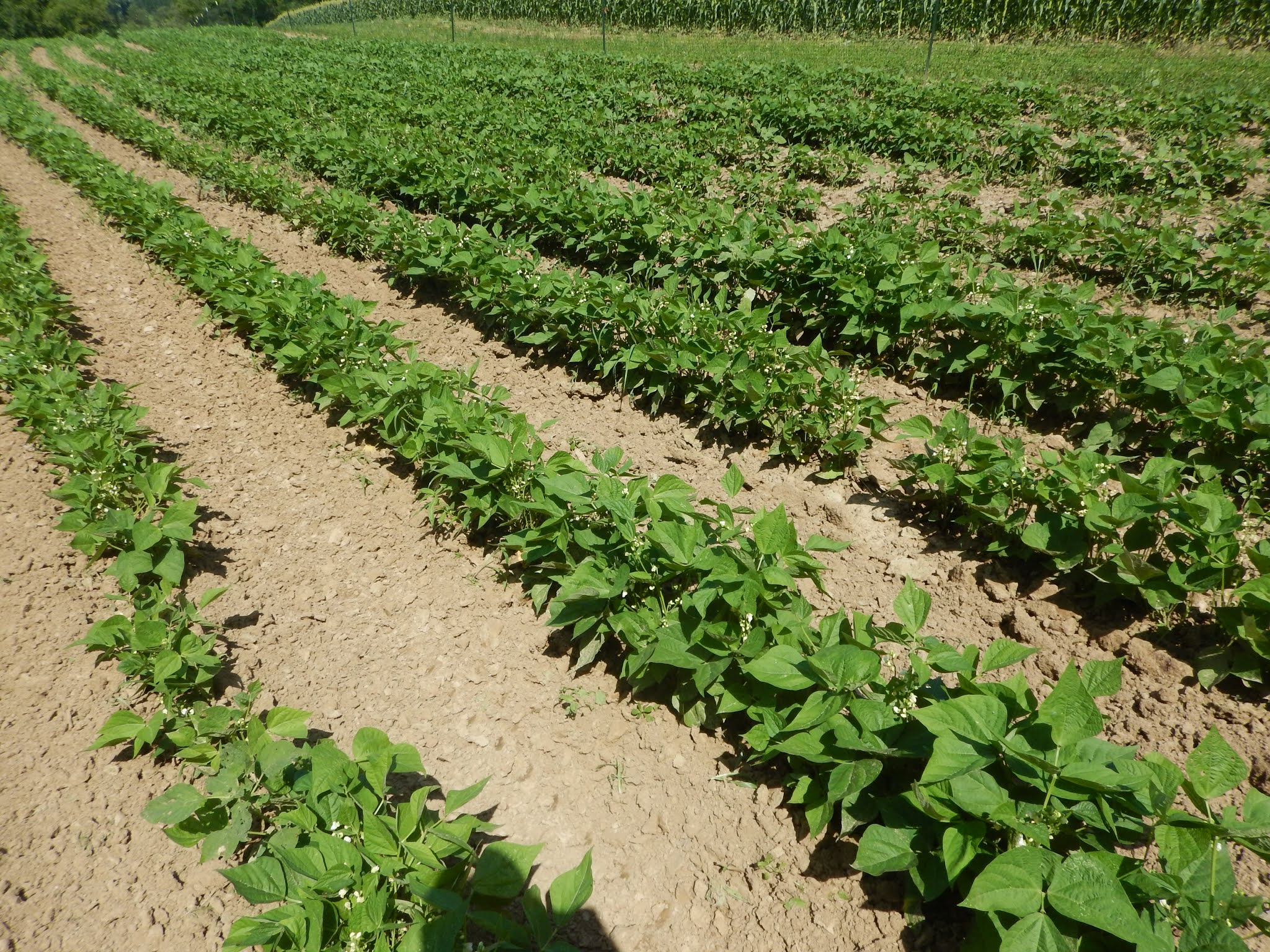
An upcoming crop of green beans,
nicely cultivated and setting on blossoms!
That’s enough about weeds though, lets look at some crops! Our first two crops of beans have yielded very nicely and after this week we still have three more crops coming up. They are all looking good and we’re hopeful we’ll be able to keep the bags of beans coming your way! We also have three crops of edamame coming up. The deer population in our area is fully informed that we grow edamame, so we have to be proactive and make sure we keep these crops surrounded by a tall deer fence to keep them from eating the plants! So far, so good and we hope to deliver the sweet, tasty fresh edamame in the near future.

An early crop of sweet corn, notice the small ears of corn.
Summer isn’t summer without sweet corn! While sweet corn isn’t a big money maker for our farm, I’ve always said it’s a crop worth growing because it earns us friends! Every year we have the goal of growing “the best sweet corn ever!” We’ve had many successful years doing so and hope we can pull it off again this year! We have planted five crops and they’re looking pretty good! The first crop suffered some loss from red-winged blackbirds that dug up about 50% of the seed. The remaining crops fared much better, but we still need to be diligent about keeping the critters out of the field! If the raccoons, deer and birds get a taste of the sweet ears of corn, they can really do some damage. These fields are also fenced and we’ll be monitoring them very closely as the corn matures and reaches the point of harvest. We’re also monitoring for the corn earworm moth which migrates from the south. With the reduced bat populations we have a larger challenge to produce sweet corn without these worms. The researchers and experts say it can’t be done organically, but with careful monitoring and a high level of management we have pulled it off many times before! So, we know it can be done and we’re going to do our best. Please know this is quite challenging to achieve, so if you do find a worm, please be forgiving.

The beloved SunOrange tomatoes--so sweet they're like candy!


The cutest little watermelon!
Tomatoes are another beloved summer crop we know you are all looking forward to. We actually had our first sweet taste of SunOrange tomatoes this week! I only found enough to pick a small handful and between Andrea and Amy, they didn’t last long. We have two crops of tomatoes planted, mulched, staked and tied and looking great! The first crop has a lot of fruit set on and we’re hoping we can start picking some of the early varieties within the next few weeks. The eggplant field is also looking quite nice. The plants have blossoms and the start of some small fruit setting on. Things could happen fast at this point, so we anticipate we’ll start harvesting eggplant within the next few weeks.

Our melons and watermelons are not far from the eggplant field, so it seems fitting to report their status now as well! After a few low yielding, disappointing years, this year’s melon and watermelon fields are looking good and setting fruit.  We’re keeping our fingers crossed that this continues and we’ll all be eating some of those “juice dripping down my chin” melons very soon! Lastly, I want to mention the peppers. We’re finally starting to see some fruit set on. The ½-inch jalapenos are quite cute and we’re hoping some of the other varieties will be ready to pick very soon.

While we’re in the midst of summer, we’re already looking to fall crops! The sweet potato vines are spreading nicely and the winter squash fields look great! On our field tour last Sunday we even spotted a nice-sized festival squash! It will be awhile before it’s mature and ready to harvest, but seeing that fruit made us realize how quickly this year is going! We’ve also started planting our fall root crops and within the next couple of weeks we need to plant beauty heart radishes, black Spanish radishes, daikon, turnips, etc.

A view of the sweet potato (left) and winter squash (right)
fields with blue skies overhead!
We also have to look ahead to the next growing season. We are already selecting and reserving fields for a new crop of strawberries knowing we need to plant a new field in 2021. We are also in the midst of garlic harvest which means we’re selecting and saving garlic for next year’s crop. We have had an unexpected increase in CSA members this year, more than double from last year. We welcome this increase and are hope you will all join us again next year as well! CSA is our preferred market to grow for and benefits our farm in many ways. We’ll see what the next year holds. Later in the fall we will be asking you to commit to the 2021 growing season so we may better plan for next year. We hope you will end this season with an increased appreciation for local and high quality organic produce along with a desire to make a commitment for next year. But for now, enjoy the rest of the season!

Wednesday, October 23, 2019

Sweet Potatoes 2019

By Chef/Farmer Andrea


This year's sweet potato vines in July.

We’re excited to be delivering the first of several weeks of sweet potatoes!  Sweet potatoes are an important crop for us, not so much because they are a big money maker, but more so because they are an important part of our diet and we love to eat them!  Richard may or may not admit this, but I think he also likes the challenge of growing a tropical plant in the upper Midwest!  As with every crop, you just never know what kind of a year you will get.  Up until 2016, we had always had a sweet potato crop to harvest.  Some of you may remember fall 2016 when we had a devastating 100 year flood at the end of September.  Sadly, our sweet potatoes were planted in field #65, right next to the river.  The rain started to fall, the river started to rise and quickly became a raging, angry beast that came out of its banks and flooded our beautiful sweet potato field.  It was heartbreaking as we were only one week away from harvest.  Even now it’s hard to write about that year when we lost the entire sweet potato crop.  We all survived with plenty to eat, but a winter without sweet potatoes just isn’t right!  We came back in 2017 and had a pretty good year.  The crop wasn’t perfect, but we were just thankful to have something to harvest!  In 2018, Richard and the crew were determined to have a knock-out sweet potato year.  Their determination paid off and we had the best sweet potato crop in the history of Harmony Valley Farm!  We harvested over 30,000 pounds of sweet potatoes and they were gorgeous!  It’s hard to match a crop like that, but we set out to do so again this year.

Digging sweet potatoes.
We planted this year’s crop on June 1.  We get our sweet potato plants from two organic producers in North Carolina.  Due to a cold, wet start to their season, they shipped our plants about 10 days later than we had planned.  Nonetheless, the field was ready before we received them so we were ready to start planting them the same day they arrived!  Most of the plants survived the transplanting process and took off.  Overall, the crop looked to have a good start.  We fertilized and delivered nutrients as needed, but there were periods of time when the soil was wet and saturated, despite the fact that we grow on beds covered with plastic mulch for heat gain.  I mentioned earlier that sweet potatoes are tropical plants.  They thrive in hot, dry climates.  In wet conditions, you often end up with scraggly roots and the plants don’t set potatoes as they should.  This year’s yields came in at about 50% of last year with an estimated 17,000 pounds.  The potatoes are nice and tasty, we just didn’t find as many potatoes per plant as in previous years.  Our two main varieties this year are Covington and Burgundy.  Both are orange fleshed sweet potatoes known to be sweet and flavorful.  We also grew Murasaki sweet potatoes, a white fleshed Japanese variety.  We haven’t had much luck with these potatoes in past attempts.  They have never yielded very well and the potatoes are always very small and skinny.  I can’t help myself though, it’s a delicious potato with sweet, moist white flesh.  Somehow I managed to convince Richard we needed to try them yet again this year.  Surprisingly, the yield was significantly improved and we harvested the largest potatoes we’ve ever seen on this variety!  Evidently this variety actually thrives with a little more moisture.  Despite a disappointing yield, we did make some important observations that will help us raise future crops and we’re always happy to have something instead of nothing.  We do plan to deliver sweet potatoes in most, if not all, of the remaining CSA boxes and we’ve allocated some to offer as a Produce Plus offering before Thanksgiving as well as part of our End of Season special offering.  We also partner with the Lakewinds Food Co-Ops in Minneapolis and they’ve done an outstanding job selling and promoting our sweet potatoes in their stores in previous years.  This year we’ll send a few their way, but not nearly what we or they had hoped for.  Because we knew our yields would be low this year, we saved every little potato when we were harvesting.  Typically when the potatoes are more abundant we would leave some of the little guys in the field. But this year, every potato is precious to us.  So we have some potatoes we’re sorting out as “Baby Bakers.”   Evidently we’re not the only ones in the country who have small, fat potatoes.  Within the last year other companies have started selling these baby sweet potatoes as well. They are completely usable potatoes, just much smaller than the historical industry standard.  You’ll likely receive some in your box before the end of the year.  They are the cutest little things and are actually easier in many ways to work with compared to some of the bigger potatoes.

Freshly washed sweet potatoes.
After we harvest the sweet potatoes, we bring them into our nursey greenhouse in wooden crates.  We stack them up and once they are all harvested, we start the curing process.  When sweet potatoes first come out of the field they are not very sweet and flavorful.  The skins are also very tender and delicate, so we have to handle them very careful with gloved hands to minimize any surface damage to the skin.  We hold them at a temperature of 85-95°F with humidity of 90-95% for 7-10 days.  During this time the greenhouse feels like a sauna!  This process helps to set the skins so they’ll last longer in storage. It also develops the starches into sugars, making them a truly sweet potato!

Sweet potatoes are best stored at a temperature of 55-65°F.  Do not store them in your refrigerator or at temperatures less than 50°F or they’ll get chill injury.  Store them in a cool, dry location or on your countertop until you’re ready to use them.

There are so many things you can make with sweet potatoes ranging from sweet potato casserole to sandwiches, fries, soup, cakes, pies, donuts, salad and more!  Of course, one of the simplest things you can do is just bake them and eat them right out of their skin with a touch of butter!


Sweet Potato Kimchi Pancakes

photo by John Kernick for epicurious.com

Serves 8 

1 pound sweet potatoes 
1 cup packed kimchi (approximately 7 ounces), chopped finely 
1 ½ tsp finely chopped garlic 
1 to 2 Tbsp chopped fresh Serrano chiles (The amount of chile pepper you use may be adjusted to your liking and will also be dependent upon the heat of the kimchi. If you do not have fresh chiles available, you may also substitute pickled jalapeño or a pinch of dried red pepper flakes.) 
1 cup thinly sliced onions 
1 large egg, lightly beaten 
1 tsp kosher salt 
¾ cup all-purpose flour 
About ½ cup vegetable oil
  1. Peel sweet potatoes and julienne (very small strips) using a mandolin or the shredding attachment on a food processor. You should have about 6 cups of sweet potatoes once they are cut. 
  2. Stir the potato together with the remaining ingredients except for the oil. Let the mixture stand at room temperature until wilted and moist, about 5 minutes, then stir again. 
  3. Heat 2 Tbsp of the oil in a 12-inch heavy skillet over medium-high heat until it shimmers. Using 2 serving spoons, scoop up some of the sweet potato mixture in one spoon and use the other one to compress the mixture and form a rough patty. Care- fully slide the patty off the spoon and into the hot pan. Repeat the process to add another 4 or 5 pancakes to the pan. You will need to do several batches to cook all the pancakes. 
  4. Cook until golden brown, 1 ½ to 2 minutes, then flip the pancake. Add a little more oil if necessary. Cook until golden brown, 1 to 2 minutes more. Transfer to a plate lined with paper towels or to a baking rack on a sheet pan. Hold the pancakes in a warm oven     (set at 150-200°F) until you are finished frying the pancakes and are ready to serve them. Add oil to skillet between batches as needed. 
  5. Serve warm with a dipping sauce of your choice. The original recipe was accompanied by a soy-vinegar dipping sauce, but I prefer to serve them with a dollop of sour cream or sour cream mixed with lime juice and cilantro. 
  6. If you have extra pancakes leftover, they can easily be cooled and frozen. When you are ready to use them, reheat the unthawed pancakes in a 375°F oven.
This recipe is a long time favorite!  It was originally published in Gourmet magazine and can be found at www.epicurious.com.

Wednesday, October 10, 2018

Sweet Potato 2018

By Farmer Richard

Sweet Potato Harvest, 2017
Every year is different.  How was this year’s crop?  Well, considering we had a cold, wet spring followed by a wet late summer which continued into fall, what would you expect for a tropical, hot and dry loving plant?  Maybe a crop failure?  Surprise!  From the 16,000 slips, planted on 1.5 acres of sandy river bottom ground we brought in a surprising 33,300 pounds of very nice sweet potatoes!  Less than the average yield from North Carolina or California, the leading sweet potato producers in the US, but our unique production system of planting into raised beds covered with green plastic really surprised us!  Even though it was far too wet when we harvested them the excess water had drained off between the beds, so under the raised plastic beds, the soil was only moist and the sweet potatoes had happily produced a nice “banana bunch” like cluster.  We only used our buried irrigation lines to deliver a bit of fertilizer and a new organic product to deter the worms that had previously produced deep holes in the developing sweet potatoes.  Well, something worked!  You’ll notice there are almost no holes this year!  Thanks to Kyle’s feedback (Madison CSA member) about the holes on some of our sweet potatoes last year, we tried to address the problem and appear to have succeeded!  We listen, we try. 

Last year we did a more extensive trial of new varieties and asked for feedback on your favorites.  Based on last year’s trials and your feedback, we chose two varieties, “Burgundy” and “Covington,” both available from our certified organic friends at New Sprout Farms.  We also added a small amount of the Japanese white fleshed variety “Murasaki” on Andrea’s insistence.  They produced only ⅓ of the volume of the best two, but they are so “unbelievably sweet” even before they were cured.  Despite the meager yield, this is by far the best yield we’ve ever seen on this potato and they actually produced sizeable potatoes this year!  We hope to pack a few in your boxes this fall.


Sweet potatoes "curing."
After last year’s variety trials, which you can read about on our blog, we find that our refractometer reading for “Brix” does not always reflect the eating experience.  The fact that different varieties have different levels of the 3 sugars, sucrose, fructose, and maltose actually plays into the eating experience.  The Brix measurement we get only reflects overall sugars, but does not give us an indicator of the overall sensation of sweetness.  So while we do still measure brix levels, we’re really left with just cooking them and eating them to see how they taste!  We did “cure” them for a full 10 days at 85°F and 90% humidity.  We burned up a bunch of wood and some propane in the process, but we think it was worth the wait!

Look forward to an abundance of sweet potatoes in all remaining boxes and feel free to order extras for winter.  We’ll offer them as a produce plus item before Thanksgiving and again in December.  We plan to eat them until spring.  Of course, we always appreciate your feedback, so let us know what you think! 

One little side note in closing, our sweet Captain Jack, “The Dog,” has developed a very strong liking for dried sweet potato slices when we tried to find healthy chew treats for him.  So with Jack as tester, I have developed the precise method of slicing, baking, and drying for a shelf stable, healthy organic treat for special dog friends.  Of course, made from the “not so pretty” sweet potatoes, but just a tasty.  If you have a four-legged friend that might be interested in trying these, watch for this offering from me & Captain Jack later in the season.

October 11, 2018 - This Week's Box Contents, Featuring Sweet Potatoes


Cooking With This Week's Box


Yellow & Red Onions: Sweet Potato and Red Lentil Coconut Curry Soup (see below); Roasted Autumn Sweet Potato Salad (see below); Acorn Squash Quesadillas with Tomatillo Salsa; Sheet Pan Chicken & Broccoli; Mizuna Quinoa Salad with Lemon Scallion Vinaigrette

Garlic: Sweet Potato and Red Lentil Coconut Curry Soup (see below)

Broccoli or Broccoli Romanesco: Sheet Pan Chicken &Broccoli  

White or Yellow Cauliflower: Cauliflower Tots

Sugar Dumpling Squash: Acorn Squash Quesadillas with Tomatillo Salsa
   
Honeynut Butternut Squash: Chai Spiced Bread

Baby Spinach: Roasted Autumn Sweet Potato Salad (see below)  

Salad Mix: Roasted Autumn Sweet Potato Salad (see below)
Burgundy Sweet Potatoes: Sweet Potato and Red Lentil Coconut Curry Soup (see below); Roasted Autumn Sweet Potato Salad (see below)

The moment we’ve all been waiting for…SWEET POTATOES!  After we lost our entire crop two years ago, we all hold our breath until we know for sure the sweet potatoes are harvested and stored away safely in our greenhouse.  If you haven’t already, please take a moment to read Farmer Richard’s article this week.  We have a great crop this year and we’re excited to start sharing them with you this week.  Our featured recipes this week give you two options to start your sweet potato cooking season.  The first is a delicious, and simple, recipe for Sweet Potato and Red Lentil Coconut Curry Soup (see below).  In this recipe you roast the sweet potatoes before adding them to the soup which adds a little extra layer of sweetness and flavor.  The other recipe is for Roasted Autumn Sweet Potato Salad (see below).  I think this is a great recipe for this week with our fall spinach or salad mix.  You could even add a little crumbled bacon if you like. 


Acorn Squash Quesadillas with Tomatillo Salsa
photo from Smitten Kitchen
I continue to collect winter squash recipes and appreciate this recipe for Acorn Squash Quesadillas with Tomatillo Salsa that was shared by a member in our Facebook Group.  Of course we don’t grow acorn squash, but you can use the sweet and delicious sugar dumpling squash in this week’s box in place of it.  This is a perfect recipe this week to wrap up our season with peppers and tomatillos.  You can use both in this recipe along with a jalapeno or the Korean chili peppers. 

The other winter squash selection in this week’s box is the beloved little honeynut butternut squash.  This is another one of our sweet specialty squash varieties that is really quite good just baked and enjoyed with a little salt and a pat of butter.  Of course, you could bake it and use the flesh to make this delicious Chai Spiced Bread, a recipe that a member shared with us several years ago.  I’m warning you…it’s delicious!
I’ve really been enjoying the carrots this summer and fall and I think the thing I appreciate the most about them is how easy it is to prepare a delicious, simple dish because the carrots themselves are so good!  This week I am into roasting and want to try this recipe for Honey-Maple Roasted Carrots.  Enjoy these as a simple side dish to make a meal as simple as a seared pork chop, the carrots and a salad made with this week’s salad mix.

Sheet Pan Chicken & Broccoli
photo from Overtime Cook
I’ve seen recipes for Cauliflower “tater” tots before, but they always seem complicated. This recipe for Cauliflower Tots actually seems pretty manageable, so I’m going to give them a try this week!  Serve these with a burger or grilled cheese sandwich for an All-American meal!  As for this week’s broccoli or broccoli Romanesco, these will be used to make a simple dinner of Sheet Pan Chicken & Broccoli.  Serve this with steamed rice for an easy dinner.

This is the time of year when some of our Asian greens that are a little spicy taste the best.  This week’s boxes include mizuna, either green or red.  Check out Early Morning Farm’s list of 7 Ways to Use Mizuna including this recipe for Mizuna Quinoa Salad with Lemon Scallion Vinaigrette.  Of course we don’t have scallions now, but red onions would work as well. 


What should we do with the last of the sweet peppers?  Check out The Food Network’s “10 Ways to Use Sweet Mini Peppers”
and you’ll find tasty recipes including one for Sweet Pepper Poppers!

We did it!  Another week of delicious, nutritious and tasty meals.  Do you ever just stop to consider how many different vegetables you’ve consumed over the course of the season?  This is our 24th week of deliveries.  If anyone goes back and counts how many different things we’ve had to cook with, please let me know what number you come up with!  We still have more delicious vegetable tricks up our sleeves as we finish out the season.  Have a great week!—Chef Andrea

Vegetable Feature: Sweet Potatoes

This week we’re excited to be packing sweet potatoes in your boxes!  Sweet potatoes, which are actually a tropical vegetable, are an important part of our fall and winter diets.  If stored properly you can eat sweet potatoes all winter! The ideal storage temperature for sweet potatoes is 55-65°F.  They can get chill injury if stored at temperatures below 55°F, so if you don’t have the perfect location to store them at their ideal temperature, it’s better to store them on your countertop in your kitchen instead of putting them in the refrigerator.

Straight out of the field, our sweet potatoes tasted pretty good, but not good enough to eat.  That’s right, we have a rule around here that you don’t really eat sweet potatoes for at least two weeks after they are harvested.  When they are first harvested the potatoes are starchy, not very sweet or tasty, and the skins are very tender requiring careful handling.  Sweet potatoes aren’t truly sweet potatoes until we “cure them.”  Curing is a process by which we hold the sweet potatoes at high heat and high humidity for 7-10 days, basically it’s kind of like a sauna for sweet potatoes!  During this time the starches in the potatoes are converted to sugars and the skins become more stable for long term storage. 

Sweet potatoes are less starchy and more sweet and moist than a regular potato and have a wide variety of uses.  You can simply bake them whole until fork tender and eat the flesh right out of the skin.  They are also delicious cut into bite-sized pieces and roasted or cut them into wedges or thin slices and make roasted fries or chips.  If you’re going to do this, it’s best to put the wedges or slices of sweet potatoes on a rack in a pan.  If you do this, the air and heat from the oven can better circulate on all sides of the sweet potato making it more crispy and less soggy.  Sweet potatoes also make delicious, hearty soups and stews, may be added to chili, shredded and fried like hash browns, or just simply cook and mash or puree them. 

Sweet potatoes can also be incorporated into baking.  Sweet potato pie is a decadent way to eat a vegetable.  If you’re going to make pie, consider this Sweet Potato Pie with Pecan Topping featured at MarthaStewart.com.  It’s delicious served with Bourbon Whipped Cream.  You can also use sweet potatoes to make biscuits, rolls, quick breads, cookies, bars, cheesecake and more! 

Sweet potatoes pair well with a wide variety of ingredients, which makes them so versatile in their use.  They pair very well with apples and pears as well as other root vegetables, bitter fall greens, dried beans and greens such as kales.  They also go very well with coconut, ginger, chiles, butter, cream, citrus and nuts of any kind.

If you haven’t read Farmer Richard’s main article for this week, please take a minute to do so as it will help you understand more about what it takes to actually grow this tropical vegetable in a northern climate! 

Roasted Autumn Sweet Potato Salad

Yield: 6 side salads

Roasted Vegetables:
2 cups ½ inch cubed sweet potato
2 cups ½ inch cubed red onion
3 Tbsp olive oil
4 sprigs of fresh thyme
2 sprigs of fresh sage
1 tsp kosher salt
A couple cracks of black pepper

Crushed Croutons:
1 Tbsp salted butter
½ cup panko

Dressing:
1 ½ Tbsp white wine vinegar
1 Tbsp Dijon mustard
1 tsp pure maple syrup
Pinch of kosher salt
A couple cracks of black pepper
3 Tbsp olive oil

Greens:
5 oz spinach (or substitute salad mix)
½ cup pepitas (pumpkin seeds)
¼ cup dried cranberries or tart cherries
¼ cup goat cheese or crumbled feta
Fresh thyme leaves (optional)
  1. Prepare the roasted vegetables.  Preheat the oven to 450° F.  Line a baking sheet with parchment paper.  Place the prepared potatoes and onion on the baking sheet.  Add all the remaining roasted vegetable ingredients to the pan; toss to coat.   Bake for 25 to 30 minutes or until lightly charred, stirring halfway through.
  2. Make the crushed croutons.  In a 10-inch cast-iron skillet melt the butter over medium heat.  Add the panko and toast until golden, about 3 minutes.  Set aside.
  3. Make the dressing.  In a serving bowl, whisk together all of the dressing ingredients until emulsified (until the oil and vinegar become one).  This can be made 3 weeks in advance and stored at room temperature.
  4. Assemble the salad.  Add all the greens ingredients into the salad bowl along with the roasted vegetables (including the crispy herbs) and crushed croutons.  Toss to combine.  Serve immediately.


Recipe borrowed from Melissa Coleman’s book, The Minimalist Kitchen.

Sweet Potato Red Lentil Coconut Curry Soup


Yield:  4 servings


2 pounds sweet potatoes, peeled and diced into small pieces (about 5 cups)

2 ½ Tbsp olive oil

1 Tbsp fresh grated ginger
1 onion, diced
1 clove garlic, minced
4 cups vegetable stock or water
1 (15-oz) can coconut milk
1 ½ Tbsp red curry paste
1 (15-oz) can crushed tomatoes
1 cup red or yellow lentils
Salt, to taste
Lime juice, to taste
Cilantro, chopped, for serving
  1. Preheat oven to 425°F.  Toss sweet potatoes with 1 ½ Tbsp of olive oil and roast for 25-35 minutes or until golden brown and tender. 
  2. Meanwhile, in a medium pot, heat the remaining tablespoon of oil over medium heat.  Sauté the ginger, onion, and garlic in oil until softened.  Add the coconut milk, red curry paste, tomatoes and red lentils.  Cover and simmer for 25 minutes.  Add roasted sweet potatoes and continue to simmer for 10-15 minutes. 
  3. Use an immersion blender or regular blender to blend until smooth or to desired consistency.  Thin with additional water if needed.  Season with salt and the juice of one lime.  Stir to combine.  Adjust seasoning to your liking with more salt and/or lime juice as needed.
  4. Serve hot, garnished with chopped cilantro.

Recipe adapted from Elizabeth Stein’s book, Eating Purely.