Cooking With This Week's Box

Purple & Green Scallions: Skillet Scallions; Scallion Pancakes
Garlic Scapes: Cheesy, Garlic Zucchini Rice; Garlic Scape & Cilantro Pesto
Red Batavia Head Lettuce: Cobb Salad
Sweetheart Salad Cabbage: Chopped Thai Chicken Salad; Summer Vietnamese Rice Noodle Salad
Collard Greens: Collard Greens with Bacon; Collard Greens Spring Rolls
Green or Italian Zucchini: Last week’s vegetable feature article; Zucchini Pizza Casserole; Cheesy, Garlic Zucchini Rice
Green or Silver Slicer
Cucumbers: Shaved Fennel, Dill &
Cucumber Salad; Creamy Cucumber Salad; Homemade Gingerale with Cucumber; Creamy Pineapple Cucumber Smoothie
Snow or Sugar Snap Peas OR
Strawberries: Gingered Stir-Fry with Shrimp and Peas
Green Top Red Beets: Beet Recipe Collection from
DishingUptheDirt.com; Roasted Beet Frittata (see below); Beet
& Goat Cheese Quesadillas with Yogurt & Lime (see below); Caramelized Fennel & Beet Pizza
Fennel: 2019 HVF Fennel Vegetable Feature Article; Caramelized Fennel & Beet Pizza; Pasta with Golden Fennel; Shaved Fennel, Dill & Cucumber Salad
Welcome to the month of July!
We’ve reached the halfway mark for 2020—how is this possible! Summer vegetables are coming on fast! The peppers and tomatoes have set on
blossoms. The tomatillo plants are
already loaded with little lantern-like tomatillo husks and we may be able to
start picking them within a few weeks!
But before I get ahead of myself, lets get back to this week’s box and
our featured vegetable—BEETS! This week
I will again refer you to Andrea Bemis’s collection of beet recipes on DishingUptheDirt.com. Andrea has over 60 recipes with beets and
this week we’re featuring two of them.
Andrea and I share the same love of beet greens, so many of her recipes
make use of the top and the bottom of the beet!
Her Roasted Beet Frittata
(see below) is on the menu for Sunday brunch and her Beet & Goat Cheese Quesadillas with Yogurt & Lime (see
below) will make for a light lunch of dinner.
 |
| Caramelized Fennel & Beet Pizza |
 |
| Homemade Gingerale with Cucumber, photo from food52.com |
This week the cucumbers are kicking in and I’ve already made my first
batch of Creamy Cucumber Salad! Cucumbers are nature’s thirst quencher, so
don’t be afraid to use them in refreshing drinks this summer. I came across this recipe for Homemade Gingerale with Cucumber or try this Creamy Pineapple Cucumber Smoothie!
In our world, cucumbers and zucchini go together as they are planted
and harvested at the same time, so before we move on we’ll cover zucchini. If you missed last week’s Vegetable Feature Article about zucchini, you should check it out.
I compiled a list of 20 recipes using zucchini, but what I really want
to do is grow that list to 100 recipes!
So, please send your favorite zucchini recipes my way and we’ll see if
we can collectively grow that list! In
the meantime, here are a few ideas for how to utilize this week’s
zucchini. Check out this Zucchini Pizza Casserole,
surely the kids will like this one! They
might also like this Cheesy, Garlic Zucchini Rice.
 |
| Scallion Pancakes Photo by Kelli Foster for thekitchn.com |
Last week I watched one of Food52.com’s “Genius” recipe videos for Skillet Scallions. This recipe caught my attention because it
only has 2 ingredients! I made these
earlier this week and they are not only super-simple to make, but they taste so
good and made a great accompaniment to the steak I served with it. The scallions are cooked by a combination of
sautéing in butter and steaming. They
turn out very silky, slightly sweet and tender.
You really should try them! The
other recipe I want to use while we’re in the height of scallions is Scallion Pancakes. I’ve never made this Chinese item, but I want
to learn more about Chinese food, ingredients and cooking so I might as well
give them a try!
We call it Sweetheart Cabbage, but I recently learned some people refer
to this pointy head cabbage as Cone Cabbage.
This cabbage shines at its best in raw salads such as this Chopped Thai Chicken Salad that was suggested by a member in our Facebook Group. I was also reminded of my own recipe for Summer Vietnamese Rice Noodle Salad that also uses this
cabbage. Both of these salads are great
options for a light dinner or lunch item that you can put on the table in very
little time.
This is our final week for garlic scapes and then we’ll transition to
fresh garlic. If you haven’t yet made a
batch of Garlic Scape & Cilantro
Pesto,
I’d encourage you to do so. I made a
batch last week and we’ve been enjoying it on burgers, scrambled into eggs, on
toast with a little wedge of cheese, etc.
The flavor is good the first day and even better the second!
 |
| Cobb Salad, photo by Joe Lingemen for thekitchn.com |
I’m not sure why I saved collard greens towards the end when in fact
they were on the top of your box?! The
collard field looks so nice right now that we couldn’t help but send these your
way while everything looks so nice. Use
them in traditional preparations such as the traditional Collard Greens with Bacon or use them to make Collard Greens Spring Rolls.
Lastly, I’d like to say a few words about strawberries and peas. This week marks the official end of
strawberry picking for HVF. Now that we
aren’t having strawberries to tend to, we’re spending our time picking
peas! I admit, I seldom ever do more
than just eat these, pod and all, but I just might try this recipe for Gingered Stir-Fry with Shrimp and Peas!
Ok, that’s it, we’ve conquered another box! I hope you all have a safe and enjoyable
holiday weekend!
Chef Andrea
Vegetable Feature: Green Top Beets
By Chef Andrea

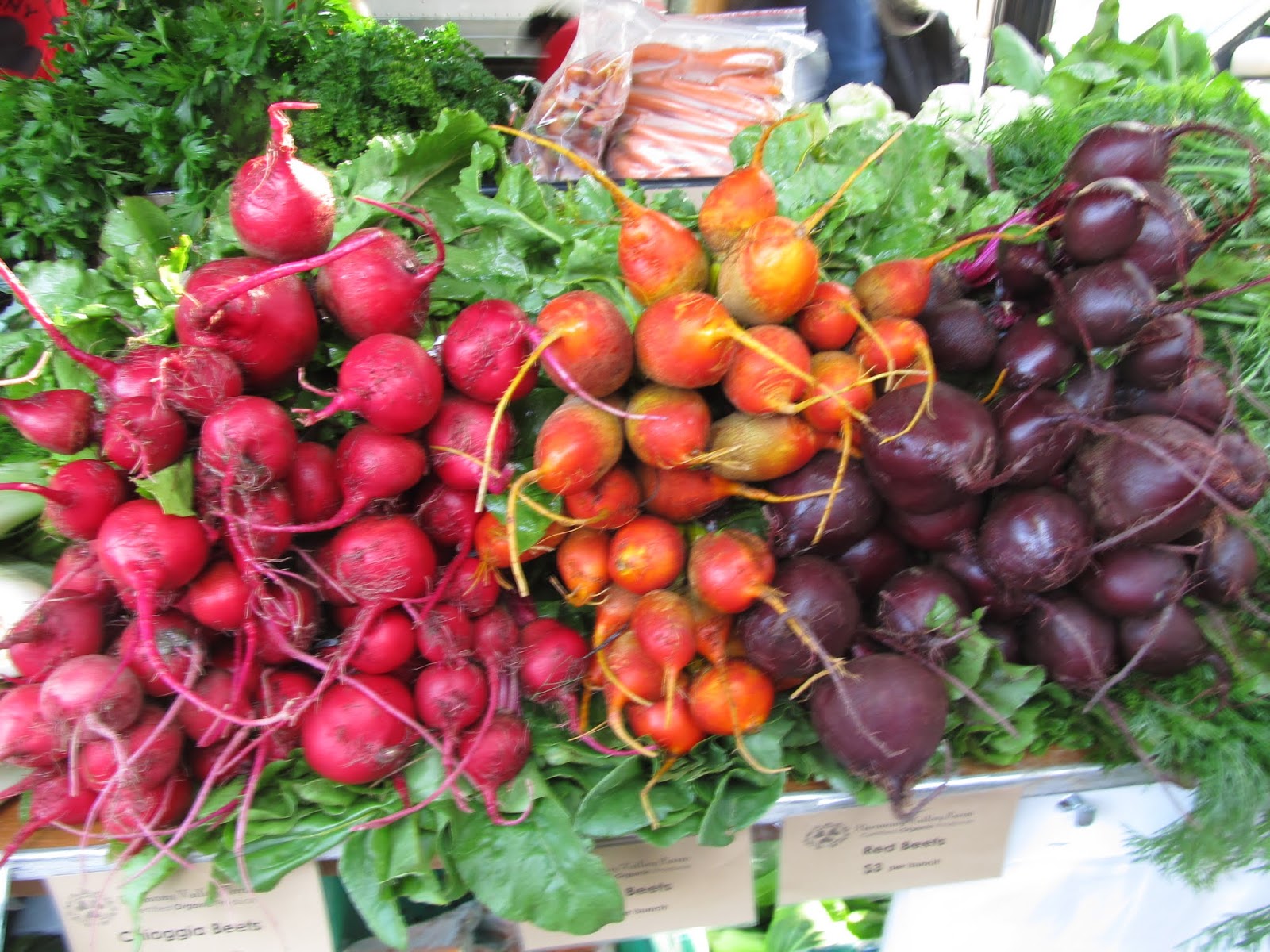
Most people are familiar with the traditional red beets, but did you know there are different colors of beets? We grow three different colors including the traditional red beet as well as chioggia beets (candy striped inside) and golden beets. In general, all beets, regardless of color, taste like beets. Red beets have more of that traditional earthy beet flavor whereas chioggia and golden beets are generally more mild in flavor. Golden and Chioggia beets are typically as sweet or sweeter than the red beets. Individuals who think they don’t care for beets generally like and will eat golden beets. If this is you, I hope you’ll give them a try.
 |
| Shaved Fennel & Beet Greens Salad |
Beet roots are usually cooked, but may be eaten raw. Thinly sliced or grated beets are a nice addition to salads and slaws. As for cooking, beets are generally either boiled or steamed on the stove top or roasted in the oven. The cooking time will vary depending upon the size of the beet. The general recommendation is to cook beets with their skins on and the root tail intact. For red beets in particular, this minimizes the leaching of the water-soluble color compounds from the beet. Once the beets are cooked, cool them so you can handle them and the peel should be easy to remove. You know a beet is fully cooked when the beet easily slides off a skewer, fork or cake tester stuck into the middle of the beet.
 |
| Balsamic Glazed Beets & Greens |
Once cooked, beets may be used in salads or just simply reheated with a pat of butter and some salt. You can also blend beets into hummus or other dips. Beets pair well with a lot of other ingredients including vegetables such as fennel, celery, carrots, red onions, shallots, arugula and other salad greens as well as other root vegetables. They also go well with fruits including apples, oranges, lemons, pears, avocadoes and pomegranates. Additionally, beets pair nicely with goat cheese, feta cheese, blue cheese, butter, nuts, sunflower seeds and pumpkin seeds to name just a few ingredients.
It is best to store beets in the refrigerator. When you get beets with the green tops still on, remove the tops and store them separately in a plastic bag. Try to use them within 5-7 days. Store the beets in a plastic bag in the crisper drawer. They will last longer than the greens.
If you’re interested in learning more about the history and nutritional benefits of having beets in your diet, check out www.justbeetit.com which is entirely dedicated to beets! I’ve also included a list below of several recipes using beets that we have featured in previous newsletters and are available in our recipe archives on our website. Enjoy!
Beet & Goat Cheese Quesadillas with Lime & Yogurt
 |
| photo from dishingupthedirt.com |
2-3 medium to large beets, cut into ½-inch pieces
1 bunch of beet greens or swiss chard (about 3-4 cups worth of greens)
Olive oil
1 small yellow onion, diced
2 cloves garlic, minced
¼ cup goat cheese
¼ cup mozzarella cheese, shredded
Salt & black pepper, to taste
4 whole wheat tortillas
¼ cup Greek-style plain yogurt or sour cream
Juice from 1 lime
½ cup chopped parsley
1. Bring a large saucepan of water to a boil. Add beets and cook until fork tender. About 10 minutes. Drain and set aside.
2. Heat a large skillet over medium heat. Add a little olive oil. Add onions and saute for about 5 minutes. Add garlic and stir in beet greens. Turn heat to low and cook until greens are slightly wilted. remove from the pan and set them aside.
3. In a food processor or blender, combine the cooked beets with a little olive oil, salt and pepper. Blend until smooth.
4. Spread the beet mixture on two of the tortillas, then divide the sauteed beet greens between the two tortillas and top each one with half the cheese. Place second tortilla on top.
5. Return the skillet you cooked the beet greens in to the stove over medium to medium high heat. Cook for aabout 3-5 minutes per side or until the tortilla is lightly browned. Flip them over and cook on the other side for another 3-5 minutes or until lightly browned.
6. Cut each quesadilla into quarters and serve with a dollop of plain yogurt or sour cream, a squeeze of lemon and chopped parsley.
Recipe from Andrea Bemis's collection featured on her website/blog, www.dishingupthedirt.com.
1. Bring a large saucepan of water to a boil. Add beets and cook until fork tender. About 10 minutes. Drain and set aside.
2. Heat a large skillet over medium heat. Add a little olive oil. Add onions and saute for about 5 minutes. Add garlic and stir in beet greens. Turn heat to low and cook until greens are slightly wilted. remove from the pan and set them aside.
3. In a food processor or blender, combine the cooked beets with a little olive oil, salt and pepper. Blend until smooth.
4. Spread the beet mixture on two of the tortillas, then divide the sauteed beet greens between the two tortillas and top each one with half the cheese. Place second tortilla on top.
5. Return the skillet you cooked the beet greens in to the stove over medium to medium high heat. Cook for aabout 3-5 minutes per side or until the tortilla is lightly browned. Flip them over and cook on the other side for another 3-5 minutes or until lightly browned.
6. Cut each quesadilla into quarters and serve with a dollop of plain yogurt or sour cream, a squeeze of lemon and chopped parsley.
Recipe from Andrea Bemis's collection featured on her website/blog, www.dishingupthedirt.com.
Roasted Beet Frittata
 |
| photo from dishingupthedirt.com |
4 medium sized beets with their greens
1 small red or yellow onion, chopped
Olive oil, as needed
1 pound ground pork sausage
1 ½ tsp dried sage
½ tsp crushed red pepper flakes
¼ tsp ground nutmeg
Hefty pinch of salt
6 large eggs
½ cup milk
Salt and freshly ground black pepper, to taste
4 ounces goat cheese
Flaky sea salt, as needed
1. Preheat the oven to 450 degrees F. Separate the beets from their greens and wash both well to remove any dirt. Cut the beet roots into 1/4-inch thick wedges (peeling is optional) and roughly chop the greens. Toss the beets and onion with a little olive oil to coat and place them on a baking sheet. Sprinkle with a little salt and pepper and give them a good toss. Roast in the oven until tender, about 25 minutes, tossing the veggies halfway through cooking. Remove them from the oven and set aside. Turn the oven temperature up to broil and move the rack so that it's 5 inches below the heat.
2. In a bowl, whisk together the eggs, milk and a pinch of salt and pepper. Set aside.
3. In a large bowl, combine the ground pork with the sage, pepper flakes, nutmeg and a hefty pinch of salt. Use your hands to mix well.
4. Heat a 10-inch cast iron skillet over medium-high heat. Add a little olive oil to the pan, and then the pork. cook, using a wooden spoon to break up the meat a bit, until the pork is no longer pink and cooked through. Add the cooked beets and chopped beet greens to the pork and give the mixture a good stir. Add the egg mixture and cook the frittata, lifting up the cooked eggs around the edges with a rubber spatula to let the under cooked eggs flow underneath, 2-3 minutes. Reduce the heat to medium and cook, giving the pan a shake now and again until the eggs are mostly set, but the center is still slightly jiggly, 5-7 minutes more.
5. Dollop the top of the frittata with the goat cheese and sprinkle with a little flaky sea salt. Place the pan under the broiler until the frittata is set and golden brown. About 2-3 minutes.
1. Preheat the oven to 450 degrees F. Separate the beets from their greens and wash both well to remove any dirt. Cut the beet roots into 1/4-inch thick wedges (peeling is optional) and roughly chop the greens. Toss the beets and onion with a little olive oil to coat and place them on a baking sheet. Sprinkle with a little salt and pepper and give them a good toss. Roast in the oven until tender, about 25 minutes, tossing the veggies halfway through cooking. Remove them from the oven and set aside. Turn the oven temperature up to broil and move the rack so that it's 5 inches below the heat.
2. In a bowl, whisk together the eggs, milk and a pinch of salt and pepper. Set aside.
3. In a large bowl, combine the ground pork with the sage, pepper flakes, nutmeg and a hefty pinch of salt. Use your hands to mix well.
4. Heat a 10-inch cast iron skillet over medium-high heat. Add a little olive oil to the pan, and then the pork. cook, using a wooden spoon to break up the meat a bit, until the pork is no longer pink and cooked through. Add the cooked beets and chopped beet greens to the pork and give the mixture a good stir. Add the egg mixture and cook the frittata, lifting up the cooked eggs around the edges with a rubber spatula to let the under cooked eggs flow underneath, 2-3 minutes. Reduce the heat to medium and cook, giving the pan a shake now and again until the eggs are mostly set, but the center is still slightly jiggly, 5-7 minutes more.
5. Dollop the top of the frittata with the goat cheese and sprinkle with a little flaky sea salt. Place the pan under the broiler until the frittata is set and golden brown. About 2-3 minutes.