Showing posts with label baby bok choi. Show all posts

Wednesday, May 29, 2024

May 30, 2024 - This Week's Box Contents Featuring Baby Bok Choi


What's In The Box

Baby Bok Choi: Read more about this week’s featured vegetable on our blog. Enjoy baby bok choi either raw in salads or lightly cooked. Wash it well before use, especially the base where the leaves attach as there may be dirt in the lower ribs.


Asparagus: We are nearly finished with asparagus for the season. We’re hoping for one more week of harvest, but no guarantees. The lower portion of the stems can be tough and “woody,” but this part still has flavor! Save these pieces to make vegetable broth!


Rhubarb: Pies, cakes, cookies, and desserts are the typical “go-to” for rhubarb. But don’t forget rhubarb is a vegetable and may also be used in soups and stews, chutney and sauces. Plus, rhubarb may be cooked down and incorporated into a variety of beverages!


Salad Mix AND Baby Arugula OR Baby Spinach: All of these delicate baby greens have had a bit of stress given the amount of rain they’ve experienced over the past two weeks. As such, the shelf life on these items may not be as long as usual. We encourage you to keep these bags in the refrigerator as the cold will prolong their life. However, it may be best to prioritize using these items within a few days of receiving for optimal outcomes.


Hon Tsai Tai: We are harvesting our second and final crop. This week’s bunches are a little younger than what we were harvesting last week thus the stems should be more tender. You may eat this green raw or cooked and it may be used interchangeably with bok choi or other cooking greens in many recipes. Don’t forget to eat the flowers too!


Baby White Salad Turnips: These tender, sweet turnips do not need to be peeled and require minimal cooking time. The greens are also edible, so don’t throw them away! Rinse them well, pat dry, then rough chop them and add them to pasta dishes or soup.


Pea Vine: Pea vine is a pea plant that is harvested while young and before it starts to blossom. The leaves and tender stems may be used in salads, sauteed or stir-fried, incorporated into soup, or blended into cream cheese or pesto. Sometimes the lower to middle part of the stem can become tough. If you find this to be true, remove the tender leaves and use the stem to flavor soups, stews, and broth.


Cilantro: This is the first of our spring-planted cilantro. Cilantro is not only flavorful, but it also serves as a powerful detoxifier for the body. Enjoy it in salads, blend into smoothies and juices, turn it into a dressing, or use it as a garnish for curries and dishes from other cultures.


Garlic Scapes: Scapes grow out of the top of a hard neck garlic plant as nature’s way of propagating a new plant. We remove them to encourage the plant to shunt its energy into making a bulb of garlic. You’ll find Scapes to be nearly entirely usable, up to the bulbil on the end which can be tough. They may be eaten raw, sautéed, grilled, roasted, or stir-fried.


Mini Bibb Head Lettuce: These little heads of lettuce have endured several inches of rainfall over the past few weeks; thus, they are more delicate and should be used sooner than later. You may notice some rust-colored blemishes on the bottom of the head. Just trim off this portion and use the rest. Wash the leaves well in a sink of cold water. Pat or spin off excess water before using.


CHOICE: Herb Packs—This week we have sent one herb pack per vegetable share. See below for more information!


Recipe Suggestions & Inspiration For This Week’s Box Contents

Bok Choi Salad with Sesame-Almond Crunch

Asparagus Mimosa

Greek Asparagus Salad

Tortellini Pasta with Asparagus, Spinach & Ham

Canal House Shaved Asparagus-Arugula Salad

Chana Saag (Chickpeas & Spinach Cooked with Warm Spices

Cilantro Lime Dressing

Citrus Cilantro Smoothie with Spinach

Hon Tsai Tai & Shiitake Potstickers

Cashew Chicken Lettuce Wraps

Garlic Scape & Cilantro Pesto

Garlic Scape Hummus

Stir Fried Garlic Scapes with Eggs

Creamy Turnips, Grits & Greens

Turnip Greens Pesto Pizza

Rhubarb Soda

Rhubarb Cordial

Salty Rhubarb Almond Crisp

Pea Vine Cream Cheese

Pea Vine Pesto Pasta Salad

Fettucine with Pea Vine Cream Sauce


Vegetable Feature: Baby Bok Choi


Originating in China, Bok choi is a member of the Brassica, or cabbage family. It is sometimes referred to as “Chinese Cabbage.” Bok Choi does have a hint of a cabbage-like flavor, but the vegetable itself bears no resemblance to cabbage. Its thick, white stems and dark, green leaves are all edible.


Preparation & Usage
Bok Choi in the Field
Before using the Bok choi you will need to take a moment to clean it. Fill a sink with cold water and trim the base of the Bok choi to allow the leaves to separate from the main stem. Swish the leaves in the water, and then check the base of each leaf. You may need to wash a little dirt off the base of the stem. If you are cooking the Bok choi, remove the greens from the water and shake off excess water. If you are going to use the Bok choi in a salad, you’ll want to dry them a little more in a salad spinner or put them in a kitchen towel and carefully shake them to remove excess moisture.

Baby Bok choi is tender enough to be eaten both raw in salads and cooked.  It is one of nature’s fast foods as it only takes a few minutes at most to stir-fry, sauté or steam it. I usually slice the stems of baby Bok choi separate from the leaves. If cooking, I give them a few additional minutes of cooking time before adding the leaves. Bok choi may be added to seasonal stir-fries, lightly steamed or sautéed and eaten alongside steamed rice and fish, or even cut in half and lightly cooked on a hot grill. If you’d prefer to eat Bok choi raw in a salad, simply dress the greens with a light vinaigrette.
Freshly Washed Bok Choi

Storage Tips
Store baby Bok choi loosely wrapped in a plastic bag in the crisper drawer of your refrigerator until ready for use.

Additional Fun Facts 
We added baby Bok choi to our repertoire of vegetables several years ago and it quickly became one of our “staple” crops that we now plant every week for as many as 20 weeks during our growing season.


Herb Pack Information


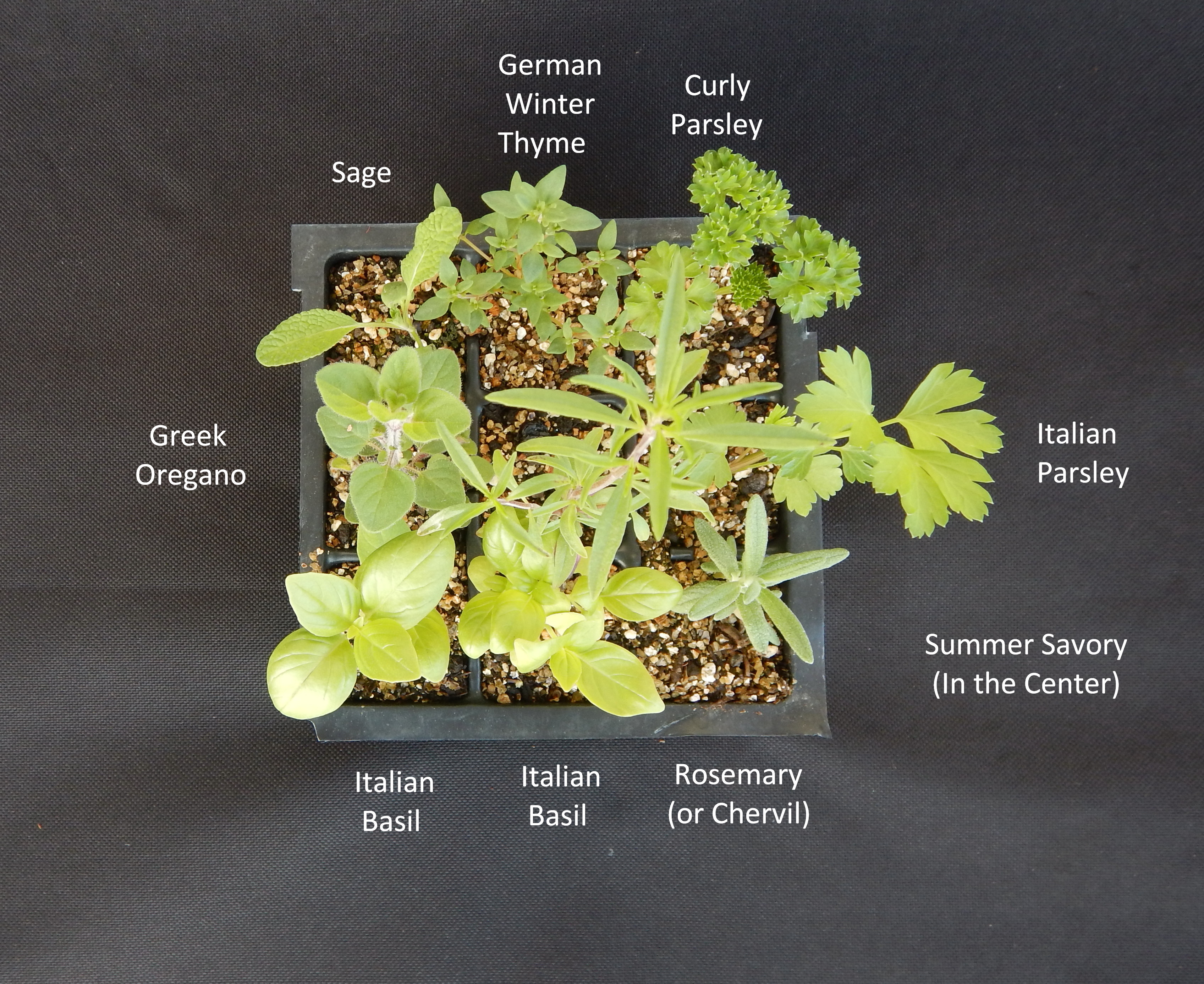
There are four perennial herbs in your pack:  Greek Oregano, Sage, German Winter Thyme & Rosemary (please note some packs may receive chervil in place of rosemary).  Oregano, sage and thyme are more cold hardy and have a pretty good chance of surviving our cold winters.  Consider where you would like to establish these herbs in your garden as they will likely come back year after year.  Sage and oregano will get quite large, so it is best to give them about 2 square feet of space in the area you plant them in.  Thyme is a bit smaller and only needs about 1 square foot of space.  While rosemary is a perennial herb, it is not quite as cold hardy.  To ensure it survives into the next year, it is best to bring it indoors in the fall. If you have planted it in the ground, you can dig it up and put it in a pot to keep inside over the winter. 

Oregano


Sage


German Winter Thyme


Rosemary


The remaining plants in your pack are annuals and include Italian Basil, Italian Parsley, Curly Parsley, Summer Savory, and Chervil (included in some packs in place of Rosemary).  Annuals will only produce for this season and will not survive the winter outdoors. Italian basil needs to be cut back regularly to delay flower and seed formation, so they continue to produce usable leaves.  If you see even the earliest sign of flowering in either of these plants, cut them back to keep them vegetative. Parsley will continue to produce throughout the season, so don’t be afraid to cut these plants back too.  If you can’t use your herbs as fast as they are growing, cut the extra herbs anyway and preserve them.  When harvesting your herbs, use a sharp knife or scissors so you can make a clean cut.

Italian Basil


Italian Parsley

Curly Parsley


Summer Savory


Grilled Bok Choi with Peanut Sauce

Bok Choi is a vegetable most commonly associated with Asian cuisine, but within the broad region of Asia it may be used in many different ways depending upon the cuisine.  This week’s recipe is not necessarily indigenous to any particular country, but it is reminiscent of flavors from Thai and Vietnamese cuisine.  The thing I like about this recipe is just how simple it is to prepare, but very flavorful and tasty!

Yield:  3-4 servings

4 small-medium baby bok choi, split length wise (about 1 pound)
¾ cup vegetable stock or water
⅓ cup peanut butter
1 Tbsp oyster sauce
1 Tbsp soy sauce
1 tsp rice wine vinegar
¼ cup raw or roasted peanuts
Salt & Black Pepper, to taste
1 tsp finely sliced fresh red chili OR ¼-1/2 tsp dried red chili flakes
2 Tbsp crispy fried shallots (optional, when in season)
Freshly chopped cilantro, for garnishing (optional)
Fresh lime wedges (optional)

  1. Heat a grill pan or outdoor grill until smoking. (Alternatively, you can use a large cast iron frying pan)
  2. Meanwhile, soak the bok choi in a big bowl of water, agitating to help dislodge any grit, paying particular attention to the outer layers. Run under cold water, using your thumbs to push the leaves apart for one more gander, but try to leave the stems attached to the base if possible.  If you can’t remove all the dirt in this way, it’s ok to take the outer leaves off and just grill them individually.  Cut each head of bok choi into halves or quarters, allowing the base to hold all of the stems together. 
  3. Once the pan or grill is hot, shake excess water off the bok choi and press each piece face down into the pan. Leave over medium-high heat for about 10 minutes, then flip face-side-up for another 3 minutes or so, until the stalks are mildly translucent.
  4.  Meanwhile, combine the stock/water, peanut butter, oyster sauce, soy sauce and vinegar in a saucepan and mix to combine. If you are using dried red chili flakes, add them to the sauce now. If you are using fresh chilis, you may wish to add them as a garnish just before serving. Place the sauce mixture over medium heat and bring to a simmer, stirring, and adding more stock of the sauce needs to be thinned slightly. Season with salt and black pepper to your liking.
  5. If using raw peanuts, toast these in a pan until golden, then roughly chop.
  6. Arrange the bok choi across a platter. Pour over plenty of the sauce, then garnish with the peanuts, and seasonal garnishes as desired.
  7. Serve as a side dish all on its own, or pair it with steamed rice or noodles and a protein of your choosing (e.g., grilled steak or chicken, tofu) to make a complete meal. Give it a squeeze of fresh lime just before serving if desired.

NOTE:  If you do not have Oyster Sauce, you may substitute it with fish sauce, hoisin sauce or just add additional soy sauce.

Recipe borrowed and adapted from In Praise of Veg:  The Ultimate Cookbook for Vegetable Lovers by Alice Zaslavsky.

Wednesday, June 21, 2023

June 22, 2023 - This Week's Box Contents Featuring Baby Bok Choi


Cooking With This Week's Box

Baby Bok Choi:
Sesame Ginger Grilled Bok Choi (See Below)
Summer Bok Choi Salad with Sesame -Soy Vinaigrette (See Below)

Chinese Scallion Omelette
Photo from www.pickledplum.com
White Scallions:

Rainbow Chard:

Garlic Scapes:

Mini Boston Lettuce:

Green Zucchini and/or Yellow Scallopini Squash:

Strawberries

Kohlrabi:

Baby Arugula:

Green Top Red Beets:

Green Top Red Radishes:

CHOICE--Italian Basil:

Happy Summer Solstice! 

As we continue our journey through the seasons, our spring greens are winding down and we are transitioning into summer greens. Last week we had our first kale, but this week we’ve included rainbow chard and baby bok choi.  So, let’s start with our featured vegetable, baby bok choi.  This week’s recipes are very simple, which is just the style I like for putting quick and easy meals on the table during the busy summer months!  The first recipe for Sesame Ginger Grilled Bok Choi (See Below) left me wondering why I have not grilled bok choi before!  This recipe is simply putting halved bok choi on a grill and then tossing it with a super simple vinaigrette. You can serve this with anything, but I ate it with steamed rice, ground pork with thinly sliced red radishes and sesame seeds to garnish. You could serve it alongside steamed or grilled fish, with rice and a fried egg, or just enjoy it on its own. The second recipe for Summer Bok Choi Salad with Sesame -Soy Vinaigrette (See Below) is also very easy. Basically, cut the bok choi very finely, along with other summer vegetables you have, and toss it with this easy Sesame-Soy Vinaigrette. Garnish the salad with toasted sesame seeds and that’s it!  

It's a big zucchini week!  If you haven’t pulled out your favorite zucchini recipes, or if you don’t have any favorite zucchini recipes, I can help.  This collection of 30 Best Zucchini Recipes  has some good selections to choose from.  Personally, I’m feeling a bit of a sweet tooth this week and these recipes for Zucchini Brownies and Zucchini Donuts are calling my name! 

As zucchini is ramping up, we’re nearing the end of strawberries.  While they’re still available, consider making this Pesto Strawberry Caprese Salad for a light lunch salad.  You could also add these Strawberries and Cream Biscuits to your breakfast or brunch menu!

I’m excited to have fresh beets again as I’ve been waiting to use them to make this Roasted Beet Salad with Kale and Maple-Candied Nuts.  This is a recipe we published several years ago, and it is very delicious. I also included two of my favorite kohlrabi recipes from past newsletters. This recipe for creamy Kohlrabi Custard was a recommendation from a longtime CSA member and friend of the farm.  It’s quite tasty and a different way to use kohlrabi.  I also really like this recipe for Kohlrabi & Chickpea Salad, courtesy of Andrea Bemis from www.disghingupthedirt.

As I sign off for today, I want to extend our gratitude to the individuals who came to the farm this past Sunday for our Strawberry Day celebration! It was so lovely to see your faces again and we enjoyed the conversations we were able to have with you. While the rainstorm was not part of our plan, we did need the rain and are grateful to all of you for making that happen just at the time we were heading to the strawberry field! While it was a bit ironic, it was also very welcomed! Despite the rain, nearly 270 pounds of berries were picked, and everyone had a chance to enjoy a cup of custom-made gelato from Magpie Gelato shop in Viroqua.

Have a great week and I’ll see you back next week for more summer recipes!!  Chef Andrea


Vegetable Feature: Baby Bok Choi

by Andrea Yoder

Baby bok choi is one of our “bread and butter” crops that we grow not only to include in your CSA boxes, but also to support our wholesale and retail partners. Last year we did 19 plantings of baby bok choi from late April through early September that totaled 4.07 acres.  From that acreage we were able to harvest 80,000 pounds of baby bok choi! That’s a lot of bok choi and as you can see, it’s a very important crop for our farm!  While we used to grow full-sized bok choi, we have found these baby bok choi varieties are better suited to our needs. The varieties we grow are naturally this small stature, even at full maturity.                                                                                                                                                                                               Baby Bok Choi is a mild-flavored Asian green that is related to tat soi and hon tsai tai. It is tender enough to be eaten both raw in salads and lightly cooked. I consider it to be one of nature’s fast foods as it only takes a few minutes at most to stir-fry, sauté or steam it. I usually slice the stems of baby bok choi separate from the leaves. If cooking, I give them a few additional minutes of cooking time before adding the leaves. Bok choi may be added to seasonal stir-fries, lightly steamed, or sautéed and eaten alongside steamed rice and fish or meat. It is also often added to ramen or noodle bowls and a variety of soup concepts in various cuisines throughout Asia. It is small enough that it may be chopped or just cooked whole or halved. I mentioned that bok choi may also be eaten raw in a salad, which is a great way to take advantage of its crispy, crunchy attributes.  Since it grows through the entire summer, it’s also a nice alternative to lettuce and spinach which are more difficult to grow in summer heat.  Bok choi salads are best simply dressed with a light vinaigrette.

Store baby bok choi in a plastic bag or in a closed container in the refrigerator to prevent dehydration until you’re ready to use them.  Before using the bok choi you will need to take a moment to clean it. Fill a sink with cold water and trim the base of the bok choi to allow the leaves to separate from the main stem. Swish the leaves in the water, and then check the base of each leaf. You may need to wash a little dirt off the base of the stem. Alternatively, if you are cooking them whole or halved, be sure to run water through the base of the bok choi as this is the most likely place where soil from the field may be found.  If you are going to sauté or grill bok choi, be sure to remove as much excess water from the bok choi as possible to avoid oil spattering while cooking. You’ll also want to pat or spin the greens dry if you’re using them in a salad.   


Sesame Ginger Grilled Bok Choi

Yield:  4 servings
1 pound baby bok choi
2 Tbsp olive oil
2 Tbsp soy sauce
1 Tbsp toasted sesame oil
1 tsp ground ginger
½ tsp ground turmeric (optional)
1 Tbsp sesame seeds, toasted (optional garnish)
  1. Preheat grill or grill pan to medium-high heat. If not already seasoned, brush grill with oil prior to heating.
  2. Halve and rinse baby bok choi well. Lay out on a clean dish towel, cut side down. Pat leaves to remove excess moisture.
  3. In a medium bowl, whisk together olive oil, soy sauce, sesame oil, ginger, and turmeric (if using). Once well combined, set aside.
  4. When grill is hot, lay bok choi on the grill, cut side down. Grill until the bok choi has nice grill marks and is starting to soften. Turn pieces of bok choi over and grill on the other side. It will likely take 4-5 minutes per side to yield a finished product that still has some crunch to it.  If you like it softer, move the bok choi to a part of the grill with less intense flame and let it cook a little longer. Once cooked to your liking, remove from the grill, and put the bok choi in the bowl with the vinaigrette.
  5. Using tongs, toss the hot bok choi in the vinaigrette to coat all pieces well. Serve hot or at room temperature, garnished with toasted sesame seeds if desired.

Chef Andrea Note:  This is a very simple, but tasty, vegetable side dish to make.  Serve it with steamed rice and grilled chicken, beef, or pork for a quick dinner. For a vegetarian option, serve with a fried egg or grilled tofu in place of meat.


Summer Bok Choi Salad

Yield:  4 Servings
Salad Ingredients:
1 pound baby bok choi
½ cup shredded carrot, kohlrabi or thinly sliced snap peas
4-6 red radishes, sliced thinly into matchsticks
1 Tbsp toasted sesame seeds, for garnish

Sesame-Soy Vinaigrette:
2 cloves fresh garlic or garlic scapes, finely minced
2 tsp toasted sesame seeds
1 Tbsp honey
1 Tbsp soy sauce
3 Tbsp rice vinegar
1 Tbsp toasted sesame oil
3 Tbsp avocado or other neutral oil
  1. First, wash and pat dry all baby bok choi. Thinly slice bok choi and place in a medium bowl along with carrots (or other vegetable of your choosing), and radishes. Set aside
  2. In a small bowl, combine all ingredients for sesame-soy vinaigrette. Whisk well to combine. 
  3. When you are ready to serve the salad, drizzle the dressing over the vegetables and, using salad tongs, toss to thoroughly combine the salad. Sprinkle with toasted sesame seeds and serve. 
Note:  It is best to put the vinaigrette on the salad just before using. If you do not plan to eat the entire salad at once, separate a portion of the vegetables you plan to eat and only put vinaigrette on this portion, reserving the remaining vegetables and vinaigrette for another day.

Recipe adapted slightly from www.thecozyapron.com/bok-choy-salad.

Wednesday, October 25, 2017

October 26, 2017 - This Week's Box Contents, Featuring Sugar Dumpling Squash


Cooking With This Week's Box

Can you believe Thanksgiving is only about 4 weeks away!?  Have you started gathering your recipes and planning your menu for the big dinner?  Brussels Sprouts with Ginger & Cranberries, Whipped Sweet Potatoes with Caramelized Apples,  Grandma Yoder’s Squash Pie . . perhaps I’m getting ahead of myself.  Well, you still have some time but I would encourage you to start planning for the big day! 

As the weather becomes more chilly, I’m more in the mood to eat some of these warm, nourishing foods like winter squash and sweet potatoes.  This week’s featured vegetable is the sweet little sugar dumpling squash.  Use this squash to prepare Andrea Bemis’s recipe adaptation for Autumn Spiced Pork Sausage & Kale Stuffed Squash (see below).  She used delicata squash in her recipe, but this will work with any squash that has a little cavity to put a filling into.  This recipe also makes good use of the tender kale in this week’s box.  The other squash in your box, either honeynut butternut or butterscotch butternut, is a great variety to bake or roast and both are naturally sweet & flavorful.  Melissa Clark has a tasty recipe for a Roasted Mushroom and Butternut Squash Tart featured at cooking.nytimes.com. 

Red Lentils with Winter Squash and Greens   
I’m excited to have so many different greens in this week’s box and I have a use for each one.  The tender bunched kale will go into the stuffed squash recipe, but I’m saving the spicy mustard greens to make a recipe we featured in our newsletter back in 2015.  It’s a recipe for Red Lentils with Winter Squash and Greens.  You’ll likely have enough butternut squash to make both the lentil recipe and the tart recipe mentioned previously.  I really enjoy this recipe prepared with the spicy mustard greens.  It makes a flavorful, nourishing meal and may be served with rice. 

Bok Choi Salad with Sesame Almond Crunch

The baby bok choi is going to be used to make the Baby Bok Choi Salad with Sesame-Almond Crunch featured in our June 2016 newsletter.  Trust me…it’s delicious! 

This recipe for Crushed Potatoes with Cream & Garlic is one of my simple go-to recipes for busy weeks. This recipe works well with the waxy potatoes like we have in this week’s box.  I usually just serve it with a seared steak or pork chop.  This week I think I’ll add roasted Broccoli and/or Cauliflower or Romanesco with Lemon and Garlic to this meal. If you’re going to eat garlic you might as well go big and put it in nearly everything!

I came across this recipe for Carrot Salad with Tahini and Crisped Chickpeas at Smitten Kitchen.  I think I’ll serve this salad with a roasted sweet potato for a simple vegetarian dinner.  Of course….there will be leftovers for lunch the next day! 

And once again we’ve reached the bottom of another delightful CSA box!  Next week we’re hoping to harvest Brussels sprouts and Tat soi for your boxes.  These are two of my favorite fall vegetables.  Even though we’re nearing the end of this year’s CSA Season, we still have a lot of interesting vegetables to include in your boxes!  Don’t forget that we change our delivery schedule a bit next week.  Please check your CSA calendar so you don’t miss any deliveries!

That’s a wrap for this week.  Have a good one!
-Chef Andrea


Vegetable Feature:  Sugar Dumpling Squash


Sugar Dumpling Squash
The world of vegetables is so diverse, and even within a category such as “winter squash” there are very different varieties.  This week we’re featuring the sugar dumpling squash, which has different qualities and characteristics in comparison to the two other squash we’ve featured this year.  Sugar dumpling squash is a variety that was developed out of collaboration between the University of New Hampshire and our friends at High Mowing Organic Seeds, an all-organic seed company in Vermont.  This variety is similar in shape to an acorn or festival squash, but is a bit more squatty and rounded.  It has yellow and green markings on the skin with a light yellow flesh.  The flesh is not as rich as a kabocha squash, but is very flavorful and sweet.  While they have been storing very well this year, they do have a higher sugar content which makes them less of a candidate for storing deep into the winter. 

Sugar dumpling squash is delicious when simply cut in half and baked until tender.  You can serve it with nothing more than a pat of butter and a little salt and pepper.  It also is a good squash for serving with a filling.  In late fall and winter I actually enjoy eating this squash for breakfast.  I cut it in half and bake it with apples, cranberries, and/or raisins in the middle and sprinkle it with a little cinnamon, a drizzle of maple syrup and sometimes I eat it with the toasted squash seeds on top.  You can fill it with any variety of fillings ranging from fruit to all vegetables, rice, meat, cheese, etc.  As I was thinking about the recipe I wanted to feature in this week’s newsletter, Andrea Bemis of Dishing Up the Dirt blog popped one right into my inbox!  Check out her recipe for stuffed squash featured in this week’s newsletter.  It was a perfect recipe that utilizes not only the sugar dumpling squash in this week’s box but also some of the onions and the tender kale. 


This squash variety also has tender seeds that toast up nice and crispy.  Last week Heidi Swanson did a very nice feature on her blog, 101cookbooks.com, about toasting pumpkin seeds.  The process is the same whether the seeds come from a pumpkin or a squash.  She has step-by-step pictures and several variations for how to flavor and season them, one of which is included in this week’s newsletter.  If you’ve never saved the seeds from your squash, or don’t have a good process for doing so, I’d encourage you to give it a try this week.  You might as well take advantage of using as much of the squash as you can!  

Autumn Spiced Pork Sausage & Kale Stuffed Squash

Photo from Dishing Up The Dirt blog


Yield:  4 servings

2 medium or 4 smaller sugar dumpling squash
1 small yellow onion, finely chopped
2 cloves of garlic, minced
1 pound ground pork sausage
¾ tsp ground cumin
½ tsp ground cinnamon
¼ tsp ground cloves
Salt and pepper, to taste
1 small bunch of kale, leaves torn into bite sized pieces
½ cup dried cranberries, soaked in hot water for 10 minutes and then drained
¼ cup pecans, finely chopped
Drizzle of pure maple syrup (optional)


  1. Preheat the oven to 425°F.  Cut the squash in half and scoop out the seeds.  Set them aside so you can clean and prepare them to toast (an optional step, but highly recommended).  Drizzle the cut side of each squash half with a little olive oil and place each squash cut side down on a baking sheet.  Roast them in the oven until the squash is tender, about 25-30 minutes.  Cooking times will vary depending on the size of the squash.
  2. Heat a little olive oil in a large, deep skillet over medium heat.  Add the onion and cook, stirring often, until they are translucent.  About 5 minutes.  Add the garlic and continue to cook for about 2 minutes longer.  Add the pork, spices, salt and pepper and use a wooden spoon to help break up the meat.  Continue to cook, stirring occasionally until the meat is cooked through and no longer pink.  Add the kale leaves and continue to cook until the kale turns bright green and becomes tender, about 5-8 minutes longer.  Stir in the drained cranberries. 
  3. Once the pork and the kale are fully cooked, remove from the heat.  
  4. Divide the sausage mixture between the squash halves and sprinkle with the toasted pecans and a drizzle of pure maple syrup.  Put the squash halves back on the sheet tray and put them back in the oven just long enough to wam up all the ingredients.  Drizzle them with a little maple syrup just before serving. 

Andrea & Author’s Note:  If you have extra filling left over, put it in the freezer. You can use this filling for a future delivery of sugar dumpling squash or with the festival squash coming before the end of the season. This recipe was adapted from Dishing Up the Dirt.

Sweet Curry Squash Seeds

Yield:  1 ½ cups seeds (or however many seeds you get out of your squash!)

1 ½ cups winter squash or pumpkin seeds, well-cleaned, well-dried
2 tsps olive oil
2 tsp curry powder
2 tsp brown sugar
Fine grain sea salt

  1. Preheat your oven to 375°F, and line a baking sheet with parchment paper.
  2. In a medium bowl, toss the squash/pumpkin seeds with the olive oil and sea salt. Transfer the seeds to the prepared baking sheet in a single layer. Bake for 25-35 minutes, or until the seeds are deeply golden. A zap under a broiler is a nice finishing touch, but not necessary.
  3. Remove from the oven, allow to cool for a minute or two, and then stir in the curry powder and brown sugar.  Sprinkle with additional salt if necessary.
This recipe was adapted from Heidi Swanson’s blog, 101cookbooks. com.  Just last week she did a great blog post all about how to save and toast pumpkin seeds, but she does mention that all the techniques also may be applied to seeds saved from a variety of winter squash.  Her post includes step-by-step pictures and instructions as well as a few other tasty seasoning variations.  You may need to scale this recipe to whatever quantity of seeds you have available from your squash.