Showing posts with label nettles. Show all posts

Wednesday, May 3, 2023

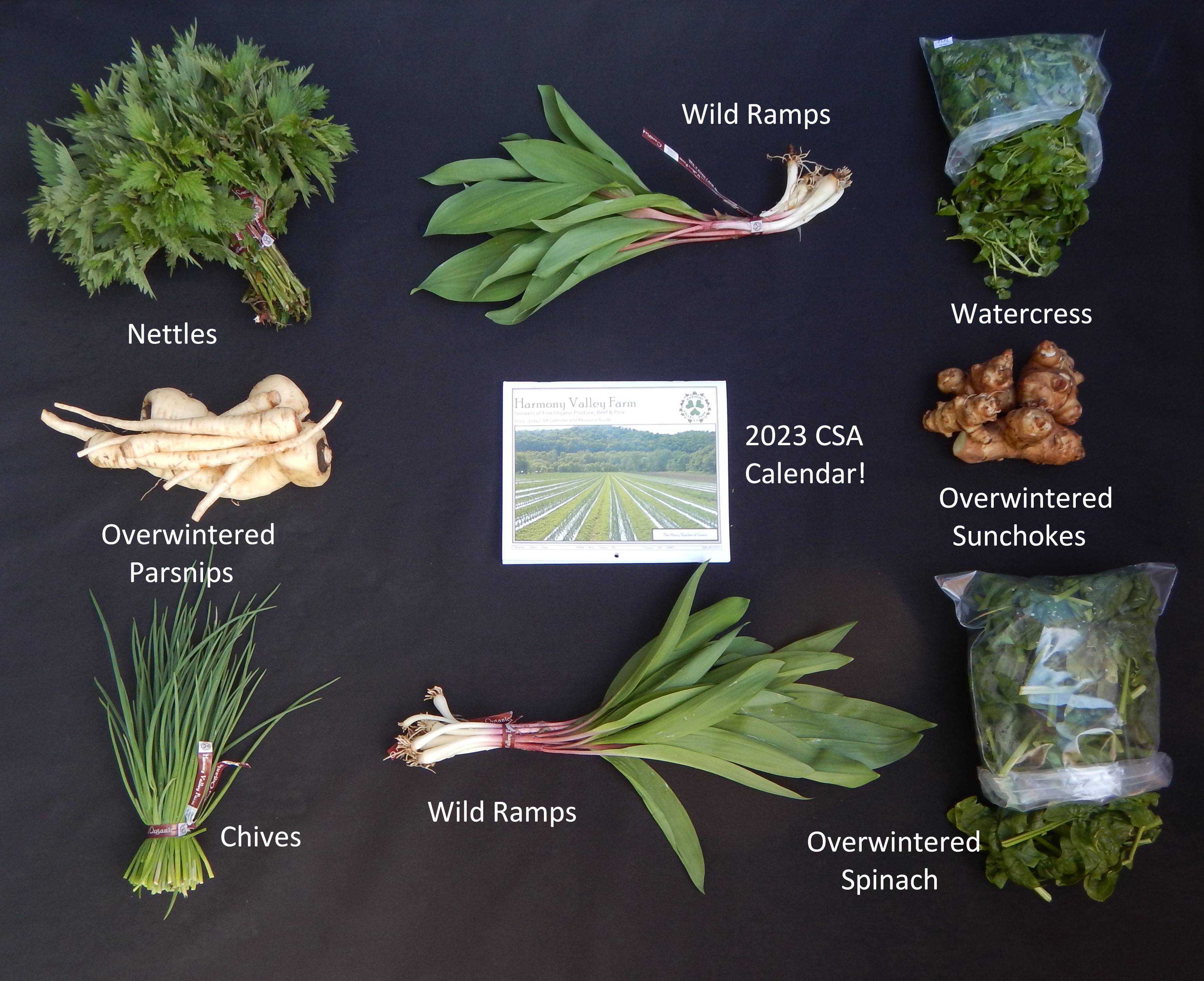
May 4, 2023 - This Week's Box Contents Featuring Nettles and Ramps


Cooking With This Week's Box

Wild Ramps:  
Photo from: www.growforagecookferment.com
Italian Nettle & Ramp Soup (See Below)

Nettles:  
Italian Nettle & Ramp Soup (See Below)

Watercress:  


Overwintered Spinach:  

Overwintered Parsnips:  

Overwintered Sunchokes (aka Jerusalem Artichokes):  

Chives:  

Welcome to the 2023 “Cooking With the Box!”  My name is Andrea and I am a trained professional chef and have 16 years of experience in seasonal cooking and eating!  While I enjoy an afternoon of leisurely cooking, I also understand the need at times to be able to put a healthy, vegetable-centric meal on the table with limited time. So I try to keep the “chef-y,” complicated recipes to a minimum and focus more on recipes of easy to moderate skill and time investment that incorporate multiple vegetables from your CSA box.  Each week I will share a recipe or two that incorporates our featured vegetable(s) for the week along with this collection of “Cooking With the Box” recipes.  The purpose of this article is to give you a starting point for planning how you are going to use every single item in your CSA box. Some weeks you may find a recipe you want to make, while in other weeks you may find inspiration that will lead you to your own recipe idea or an adaptation. Either way, I hope this is helpful and I hope you have fun creating some delicious food this year! If you are not already a member of our private Facebook Group, I encourage you to join. It’s another great resource for sharing recipes & ideas as well as asking questions.

Ok, with that introduction laid out, lets get into this week’s Cooking With the Box!  First of all, I’d like to share this week’s featured recipe for Italian Nettle & Ramp Soup (See Below).  Feel free to adapt this recipe to your liking. Leave out the beans and add some pork sausage for one variation, or make a batch of ramp pesto and use it to garnish the soup.  While this recipe incorporates both of this week’s featured vegetables, I also gave you a list of other recipes using these ingredients. Additionally, I provided links to several really good recipe collections where you’ll find many different ideas for how to use both ramps and nettles.

Overwintered parsnips are naturally sweet, so I often like to incorporate them into baked goods where I can take advantage of their sweetness as an opportunity to reduce the amount of sugar in the recipe! This week you’ll find a recipe for Parsnip & Orange Spiced Cake  and Hearty One-Bowl Parsnip Muffins.  As for overwintered sunchokes, consider Heidi Swanson’s recipe for Sunchoke and Cashew Stir-Fry or try these Smashed Sunchokes with Thyme Butter.  

Overwintered spinach leaves are generally more thick, yet tender and flavorful.  Use it to incorporate some greens into your dinner plan for the family with either of these main dish recipes for Creamy Spinach Chicken Casserole and Mushroom and Spinach Lasagna.  Pizza is one of those concepts that you can bend and adapt however you want to in any season of the year! If you’re up for a piece of the pie, consider making this Asparagus and Watercress Pizza or this Spring Onion and Chive Pizza with Genius Cream Sauce!

I hope you have a great week and enjoy cooking with fresh, green vegetables again!  Hopefully, we’ll have some asparagus to share with you next week.  Green garlic and red radishes will be here soon along with sorrel! Start gathering your recipes, it’s going to be a fun ride!

---Chef Andrea 
 

Vegetable Feature: Nettles & Ramps

by Andrea Yoder

This week we’re featuring two of our favorite wild-harvested spring vegetables.  The first is Stinging Nettles, which we both wild harvest and plant in the field. They need to be handled carefully, especially before they are washed and cooked.  They have little fibers on the stems that contain several compounds including formic acid, which will give you a “stinging” sensation if you touch them with your bare skin. “Why are you giving me a vegetable that will sting me?!  Are you trying to kill me?!”  No, quite the contrary!

Nettles are very nutrient dense and help our bodies wake up after a long winter through their ability to purify blood and cleanse our bodies. They have anti-inflammatory and antihistamine properties. They are high in protein, carotenoids, chlorophyll, iron, calcium, magnesium, zinc, potassium, selenium and vitamins B, C, D and K. Wow—that’s a lot of nutritional goodness!  Nettles give us that jump start we need in the spring and, they also taste great! Cooking destroys the stingers so you can safely handle them with bare hands.  They have a rich flavor similar to spinach, but even better!  

As for handling nettles, many of the stingers are removed with vigorous washing, which we’ve already done for you.  Even though we’ve washed them, I would still recommend you handle them carefully and avoid touching them with bare hands prior to cooking.  Some people are more sensitive to their sting than others, which is why we put them in a plastic bag to make it easier to get them home without touching them. You can use the bag as your “glove” to hold the bottom of the bunch while you remove the twist tie prior to washing them in a sink of water. While you are washing them, bring a pot of water to a boil. Transfer the nettles from the sink to boiling water using a pair of tongs. Boil for 2-3 minutes, then transfer to a bowl of ice water to cool them. Now you can handle them with your bare hands.  

The lower portion of the stems may be tough, so only use the leaves and tender upper stem portions. You can pluck or cut these off the main stem after they are cooked. Alternatively, you can hold each stem (with your gloved/bagged hand) and use a pair of scissors to snip the tender leaves off the main stem before you cook them. Check out this blog post we did on May 10, 2018, which demonstrates these processes and includes pictures. 

Nettle leaves are perishable, so it is best to cook them shortly after you receive them. The cooking water makes a beautiful tea, so don’t discard it.  You can drink the tea either hot or cold and mixed with honey and lemon. The water can also be used to cook pasta, rice, etc. Nettles grow in other areas of the world with similar climates to ours, such as areas of Scandinavia, the United Kingdom, Italy, and other parts of Europe as well as Turkey, Russia, and parts of Asia. Thus, you will find nettles incorporated into a wide variety of preparations from different cultures. Nettle soup is a widely popular way to use nettles, as well as dishes that incorporate eggs, grains and pasta.  They pair well with eggs, dairy, mushrooms, beans, asparagus, and other spring greens.

The second part of our feature is Wild Ramps! We forage for ramps in wooded areas where they grow on north-facing hillsides. They have a very short season lasting, at most, 3-4 weeks.  Their flavor is kind of oniony-garlicky, but honestly the best way to describe it is simply rampy.  They resemble a green onion, except they have tender, delicate lily-like leaves. Ramps grow in the woods and, while they can be replanted to establish new patches, it takes a long time for them to multiply. Many, us included, are concerned about the sustainability of ramps. Thus, it’s important to be mindful when harvesting them.  Ramps grow in clumps and we’re careful to only take about half the clump while leaving the other half undisturbed.  We also replant thousands of bulbs every year in an effort to ensure healthy ramp populations for many years to come!  If you’d like to learn more about our harvest practices, please read our blog post from April 20, 2017

Ramps may be eaten raw or cooked and both the leaves and lower bulb are edible. Eaten raw they can be quite pungent, but the flavor mellows with cooking. Ramps are often used in pasta and egg dishes, but can also be made into pesto, ramp butter and even added to baked goods. Ramps pair well with cream, cheese, bacon, and other spring vegetables including mushrooms, asparagus, nettles, and spinach. The leaves are the most perishable part and should be used within a few days. To store ramps, wrap the bunch in a damp paper or linen towel and keep them in the refrigerator. 


Italian Nettle & Ramp Soup

Yield:  4 Servings

1 bunch ramps
¼ cup olive oil
Pinch of dried crushed red pepper
1 can (15.5 oz) chopped & peeled tomatoes
1 bunch fresh nettles
Salt and freshly ground black pepper, to taste
6 cups chicken or vegetable stock
1 Tbsp balsamic vinegar
1 can (15 oz) chickpeas or cannellini beans
2 cups cooked short grain rice or small pasta

Serving Suggestions:
Extra-virgin olive oil
Lemon wedges
Grated Parmesan cheese

  1. Clean the ramps and separate the leaves from the white lower portion.  Finely chop the white bulb and set the leaves aside.  Prepare the nettles by using kitchen shears to snip the leaves off the main stem.  Discard the thick stem and set the nettle leaves aside until needed.
  2. In a medium stock pot, heat ¼ cup olive oil over low heat.  Add the finely chopped ramp and sweat just until softened.
  3. Add the crushed red peppers, tomatoes, nettles, 1 tsp salt, freshly ground black pepper, 6 cups stock and balsamic vinegar.  Bring to a simmer and cook for 15-20 minutes or until nettles are softened, stirring periodically.  
  4. While the soup is simmering, finely slice the ramp leaves.  After the soup has simmered for 15-20 minutes, remove from heat and stir in the ramp leaves.  
  5. Carefully blend the soup at this time using either an immersion blender or transfer the soup to a blender.  Return the blended soup to the pot and heat over low heat.  
  6. Stir in the chickpeas or cannellini beans and cooked rice.  Simmer briefly, then taste.  Adjust the seasonings to your liking by adding additional salt, pepper and/or balsamic vinegar as needed.  Serve hot with a drizzle of olive oil, lemon wedges and parmesan cheese if desired.  
If you happen to have some ramp or nettle pesto on hand, that is a great garnish as well!
Recipe adapted from an original recipe featured at www.foragerchef.com.

Wednesday, May 8, 2019

May 9, 2019 - This Week's Box Contents, Featuring Stinging Nettles and Wild Ramps!


Cooking With This Week's Box

Wild Ramps: Ramp Pesto (See Below); Quiche with Ramps, Mushrooms & BrieNettle & Mushroom Pizza with Ramp Cream


Nettles: Nettle Chips (See Below);  Easy & Tasty Nettle Tea; Nettle & Mushroom Pizza with Ramp Cream


Quiche with Ramps, Mushrooms & Brie
(photo from thegourmetgourmand.com)
It’s time to get into the rhythm of “cooking out of the box!”  After a long winter, it feels good to have fresh greens and new vegetables coming in from the field.  Lets dive in with this week’s box contents.  With Mother’s Day coming up this weekend, I think we should treat our Moms (or yourself if you are the Mom) to a special Mother’s Day Brunch.  This Quiche with Ramps, Mushrooms & Brie served with Alice Water’s Warm Spinach Salad will make a lovely meal.  For a little added bonus, make a batch of these Parsnip, Lemon & Poppy Seed Muffins with Lemon Drizzle.

Nettle & Mushroom Pizza with Ramp Cream
We have two bunches of ramps this week, so even after making the quiche, there should still be enough to make a batch of Ramp Pesto (see below).  This is great to have in the refrigerator to make a quick pasta dinner.  Just boil some fettuccine and toss it with a few spoonfuls of ramp pesto.  Done!  Of course we could also use that second bunch to make this absolutely delicious Nettle & Mushroom Pizza with Ramp Cream!  This is one of my favorite spring recipes that was actually prompted by several members.  If you don’t use your nettles to make this pizza, you could always try this week’s featured vegetable for Nettle Chips (See Below).  This is a great way to eat your greens and these make a great afternoon or weekend snack when you just need something crispy and salty, but very simple.  If you’re really short on time this week, the easiest thing of all to make with nettles is Easy & Tasty Nettle Tea.  In the midst of a busy week this might be a good way to support your body and keep you well.

Green Garlic Soup
(photo from loveandoliveoil.com)
The nights are still a little chilly which makes me want to eat soup, such as this Green Garlic Soup.  This recipe makes 8-10 servings and calls for more green garlic than is in this week’s box.  I’d recommend cutting the recipe in half and using the entire bunch of green garlic supplemented with some chives.  If you aren’t into soup this week, use the green garlic to make this Green Garlic Toast.  This toast will go great with scrambled eggs (perhaps with some ramp pesto mixed in) for a light dinner or a hearty breakfast. 

If you have some chives remaining, use them to make Almond-Chive Salmon for dinner served with Creamed Spinach & Parsnips.  If you have any salmon left, mix it with mayonnaise to make a little salmon salad to take for lunch the next day.

This recipe for Carrot Tart with Ricotta & Herbs is a little bit more complicated, but it’s a lovely dish and would make a nice brunch item or eat it as a light dinner.  Of course, those sweet carrots might also be great used to make these Carrot Cake Pancakes.  This is a sure way to get children of all ages to eat their vegetables! 

We have a great week of meals ahead of us with all these options.  As we look ahead to next week, we are crossing our fingers that we’ll be able to deliver ramps again as well as more chives, nettles and green garlic.  We should also have some asparagus and red radishes to add to the box!  So, if you find more recipes you want to try, save them until next week!  Have a great week of cooking and I’ll see you back here next week!

This Week's Featured Vegetables:  Stinging Nettles & Wild Ramps--The Wild Things!


Spring has a beautiful way of nourishing us and giving us just what we need, even when we don’t know we need it!  The first of our double-vegetable feature this week is Stinging Nettles.  We wild harvest them on our farm, but also plant them in the field.  They need to be handled carefully, especially before they are washed and cooked.  They have little fibers on the stems that contain several different compounds including formic acid, which will give you a “stinging” sensation if you touch them with your bare skin.  “Why are you giving me a vegetable that will sting me?!  Are you trying to kill me?!”  No, quite the contrary!


Nettles are very nutrient dense and we consider them to be a “Wisconsin Super Food.”  They help our bodies wake up after a long, cold wet winter and help us purify our blood and cleanse our bodies.  They have anti-inflammatory and anti-histamine properties.  They are high in protein as well as carotenoids, chlorophyll, iron, calcium, magnesium, zinc, potassium, selenium and vitamins B, C, D and K.  Wow—that’s a lot of nutritional goodness in one plant!  Nettles give us that jump start we need in the spring and, they also taste great!  Cooking destroys the stingers so you can then safely handle them with bare hands.  We recommend cooking them before eating.  They have a rich flavor similar to spinach, but even better!  So no, we are not trying to harm you.  Rather, our intention is to give you something delicious and nourishing.

Use the bag as a "glove" when handling nettles.
Here are some recommendations for handling them.  First, many of these stingers are removed with vigorous washing, which we’ve already done for you.  Even though we’ve washed them, I would still recommend you handle them carefully and avoid touching with bare hands prior to cooking.  Some people are more sensitive to their sting than others, which is why we’ve also put them in a plastic bag to make it easier to get them home without touching them.  You can use the bag as your “glove” to hold the bottom of the bunch while you carefully remove the twist tie.  We do recommend you wash them in a sink of water after you’ve removed the twist tie.  While you are washing them, bring a big pot of water to a boil.  Transfer the nettles from the sink to the boiling water using a pair of tongs.  Boil them for 2-3 minutes and then transfer to a bowl of ice water to cool them.  Now you can handle them with your bare hands.

Some of the lower portion of the stems may be tough, so only use the leaves and tender upper stem portions.   You can pluck or cut these off the main stem after they are cooked.  Alternatively, you can hold each stem (with your gloved/bagged hand) and use a pair of scissors to snip the tender leaves off the main stem before you cook them.  Checkout this blog post we did on May 10, 2018 which demonstrates these processes and includes pictures.

Nettle leaves are perishable, so it is best to cook them shortly after you receive them.  It is better to store them in their cooked form for a few days until ready for use.  The cooking water makes a beautiful tea, so don’t discard it.  You can drink the tea either hot or cold and mixed with honey and lemon.  The water can also be used to cook pasta, rice, etc.  Nettles are often used to make soup, but you can also use them in pesto, or risotto and pasta dishes.  Nettles may be substituted for spinach in any recipe calling for cooked spinach.  They pair well with eggs, dairy, mushrooms, asparagus and other spring greens.


The second part of our feature is Wild Ramps!  Ramps are are one of the first green things to pop up in the spring.  They have a very short season lasting, at most, 4-5 weeks.  They have a unique flavor that is kind of oniony-garlicky, but honestly the best way to describe it is simply rampy.  They resemble a green onion, except they have tender, delicate lily-like leaves.  Ramps grow in the woods and, while they can be replanted to establish new patches, it takes a very long time for them to multiply and spread.  Many, us included, are concerned about the sustainability of ramps.  Because they take so long to multiply and replenish, it’s important to be mindful when harvesting them.  Ramps grow in clumps and we’re careful to only take about half the clump while leaving the other half undisturbed.  If you’d like to learn more about our harvest practices, please read our blog post from April 20, 2017.

Ramps may be eaten raw or cooked.  When raw they can be quite pungent, but the flavor mellows with cooking.  You can eat both leaves and the lower bulb.  Just trim away the roots.  Some popular ways to use ramps include risotto and pasta dishes.  Ramps also pair well with eggs in scrambles, frittatas and quiche.  Ramp pesto is another great way to use this vegetable and it’s our featured ramp recipe this week.  Ramps pair well with cream, cheese, bacon and other spring vegetables including mushrooms, asparagus, nettles and spinach.

The leaves on ramps are the most perishable part and should be used within a few days.  To store ramps, wrap the bunch in a damp paper or linen towel and keep them in the refrigerator.
 
If you’re looking for more recipe and use ideas for these two spring treats, check out the recipe archive on our website.  We hope you enjoy these spring treasures!

Nettle Chips

Yield:  2 cups

1 bunch nettles
2 Tbsp olive oil
1 Tbsp soy sauce or coconut aminos
Salt, to taste
  1. Preheat the oven to 300°F.
  2. Wash the nettles in a sink of cold water.  Using gloves or a bag over your hand, take the nettle stems out of the water and place them on a towel.  Gently pat them dry. 
  3. Using a scissors, trim the tender leaves and upper stem off the main stem.  Put all of the trimmed leaves into a mixing bowl.
  4. Drizzle the leaves with oil and soy sauce or coconut aminos.  Using a tongs, toss the leaves to thoroughly coat them with the oil and soy sauce mixture.
  5. Spread the leaves on a non-stick baking sheet (or use parchment paper).  If you use low-sodium soy sauce or coconut aminos, you’ll want to season the nettles lightly with a sprinkling of salt.  If you use full sodium soy sauce, you may not need additional salt.  
  6. Bake in the oven for 20-30 minutes or until crisp.  You will need to turn them once about halfway through baking.  Try to separate the leaves as best you can so they bake more evenly.
  7. Remove from the oven and cool.  Taste one and add additional salt if needed.  They are best eaten immediately. 

Note:  If you have leftovers, crush the chips and use them as a topping to sprinkle on top of salads, eggs or buttered toast.

Recipe by Chef Andrea

Ramp Pesto

Yield:  1-1 ½ cups

1 bunch ramps, cleaned
½ cup toasted almonds or pine nuts
½ cup extra-virgin olive oil
½ cup grated Parmesan cheese (or other hard cheese)
3-5 tsp fresh lemon juice
Salt and black pepper, to taste

  1. Cut the leaves off the ramps.  Roughly chop the leaves and set them aside.
  2. Put the ramp bulbs and nuts in the bowl of a food processor and coarsely chop them.
  3. Add  the cheese, ¼ tsp salt, black pepper, 3 tsp lemon juice and the ramp leaves.  Continue to process the contents while slowly pouring in the olive oil.  
  4. Taste the pesto and adjust the seasoning with more salt, pepper and lemon juice to brighten it up.
  5. Store in a glass jar in the refrigerator.  It’s best to pour a little extra olive oil over the top of the jar to preserve the color of the pesto.
Note:  If you do not have a food processor, you can also make pesto in a blender.  Of course people used to make pesto before the invention of electronic appliances, so you could also just use a knife and finely chop all the ingredients.

Ramp Pesto Serving Suggestions: 
  • Toss a few spoonfuls with hot pasta
  • Stir into scrambled eggs
  • Use ramp pesto as the base for a delicious homemade pizza topped with mushrooms, bacon, prosciutto, mozzarella, etc.
  • Spread on toast or a bagel with fresh ricotta or cream cheese
  • Stir a spoonful into mayonnaise and use it as a sandwich spread or dipping sauce
  • Baste grilled or roasted chicken with pesto
  • Serve with seared salmon
Recipe by Chef Andrea

Wednesday, May 9, 2018

May 10, 2018 - This Week's Box Contents, Featuring Nettles


Cooking With This Week’s Box: 


We have a few new items in this week’s box including one of our spring favorites, Nettles!  Don’t be intimidated by nettles, it’s just another vegetable that requires a bit of careful handling.  The benefits you’ll reap from them far outweigh the little bit of time you’ll invest in preparing them.  I’m excited to share two delicious nettle recipes with you this week.  The Nettle & Mushroom Pizza with Ramp Cream and Chicken & Chickpea Curry with Nettles  recipes are adaptations of recipes shared by members in our Facebook Group.  Both recipes have several components, but neither recipe is complicated and once you have the different parts prepared the final product comes together pretty quickly.  The pizza recipe is a bit on the rich side, so it would pair well with a simple, light spinach salad on the side.  The Chicken & Chickpea Curry with Nettles is a great dish to prepare in advance and stick in the refrigerator.  It reheats well, so gives you a good, quick option for dinner on a busy night.

We’re fortunate to have a late spring which means we get to enjoy ramps again this week!  I am going to make a batch of Ramp Chimichurri this week.  This is great to have in the refrigerator as it has many uses.  I like to eat this with grilled flank steak and then use the leftovers in scrambled eggs or as a sandwich spread.  With the remaining bunch of ramps, I am going to make Chef Bri’s Spring Confetti Salad. This is a very light, simple salad that gets its flavor from ramps.  It also includes black Spanish radishes and you could add a little carrot as well.  This is a nice light salad to serve as a side dish or add some beans to it and turn it into a main dish.

I often overlook black Spanish radishes, but with limited vegetables to choose from this spring I’ve been challenged to find more ways to use them.  In last week’s newsletter we featured a recipe for Roasted Black Radishes with Brown Butter, Chives & Rice. This is a pretty easy recipe to prepare and makes great leftovers.  If you’re making the Chicken & Chickpea Curry with Nettles recipe this week, prepare some extra rice and you can use it to make this recipe.  I also came across this recipe for Black Radish Pickles  I think these would be a great condiment to eat alongside sandwiches or added to spring salads over the next few weeks. 

This week I have my eye on a new recipe for Parsnip Soup with Toasted Almonds.  This is a simple, creamy soup that will make for a simple dinner and will reheat well for lunch the next day.  I also want to make one of my favorite parsnip recipes, Parsnips with Brown Butter, Pecans & Maple.  I like to serve this as a side with sautéed pork chops.

This week I’m going to use a small amount of sunchokes in the featured curry dish with nettles, but the remainder will be used to make Sunchoke Chive Soup, a recipe I developed when I was cooking for the crew my first year at the farm!  If you are one of those individuals who does better with smaller portions of sunchokes, you’ll want to enjoy this soup in small quantities.  I’m going to serve it with a Korean Spinach Salad that has hard-boiled eggs, bacon (optional) and a tangy, slightly sweet dressing.  This is a salad my mother used to make when I was a kid. 

Lastly, we are super-excited to be able to include asparagus in this week’s box!  I really enjoy this simple recipe for Roasted Asparagus with Bread Crumbs & Herbs.  We’ll enjoy this with over-easy eggs and a few pieces of bacon for Sunday morning brunch.

That brings us to the end of another CSA box.  I always enjoy seeing pictures and learning about the different recipes you’re preparing in your own homes.  Please feel free to shoot me an email with your latest creations or share them in our Facebook Group!

Featured Vegetable: Nettles (yes, the stinging kind...please read this feature for more information) 

We look forward to nettles every spring as they are one of our “Wisconsin Super Foods!” They are one of the most nutrient-dense spring greens we have available early in the season.  Please be forewarned that these nettles are the “stinging nettles” many might consider a weed.  They have little fibers on the stems that contain formic acid which will give you a “stinging” sensation if you brush up against them before they’ve been washed or try to harvest them with bare hands.  Washing the nettles will remove most of the stinging fibers and there is no sting remaining after they are cooked.  We have vigorously washed the nettles in your box and put them in a bag to make handling easier for you.  Even though we’ve washed them, I would still recommend you handle them carefully and avoid touching them with your bare hands prior to cooking them.  With a flavor similar to spinach, they contain a whole host of nutrients including protein, calcium, magnesium, potassium, boron, carotenoids and iron.  They are also reported to relieve eczema and seasonal allergies. 

Nettle leaves are perishable, so it is best to cook them shortly after you receive them.  Even if you don’t want to eat them right away, it is better to store them in their cooked form for a few days until you are ready to use them.  The cooking water actually makes a beautiful tea, so don’t discard it.  You can drink the tea either hot or cold and mixed with honey and lemon.  It’s delicious and makes the cooking process dual purpose.  Nettles actually originated in Europe and Asia, so are a familiar vegetable in many of the cuisines from these regions.  They are often used to make soups, but you can also use the nettles in a pesto, to top off a pizza, or incorporated into a risotto or pasta dishes.  Nettle puree may be used in pasta or gnocchi dough to make a stunning appearance, or the nettles can be used in a ravioli filling.  Nettles pair well with cheese, cream, mushrooms and other spring greens.


Please refer to the handling instructions and tips that follow before you open your bag and use the nettles.  These guidelines will help you find success with your nettles!  If you do get a little sting while handling nettles, it generally subsides within an hour.  If the sting does persist you may find it soothing to apply a little aloe vera or make a paste with baking soda and water and put it on the affected area.

Please note, while most people eat nettles cooked, you can eat them raw as well.  If you choose to eat them raw, we would advise you to do so in a form that requires them to be chopped finely either with a knife or in a food processor, such as nettle pesto.  Some individuals may be sensitive to eating raw nettles, so if you have any hesitancy we’d recommend just blanching or thoroughly cooking the nettles before you eat them. Below we have outlined two methods for handling and blanching nettles.  Choose whichever method you prefer and don’t let a little extra handling deter you from eating this wonderful spring vegetable!

Method #1:  Blanch nettles whole with the leaves still attached to the main stem

Step 1:  Wash the nettles
Use the bag the bunch of nettles is in as a barrier between your hand and the nettles.  Hold the bunch of nettles with your hand on the outside of the bag.  Pull the bag back and over your hand to expose the nettles.  Carefully remove the twist tie and put the bunch of nettles in a sink of cold water.  You can use your bag-covered hand to swish the nettles around in the water.  Alternatively, you can use kitchen tongs or gloves to wash the nettles as well.  While we have washed the nettles at the farm, it is good to do so again after removing the twist tie.

Step 2:  Blanch the nettles
Blanching is a cooking process where a food, usually a vegetable, is cooked briefly in boiling water, then removed and immediately placed into iced water or placed under cold running water to stop the cooking process.  In the case of nettles, blanching is important to remove the sting from the nettles so they are easier to work with.

Bring a pot of water to a vigorous boil.  Using a pair of tongs, remove the nettles from the sink of water and transfer them to the boiling water.  Submerge the nettles completely in the water and boil for about 2-3 minutes.  The nettles will wilt and turn bright emerald green.  Remove the nettles from the water and put them into a colander.  Run cold water over them or plunge them into a bowl with iced water. 


Step 3:  Prepare the leaves for use
Now that the nettles are cooked, you can handle them with your bare hands.  Remove them from the cold water and squeeze out all the excess water.  Using a paring knife or kitchen shears, cut the leaves and any small stems off the main stem.  Discard the main stem and the leaves are now ready to use!

Method #2:  Remove the leaves from the main stem before blanching
Step 1:  Wash the nettles
Use the bag the bunch of nettles is in as a barrier between your hand and the bunch of nettles.  Hold the bunch of nettles with your hand on the outside of the bag.  Pull the bag back and over your hand to expose the nettles.  Carefully remove the twist tie and put the bunch of nettles in a sink of cold water.  You can use your bag-covered hand to swish the nettles around in the water.  Alternatively, you can use kitchen tongs or gloves to wash the nettles as well.  While we have washed the nettles at the farm, it is good to do so again after removing the twist tie.


Step 2:  Cut the nettle leaves from the main stem
Use the bag as a glove so you can pick the stems up individually.  Using kitchen shears, cut the leaves and small stems away from the main stem.  Collect the leaves in a bowl and discard the main stem. 

Step 3:  Blanch the nettles
Blanching is a cooking process where a food, usually a vegetable, is cooked briefly in boiling water, then removed and immediately placed into iced water or placed under cold running water to stop the cooking process.  In the case of nettles, blanching is important to remove the sting from the nettles so they are easier to work with.

Bring a pot of water to a vigorous boil.  Using a pair of tongs, dump the nettle leaves into the boiling water and use the tongs to make sure they are fully submerged.  Boil for about 2-3 minutes.  The nettles will wilt and turn bright emerald green.  Remove the nettles from the water using tongs or a slotted spoon and put them into a colander.  Run cold water over them or plunge them into a bowl with iced water. 

Step 4:  Prepare the leaves for use
Now that the nettles are cooked, you can handle them with your bare hands.  Remove them from the cold water and squeeze out all the excess water.  The leaves are now ready to use!


Nettle & Mushroom Pizza with Ramp Cream 


Yield:  One 12-14 inch pizza


½ bu ramps*
2 Tbsp unsalted butter
1 Tbsp dry white wine
½ cup heavy cream
Pizza dough for one 12-14 inch pizza
1 bunch nettles
2 Tbsp olive oil, divided
4 oz fresh mushrooms, thinly sliced
Salt, to taste
Freshly ground black pepper, to taste
5 oz mozzarella, shredded or thinly sliced
Parmesan cheese, for serving


*If ramps are not available, substitute 2-4 stalks of green garlic or 2-4 spring scallions

  1. Preheat oven to 400°F.  
  2. Clean ramps and separate the greens from the white bulbs.  Thinly slice the leaves and set aside.  Finely mince the bulbs.  
  3. In a small saucepan over medium heat, melt butter.  Add the minced ramp bulbs and cook for 3-4 minutes.  Add the white wine and cook for another 2 minutes.  Add the heavy cream and ⅛ tsp salt and freshly ground black pepper.  Simmer over low heat until the mixture is reduced to about half the volume and has thickened.  The sauce should coat the back of a spoon.  Remove the cream mixture from the heat and stir in the ramp greens.  You should have about ½ cup of cream sauce.  Set aside.
  4. Prepare the nettles by first washing them in a sink of cold water.  Then, using a kitchen shears, trim the leaves from the stems and collect them in a bowl.  Discard the stems.
  5. In a medium saute pan, heat 1 Tbsp olive oil over medium heat.  Add the mushrooms and sautè just until softened.  Add an additional ½ to 1 full tablespoon of oil to the pan and then add the nettle leaves.  Season lightly with salt and pepper and stir to combine.  Reduce the heat to low and cover the pan for 2-3 minutes or just until the nettle leaves are wilted.  Remove from the heat.
  6. Prepare the pizza dough.  Roll or press the dough into a 12-14 inch circle and place on a pizza stone or baking sheet dusted with cornmeal or semolina to keep it from sticking.  Prebake the pizza crust for 10 minutes, then remove from the oven.  Spread the ramp cream evenly on the crust, being sure to take it all the way to the edges.  Next, spread the mozzarella cheese on top of the cream.  Evenly spread the nettle and mushroom mixture on top of the cheese.  
  7. Put the pizza back in the oven and bake for an additional 15-20 minutes or until the crust is golden brown, the cheese is melted and the cream is bubbling.  
  8. Remove the pizza from the oven and grate Parmesan cheese over the top.  Cut and serve.

Note from Chef Andrea:  This is my adaptation of a recipe entitled “Pizza with Garlic Cream and Nettles” which may be found at foodandwine.com.  My version has more cream sauce and toppings than the original recipe and is rich, but balanced.  If you prefer a drier, lighter pizza, refer to the original recipe.

Coconut Chicken & Chickpea Curry with Nettles 

Yield:  4 servings

1 pound boneless, skinless chicken breasts or thighs
2 ½ tsp mild curry powder
1 tsp salt, plus more to taste
¼ tsp freshly ground black pepper, plus more to taste
1 can (14 oz) coconut milk
1 (2 ½ inch) piece ginger, peeled
4 garlic cloves or 2-3 pieces green garlic, ramps or scallions, lower white portion only
2 Tbsp plus 2 tsp coconut or vegetable oil, divided
½ cup sunchokes, small dice*
½ cup black Spanish radish, small dice*
1 can (15 oz) chickpeas, drained and rinsed
1 bunch nettles
¼ cup raw cashews, chopped
1 ½ tsp yellow and/or black mustard seeds
1 cup finely minced chives
Cooked rice, for serving

*You may substitute other root vegetables (such as carrots or parsnips) if sunchokes and black Spanish radishes are not available. 
  1. Slice chicken into 1-inch pieces and place in a medium bowl.  Add curry powder, 1 tsp salt and ¼ tsp black pepper.  Mix the spices with the chicken and set aside.
  2. Place coconut milk, ginger and garlic (or green garlic, ramps or scallions if using) in a blender and process until the mixture is very smooth.  Set aside.
  3. In a large skillet, heat 2 Tbsp oil over medium-high heat.  Add the sunchokes and radishes and cook, stirring periodically, until the vegetables are tender and starting to brown.  Add the chicken and cook for 3-4 minutes or just until the chicken starts to brown just a bit.  Add the chickpeas and the coconut milk mixture to the pan and bring it to a simmer.  Simmer for 7-10 minutes or until the chicken is cooked through and the sauce has thickened.  
  4. While the curry is simmering, prepare the nettles.  First wash the nettles in a sink of cold water.  Then, using a kitchen shears, trim the leaves off the stem and collect them in a bowl.  Discard the stems.  Once the sauce is thickened, add the nettles to the pan and cover just until the leaves have wilted.  Remove the lid from the pan and stir to combine.  Taste the sauce and season to your liking with salt and pepper as needed.
  5. Lastly, heat 2 tsp oil in a small sautè pan over medium heat.  Add the chopped cashews and mustard seeds. Cook, stirring, until the mixture is fragrant and lightly browned, 2 to 3 minutes.  Immediately transfer mixture to a small bowl.
  6. Serve the curry mixture over rice and garnish each portion with some of the cashew & mustard seed mixture as well as 3-4 tablespoons of minced chives.
Note from Chef Andrea:  This spring curry recipe was adapted from a recipe entitled “Coconut Chicken Curry in a Hurry” which may be found at epicurious.com.  While there are several components to this recipe, it actually comes together pretty quickly.  This is a good recipe to make in advance and then refrigerate the components individually.  When you are ready to eat, simply reheat the rice and curry mixture and add the garnishes before serving.  The fresh chives and the cashew/mustard seed garnish are a nice touch on the final dish.