Tuesday, April 7, 2020

COVID-19 Pandemic & The Harmony Valley Farm 2020 CSA Season

Spring ramps poking through the forest floor
The weeks have been passing us by at a rapid pace and we see signs of spring unfolding all around us.  The start of our CSA season is approaching in 4 short weeks and we wanted to reach out to let everyone know we are still farming!  We’re working on many things simultaneously at the farm right now, both in response to an early spring but also in response to the COVID-19 pandemic.  The focus of this post is to inform you about some general farm updates & information as well as provide you with our thoughts and plans for our 2020 CSA season.  Please understand this is a work in progress and we will do our best to provide further updates as we move forward.

The final check before closing the CSA box on the pack line
First of all, we believe Community Supported Agriculture (CSA) has been a valuable model for consumers to source food for many years, but we believe it can also be one of the safest ways to source high quality, nutritious food with the lowest risk as we continue to navigate this pandemic.  We need to recognize that we are all part of a community, that is the “C” in CSA.  We take our role as a member of this community very seriously and ask our customers and members to do the same.  We are determined to do everything we can to keep our crew members healthy so we can keep our farm running and may continue to deliver our high quality food to as many people as possible and in the safest possible way.  We know this crisis may persist for months, thus we are doing our best to prepare for both the expected and unexpected.

Before we go any further, there are a few things we want to bring to your attention.
  • CSA Capacity & Sites: The majority of our CSA Site locations are still available.  Please refer to pages 2 & 3 of our sign-up form for a full listing of CSA locations.  We are only at about 50% capacity and will continue to accept sign-ups until the trucks are full!  We encourage you to include a “1st Choice” and “2nd Choice” when selecting your delivery site.
  • Welcome Packets: We will be sending pre-season welcome packets in the mail very soon for those who have already submitted their sign-ups.  We’ll let you know when they are on the way and will continue to send them to members as you sign-up.  It is very important that you open this envelope and read the contents!  We will be including important details you need to read before you pick up your first CSA box.  Please review your invoice and the site-specific information as well.  Some individuals may have been scheduled at their 2nd Choice location.
  • Volunteer Opportunities: While we are not able to offer home delivery, we do want to have resources in place to assist a member who may not be well or is in a high-risk situation and is not able to pick up their box.  If you are willing to deliver a box to another member at your site if necessary, please let us know so we may contact you as needed.  Additionally, if we find a site needs additional monitoring or a site host needs assistance, we are accepting volunteers for this need as well.  We are not certain if these needs will arise, but we’d like to be prepared if and when they do.  Please email Kelly at csa@harmonyvalleyfarm.com if you are willing to be on our volunteers list for either or both of these duties. (Volunteers must be current CSA Members)
Pandemic Response Changes to CSA Protocols:
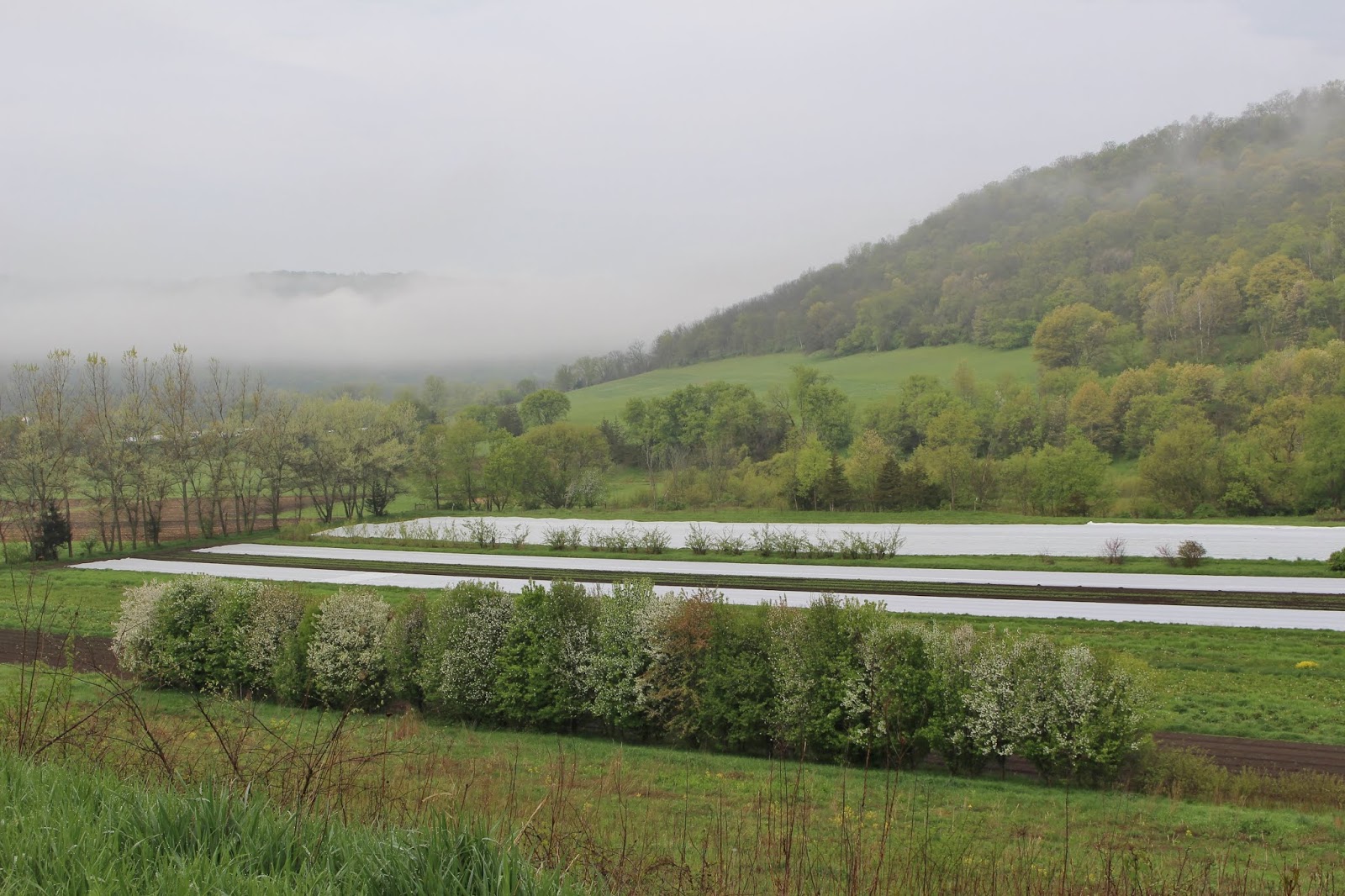
A view of our peaceful, beautiful valley and fields
As we think through every step of the CSA delivery/pick-up process, we are aware that social distancing is a priority and minimizing points of contact are essential in order to maintain a low risk situation.

We believe we can achieve this, however everyone involved needs to be part of the process for this to work.  As we get going, we will be monitoring our systems and are prepared to make changes and modifications as needed to ensure the safest pick-ups possible.

CSA Member Responsibilities:

  • Community Responsibility: We ask our members to please read and pay attention to all email updates from the farm!  It is also your responsibility to read signs at the CSA sites so you are fully informed of procedures and expectations.
  • Be Well: Do not go to the CSA site if you, or a member of your household, is ill or is under quarantine for COVID-19.  Please ask a friend or family member who is well and not under quarantine to do the pickup for you.  If you do not have someone to do this, please contact us.  We are compiling a list of individuals who have volunteered to help in these situations.
  • Social Distancing: Maintain a minimum of 6-foot social distancing when approaching and at the site.  We ask that only ONE member is in the pickup site at a time.
  • One Person Pick-Up: Only one member per household should go to pick up the box.  We prefer that this person is an adult and if possible, it is the same person each week.  Whomever goes to the site should be fully aware of and willing to follow the protocols for a safe pick-up.
  • Patience: Please be respectful and courteous of other members when you pick up your box.  There may be times when you need to wait for your turn to enter the site and/or to maintain appropriate social distancing.
CSA Pick-Up Changes & Procedures:
  • Newsletters: We will not be providing print copies of the newsletters at the sites until the need for pandemic-related precautions change.  Newsletters will be available online and links to both our newsletters as well as additional content on our blog will be included in the “What’s In the Box” email you receive the day before your delivery.
  • “Swap” Box: We will not be offering a “Swap” box at the start of the season.  We may choose to add this later when it is appropriate to do so.
  • “Choice” Items: Any choice items we offer will be portioned individually as much as possible.  Remember, it’s always your choice if you want to add these items to your share. 
  • Checklist: We will continue to use our checklist system, and ask each member to bring your own pen when you come to pick up your box.  It is important that you consult the checklist prior to selecting your box.  Find your name (or your share partner’s name) on the list.  Carefully put a checkmark next to your name so we know you’ve taken your box.  If you do this carefully, you should not even need to touch the paper, table or clip board.  If you do not see your name on the checklist, we have not delivered a box for you.  You need to exit the site and give us a call so we can help troubleshoot the situation.  If we’ve made an error we’d like the opportunity to correct it as quickly as possible.
  • The CSA Box: We are still in the process of determining the lowest-risk packaging solution that is also cost-effective and manageable.  We will be testing both options here at the farm to ensure they are not only low-risk at the pick-up site, but will also preserve the quality of the vegetables.  Regardless of the box we choose to use, we will be adding a plastic liner bag to the box this year.  
  • Take the Top Box: All boxes will be packed with the same contents.  Please take the top box and do your best to only touch the box you are taking. 
  • Do Not Sort or Repack Your Vegetables At the Site: We ask that you sort and repack your vegetables at your home, not at your site.  We hope to facilitate a quick and speedy pick-up and limit the surfaces both your hands and your vegetables touch.  If you follow our guidelines, your vegetables will remain in the plastic bag until you remove them in your home.  
  • Sharing Households: We ask that sharing households do not split shares or leave partial shares at the pick-up site during the pandemic.  Please make arrangements for one person to pick up the share and split the contents away from the site.
  • The Plastic Liner Bag: We encourage you to reuse this bag in your home if you feel comfortable doing so.  One way to repurpose it is to use it as a liner for a small trash can.  This bag holds a low risk as a potential source of contamination and has only been touched by a farm employee on the packing line who will be wearing gloves and you, the end user. 
  • Site Management: We are working with site hosts to eliminate as many potential surfaces members need to touch when entering and exiting sites.  We do need to also be sensitive to security issues at both our residential and business locations, so it will be up to the discretion of each site host as to what is feasible to do at their site.  For sites with a large garage door that may be left open during site hours, you may just walk right in without touching any surface.  Many sites have outer gates/fences that need to be opened and closed as well as a service door entry.  If and when possible, we are asking that these entry points be propped open during site hours to eliminate the need to touch these surfaces.  If a door is open at your site when you arrive, please leave it open when you leave.  We are still working through these details and will do our best to communicate changes and procedures to you as we refine the processes.
  • Wash & Sanitize Your Hands Before & After Pick-up: Please do your part to ensure you are washing your hands before you go to pick up your box.  If you are able to use hand sanitizer once you arrive at the site but before you enter, that is also appreciated.  While we are trying to source hand sanitizer, it is in very short supply and we are not certain we will be able to provide it at all sites.  If we are able to source hand sanitizer, we will allocate it to any site that may have doors that members need to open before entering.
  • Bring Your Own Gloves….Or a Clean Pair of Socks!  If you’d like to create a barrier between your hands and any surfaces at the pick-up site, we will not object.  You may use a CLEAN pair of cotton gloves or even winter gloves if that is all you have.  If you don’t have gloves, a clean pair of socks could also suffice!  Make sure your gloves/socks are clean and you have not used them elsewhere or for any other purpose.  Put them on just before you enter the site.  Remove them once you have exited and take them with you so you may launder them.
The CSA Delivery Team:

We will be providing additional training to our delivery team prior to the start of deliveries.  We will do our best to provide precautionary measures to protect their health and well-being while they are executing deliveries.  We will also be implementing additional measures to ensure proper handling of your CSA shares.  We are still working out all of these delivery details, however we are prepared to provide a sufficient supply of disposable gloves, a portable handwashing station on the truck, hand sanitizer and masks for our delivery crew.  Additionally, we are prepared to provide supplies needed to clean and sanitize any table surface, door knobs, etc that may be needed to facilitate CSA pick-up.  If you have additional questions about this process, we’re happy to share these details with you as we continue to develop our protocols.

How & Where You Can Source Our Vegetables in April:

We know our customers are anxious to start enjoying some of our spring offerings such as overwintered spinach and ramps.  We are doing our first spinach harvests this week and anticipate ramps will be ready to start harvesting as early as next week.  We are evaluating the possibility of offering some pre-season special offers, however we do not have the logistics in place for this at present.  In the interim, we will start supplying our vegetables through some of our regional distributors and food co-ops in the Twin Cities, MN area as well as Madison & Viroqua, WI.   If/when we are able to move forward with a pre-season special offer, we will share this information with you by email.  If you would like to receive email updates from our farm, please email csa@harmonyvalleyfarm.com.
  
In closing, we thank you for your support of our farm and for your patience as our plans unfold.  We will do our best to keep you nourished this season.

Harmony Valley Farm’s Response to the COVID-19 Pandemic—4/7/2020 Update

If you missed our first COVID-19 update from the week of March 16, you can read it here.   We continue to prioritize the health and safety of our crew members and at present everyone is healthy and well!  Below is a summary of some of the things we do on a regular basis as well as additional measures we are taking in response to the pandemic.  We continue to evaluate our practices every day and will continue to adapt as needed.


Cleaning the salad cutting equipment before harvest
(note red brushes that are only used for cleaning equipment)
General Food Safety Practices: Food safety has always been and will continue to be a priority for our business.  While we are adapting our policies and procedures in response to COVID-19, we are also continuing to implement and improve upon the food safety practices we already have in place.  If you would like to read more about the food safety efforts on our farm, you may do so in an article we published on our blog in 2015, “HVF’s ‘Culture of Cleanliness.’”   All of the information in this article still holds true and we’ve made additional improvements over the past several years.  We are scheduled to have our annual food safety inspection on June 30, 2020 and were inspected in August 2019 by a food safety inspector from the Wisconsin Department of Agriculture, Trade and Consumer Protection (DATCP) as part of the food safety requirements set forth by the Food Safety Modernization Act (FSMA).  If you have specific questions about our practices, you’re always welcome to contact us directly.
Continuing to wash vegetables, with awareness of
our co-worker's rights to personal space.

Social Distancing & Limited Movement in the Community: We, as well as our families, are limiting our movement in the community and keeping trips to grocery stores, gas stations, etc to a minimum.   We are using online ordering and pick-up options when available.  We are also utilizing some bulk purchasing options to help supply essential resources for our crew members and decrease our need to go anywhere other than our homes and work.  We are also practicing social distancing both at work and in the community.

Additional Facilities Cleaning & Sanitizing: For over three weeks now we have been doing additional facilities cleaning to ensure frequently touched surfaces (door knobs, pallet jacks, door openers, tables, light switches, etc) are cleaned and sanitized daily.


Our COVID-19 Drop & Honk Notification for
Receiving Deliveries at the farm
“Drop & Honk” Policy & Restricted Access to Visitors: We now have signs posted in five different locations on our farm to inform any visitors or outside delivery personnel about our new policies in response to COVID-19.  We have restricted access to our farm and are not allowing anyone other than employees to enter our facilities.  Delivery services leave packages outside our door and give us a honk as they pull away so we know they’ve made a delivery. While we normally welcome visitors, at this time we feel it is in our best interests to limit our exposure.


One of our portable handwashing stations
Handwashing, Gloves, Masks, etc: Our employees are trained annually in proper handwashing techniques and this has been a point of emphasis and accountability on our farm for many years.  Any crew member handling produce does so with disposable gloves and they are also trained on how to properly use disposable gloves, eg when they need to be changed, etc.  We use N95 respirator masks on our farm regularly for non-viral purposes, however we have a limited supply and are not able to source them at this time.  One of our crafty and talented employees is making masks for our crew members so they will be available for use both on and off-farm. 


If you have any additional questions or concerns, you are welcome to reach out to us directly by phone or email.  If you have questions about pandemic-related changes to our CSA box procedures, additional CSA-specific information is available on our blog.

Thursday, March 19, 2020

Seeds, Seeds, Seeds!


By Amy Peterson


Amy, "Maven of the Seeds"
Some of you may have met me at our fall harvest party, but I’m sure many of you are wondering, “Who’s this writing in my newsletter?”  Please allow me to introduce myself: my name is Amy, and I’m the newest member of the Harmony Valley Farm crew and a first time Harmony Valley CSA member.   I started working on the farm this past June after moving from Denver, CO to Viroqua, WI.  This is my first foray into the world of commercial farming, although I’ve been a long-time gardener and supporter of all things organic.  The sheer scale of the operation here at Harmony Valley has definitely taken some getting used to—I’ve learned so much in these last 10 months, and there is still so much more to learn!   My job here on the farm is officially called “packing shed support”, and in practice this means I take care of many behind-the-scenes tasks and also step in to help wherever I am needed.  My job is filled with variety, and there are many roles that I fulfill throughout the year.  However, my hands-down favorite role is "maven of the seeds."  As spring unfolds all around us it seems very appropriate to pay homage to these tiny but mighty building blocks of the farm—seeds!


Our meticulously organized walk-in seed storage cooler
My interest in farming stems from a life-long love of gardening, and anyone with a home garden (which I suspect includes many of you) has experienced the end-of-winter thrill of opening the seed catalogs and planning for next summer’s bounty.  For me this time has always been a beacon of hope after the long cold darkness of winter, and having this experience for the first time on the farm did not disappoint!  The excitement was palpable as the seed catalogs began to arrive in the mail.  My days quickly became filled with seed orders and preparations for the influx of seed to come.  Home gardeners may have a box where seeds are stored, or perhaps a shelf in a cabinet, and you simply push back last year’s seed packets to make room for the new.  We have an entire walk-in cooler devoted entirely to seeds, and even at the end of the growing season there are pounds upon pounds of seeds stored in there.  Preparing for the new year’s seeds to arrive is much more complicated at this scale!  After a full inventory of the seeds for every crop group with all of their corresponding varieties, we temporarily remove all the containers and do our annual cleaning of the cooler.  Floor to ceiling, every surface is washed and sterilized before we return our carry over inventory and start receiving new seeds for the upcoming growing season.  By the end of this process I was finally able to navigate the seed cooler with confidence, no longer overwhelmed by the sheer volume of seed stored in this magical cooler.

Organized carrot seeds packed into one of our totes.
What kind of volume are we talking about, you may wonder. Let’s look at some of the numbers to paint a picture.  From Arugula to Watermelon, our seed cooler currently contains about 70 different crop groups.  We use large plastic tubs, 5 gallon buckets and lots of shelving to store the seed by crop groups.  Organization is key when dealing with this many options in one space!  Within each crop group there are a wide range of varieties and seed lots.  For example, we have 3 different lots for the Burdock crop group, but when it comes to sweet peppers we have 90 different lots!  Some other heavy hitters are the melons (40 lots), and winter squash (30 lots), just to name a few.  There is also a wide range in the weight and number of seeds for each crop group.  Some seed like, broccoli and cauliflower, are measured by the number of seeds per packet and are relatively light. We have about 200,000 broccoli seeds at the moment, but they weigh less than 2 pounds total.  Compare that to our stock of edamame seed which weighs in at just under 1,000 pounds!  Cilantro is a very important crop group since we plant cilantro seed weekly throughout the entire growing season, and we currently have over 11,000,000 (yes, 11 million!) cilantro seeds weighing about 240 pounds.  One last number that I’d like to use to describe the seed collection here is value.  At this point in the year our seed cooler houses around $80,000 worth of seed!  This seed is what makes all those beautiful and delicious CSA boxes possible, so I would say that it is definitely money well spent.

The tedious job of counting out and labeling
seeds for germination tests.
Knowing how valuable these seeds are gives me cause to be very careful while working with them.  It has come in very handy that I have been making beaded jewelry most of my life, because the same techniques that I use for carefully handling my bead collection can be applied to handling seeds. I pour and weigh my beads in the same way that I pour and weigh seed, so my past mistakes that resulted in spilled beads can now be avoided when handling seed! Some crops are prone to certain diseases and insects, so another way that I help protect the seed collection is through seed sterilization.  We have developed our own hot-water seed treatment which is an organic method for mitigating these diseases and pests, and this falls under my job description as well. Also, using proper storage techniques and monitoring the cooler for proper temperature and humidity are some other ways that I do my part to make sure this valuable investment remains viable.

Planting peas for germination tests (left) and
Beet seedlings ready to be counted (right)
Keeping this impressive seed collection in working order is a large part of my job year-round.  We keep a digital database of our entire seed inventory which I update as new seeds arrive, as well as when seeds go out for planting.  This database is a very important tool in determining which seeds will be planted at which times, so it’s imperative that it is maintained accurately so that Andrea and Richard can make the most well-informed decisions when it comes time for purchasing seeds and planting them.  Each seed lot has a unique lot number and seed count per pound that is essentially the fingerprint for that seed.  The seed count is also a valuable tool in determining how many seeds should be planted per foot.  Another important piece of data recorded in the seed inventory is the germination rates for each particular variety.  It would be ideal if every seed that we planted resulted in a corresponding plant, but unfortunately nature is not perfect.  Some especially vivacious varieties of seed have close to a 100% germination rate, but the majority of seed coming onto the farm have between 85% - 95% germination rate as reported by the seed manufacturers.  This number is so important to making planting decisions that we conduct our own germination tests before planting any crop for the year.  As spring has crept in I have begun the process of germ testing our seed collection.  To come up with a germination rate I plant a very specific number of seeds for a certain seed lot (anywhere from 20 to 200 seeds, depending on the variety), and then later I count how many of those seeds result in a seedling.  It’s an easy enough concept, but it takes quite a bit of time to keep the seed organized, labeled and neatly planted so that the information provided by these tests is accurate. Mixing up a label during this germ testing phase could lead to a poor performing field later in the season, so I do my best to be organized and accurate while gathering this important data.  It’s such an uplifting sign of spring to see these trays of seed sprouting and declaring their viability for all to see.

As the year progresses, more and more of my time on the farm will be spent gathering seeds for planting.  For me, this is a really fun part of the whole process.  Every time I open up the storage bin for a particular crop I am flooded with sensory information. The first thing I will notice is the unique smell of each seed type.  Since we use all organic and untreated seed the smell of these seeds is especially aromatic.  My favorite are the carrot seeds—they have a delightful sweet aroma that is very uplifting and does not smell at all like a full grown carrot.  However, cilantro seeds smell exactly like a bunch of full grown cilantro. Fennel seeds smell strongly of anise, which tickles my senses every time! The next sense to be flooded is my visual field.  Each crop variety has a unique looking seed.  Although there is diversity between the seeds of different varieties of a crop, there are always some visual characteristics that remain the same within a crop group.  There may be some color differences or slightly different textures between the varieties, but the basic seed will be recognizable for that crop group.  All lettuce seeds are lightweight, paper thin tiny little pointy-ended ovals, but some are light brown in color, some dark brown. Beet seeds are such an interestingly peculiar shape that I can only describe as a little burr, but with very little visual distinction between varieties.  An interesting side note, these little beet “burrs” are unique in that they each house a group of individual seeds, which means multiple plants can grow from each burr that is planted.  One visual cue that I hope not to find when opening a new bag of seed is an unnatural fluorescent color.  All of the seed we plant is free of chemical treatment, so if I see unnaturally bright colored seed (or a list of long chemical names on the label) I know that we were sent the wrong lot and it must be returned to the manufacturer.  Thankfully, this rarely happens.  Each crop group has its own auditory signature as well.  As I pour out the seed into the proper container for planting I can hear the specific note which that seed plays.  Some seeds create a cascade of seed   All of these observations took me quite by surprise when I first started working here, as I had never before handled seed in the quantity that allows you to notice all of these sensory delights. Now I look forward to my time spent pulling and measuring the seed for all of these reasons, and I’m always on the lookout for new observations of my tiny little friends.

French Breakfast Radishes growing in the field
Once these seeds have left my care and are planted in the soil they will expand exponentially.  It boggles the mind to think of how much growth potential is stored in each of those little seeds.  The 10 pounds of radish seed that I send out into the field will come back as thousands of bunches of beautiful red radishes. A few pounds of turnip seed will come back from the field as literal tons of delicious roots that will provide nutrition all winter long.  Each one of the millions (maybe billions?) of seeds in my care has the potential to become a nutritious and delicious organic masterpiece.  The seeds that I weigh out in pounds will return to the packing shed in tons, which will then end their journey on your tables all season long. To me this is nothing short of a miracle of nature.

I don’t think I will ever tire of handling the bountiful Harmony Valley seed collection, and I hope these insights have passed along some of my enthusiasm for these tiny powerhouses. As spring marches ever forwards, take a moment to appreciate that the bounty which is just beginning to unfold all around us started with these unique and amazing little packages we call seeds.  And the next time you find yourself opening a package of carrot seeds, take a little sniff for me—I promise you will not be disappointed!

Thursday, February 27, 2020

Thank You for Your Input! 2019 Season Survey Results

By Gwen Anderson

First CSA Box of 2019 Season
Our 2019 End of the Season Survey wrapped up on January 4th this year, and we have spent the last few months compiling, reviewing, and considering all of the information we gathered from the responses.  First off, we would like to once again thank everyone who took the time to participate in the survey!  Your feedback helps us make business decisions and improvements so we can better serve our members.  To show our appreciation, we wanted to take the time to share some of the feedback and information we received from you!

We put a lot of thought into the types of questions we ask on our surveys to garner the best information to help us improve in ways that are important to our members.  If you were one of the 528 people who took our survey, you may have noticed quite a few questions about our newsletters.  We invest a lot of time in creating newsletter content and this is one of our primary means of connecting with members every week during the season.  We feel the newsletters are important, and we have had members express this to us in the past as well, but it is hard for us to gauge the value of these types of correspondences without further feedback.  Are we hitting the target and giving our members useful information, or are we just shooting in the dark?

What did we find out?  Yes, people are reading the newsletters!  98% of our members said they read the "What’s in the Box" newsletter at least half the time, with over 77% reading it every week!  Over 66% of our members are regularly reading the "Weed ‘Em and Reap" newsletter as well.  We received a lot of positive feedback about our newsletters, and it made us feel like we are indeed doing the right thing with them!  Last season, due to feedback from a previous survey, we tried something new and printed two newsletters.  There is a lot of information we want to share with you, and a single sheet of paper had been too limiting.  Previously, we adopted a blog format in order to provide more information for our members, and put “teaser” articles in our printed newsletters to encourage people to visit our blog for the remainder of the article.  We received some feedback from members that this type of printed newsletter was irritating; they wanted the entire article without being directed elsewhere.  So, we decided to split the newsletter into two portions.  The "What’s in the Box" newsletter would contain the vegetable feature, recipes and the box contents for that week.  The "Weed ‘Em and Reap" newsletter would be the place for articles about other important topics including farm updates, news reviews, employee highlights, or whatever other information we feel is important to share with our members.  This change means there are two folders with newsletters at your pickup site, one with the "What’s In The Box" newsletter, and one with the "Weed ‘Em and Reap" newsletter.  It was clear from our last survey that there are still many people who are unaware of the change we made to the printed newsletters.  We are planning to continue to do the two newsletter format this year for those of you who prefer the paper copies; and as always, the information will still be linked in our email communications and posted on our blog as well.

Hon Tsai Tai & Shiitake Potstickers
Recipes continue to be the most valued resource we provide for you, and the request for more recipes topped out the list of suggestions for improving our newsletters.  The "Cooking with the Box" segment we offer on our blog was started in 2017 as a means to address this request and features recipes and suggestions for every item in the box!  We do our best to provide you with as many recipes as we can each week, with a little something for various levels of cooking experience.  Nearly 82% of our members said they read the "Cooking with the Box" segment, and over 69% said they regularly use the suggestions found therein.  If the "Cooking with the Box" segment still leaves you craving more recipes, check out our Facebook group!  There are always great posts about what people are cooking up with their boxes, including recipe links.  Sometimes, we even borrow the recipes shared in the Facebook group and use them in the "Cooking with the Box" segment!

Additional feedback we received for improving our newsletters included providing more vegetable storage information.  We were also asked to provide an earlier “best guess” or a "What’s in the Next Box" section to give you an idea of what might be included in the current week’s box as well as the next week’s box.  We are currently brainstorming on how we can improve our communications to include more of this valuable information.

CSA Box from June 2019
As your CSA farm, we strive to provide you with as much information as possible to ensure that your CSA experience is both positive and successful.  By asking what resources you may have been struggling to find last season, we were able to identify additional resources to call attention to or create.  Vegetable storage information showed up often in this question as well.  There were also a great deal of requests for more information on how to preserve, freeze or dry vegetable for later use.  As of now, we have a list of vegetable storage suggestions in the back of our current CSA calendars and include this information in our weekly vegetable features.  We will continue to include storage suggestions in our calendars each year.  Due to your feedback, we realize that we need to have the information available in more locations that are easier to reference.  We will do our best to provide this information more consistently in our newsletters each week, and we are looking into how to get the information available on our website.

Fresh Ginger
“What do our CSA members want in their boxes?” is always a fun question to ask on a survey, and it is one we ask ourselves each year when we do our planning in the winter.  This year, we took the guesswork out and decided to ask our members directly.  The answer? Ginger!  And in one very emphatic case it was GINGER GINGER GINGER GINGER GINGER GINGER PLEASE BRING BACK THE GINGER!!!!!  Lemongrass was a not-too-distant second.  We hear you, and would love to grow these items for our CSA boxes this year.  For the sake of transparency, the seed for ginger and lemongrass has been challenging to source this year.  We are still trying to secure enough seed to plant in order to provide these highly requested crops, and are hopeful that we will be successful.  Ginger is grown in our cold frame greenhouse, so we had to take a few years off from growing it in order to rotate crops in this space just like we do in the field.  We’re looking forward to growing both ginger and lemongrass again this year!

Egyptian Spinach
The next three runners up were globe artichokes, Egyptian spinach and purple Napa cabbage.  The silver lining is that we will for sure be growing Egyptian spinach and purple Napa cabbage this season!  Our plan is to harvest the Egyptian spinach for summer boxes, and to have the purple Napa cabbage available in the fall.  We’ve grown Egyptian spinach before, and used it for a delicious soup we are excited to try again.  Purple Napa cabbage is a new variety and we are anxious to try it out!

The last batch of questions we ask on our survey were geared towards marketing.  We know, as it has been proven time and time again, that our customers are our best source of advertisement and are a wellspring of creative ideas and solutions.  By finding out what it is that you value about being part of our CSA program, we can use those values to draw in more like-minded members.  By asking what we can do to help you promote your CSA farm, we are able to create resources and promotion materials that reflect what would grab your attention, and thus the attention of the people who share similar values.  We have already heard from some members requesting the promotional materials we have available, and we are always happy to oblige!  We have several different printed material options available, and we have plenty of pictures and short messages we can send out for our members to post to social media.  If any of this sounds like something you would be interested in, please feel free to call or send us an email for more information!

Garver Feed Mill, photo from garverfeedmill.com
We want, and need, to build our membership in order to keep our CSA program sustainable, so we asked for your suggestions to help up improve our outreach.  One of the top suggestions we received was to partner with area businesses.  We are happy to announce that we are now partnering with Twin Town Fitness and Lakewinds Minnetonka in the Twin Cities.  In the Madison area, we are partnering with three new UW Health System locations, the VA Hospital, MGE and the Garver Feed Mill.  We’ve also added an additional residential site in Middleton for our Madison Thursday route!  On top of these confirmed new locations for next season, there are a few potential sites in all our CSA areas we are still looking into.  As exciting as the new sites are, we still need our current members’ help bringing in new members.  We’ve added the sites, please help us add the people!  What tools do we have at our disposal to help you bring in new members?  We offer a new member coupon, which will give the new member between $15 and $25 off their first season depending on the share they select.  This coupon also comes with a referral line, and the referring member will receive a $20 gift certificate!  Another great way to get our standard $10 referral coupon is to write your name in the referral line on sign up forms when you hand them out to neighbors, friends and family, or that stranger in the co-op line!  When they sign up, we’ll send you a coupon!

Andrea Enjoying the company of some of our CSA members
at Strawberry Day 2019
What do our members value most about being part of our CSA program?  The vegetables, of course!  The top five responses we received on this question were high quality produce, supporting local businesses, variety of produce, freshness, and being organic.  We were a little surprised that organic didn’t come in higher on the totem pole, but we were very pleased to hear how highly our quality, freshness and diversity were regarded.  Community was also a common theme we ran across in the comments of this section.  While we appreciate the positive feedback about our vegetables, what really touched our hearts was the human connections our CSA program has fostered.  We enjoyed hearing that the information we provide to you in newsletters strengthens the connection between us and how important that connection is to you.  The connections our members have made between each other were also a joy to hear about!  (Thank you to our Powderhorn site host for being “a wonderful person and a great site manager!”)  We also care a great deal about our land and the people who work on it, so it was also wonderful to hear that the care and dedication we strive for in maintaining both is something our members value as well.  Our organization and attention to detail is something we also loved hearing is appreciated.

There were many other interesting things we found out through our survey, too.  We’ve received quite a few requests for videos of all kinds: cooking demos, field work, newsletter recaps, etc.  The videos we have made in the past have been fun to do, and broadening our horizons in this form of communication is something we have a great interest in.  We are currently brainstorming how to incorporate this into our day as well as what type of content will garner the most interest from our members.  As well as videos, we received many suggestions for having a larger social media presence in general.  After carefully considering our options, we have decided to continue using Facebook and to start a Harmony Valley Farm Instagram page!  Please feel free to follow us on Instagram @harmonyvalleyfarm for more great updates from your farm.

Merchandise was another suggestion that popped up here and there.  We do currently have t-shirts available for purchase during our on-farm events, and have been thinking about what other cool things our members might like to see as well (like re-usable tote bags)!  My personal favorite suggestion was to create a hot sauce subscription program to supplement our CSA.  The Korean Chili Sauce has been a big hit, and it might be fun to try new sauces in the future.  We don’t have any immediate plans to pursue this, although it is a really hot idea.

Our website was also a subject we received lots of feedback on.  We understand the one we currently have needs improvement, which is why we are working with our friends at Leum Tech to roll out a site that has a fresh look, greater functionality and will work great with mobile devices!  Converting our information to the new site takes time, and we are currently prioritizing what needs to be on the site for launch day.  Eventually we will have features like online ordering and an integrated blog!  Our current recipe and newsletter archives are going to be available much like they are now, and we are looking for ways to make our future newsletters and recipes easier to locate and search as well.  Additionally, we will be releasing a new and improved Vegetable Gallery that will include photos, descriptions, storage information, and much more!

As our review of the 2019 End of Season Survey comes to a close, we would like to thank you one more time for the invaluable feedback you have provided.  Your support, positive feedback and creative ideas have helped in more ways than a simple newsletter and a “thank you” could ever express.  We are truly looking forward to doing an even better job at being your CSA farm next season.  See you then!

Did you know you can comment on our blog?

There are a couple different ways you can leave a comment, depending on how you are accessing the blog.  If you use a link that takes you to a specific article, or click into a specific article, when you scroll to the bottom, you will see this:


Just click on the "Post a Comment" link, and it will bring you to the screen to do so!

If you are at the blog  homepage, where all of our articles are available to scroll through, at the end of each article you will see this:


If you click on where it says "No comments" it will bring you to the "Post a Comment" screen as well!


Once you've written a comment for us, make sure to click the "I'm not a robot" check box, and click the orange "Publish Your Comment" button.  We love hearing for you, and leaving comments on our blog lets us know you stopped by as well!


Friday, January 24, 2020

The 2020 CSA Season is Unfolding!


By Richard & Andrea

Harvesting curly willow earlier this week
When winter sets in we always feel like we have “all this time” to tackle our projects, brainstorm, lay out plans, etc.  Here we are, approaching the end of January and believe it or not we’ll be packing our first CSA boxes of the 2020 season in less than 100 days!  We’re thankful to see the days getting longer—it’s still light outside at 5 pm when the crew is heading home!  Sign-ups are rolling in as are shipments of seeds.  This week our winter crew was in the field trimming curly willow as we take advantage of appropriate conditions to get the willow out of the field while it’s above zero degrees and the snow is not too deep.  We’ll spend the next few weeks trimming and bundling it in the greenhouse before we need to prepare that house for growing transplants.  Yes, we’ll be setting up our first greenhouse to start planting onions and celeriac next month!  It’s exciting to see another CSA season starting to unfold!

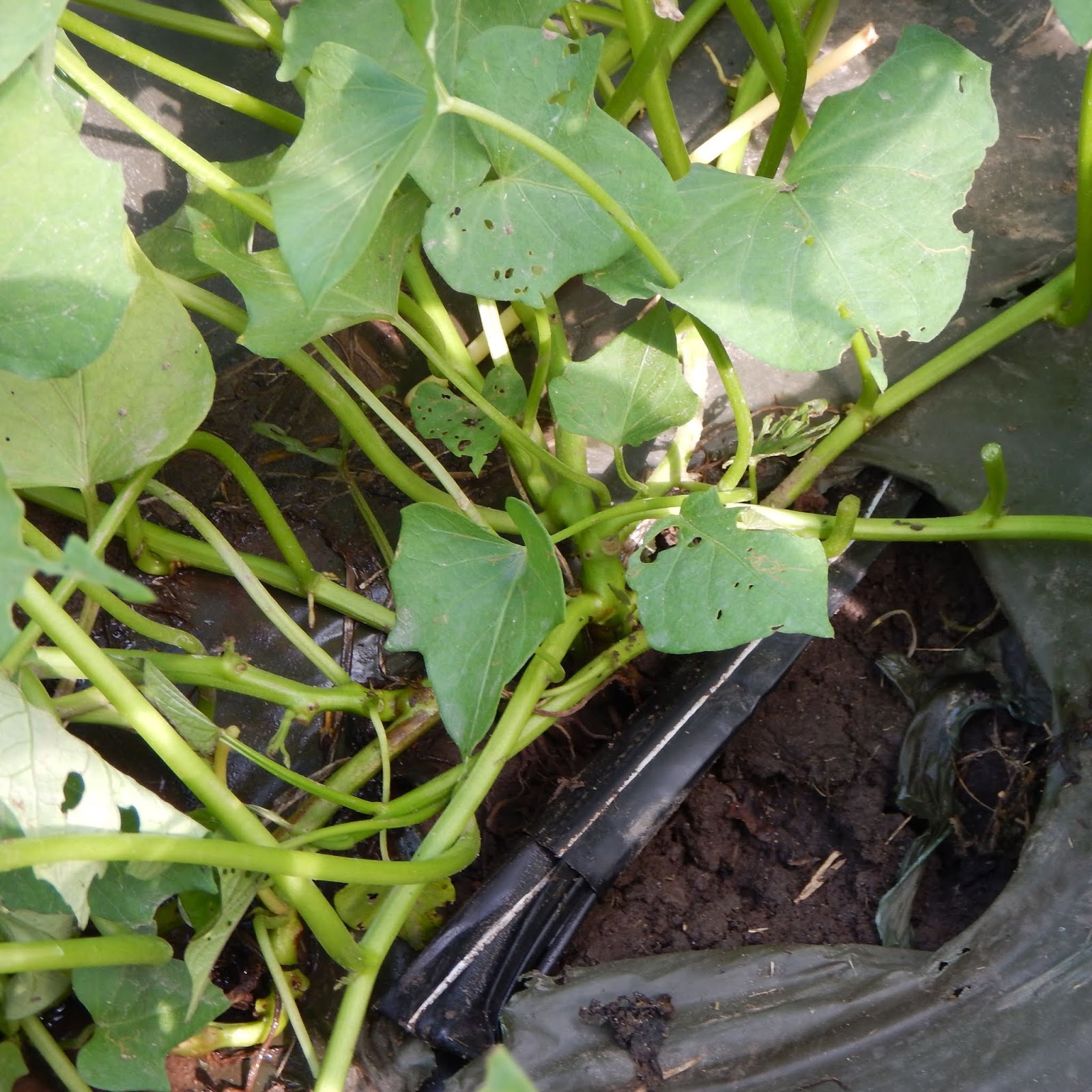
Drip tape line used to deliver nutrients to sweet potato plants.
As farmers, weather is always on our minds, so we might as well tackle this topic and get it out of the way!  There is some evidence that El Niño is finally turning to La Niña, which typically means less moisture and maybe even a bit of drought.  Since you just never know what you may get, we thought it prudent to update our irrigation permits and make sure our equipment is prepared and working well.  Whether we need irrigation as a means of delivering water to a crop or not, we use buried drip irrigation lines to deliver nutrients, microorganisms and trace minerals to our crops.  This year we are excited to expand our use of “sap analysis” to determine the specific nutrient needs of individual crops.  Sap analysis is kind of like a blood test for plants that allows us to better understand the plants’ nutritional needs at different points in growth.  Last year we saw some dramatic results when we used sap analysis to help us determine what support some of our crops needed in order to thrive.  We are planning to use sap analysis more proactively this year so we can be more aware of deficiencies and do what we can to correct them before they become a big problem.

As for crop planning, we’re laying out the plan and getting all the parts and pieces in place.  Sweet potato plants have been ordered, all 18,000!  We’ll be growing our two favorite orange varieties, Burgundy and Covington, and are also going to try a new variety called Bayou Belle.  We had better luck growing the white-fleshed Japanese sweet potatoes last year, so we’re going to expand that part of the planting a little bit.

Diana radishes, freshly washed!
We continue to appreciate the color and nutrition we get from our line-up of purple vegetables.  The color purple represents anthocyanins, plant compounds that play an important role in our physical health.  We’ll be doing one planting of the beautiful Amethyst beans and are considering growing the sweet and tasty purple tomatillos again this year.  Last year we also tried Diana radishes for the first time.  This is a spring radish that is shaped like a traditional red radish, but it has purple on the top and white on the root end.  We received positive feedback about this variety and we liked the way it looked in the field with regards to disease resistance, etc.  We have secured seed for our new favorite purple cauliflower, Purple Moon, and have our fingers crossed that we’ll get the Purple Majesty potato seed we have on order.  Lastly, we have to try a new bright magenta napa cabbage named “Scarrossa.”  We don’t typically grow napa in the fall, but that’s the recommendation for this variety so watch for this around October.

Fresh baby ginger with greens
We have been reviewing the results of our end of season survey that closed the fourth of January. We asked members for their input on which specialty produce items we should grow this year.  It’s clear that ginger is high on the list along with lemongrass!  We can’t make any promises at this point, but know we are trying to get some ginger “seed”.  Our supplier has closed ordering for now, but we’re on the list for an opportunity to purchase seed when they open ordering again sometime in February.  Wish us luck!  The other crop that had a lot of support was Egyptian Spinach.  This is a unique vegetable that grows in the heat of the summer when other greens struggle.  It is packed with nutrients and you just feel really good when you eat it!  It is a little challenging to grow, but we’re willing to give it a try!

Summer 2019:  Richard sampling and selecting
French Orange melon seeds
We continue to look for a personal-sized, yellow seedless watermelon, but there just isn’t anything available.  What about the French Orange Melons?  Good question.  For those of you who know the sweet, delicious, aromatic, one-of-a-kind French Orange melon, you may remember the sad story about how the producer has decided to drop the seed.  Richard has been working on saving seed for this melon for several years now.  This is not a quick or easy process.  The original seed was a hybrid.  When we plant the seed from melons produced from the original seed, we get a variety of results.  The sizing, color and characteristics of the melon are not always a direct reflection of the original seed.  As such, it takes several years of selecting the seed from the melons that most resemble the original set of characteristics and eliminate the off-types.  We feel like we are at a pretty good place with the quality of the seed we produced in 2019 and we finally have enough volume of seed that we can put in two nice sized plantings for actual production and harvest.  Richard will continue to carefully select seed and plant a separate seed production plot each year in an effort to refine our seed stock for this variety.  Wish us luck—we’re really hoping for a much better melon season than in 2019.  One of the problems we experienced last year was fewer pollinators.  We think the cold, late spring may have caused a decreased population of pollinator creatures.  It’s easy to take these little creatures for granted, but when something affects their population and they don’t show up, the results can be very dramatic!

Our crew happily putting together our first pollinator packs in 2016.
Speaking of pollinators, we are going to be planting pollinator packs again this year!  This is a project we started back in 2016.  In 2015 we published a series of newsletter articles we entitled “The Silent Spring Series.”  If you’re interested in reading these information-packed articles, you can find them all on our blog.  Basically the series took a look at the impact the use of agro-chemicals is having on our environment, ecosystem and our bodies.  The topic is pretty heavy and as we worked our way through the series we felt like we needed to create some light at the end of this very long tunnel.  We needed something positive to move the needle back to a point of hope.  We decided to plant pollinator packs, a garden pack with 9 different plants.  We started the seeds, transplanted them into the trays and delivered them to CSA members in the spring so everyone could use them to plant pollinator gardens in their own yard, on a patio space, in a community space or anywhere else they could think of where they would flourish, grow and serve to attract and support pollinator creatures (bees, butterflies, birds, wasps, etc).  We only intended to do it once, but it was so well-received, we get requests for them every year!  So, for those of you who already have an established pollinator garden, perhaps you’d like to add a few new plants to your space.  If you are just starting out, no worries!  We’ve included some plants in the pack that are easy to establish and will bloom in the first year!  Our order is nearly finalized and here is the list of seeds we ordered for this year’s packs.  Please note, the packs only hold 9 plants, but we’re ordering more than 9 different things just in case something doesn’t germinate very well and we can’t include it in all packs.  Here’s what we’re looking forward to:

Anise Hyssop, photo from Prairie Moon Nursery
Wild Bergamot, photo from Prairie Moon Nursery
Lance-Leaf Coreopsis, photo from Prairie Moon Nursery
New England Aster, photo from Prairie Moon Nursery
Brown-Eyed Susan, photo from Prairie Moon Nursery
Prairie Sage, photo from Prairie Moon Nursery
Lead Plant, photo from Prairie Moon Nursery
Little Bluestem Grass, photo from Prairie Moon Nursery
Blue Wild Indigo, photo from Prairie Moon Nursery
Leafy Prairie Clover, photo from Prairie Moon Nursery
Purple Coneflower, photo from Prairie Moon Nursery
Butterfly Weed, photo from Prairie Moon Nursery

We are looking forward to a great season and packing boxes for you and your families.  Once again we hope to strike a balance between supplying the staple items (onions, garlic, carrots, broccoli) and longtime favorites (sweet corn, tomatoes, green beans, strawberries) with some interesting and unusual selections to bring a little extra variety to your meals and challenge you, just a bit, to step out of your vegetable comfort zone and experience something new.  You never know, you just might discover a new flavor or vegetable you didn’t even know you liked!

In closing, we would like to share an excerpt from a note we received from a CSA family when they signed up for their second year with our farm.  Here’s what they shared:  “This past year was our first year getting a CSA share and it is not an understatement to say that it has changed our lives.  Thank you for doing what you do!  We love you guys!”  Thank you so much to all of you who send us notes like these.  We hope you understand how meaningful it is for us to read these and we also hope you understand that we think of you as we make our plans, select the varieties and pack your boxes each week.  Cheers to an awesome 2020 CSA season!