Wednesday, July 15, 2020

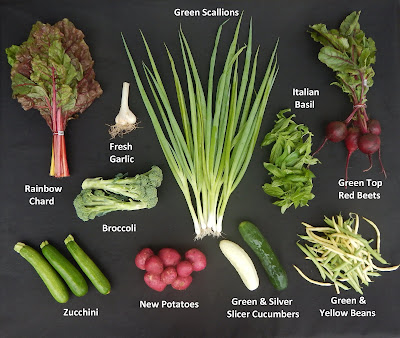
July 16, 2020 - This Week's Box Contents, Featuring New Potatoes!

Cooking With This Week's Box


Sweetheart Cabbage or White Cauliflower or Broccoli: Spicy Pickled Cauliflower; Broccoli Cauliflower Soup; Summer Farmer Skillet


New Potatoes: Smashed New Potatoes with Lemon and Lots of Olive Oil (see below); Butter-Steamed New Potatoes (see below); New Potatoes Cooked in Their Jackets with Spices (see below); Summer Farmer Skillet


Hello Everyone!

I hope you’re enjoying your summer activities and meals. We have some tasty ingredients awaiting you in this week’s box and more summer goodness yet to come! This week’s featured vegetable is new potatoes. These aren’t just any old potato—new potatoes are different. They are creamy and delicious with tender delicate skins and a fresh potato flavor that can’t be matched any other time of the year. I’ve included three simple recipes for you to consider trying this week, and all of them are centered around the concept of simplicity because in my opinion, these potatoes shine best with simple flavors and preparations. The first recipe for Smashed New Potatoes with Lemon and Lots of Olive Oil (see below) comes from Joshua McFadden’s book, Six Seasons, A New Way with Vegetables. Serve these as a side along with grilled chicken or fish or enjoy it as more of a main meal item with a vegetable salad to accompany. The second recipe for Butter-Steamed New Potatoes (see below) comes from Darra Goldstein’s book, Fire & Ice, Classic Nordic Cooking. This recipe represents some northern European influences and uses a combination cooking method of baking and steaming…in butter! The third recipe for New Potatoes Cooked in Their Jackets with Spices (see below) comes from Madhur Jaffrey’s book, An Invitation to Indian Cooking. The cooking method is simple and the flavor of the new potatoes is complemented by spices commonly used in Indian cuisine. What I like about all of these recipes is the fact that all three, regardless of the origin, acknowledge that the best way to prepare a new potato is to keep the flavors and method simple!

Beef Taco Hot Dish, photo from therealfoodrds.com
Our summer of zucchini recipes continues and I have to say there were several great recipe suggestions posted in the Facebook Group recently. This recipe for Zucchini Pizza Casserole looks like a family-friendly recipe and so easy to put together! For all you native mid-Westerners who like a good hot dish, check out this recipe for Beef Taco Hot Dish. This is a great summer recipe that can be adapted throughout the summer to include peppers, tomatoes, tomatillos or really any summer vegetable you have that needs a home! Now that I’ve mentioned two main dish suggestions, I’m going to balance it out a bit with something sweet. This sweet treat comes completely guilt free, and does not require you to heat up an oven! Try these No-Bake Zucchini Bread Granola Bites and enjoy them as a little afternoon snack!

Before I go any further, I want to mention this recipe for Summer Farmer Skillet. This recipe is not new to those of you who have been following along with this blog over the past few years. This is a recipe we eat a lot in the summer and it’s great because it’s adaptable, it only requires one pan, and you can include a lot of different vegetables in it! This week I made it with potatoes, onions, green beans and zucchini. The “green” that I used as the topping was cabbage, but you could also use amaranth or rainbow chard as well!

Basil Cucumber Salad
photo from wholeandheavenlyoven.com
The cucumbers have been so refreshing and I just can’t get enough fresh cucumber salads! This week I’m going to try this simple recipe for a Basil Cucumber Salad. I also want to make some Quick Refrigerator Pickles. You can store these in the refrigerator for 2-3 weeks on average (sometimes a little longer). They are a nice little accompaniment to sandwiches, snacks, etc. While you’re pickling, you might want to make a jar of Spicy Pickled Cauliflower too! This would go well with that Beef Taco Hot Dish!

Growing up, green beans were one of my least favorite vegetables. That could be because my mom always overcooked them, or possibly because I had to pick them from the garden and snap them for winter preservation. In my adult life, I’ve come to appreciate just how delicious fresh green beans can taste. Since we have some basil in this week’s box, I thought this recipe for Crispy Green Beans with Pesto would be fitting. It’s been awhile since I have roasted green beans, but I want to make these Roasted Garlic Green Beans this week using the fresh garlic!

Cucumber Basil Aqua Fresca, photo by David A. Land for epicurious.com
Have you eaten the beets from the last two weeks? If not, you are missing out! They are so sweet and delicious! While I typically just eat them cooked with butter and salt, I think I’m going to have to try making this Beet Lemonade, a recipe mentioned in our Facebook Group. While we’re talking about drinks with vegetables, perhaps this recipe for Cucumber Basil Agua Fresca is of interest to you!

Vegan Beet Salad with Basil
photo from hellyeahitsvegan.com
Back on beets….I also have this simple recipe for Vegan Beet Salad with Basil on the list for later this week. Before I finish up with beets, I have to put in my plug to encourage you to eat the beet greens because it would be a shame to waste them and they taste so delicious! If you have more greens or vegetables than you can eat this week, consider preserving them. Here’s a link to this blog post that will show you How To Preserve Beet Greens & Chard. Chard and beets are in the same family and they both resemble each other in both appearance and texture, thus you can use them interchangeably in many recipes. Frozen greens such as this can be used throughout the winter in soups, smoothies, casseroles, hot dishes, etc. This is actually a really good blog with some useful information about preserving many other things. If you are interested in freezing some of your green beans for later use, check out the article “How To Blanch and Freeze Fresh Green Beans.”

Sesame Noodles with Swiss Chard & Chicken
photo by Alexandra Stafford for food52.com
Swiss chard is one of my favorite greens, partly because it’s beautiful but also because it’s so versatile to use. Check out this recipe for Sesame Noodles with Swiss Chard & Chicken. Chard seems to go very well in any pasta dish. I also have to mention this Swiss Chard Salad with Lemon, Parmesan & Breadcrumbs. We featured this recipe in our newsletter several years ago and I mention it every year because it is so delicious! This would be a great salad to serve with a simple bowl of Broccoli Cauliflower Soup for a light dinner or lunch.

Scallion Beef Stir Fry
photo from thewoksoflife.com
Lastly, this is our final week for scallions. We’ve had a really strong run on scallions, but next week it will be time to move on to Desert Sunrise Cipollini Onions and the delicious, mild Sierra Blanca onions. Before they’re gone, perhaps we should feature them in a stir-fry! I have several options for you. You can go with Scallion Beef Stir-Fry or Pork and Chinese Scallion Stir-Fry if you eat meat. If you’d prefer a vegetarian alternative, consider this Mushroom and Green Onion Stir-Fry.

Ok, I think we’ve covered every item in this week’s box! Looking ahead to next week, it looks like there’s a chance we might have some tomatoes to pick! We’ll be digging more new potatoes over the weekend, so you can expect to receive more of those next week. Tomatillos are on my radar….we’ll have to see if they fill out in time for next week. Have a great week!—Chef Andrea


Vegetable Feature: New Potatoes

By Chef Andrea

“Everyone has eaten a potato, but not everyone has eaten a truly new potato, freshly dug from the soil just days before serving. Once you do, your life is forever changed, because a new potato is everything good about a potato but more delicate, sweeter, and refined.”—An excerpt from Chef Joshua McFadden’s, Six Seasons, A New Way with Vegetables.

Potatoes are a vegetable everyone’s familiar with, but not all are created equally and this week’s potatoes are, in our opinion, very special. There is a short period of time early in the summer when we have the opportunity to eat “New Potatoes.” New potatoes are not a variety, but rather a term used to describe potatoes that are harvested off of a plant that still has green leaves on it. Our usual practice is to mow down the potato vines about a week in advance of harvest. In the week between mowing down the vines and actually harvesting the potatoes, changes take place in the plant that help to set the skins and make them easier to handle without damaging the skin. It also gives them a more durable skin to protect the flesh and make them better for storage. These potatoes were dug last Saturday from plants with green vines. Freshly dug new potatoes have a flavor and texture unlike other potatoes throughout the season. It is a fresh, pure potato flavor and the skin is tender and delicate. Once cooked, the flesh is moist, creamy and smooth. Simply delicious!

The new potatoes in your box this week are a variety called Red Norland. They are an early red-skinned potato with creamy white flesh. They need to be handled with care so as not to disturb the skin and expose the flesh. We’ve given them the “white glove treatment” through the harvest and washing processes, but we encourage you to handle them with care as well. Wash them just before use and just give them a gentle scrub if needed.

Potatoes should be stored in a cool, dark place, but not in the refrigerator. We store our potatoes in a warmer cooler at about 48-50°F which is most ideal. If potatoes are stored in colder temperatures (such as your home refrigerator), the starches will convert to sugars which is not what we want in a potato (save that characteristic for sweet potatoes!) So in a home setting, it’s best to store them in a cool, dry location outside of the refrigerator where they will not be exposed to light which can cause the potatoes to turn green and bitter. If the potatoes have set their skins, in general they will store for a few weeks at room temperature in a brown paper bag (never in a plastic bag). However, this week’s new potatoes will not store as well and are best eaten within one week.

New Potatoes with Garlic and Butter
(Recipe in the HVF archives)
I encourage you to slow down and really savor the flavor of these new potatoes as this is the only time during the season you’ll be able to have this taste experience of freshly dug potatoes. You really don’t need to do much to them and, in fact, I’d encourage you to do as little as possible! I am in agreement with Chef Joshua McFadden who recommends the following when using new potatoes:
"Simple cooking methods are best for these early-season potatoes—think boiling, steaming, and pan-roasting—and delicately flavor with fresh herbs……One of the beauties of a new potato is its undeveloped skin. That means no peeling, folks."

So save your complicated potato recipes for another time and just focus on simple recipes and preparations that allow the flavor of the new potatoes to come to the forefront. All they really need is a little cooking time, a little butter or oil and light seasoning. In searching different cookbooks for references to new potatoes, this seems to be the general consensus in cultures around the world. I thought it was interesting to note a special reverence and emphasis on simplicity was given to “new potatoes” in recipes from all around the world including northern Europe, France, and India to name just a few. I’ve featured several of these recipes for you this week. Give one of them a try and pay particular attention to how delicious and creamy these potatoes are this week!

As we progress through the season, you will be receiving more varieties of potatoes. It’s important to know that some potatoes are classified as “waxy” while others are classified as “starchy,” or possibly a mix of the two classifications which we label “all-purpose.” These classifications are assigned based on the type of starch that comprises the flesh of the potato and it’s important to choose the appropriate cooking method for each type. Waxy potatoes are generally more moist and hold together better. They are best used for roasting, boiling or steaming, and are a good choice for soups and potato salad. I do not recommend mashing them because they usually become sticky and pasty. This week’s variety is a waxy potato. Starchy potatoes tend to be more dry and fluffy. This is a variety of potato appropriate for mashing as well as for making roasted potatoes, pan frying, etc. Starchy potatoes are also useful in soups, but they’ll likely fall apart which is actually good for thickening. As we progress throughout the season, make sure you read the “What’s In the Box” portion of the newsletter each week as we’ll give you information about the specific potato varieties as we deliver them so you’ll know the best ways to prepare and enjoy them. In the meantime, enjoy the fresh flavor and creamy texture of these freshly dug new potatoes!


New Potatoes Cooked in Their Jackets with Spices

Yield: 4-6 servings
1 ½ pounds new potatoes
A piece of fresh ginger, about 1 ½ inches square, peeled and coarsely chopped
½ tsp ground turmeric
5 Tbsp vegetable oil
¼ tsp whole cumin seeds
½ fresh hot green chili, finely sliced (optional), or ¼ tsp cayenne pepper
1 cup chopped cilantro
1 ¼ tsp salt
1 tsp garam masala
1 Tbsp ground coriander
2 Tbsp lemon juice

  1. Wash the potatoes well, but do not peel. Quarter them lengthwise, then dice them. Set aside in a bowl of cold water.
  2. Put the ginger in the electric blender with the turmeric and 3 Tbsp water. Blend at high speed until smooth.
  3. Heat the oil in a 10-12 inch heavy-bottomed pot over medium heat. Add the whole cumin seeds, and after about 10 or 20 seconds, when they change color, add the paste from the blender and cook for about 1 minute. Put in the sliced green chili if you are using it, and cook another 30 seconds.
  4. Drain the potatoes and add them to the pot. Fry them, stirring, for about 5 minutes. Scrape the bottom of the pan as you stir. Put in the cilantro, lower heat a bit, and fry another 5 minutes, stirring gently. Add the salt, garam masala, coriander, lemon juice, cayenne pepper if you are using it, and 3 Tbsp warm water. Stir, scrape bottom gently, and cover. Reduce flame to very low and let the potatoes cook about 25 minutes, until done. Stir very gently every 10 minutes or so.
  5. To serve: Lift out carefully and serve in warm shallow dish or platter. Try these potatoes with roast pork or lamb. They are very versatile in an Indian meal and can be served in an all-vegetarian lunch…—or they can be served with almost any meat or poultry dish.
Recipe borrowed from Madhur Jaffrey’s book, An Invitation to Indian Cooking.


Smashed Potatoes with Lemon and Lots of Olive Oil


Yield: 4 serving

Kosher salt, to taste
1 ½ pounds new potatoes, rinsed and just lightly scrubbed if they need it
Freshly ground black pepper, to taste
1 lemon, halved
Extra-virgin olive oil

Put the potatoes in a pot and add cold water to cover by 2 inches. Add salt until the water tastes like the sea. Bring to a gentle boil and boil the potatoes until they are very tender, 15 to 20 minutes.

With a ladle or a measuring cup, scoop out about ½ cup of the cooking water and drain the potatoes well. Put them back in the pot and crush them using a potato masher or a big fork or a wooden spoon. Squeeze on the lemon juice, season with ½ tsp salt and many twists of pepper, and add ¼ cup olive oil. Sprinkle on a Tbsp or so of the cooking water and crush a few more times and then taste. Adjust with more lemon, salt, pepper, or olive oil until the flavor is irresistible. Add a bit more cooking water if you like in order to make the texture chunky but a bit creamy.

Recipe from Joshua McFadden’s book with Martha Holmberg, Six Seasons, A New Way with Vegetables.
Author’s Note: “This side dish is so perfect on its own that I hesitate to suggest any additions, but if you must, a handful of freshly picked herbs—especially chives and dill—is fantastic.”


Butter-Steamed New Potatoes


Yield: 4 servings

1 pound new potatoes, unpeeled
4 Tbsp butter
½ tsp salt
3 Tbsp finely chopped fresh dill

Preheat the oven to 300°F. Gently wash the potatoes and drain them in a colander. Leave whole or cut into pieces 1-inch diameter or smaller.

Place the butter in a small gratin dish just large enough to hold the potatoes. Set the dish in the oven for the butter to melt, then add the potatoes and salt, and toss with the butter. Cover the dish tightly with foil and bake until the potatoes are tender, about 1 hour.

Sprinkle the potatoes with the dill and serve immediately, right from the gratin dish.

Recipe adapted slightly from Darra Goldstein’s book, Fire & Ice, Classic Nordic Cooking. In the introduction to this recipe she shares: 

“I first encountered butter-steamed potatoes as a newlywed living in Stockholm. I had carried James Beard’s Delights and Prejudices across the ocean to serve as my kitchen bible. There I discovered a recipe for pommes fondantes, tiny, peeled potatoes steamed in nothing but butter over low heat. That year in Sweden I spent a lot of time standing over the stove, shaking the pot to make sure the potatoes didn’t burn. Now, though, I make these darlings in a much more carefree manner, one I discovered in Norway. For all their ease, they are just as delectable.”

July Farm Update

By Farmer Richard

Tomatillo fruit hanging heavy on the vines
and filling out their husks!
Despite the fact that we just did a farm and field update last month, a lot has changed and happened since then and we want to let you know what’s happening at the farm! We are at the apex of the season, halfway through the calendar year and one-third of the way through our CSA delivery season. The spring crops and weather were quite moderate and we were able to pack quite nice boxes for the early part of the season. But we know you can only eat so many radishes and lettuce and many of us look forward to all the delicious vegetables of summer! We’ve been delivering cucumbers and zucchini for several weeks and we’re in our second week of beans, but there are more summer favorites coming up very soon! If you don’t have time to read all the details of this week’s update, at least take a look at the pictures! Our hope is that we can connect you with our farm virtually so you know where your food is coming from and can have those images in your mind when you unpack your box each week!

The start of this year's garlic harvest, drying in the greenhouse.
Summer did not enter gently this year. The past two weeks have been a new challenge of very hot and humid days. We had a stretch of days reaching 88-90°F every day with high humidity that left us all with beads of sweat running down our brows early in the day. We started off the summer in a bit of a dry spell, but that has quickly changed as we’ve had frequent rains totaling about 9 inches in the past two weeks. If our more normal spring was a result of the extreme cutback in emissions related to COVID-19 changes in travel, etc, then it leaves us wondering if the sudden and recent switch to extreme weather is connected to “opening up.” Hmm….maybe we don’t want to “go back to normal!” Well, normal or not, we are looking forward to the second half of the season and we have a job to do. So here’s a glimpse of what is yet to come.

Rows of tomatoes in our 1st planting--staked,
tied and setting on fruit!
Spring days are highlighted by lots of planting and weed control. While we’re trying to get everything in the ground and keep up with flame weeding, mechanical cultivation and hand weeding spring crops, we are also planting and caring for the summer crops that will follow. Our efforts to control weeds are directly related to the hand of weather conditions we are dealt. While our crew members have done a good job keeping up with timely cultivations, rainy, wet conditions limit what we can do mechanically. Unfortunately, the weeds thrive in these hot, wet conditions which adds salt to our wound and leaves us with some big hand weeding jobs! We’re doing the best we can, but hand weeding requires a lot of crew time that we just don’t have many days. We’ve had a dedicated crew of four people who were hired specifically for focusing on hand weeding missions, but the weeds are growing faster than they can pull them! While the majority of our experienced H2A crew members arrived back in April, we did have several who received “administrative hold” and were not issued visas. Due to pandemic-related changes with the consulate’s office in Mexico, these members had to return home and wait for the call to return for further evaluation. They were also restricting visas to only those who had had a visa previously and were not considering any new applicants. Finally, the
A hillside sweet corn field....look carefully and
you'll see the deer fence surrounding the
field to help deter the critters.
first week in July we received notice letting us know the consulate’s office was ready to look at their cases. We are happy to report that four more crew members received their visas and made the long journey to Viroqua arriving last Thursday! We have only seen them from a distance as they will remain quarantined for 14 days, separate from the rest of our crew and with no contact with others in the community. They arrived healthy and well, going directly to the house we prepared for them complete with a fully stocked kitchen! They’ll reside in this location until the end of their quarantine and will stay busy during the day tackling their own weeding missions in fields we’ve assigned to them safely distanced from any other people. Thankfully, that is the beauty of being in the country where there are wide open spaces! We look forward to integrating Alvaro, Silvestre, Samuel and Joel into our crew in the near future. They all have special skills and contribute greatly to our farm. We’ve really missed them and are thankful to have them here!

An upcoming crop of green beans,
nicely cultivated and setting on blossoms!
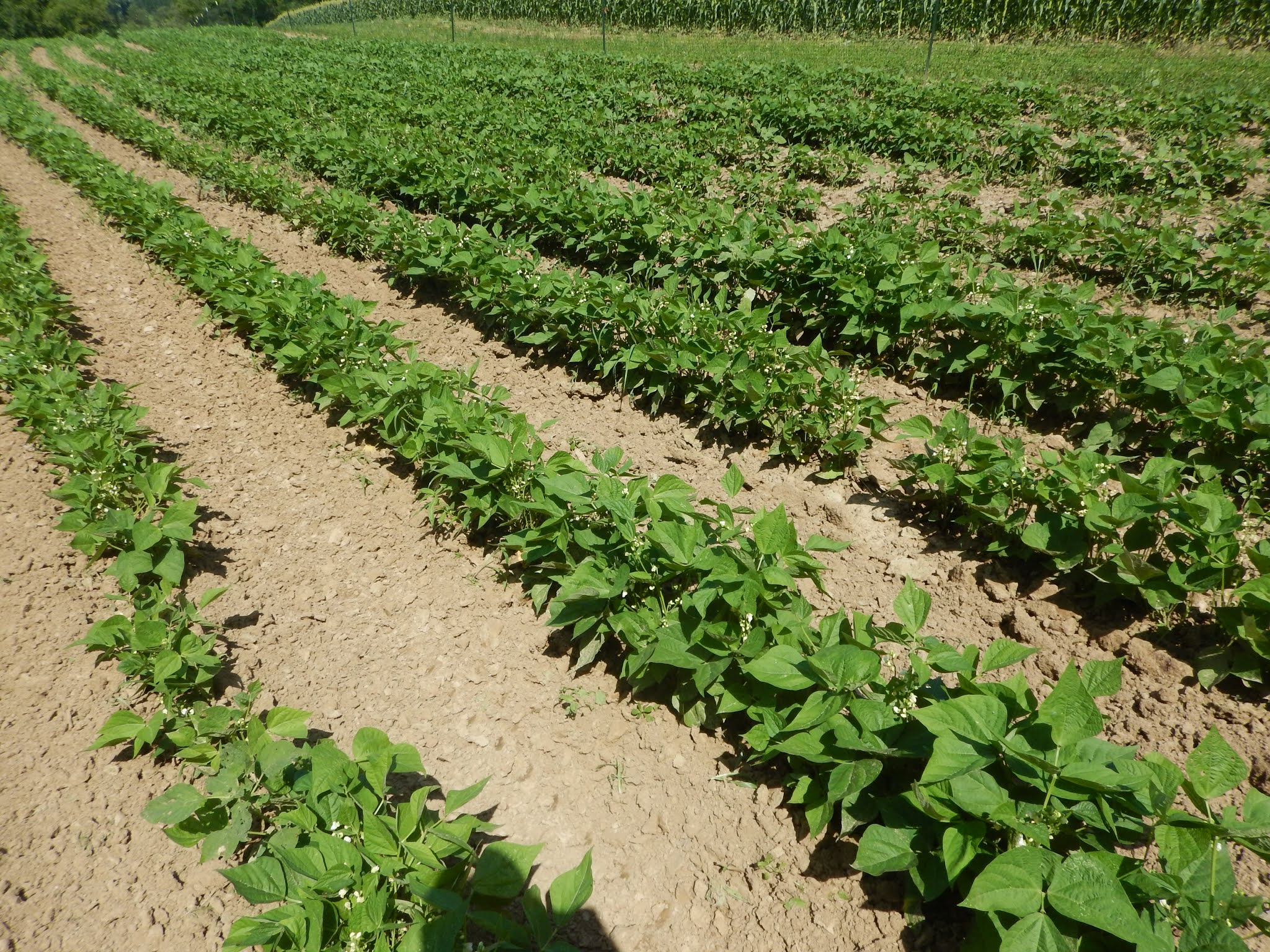
That’s enough about weeds though, lets look at some crops! Our first two crops of beans have yielded very nicely and after this week we still have three more crops coming up. They are all looking good and we’re hopeful we’ll be able to keep the bags of beans coming your way! We also have three crops of edamame coming up. The deer population in our area is fully informed that we grow edamame, so we have to be proactive and make sure we keep these crops surrounded by a tall deer fence to keep them from eating the plants! So far, so good and we hope to deliver the sweet, tasty fresh edamame in the near future.

An early crop of sweet corn, notice the small ears of corn.
Summer isn’t summer without sweet corn! While sweet corn isn’t a big money maker for our farm, I’ve always said it’s a crop worth growing because it earns us friends! Every year we have the goal of growing “the best sweet corn ever!” We’ve had many successful years doing so and hope we can pull it off again this year! We have planted five crops and they’re looking pretty good! The first crop suffered some loss from red-winged blackbirds that dug up about 50% of the seed. The remaining crops fared much better, but we still need to be diligent about keeping the critters out of the field! If the raccoons, deer and birds get a taste of the sweet ears of corn, they can really do some damage. These fields are also fenced and we’ll be monitoring them very closely as the corn matures and reaches the point of harvest. We’re also monitoring for the corn earworm moth which migrates from the south. With the reduced bat populations we have a larger challenge to produce sweet corn without these worms. The researchers and experts say it can’t be done organically, but with careful monitoring and a high level of management we have pulled it off many times before! So, we know it can be done and we’re going to do our best. Please know this is quite challenging to achieve, so if you do find a worm, please be forgiving.

The beloved SunOrange tomatoes--so sweet they're like candy!


The cutest little watermelon!
Tomatoes are another beloved summer crop we know you are all looking forward to. We actually had our first sweet taste of SunOrange tomatoes this week! I only found enough to pick a small handful and between Andrea and Amy, they didn’t last long. We have two crops of tomatoes planted, mulched, staked and tied and looking great! The first crop has a lot of fruit set on and we’re hoping we can start picking some of the early varieties within the next few weeks. The eggplant field is also looking quite nice. The plants have blossoms and the start of some small fruit setting on. Things could happen fast at this point, so we anticipate we’ll start harvesting eggplant within the next few weeks.

Our melons and watermelons are not far from the eggplant field, so it seems fitting to report their status now as well! After a few low yielding, disappointing years, this year’s melon and watermelon fields are looking good and setting fruit.  We’re keeping our fingers crossed that this continues and we’ll all be eating some of those “juice dripping down my chin” melons very soon! Lastly, I want to mention the peppers. We’re finally starting to see some fruit set on. The ½-inch jalapenos are quite cute and we’re hoping some of the other varieties will be ready to pick very soon.

While we’re in the midst of summer, we’re already looking to fall crops! The sweet potato vines are spreading nicely and the winter squash fields look great! On our field tour last Sunday we even spotted a nice-sized festival squash! It will be awhile before it’s mature and ready to harvest, but seeing that fruit made us realize how quickly this year is going! We’ve also started planting our fall root crops and within the next couple of weeks we need to plant beauty heart radishes, black Spanish radishes, daikon, turnips, etc.

A view of the sweet potato (left) and winter squash (right)
fields with blue skies overhead!
We also have to look ahead to the next growing season. We are already selecting and reserving fields for a new crop of strawberries knowing we need to plant a new field in 2021. We are also in the midst of garlic harvest which means we’re selecting and saving garlic for next year’s crop. We have had an unexpected increase in CSA members this year, more than double from last year. We welcome this increase and are hope you will all join us again next year as well! CSA is our preferred market to grow for and benefits our farm in many ways. We’ll see what the next year holds. Later in the fall we will be asking you to commit to the 2021 growing season so we may better plan for next year. We hope you will end this season with an increased appreciation for local and high quality organic produce along with a desire to make a commitment for next year. But for now, enjoy the rest of the season!

Wednesday, July 8, 2020

July 9, 2020 - This Week's Box Contents, Featuring Amaranth!

Cooking With This Week's Box


Amaranth: Chinese Amaranth & Garlic Soup (see below); Summer Amaranth & Quinoa Salad with Chickpeas (see below)
Green Scallions: Summer Amaranth & Quinoa Salad with Chickpeas (see below); Creamy Charred Scallion Dip; Skillet Chicken and Zucchini with Charred Onion Salsa
Fresh Porcelain Garlic: Chinese Amaranth & Garlic Soup (see below); Summer Amaranth & Quinoa Salad with Chickpeas (see below); Beet Green Pesto
Green and/or Silver Slicer Cucumbers: Cucumber WaterCucumber Mint & Basil Soda
Green and/or Yellow Beans: Summer Amaranth & Quinoa Salad with Chickpeas (see below); Stove Top Green Bean “Casserole”
Beautiful amaranth greens on their way to becoming dinner!
I don’t know what it is about amaranth that makes me so happy, but I have to admit—I love this vegetable!  Maybe it’s the stunning color or perhaps it’s the nutrition nerd coming out in me.  There’s just something about eating a beautiful vegetable that I know is benefiting my health.  To all the naysayers who think “healthy” food doesn’t taste good—quite the opposite.  So lets jump into this week’s box starting with amaranth.  This week I’m sharing two simple recipes with you.  The first is a Chinese Amaranth & Garlic Soup (see below).  You might be thinking, “Seriously Andrea, soup in July?”  I couldn’t help it—it’s such a simple recipe I had to see if it was good.  When I first tasted it, I actually said out load “Wow, this is really good!”  The key is making sure you have good quality vegetables (check—you do) and a good quality stock or broth.  If you have these things along with about 15 minutes you can make this simple, nourishing soup.  Serve it with steamed rice or perhaps the Soy-Pickled Eggs that were part of the recipe for Spicy Pork & Turnip Soup featured back in May.  Don’t be afraid to eat this soup for breakfast too.  I know this might seem odd to some of you, but I actually do like to eat soup for breakfast, especially nourishing ones like this.  It is a good way to get a nutrient boost to start your day without weighing you down.  The second recipe is for Summer Amaranth & Quinoa Salad with Chickpeas (see below).  The ingredient list is a little long, but don’t let that intimidate you.  There are several components to this recipe, but once you have everything prepped it comes together quickly.  The point of this recipe is to let the simple flavor of the vegetables come out.  If you want more flavor, you could add some ground cumin or coriander or serve it with a bit of hot sauce.  The quinoa and chickpeas contribute additional protein, so this can be served alone as a main dish salad or you could serve a smaller portion as a side dish.  This is also a good “prep in advance” salad that you can make on the weekend and then pull out during the week for a quick dinner.  You could also make it in advance and portion it into containers that will make a quick “grab-n-go” lunch option to take with you to work (if you’re going to work) or for a picnic!
Creamy Charred Scallion Dip
photo from kitchenstories.com

We’re nearing the end of our spring-planted scallions, maybe just one more week before we move into the next onion selection.  While scallions are often used in smaller quantities to accent a dish, you can also use them as more of a main, featured item.  Check out this recipe for Creamy Charred Scallion Dip.  This would be another good item to take on a picnic or enjoy on the patio for an evening snack with a cold beverageI also want to try this recipe for Skillet Chicken and Zucchini with Charred Onion Salsa.

Since I mentioned zucchini, we might as well check out a few more zucchini recipes such as Fudgy Zucchini Brownies or Flourless Almond Butter Zucchini Bars.  Life is too short to not indulge in dessert now and again. 
Spiralized Zucchini with Beet Balls
photo from veggiedesserts.com
What shall we do with this week’s beets?  How about Spiralized Zucchini with Beet Balls.  This is a vegan recipe utilizing zucchini as a “noodle” tossed with pesto and served with little baked beet balls on top.  The recipe just calls for pesto, so you could go with a standard basil pesto or consider using the beet greens to make this Beet Green Pesto, which is also vegan.  If you’re looking for another use for beet greens, check out this Red Lentil Soup with Beet Greens.  If you’re not into pesto and beet balls this week, refer back to Last Week’s Vegetable Feature Article about beets for more recipe suggestions!

The first cauliflower of the season is finally ready!  I have to admit, I’ve never made Cauliflower Rice, so this might be the week to give it a try!  So here’s a new use for cauliflower I never would’ve dreamed up on my own.  Cauliflower Buns!  That’s right, this recipe uses cauliflower as one of the main ingredients to make gluten free buns, or bagels if you want to shape them differently.  This is one of those “Really, does this work” kind of recipes that I just have to try.  If you beat me to it, post your results in our Facebook Group!
Cucumber Mint & Basil Soda
photo from bonappetit.com
Moving on, lets talk about cucumbers….which are coming out of our ears this week (figuratively)!  Cucumbers are nature’s hydration vegetable.  Check out this article featuring Cucumber Water.  The article talks about the health benefits of adding cucumbers to your water, especially in the heat of the summer.  There’s also a recipe at the end of the article.  You can jazz up a basic recipe by adding other ingredients such as herbs or fruit.  I also want to try this refreshing recipe for Cucumber Mint & Basil Soda.  This might just be the “cold beverage” to enjoy on the patio with a bowl of that Creamy Charred Scallion Dip!

We’re nearing the end of this week’s box, but we have a few more items to play with!  Last week in the Facebook Group there were quite a few good recipe suggestions including Fennel Orange Muffins.  This recipe comes from the Fairshare CSA coalition’s cookbook, From Asparagus to Zucchini.  If you’re looking for more fennel recipes, I’ll refer you to last year’s Fennel Vegetable Feature Article on our blog.  Go to the end of the article and you’ll find a long list of suggestions for utilizing all parts of the fennel!

Summer isn’t summer without fresh green beans!  Here’s a recipe for Stove Top Green Bean “Casserole,” a riff on a classic American recipe minus the canned onions and cream of mushroom soup.  Please note this recipe calls for 2 pounds of beans, but there is only 1 pound in your box so you’ll need to cut the recipe in half.

Ok, I think that’s a wrap for this week.  In case you’re wondering what’s coming next, I have my eyes on fresh, green top carrots and Richard’s been doing some test digs to decide when we can dig new potatoes!  I don’t know when we’ll be able to start picking, but tomatillos are almost ready and some of the tomatoes have set on fruit!  Have a great week!—Chef Andrea


Vegetable Feature: Amaranth Greens


By Chef Andrea


This week’s featured vegetable is not only gorgeous, but it’s also packed with nutrition!  We’re talking about Amaranth Greens!  While this is a “green” type vegetable, the leaves on this beauty are actually a dark burgundy red color.  When you’re driving by the fields, the bed of bright red amaranth greens is a site to behold, and it makes it easy to find in the field!

Amaranth is thought to have originated in Central and/or South America, but has made its way around the globe.  It can be found in Europe, Asia, and the Americas, which means there are many options for finding ways to use this vegetable.  Amaranth is used in Indian cuisine, paired with a variety of lentil and curry dishes.  It’s also used in the Carribean where it’s known as callaloo and is used in soups laced with coconut and chiles.  You’ll also find amaranth in Chinese cuisine, either lightly stir-fried with garlic, etc or incorporated into a simple soup such as the one featured in this week’s newsletter!  As I mentioned, amaranth is thought to have originated in Central and/or South America, so it also pairs well with flavor combinations from the cuisine of these regions.  One of the reasons we choose to include amaranth in our line-up of “CSA Vegetables” is because it thrives in the heat of the summer when other greens and lettuce really struggle.  As such, it goes well with all those other summer vegetables including zucchini, eggplant, peppers, potatoes, tomatoes, corn, onions and garlic.


Amaranth greens could be called one of our own “superfoods.”  While I’ve never sent a sample to the lab to test nutrient levels, we know “greens” in general are packed with nutrients and foods with vibrant colors are such because of antioxidants and phytochemicals in them.  Amaranth is thought to have high levels of iron, potassium, magnesium, vitamin C and vitamin E…to name just a few of its nutrient attributes.  Do yourself a favor and eat this vegetable if for no other reason than that it’s good for you!

The variety of amaranth we grow is referred to as “Polish Amaranth.”  We purchased the seed from Wild Garden Seeds (WGS), which is kind of funny because our own Farmer Richard is the one who actually gave them the seed originally!  For those of you who haven’t heard the story, it goes like this: One day Richard was driving to LaCrosse, WI and saw this beautiful red amaranth growing in a garden along the way.  He stopped and asked the people who lived there about this plant.  They said their Aunt May brought the seed with her from Poland and they were happy to share it with Richard.  So Richard collected some seed and started growing it, mostly as a baby green to mix into his gourmet salad mix.  It didn’t do so well as a salad mix ingredient, but in later years we found success growing it as a mid-summer bunching green used for cooking.  Since we aren’t in the business of seed production, Richard passed the seed onto Frank Morton at WGS and he has been maintaining this variety of amaranth.   Thanks Frank!

Spicy Amaranth with Zucchini & Black-eyed Peas
While amaranth may be eaten raw, at this stage where it is more mature we recommend enjoying it as a cooking green for optimal flavor.  The stems are often tender enough to be eaten as well. The stems will need just a little extra cooking time so I like to separate the stems and leaves.  Cut off about one inch of the lower portion of the stem and then finely chop them.  When cooking, add the stems to the pan a few minutes ahead of the leaves.  Amaranth can be simply boiled, steamed or sautéed with garlic and onions for a super-simple preparation.  You can also wilt it into soups, grain dishes, curries, and bean dishes.  Many of the nutrients in amaranth, including the phytochemical that gives it its pink color, are water soluble.  Thus, you’ll notice when you cook amaranth the leaves will often turn green and the cooking liquid or other ingredients you’re cooking with the amaranth will turn pink!  Always try to use any cooking liquid (eg if you choose to simmer or boil amaranth) so you retain the nutrients.  I almost forgot to tell you what it tastes like!  Amaranth is similar in flavor to spinach, except it’s even better!

Store amaranth greens in the refrigerator loosely wrapped in a plastic bag or a storage container with a lid.  If you want to enjoy their beauty before you eat them, you can also put them in a vase and leave them at room temperature where you can see them!  Be sure to change the water daily.  Enjoy!


Chinese Amaranth & Garlic Soup


Yield:  4-6 servings

1 bunch amaranth greens
3 small or 1-2 large cloves garlic, sliced thinly
2 Tbsp peanut or sunflower oil
32 oz chicken stock
16 oz water (optional)
Salt, to taste
Freshly ground black pepper, to taste
Freshly ground white pepper, to taste (optional)

1. Separate the amaranth leaves from the stems.  Cut the amaranth leaves into thin strips.  Cut the bottom one inch off the stems and then chop finely.

2. Heat a wok or 2-3 quart saucepot over medium heat.  Add the oil and once it shimmers, add the garlic.  Stir carefully and cook until the garlic is very fragrant and even turning just a little golden brown.  Add the amaranth stems and cook an additional 1-2 minutes.  

3. Stir in the amaranth greens and continue to stir-fry just until the greens have wilted.

4. Add the chicken stock and additional water if needed (if the stock or broth you are using is concentrated, you may want to use additional water).  Season with a bit of salt, black pepper and white pepper (optional).  Bring the soup to a simmer.  

5. Simmer for 3-5 minutes, just until the broth is pink and the amaranth is tender.

6. Remove from heat and adjust the seasoning to your liking with additional salt and pepper as needed.  Serve hot.

Recipe adapted from www.thehongkongcookery.com.


Summer Amaranth & Quinoa Salad with Chickpeas


Yield:  5-6 servings

1 ½ cups quinoa
3 cups water
1 ½ tsp salt, plus more to taste
1 tsp ground turmeric
¼ tsp freshly ground black pepper, plus more to taste
¼ cup raisins
2 cups cut fresh green beans
1 bunch amaranth, leaves and stems separated
1 Tbsp sunflower or olive oil
1 Tbsp minced garlic
1 Tbsp lemon juice
1 tsp honey
1 tsp Dijon mustard
¼ cup extra-virgin olive oil
1 can (15 oz) chickpeas
1 cup finely sliced scallions (green tops and bottoms)

1. In a medium sized pot, combine quinoa, water, 1 tsp salt, turmeric and ¼ tsp black pepper.  Place over medium-high heat and bring to a boil.  Reduce the temperature to medium, enough to maintain a gentle simmer.  Cover the pan and simmer for 13-15 minutes or until all the water has been absorbed and the quinoa is tender.  Remove the pan from the heat, add the raisins and gently stir the quinoa with a fork to release some of the steam.  Place a clean dish towel over the pan and put the lid back on.  Set aside for 8-10 minutes.  The towel will absorb excess steam as the quinoa begins to cool.

2. Place the cooked quinoa in a large mixing bowl and set aside to cool to room temperature.

3. While the quinoa is cooking, prepare the green beans and amaranth.  Remove the stem end from the green beans and cut into ½-inch pieces.  Separate the stems and leaves of amaranth.  Roughly chop the amaranth leaves into bite-sized pieces.  Set aside.  Cut the lower 1 inch of stem off and discard it.  Finely chop the remaining stem.

4. In a medium sauté pan, heat 1 Tbsp sunflower or olive oil over medium to medium-high heat.  Once the oil is hot, add the garlic and saute until fragrant.  Add the cut green beans and ½ tsp salt to the pan.  Stir to combine, then continue to sauté just until the green beans turn bright green.  Add the amaranth stems and sauté an additional 1-2 minutes, then add the leaves to the pan, cover and allow the leaves to wilt.  This will take 3-4 minutes.

5. Once the greens are wilted, remove the lid and continue to cook until all the moisture is gone and the leaves are fully wilted and tender.  Remove from heat and set aside.

6. In a small mixing bowl, combine lemon juice, honey and Dijon mustard.  Drizzle in ¼ cup olive oil while continuing to stir.  

7. Now it’s time to compile all the salad ingredients.  To the bowl containing quinoa, add the chickpeas, amaranth and green bean mixture and scallions.  Drizzle the lemon vinaigrette over everything and stir gently to combine.  Let set for 5-10 minutes and then taste it.  Adjust the seasoning with additional salt, pepper and/or lemon juice as needed.  Serve at room temperature or slightly chilled if you prefer.

Additional Notes: Don’t be afraid to add to this recipe if you are inclined to do so.  Serve it with a little hot sauce or stir in a large handful of coarsely chopped fresh herbs (mint, basil, parsley, or cilantro) if you wish.

Recipe by Chef Andrea Yoder