Wednesday, August 17, 2022

August 18, 2022 - This Week's Box Contents Featuring Edamame


Cooking With This Week's Box

Red Onions:  

Orange Carrots:  

Red or Gold Potatoes:  

Variety Bag of Tomatoes:  

Green Beans:  

Edamame:
Cold Ramen Salad with Edamame & Broccoli (See Below)

Sweet Corn:  

Jalapeño Pepper:  

Italian Frying Peppers:  

Sugar Cube and Sweet Sarah Melon:  

Photo from cleanfoodcrush.com
Sun Jewel Melon:

Chocolate Sprinkles Tomatoes:  

Broccoli: 

Green or Silver Slicer Cucumbers:  

Hello everyone! 

Summer is coming in strong, as you can see by the contents of this week’s box! Not too long ago we transplanted our fall head lettuce crop and this week the last of our transplants are going to the field as we put out the escarole and radicchio for a late fall harvest. But before we return to leafy green salads, we still have a lot of delicious summer salads to enjoy! With this week’s featured vegetable, edamame, we’re featuring this recipe for a Cold Ramen Noodle Salad with Edamame and Broccoli (See Below).  This is a pretty easy salad to put together, and one that could be a side dish or a main on its own if you add a little protein.  

As for salads, I included several suggestions for salads utilizing this week’s produce. Check out the Summer Succotash Salad with Orzo Pasta from awhile back.  It was well-received by members and is easy to make! This Panzanella Salad with Peaches and Corn also caught my eye.  Panzanella is a wonderful way to eat tomatoes and other summer vegetables! Since we mentioned corn, I want to draw your attention to this week’s suggested recipes for Fresh Sweet Corn Pudding and Sweet Corn Oatmeal with Peaches.  Ok, I have to admit both of these recipes are unusual, but I really think they’ll both be delicious.  If anyone has a chance to try them within the next week, please post the results in the Facebook Group!

It’s a heavy melon week this week!  What are you going to do with three different varieties? Well, you can just cut it up and eat it raw or you could check out some of this weeks recipes for things such as Cucumber Melon Salad and Mint Cucumber Melon Detox Water for Glowing Skin.  I also thought this refreshing recipe for Cantaloupe and Black Pepper Granita sounded intriguing.  Of course, you could jazz it up and turn it into dessert with this recipe for Cantaloupe with Ice Cream & Caramel Sauce or Cantaloupe Pie!

Alright, I’m going to wrap it up here.  Is anyone wondering where the tomatillos and poblano peppers may be? Well, they are coming soon so get ready! We also have two more crops of corn, more beans and more edamame coming your way!

Have a great week—
Andrea 

Vegetable Feature: Edamame

by Andrea Yoder

Edamame (eh-dah-MAH-may) is a fresh soybean that has grown in popularity in the United States over the past few years, but has been a part of Japanese and Chinese cuisine for much longer.  True edamame intended for fresh eating is quite different than oil-seed soybeans and tofu beans most often grown to make tofu and other processed soy products.  The edamame varieties we grow were developed specifically because they produce a sweet bean that doesn’t have a “beany” aftertaste and is the preferred variety in Japan and China for fresh eating.  Seed varieties for tofu beans are typically much less expensive than varieties for fresh eating, thus in this country the edamame found in the frozen section, either in the pod or shelled, is likely a tofu bean with that “beany” aftertaste.  We actually save our own seed, which still comes at a cost, but allows us to grow our preferred, clean tasting varieties.  

Edamame resembles a small lima bean encased in a pod.  The beans are sweet and tender and best eaten lightly cooked. Unlike sugar snap peas, edamame pods are not edible and should be discarded.  Edamame is hard to shell when it’s raw.  It is easiest to cook edamame in its pod first and then remove the beans from the pod.   To cook edamame, rinse the pods thoroughly with cold water. Bring a pot of heavily salted water (salty like the sea) to a boil.  Add the edamame and boil for about 3-4 minutes.  You should see the pods change to a bright green color.  Remove the edamame from the boiling water and immediately put them in ice water or run cold water over them to quickly cool them.   After the beans are cooked you can easily squeeze the pod to pop the beans out, either into a bowl or directly into your mouth!  Once you’ve removed them from the pods, they are ready to incorporate into a recipe or eat as a snack.

You can also roast edamame in their pods.  There’s a basic recipe on our website, but basically you toss the edamame pods with oil and seasonings of your choice.  Serve the beans whole with their pods still on.  While you won’t eat the pod, you can use your teeth to pull the edamame out of the pod and in the process you’ll pick up the seasoning on the outside of the pod!

Edamame is often eaten as a simple snack, but you can also incorporate it into vegetable or grain salads, stir-fry, fried rice, ramen bowls, steamed dumplings or pot stickers to name just a few suggestions.  They pair well with any combination of traditional Asian ingredients such as sesame oil, soy sauce and ginger.  They are also a nice, bright addition to brothy soups such as a miso soup.  If you follow the suggested method for boiling edamame before shelling them, the bean will already be fully cooked, so if you are adding edamame to a hot dish or recipe, do so at the end of the cooking.  

You can store fresh or cooked edamame for up to a week in the refrigerator, but it is best to eat them soon for the sweetest flavor and best texture.  If you want to preserve edamame for later use, simply follow the cooking procedure above, then freeze the beans either in their pods or remove them and freeze just the bean. It’s fun to pull something green out of the freezer in the winter to enjoy as a snack or incorporate into a winter stir-fry or pan of fried rice.

Cold Ramen Noodle Salad with Edamame & Broccoli

 
Photo from savoryonline.com
Yield:  4 servings

16 oz broccoli florets and or peeled stems
12 oz edamame pods, cooked & shelled
½ cup shredded carrots
1 small red onion, minced
10-12 oz ramen noodles (no seasoning packets)
3 Tbsp smooth peanut butter
2 Tbsp rice vinegar
1-2 limes
2 Tbsp soy sauce
2 Tbsp toasted sesame oil
Salt and pepper, to taste
  1. Heat a large pot of salted water to a boil on high.  Add the broccoli and cook until it is bright green and al dente (still with a slight crunch).  Remove the broccoli from the water and put it in a colander.  Run cold water over it to quickly cool it, then set aside to drain.
  2. Use the same water you cooked the broccoli in to cook the ramen noodles.  Bring the pot of water back to a boil, then add the ramen noodles and cook for about 4 minutes or until al dente.  Drain the noodles and discard the water.  Rinse with cold water to quickly cool them.  Set aside to drain well.
  3. Meanwhile, in a large bowl, whisk the peanut butter and vinegar until smooth.  Squeeze in 2 Tbsp juice from the lime(s).  Whisk in the soy sauce and sesame oil.  Season with salt and pepper to taste.  
  4. To the bowl with the dressing, add the drained noodles, broccoli, shelled edamame, carrots and minced red onion.  Toss until all components are well coated.  Taste and adjust the seasoning to your liking with additional salt, pepper and lime juice.  Serve immediately or refrigerate.
Recipe adapted from www.savoryonline.com.

Thursday, August 11, 2022

August Farm Update

By Richard de Wilde

Richard checking watermelons
to see if they are ready to pick!

Here we are in August, the high point of many of our staple, basic warm weather crops.  Sweet corn is one of our summer favorites.  We are finishing harvesting our second planting, three more yet to come.  The battle with nature is intense!  We have been successful with stopping damage from deer and raccoons with tall mesh fences around the fields and low electric wires, but the birds!  Mostly red-winged blackbirds and grackles are defying our two laser deterrents and an intermittent noise cannon.  Plus, we have scarecrows and scare-eye balloons in the field along with reflective streamers and decoy hawks and owls.  So, if you see some “shredding” on the tip of the ear it is those defiant birds that “know” a sweet corn field from field corn, which is much more available in the area.  The remaining three crops of sweet corn will continue to be challenged by the above, plus the corn earworm which is yet to arrive.  We have a pheromone trap in our field and monitor it along with reports from University of Wisconsin’s pest monitoring in hopes that we can stay ahead of it and keep it out of the crop!  The European corn borer was worse than ever this year and it is just a matter of time (and weather) that will bring the earworm moth from the south. 

Tomato yet to ripen in the second crop
of tomatoes 
Two more crops of beans remain.  We have sustained some deer eating before we could fence them, but without too much damage.  The first crop of tomatoes are ripening in mass now.  The second crop still looks good, but if you want to preserve tomatoes for winter, now is the time!  Check out this week’s Produce Plus offerings where you’ll find we’ve added Roma Tomatoes to the list!

The peppers are looking good, but a bit slow to mature and ripen.  Our fall brassicas including broccoli, cauliflower, cabbage, Brussels sprouts, rutabaga and turnips are on schedule and looking good so far.  Carrots look good and have been hand weeded.  The potatoes and winter squash are also looking quite nice. Our fall lettuce was planted just before we got three inches of rain last weekend!  We’re almost finished with transplants, just escarole and radicchio remain and are almost ready to transplant into the field.  We have harvested most of the onions and they have been curing in the greenhouse.  The sweet potatoes look good and are now ready to start making tubers! 

Our happy pigs come in from foraging
to get a little scratch from Richard
I must say that our animals are doing very well this year.  Our Angus beef look the best ever and are benefitting from our new fly repellent back rub.  We put organic sunflower oil and citronella essential oil on the back rub and have it in their pasture.  The cows walk under it and it rubs the oil on their faces and backs, which repels the flies.  The pigs are enjoying their daily loads of vegetable waste including melons and tomatoes, sweet corn cobs and a lot of greens!  Of course they also eat organic grain and a fair crop of wild-foraged apples, acorns and hickory nuts they find in their hillside pasture.  They are very busy and very happy! As we approach fall, we’re happy to have all of our cover crop seeds in house and we were able to get all organically produced seed this year!   We are ready when the time is right, but as always, weather is everything.  We have done fine with a prolonged drought and survived two Saturday night storms with three plus inches of rain falling in a short time.  The next day, Nestor spent all day fixing wash-outs in our yard and on field roads. 

The Japanese beetles have been bad this year, but less so than last year.  Their populations have been so dense that for the past two years we’ve had to hang a lot of traps!  At present we have 25 traps and Alvaro empties them twice weekly.  Last year we trapped an estimated 500# total!    So far this year we’ve only collected about 200#.   Much to our dismay, one of their favorite crops is basil!  Basil is also plagued by a mildew which can strike any time if we have a wet, cool period.  So we have planted the new mildew resistant varieties for this time of year, but guess what?  The Japanese beetles prefer them to any other variety!  It has been a good basil year overall, but with these challenges it could end soon!

Monarch on New England Aster
While we do battle with many pesky insect critters, we also depend on insect critters to provide
 pollination.  Sadly, most of them are endangered and may be lost if we, as a society, do not change the course.  Part of the problem is a loss of flowering habitat plants, but the greater issue is the heavy use of neonicotinoid seed treatments along with the extensive use of glyphosate weed killer.  In recent new research, glyphosate was shown to cause bumble bees to lose their ability to control the temperature of their hive and they were not able to overwinter.  We are always watching our crops and pollinator plantings and are observing a modest increase in native bees and butterflies this year, including the beloved Monarch butterflies.  While this is encouraging, it is still only a small fraction of what we were seeing 10-15 years ago!  We have a small native bumble bee, maybe a rusty patch or maybe another.  We see these bees humming in masses in our tomatillo blossoms!  They are non-aggressive and we’ve never been stung, thus we are happy to see them returning by the hundreds to help pollinate our crops!  We are also seeing them on the Joe Pye Weed, Bergamot and Brown-Eyed Susan flowers as well as on the Purple Echinacea.

Ouch! 
Bergamot on our farm
A mosquito just bit me!
  I miss the old days when we had hundreds of bats in our bat houses.  Now we are happy to see a dozen!  That’s definitely not enough.  Is the population decline due to white nose disease?  No, more likely it’s due to compromised immune systems from eating neonicotinoid contaminated mosquitos.  What can we do?  Vote for an EPA that is not controlled by the chemical industry!  In the meantime, we can also plant pollinator friendly plants to better support our pollinator friends!  It is being done in communities across the country and it does help!  Check in with the Xerxes Society and see what they are doing.  Many cities around the world are planting “Corridors” of pollinator plants.  Monarch butterflies for example need nectar and reproductive sources across the country for a successful migration to and from their wintering sites in Mexico.


One of many pollinator habitat areas on our farm
We have been planting intentional native prairie plantings for many years.
  We have some dramatic successes and some failures and some so-so results.  Our most successful is planting on the poorest sandy depleted soil!  Our plantings along stream banks can easily be overwhelmed with non-native reed canary grass and are sometimes difficult to establish and maintain.  Several times in recent years, we have grown plants for our CSA members to start their own pollinator gardens and of course we get to plant the extras!  Prior to putting together these “Pollinator Packs,” we exclusively did our plantings only from seed that we sowed directly into the area we were inoculating.  It takes longer to see results with direct seeding, as in years of management, mowing, etc.  The beauty of planting these plants in the form of a transplant that we start in the greenhouse is that they can offer greater short term success.    
Pollinator Packs in the Greenhouse, 2018

We are considering growing “pollinator packs” again next year, but we have to plan ahead since many require a 60 day cold treatment to germinate.  As we make our plans for the upcoming season, we would like to get feedback from you as to how much interest you have in planting and tending a pollinator garden.  Perhaps you are interested in adding to the garden you have already established or maybe you would like to start a pollinator garden for the first time.  Please let us know what plants you are interested in for next year as well as specifically what has worked for you from our previous offerings.  We value your input and this is for you!

I can list some of our favorites and what we are seeing over the course of the season.  It’s important to have diversity in your landscape to provide pollen sources and habitat from early spring to late fall.   
Echinacea hosting a bumble bee
We have some Prairie Smoke which is very early and a very early lance-leaf coreopsis that also has the benefit of being self-seeding.  The echinacea comes later along with black-eyed Susan.  Bergamot is a native champion.  The Brown-eyed Susan is late along with New England Aster and Pale Asters which are the latest.   

Please send us an email and let us know what has worked for you, what you would like to see and if you’re even interested!  Our hope is that, together, we can make positive change in our environment to support our pollinator allies!

Wednesday, August 10, 2022

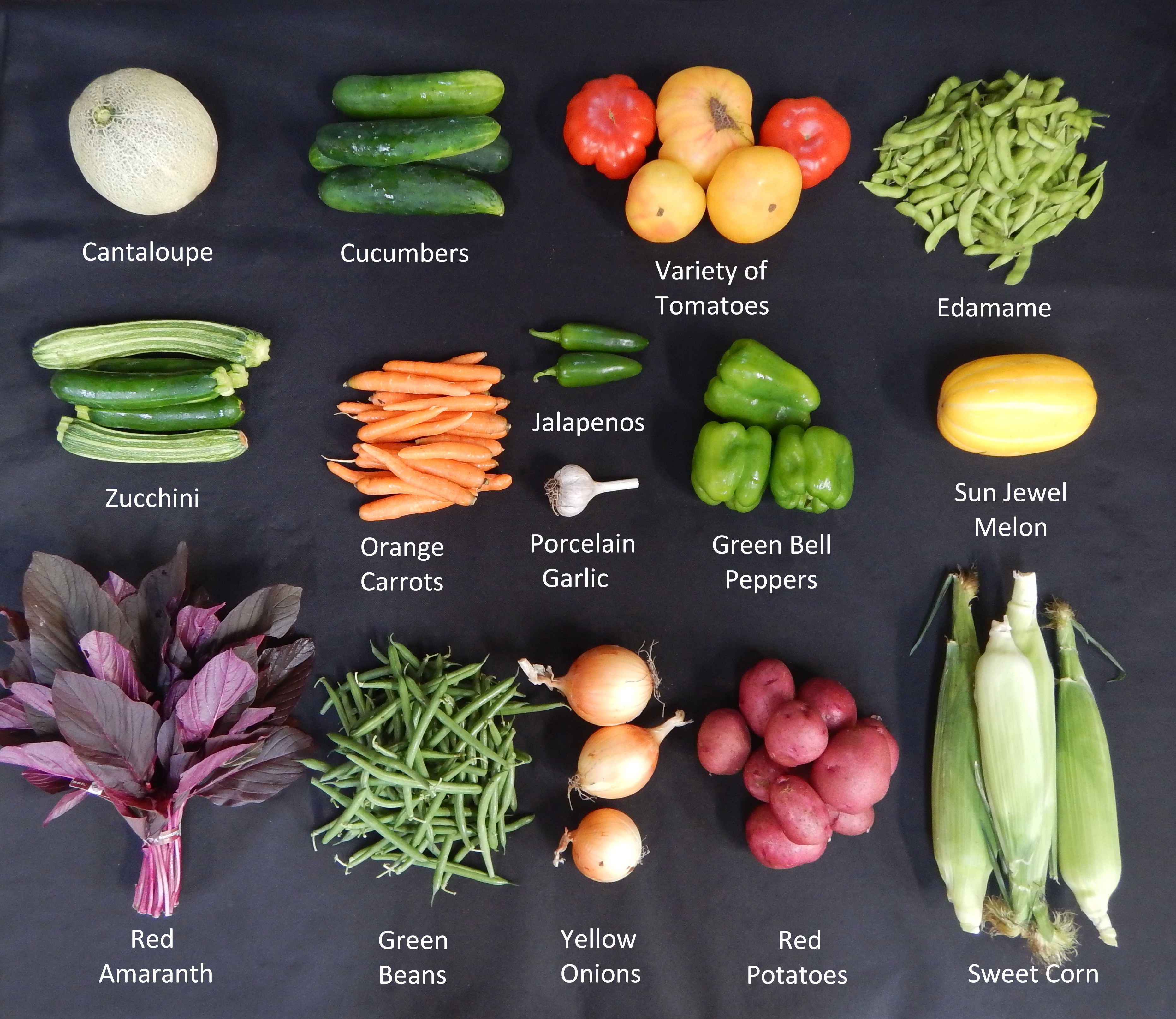
August 11, 2022 - This Week's Box Contents Featuring Amaranth


Cooking With This Week's Box

Amaranth Greens: 
Photo from ambitiouskitchen.com
Jamaican Amaranth (See Below)

Red Cipollini or Sweet Spanish Onions:   

Orange Carrots:

Zucchini:

Green and/or Silver Slicer Cucumbers:

Red New Potatoes:
Photo from poshinprogress.com

Porcelain Garlic:

Variety Bag of Tomatoes:

Green Beans:

Edamame:

Sweet Corn:

Jalapeño Peppers:

Green Bell Peppers: 

Sweet Sarah or Sugar Cube or French Orange Melon:

Sun Jewel Melon:

Hello All!

Red Lentil South with Amaranth Greens
This is the time of the season when we have a very challenging time getting everything in your boxes!  We are so blessed with produce and want to share it with you, but the box is packed full and we can’t fit it all in!  We realize this is a lot of food, but if you feel like you may not be able to eat through everything while it’s at its’ peak, there are some simple things you can do to preserve some of this week’s produce for use later.  Peppers are easy to freeze.  Just cut them up and freeze them in their raw state.  You can pull them out later and add them to chili or casseroles or sauté them for use in scrambled eggs or egg bakes.  They also make a nice addition to winter pizzas.  Green beans and edamame are also easy to freeze.  These two vegetables do need to be blanched before they are frozen.  This means you should cook them in boiling salted water for several minutes, or until you see a change in their color.  Once the color changes, remove them from the boiling water and put them in cold water to stop the cooking.  In the case of green beans, they are now ready to be bagged and frozen.  You may want to pop the edamame beans out of their shell prior to freezing, just to conserve space.  Tomatoes may be frozen raw or chop them up and cook them into a sauce that may be frozen.  You can also slice them and dehydrate them.  These are just a few suggestions I thought I would mention.  No one wants to waste produce dollars and you’ll be thankful to have these things squirreled away to use once the CSA delivery season is finished!

Ok, now let’s move on to this week’s featured vegetable which is Amaranth Greens.  If you’re not familiar with this vegetable, please refer to this week’s feature article and don’t be intimidated by it!  You can prepare it similarly to spinach and I think it is best prepared in a cooked manner when it’s at this stage of maturity.  This is one of our favorite summer greens and it is packed with nutrition!  This week’s featured recipe is for Jamaican Amaranth (See Below), which is a very simple, traditional way amaranth is prepared in the Caribbean and usually eaten as a side dish for breakfast or lunch.  I consider this recipe to be a good base recipe, but if you’re not afraid to stray from tradition it may be adapted by adding additional vegetables such as green beans, edamame and sweet corn!  Basically, this dish consists of quick-cooking stewed summer vegetables.  It’s delicious served with scrambled eggs and/or rice.  I also included several links to other recipes we’ve published previously that highlight Amaranth.  

Another new vegetable in this week’s box is edamame!  If this is your first time using this vegetable, you may want to take a moment to read our past Edamame Vegetable Feature 
which includes cooking instructions.  Once cooked, edamame are easy to use and can become quick and healthy snacks and meals.  Check out these recipes for 5-Minute Edamame Snacks and Edamame Hummus, two good recipes for late summer travel food, lunch at work or back to school lunch options!

We’re in the peak of tomato and sweet corn season and there’s never a shortage of recipe ideas for ways to put these two summer favorites to use.  Fresh Sweet Corn Salsa is a tasty use of corn and may be served with chips or use it to top off beef tacos or grilled fish or chicken.  Double Bean & Corn Enchiladas is a family-friendly dinner option that could be assembled in advanced and then baked on the night you want to serve it.  Roasted Tomato & Garlic Risotto is a dish you’ll want to make and serve, but will really showcase the fresh garlic and tomato flavors.  Remember, tomatoes are actually a fruit so don’t be afraid to pair them with other fruit such as in this Tomato and Stone Fruit Salad!  

If you want to try something a little different, creative and a taste from another culture, check out these recipes for 3-Ingredient Korean Melon Ice Cream Bars and Korean Melon Jam & Cream Cheese Pastries.  Of course you can also just cut the melon and eat it right out of the rind!

I want to also mention there have been some great recipe shares in the Facebook Group over the past week, some of which I included in this week’s list of suggestions.  If you’re feeling stuck and not sure what to do with a vegetable, check in with the group and I’m certain other members will offer suggestions for recipes to help you out!

Looking ahead, we’re hoping to include tomatillos and poblanos in your box very soon and possibly even next week!  Of course, we’ve only just begun with sweet peppers, so you can expect some Italian Frying peppers and other sweet varieties very soon.  In the meantime, have a great week and I hope you enjoy this week’s box of summer goodness!

-Chef Andrea 

Vegetable Feature: Amaranth

by Andrea Yoder

Red Amaranth is a stunning “green” with dark, burgundy-colored leaves. Amaranth is also a grain. While the plant that produces grain is in the same family, they are not the same plants. Amaranth greens have become an important part of our seasonal diet because of their ability to grow in the heat of the summer when other greens, such as spinach and lettuce, do not thrive. Amaranth is adaptable to variable conditions with little impact from weather or disease.  It can survive in extreme heat or drought conditions because it is able to convert twice the amount of solar energy using the same amount of water as most other plants! It is also worth mentioning that amaranth is a nutritional powerhouse. The leaves are rich in calcium, phosphorus, protein, vitamin C, carotene, iron, B vitamins, and trace elements including zinc and manganese. Compared to spinach, amaranth leaves have three times more vitamin C, calcium, and niacin! Of course, we know vegetables that have rich colors like the magenta leaves of amaranth are also packed with important phytonutrients and antioxidants. While we choose to grow this stunning dark red variety, there are other varieties of amaranth that have all green leaves and some that have green and red variegated leaf patterns. Amaranth is also known by other names including callaloo in the Caribbean and pigweed. 

Amaranth is an ancient plant that was part of the diets of Aztec civilizations in Mexico up to 7,000 years ago. It was also an important staple food for the Incas of South America and the people of the Himalayan region of Asia. In these ancient cultures, amaranth was also used medicinally and in cultural rituals. It was held as a symbol of immortality and means “never-fading flower” in Greek. Amaranth has made its way around the globe as people have immigrated. Amaranth became an integral part of the cuisine in some parts of Africa and later spread more extensively around the world to the Americas, Caribbean, Brazil, India, and Asia in part facilitated by the slave trade. Thus, there are many different options for preparing amaranth depending upon the culture. This week’s featured recipe is actually a traditional way amaranth is prepared in the Caribbean where it is a staple vegetable cooked very simply and eaten as a side dish for breakfast or lunch.  

While amaranth may be eaten either raw or cooked, I think it tastes best when cooked when it is at this stage of maturity.  The flavor of cooked amaranth is similar to spinach, except better!  You can prepare it as you would spinach or other similar greens such as chard. The stems and leaves are both edible. I learned something new this year in my research. Previously I had discarded the thick main stem and only used the thinner more tender stems. However, several different sources indicated the thick stems should be peeled.  I did this and was surprised to find the inner part of the stem is quite tender and delicious. It’s a bit of a tedious job, but if you use a small paring knife it’s manageable and will maximize the yield.   Amaranth greens may be steamed, sautéed, added to soups, stews, wilted and stir-fried and cook quickly in just a few minutes. Amaranth pairs well with so many other summer crops including onions, fresh garlic, zucchini, peppers, corn, green beans, edamame, basil, oregano, and tomatoes.  

Store amaranth greens in the refrigerator in a plastic bag until you are ready to use them. Remove the twist tie and wash well in a sink of cold water before using.  Shake or spin off excess water.


Jamaican Amaranth

Yield:  4 servings

1 bunch amaranth greens
1 Tbsp vegetable oil
1 medium onion, small dice
1-2 cloves garlic, minced
½-1 jalapeño pepper, minced
2 cups diced fresh tomatoes
2 Tbsp water
2-3 sprigs fresh thyme or 1 tsp dried thyme
1 tsp Salt, plus more to taste
Black Pepper, to taste
  1. First, prepare the amaranth greens.  Remove the leaves and tender stems from the thicker main stem.  Cut the leaves into thin, bite-sized pieces and finely chop the stems.  Using a small paring knife, carefully peel the outer layer off the thicker stems to reveal the tender green inside.  Finely chop the stems.  Place the chopped amaranth in a bowl and cover with cold water.  Stir in 1 tsp salt and mix it in.  Set aside while you prepare the remaining vegetables.
  2. In a large sauté pan, heat the vegetable oil over medium heat.  When the oil shimmers, add the onion, garlic, and jalapeños to the pan.  Sauté until the onion is softened and translucent.  Add the tomatoes, 2 Tbsp water and thyme.  Drain the water off the amaranth and rinse them in a colander.  Add the amaranth to the pan.  Season with salt and black pepper.
  3. Simmer the vegetables over medium to medium high heat for 5-10 minutes or until all vegetables are tender and some of the liquid has reduced.  Add additional salt and black pepper to your liking.
  4. Serve hot as a side dish for breakfast or lunch.  You may also wish to eat it with cooked rice or steamed fish.
Note from Chef Andrea:  I adapted this recipe slightly from www.healthiersteps.com/recipe/jamaican-callaloo The original recipe called for a Scotch Bonnet pepper instead of a jalapeño.  I am not brave enough for a Scotch Bonnet and we have jalapeños right now, hence the substitution.  You can adjust the level of spice to your liking by using an appropriate quantity of jalapeño.  This is a simple dish, but I consider it a good base recipe that you can build upon.  While it may not be traditional to Jamaican cuisine, this dish would also be good with the addition of other summer vegetables including fresh sweet corn, green beans and/or edamame.  Don’t be afraid to add to it!  

Wednesday, August 3, 2022

August 4, 2022 - This Week's Box Contents Featuring Sweet Corn

Cooking With This Week's Box


Photo from dessertnowdinnerlater.com
Sierra Blanca Onions:

Orange Carrots:

Zucchini:

Green and/or Silver Slicer Cucumbers:

Red New Potatoes:

Porcelain Garlic:

SunOrange, Chocolate Sprinkles or Red Grape Tomatoes:

Variety Bag of Tomatoes:

Green Beans:

Sweet Corn:
Corn and Snap Bean Succotash with Basil & Jalapeño (See Below)
Scrambled Eggs with Fresh Corn, Goat Cheese & Tomatoes (See Below)

Jalapeños:

Green Bell Peppers:

Melons:

Rainbow Chard:
Hello Everyone!

This week’s box is a heavy one, so get ready! We had quite a challenge fitting everything in the box and had to pack strategically, but it’s a beautiful summer box!  This week we’re featuring sweet corn and we think you’ll be pleased with the flavor and sweetness in these ears.  So, we’ll kick off this week’s recipe inspirations with two sweet corn recipes.  The first recipe is Corn and Snap Bean Succotash with Basil & Jalapeño (See Below), a recipe created by Vivian Howard, a chef from North Carolina. This is a great CSA recipe fitting for this week’s box as it includes five different vegetables from the box as well as basil which you may have in your own garden from your CSA herb pack! The second recipe is for Scrambled Eggs with Fresh Corn, Goat Cheese & Tomatoes (See Below). I don’t know what it is about fresh sweet corn and scrambled eggs, but it is one of my favorite things to eat for breakfast during the summer.  Pair them with some creamy goat cheese and fresh tomato slices and it doesn’t get much better.  The only thing I may suggest is to cut up some fresh melon to finish off the breakfast! If you’re looking for more fun recipes to try with sweet corn this season, be sure to check out the vegetable feature article that follows.  At the end of the article, I included a list of suggested recipes which includes some interesting things ranging from desserts to snacks, drinks, and tacos! 

Photo from theblackpeppercorn.com
We are at the very beginning of melon season and this week we’re picking a lot of our early season Korean melon, Sun Jewel.  I found two recipes worth taking a look at this week.  The first is for Korean Melon Popsicles, a fun recipe for kids and adults!  The second is a little fancier, yet still quite simple. Check out this recipe for Korean Melon with Apple & Ginger.

This week’s green is one of our favorite summer greens, Rainbow chard! Packed with nutrients and flavor, this is a great summer green to include in your meals. If you’re not sure what to do with it this week, check out the collection of recipes at Bon Appetit entitled 19 Swiss Chard Recipes That Will Make You Wonder “Spinach Who?”. It’s a pretty good collection and includes a recipe for Sour Cherry & Bacon Pizza with Chard & Pickled Jalapeños  and this Olive Oil Galette with Spicy Greens.  Neither of these recipes is challenging to make, yet I think you’ll find the results to be equal to restaurant quality!

We’re also including the first of the peppers this week and I managed to sneak in another pizza recipe.  Check out this tasty recipe for Philly Cheese Steak Pizza and put those green bell peppers to good use!  I also included a recipe for Easy Cheesy Chili Mac  which also uses green bell peppers.  If you are into cooking with the Instant Pot, this recipe includes a version using the Instant Pot in addition to a method for making it in the oven.

Photo from thekitchn.com
As we are in the height of summer, the tomatoes are starting to ripen, and I suspect we’re about to get hit with a tsunami wave of them very soon!  There are so many things to do with tomatoes, but sometimes it’s best to keep it simple.  Check out this recipe for The Best Summer Tomato Salad if simple is on the menu for this week. I also came across this recipe for Spice-Braised Lentils & Tomatoes with Toasted Coconut. We featured this recipe in the newsletter previously and I recall it being quite tasty.

As I wrap up this week’s Cooking With the Box conversation, I want to mention one more of the recipes in this week’s selections.  I don’t make a lot of desserts, but if you have any picnics or family reunions coming up this month, check out this recipe for Carrot Cake Cheesecake Bars!  Dessert with carrots in it can’t be too bad, right?  

Alright, that’s a wrap for this week.  I hope you have a great week of cooking and enjoy some tasty summer meals.  If you have more food than you think you can eat this week, I did include a few suggestions for preservation in the “What’s In the Box” portion of this week’s newsletter.  This information is also in your “What’s In the Box” email.  Until next week, have fun, eat well, and enjoy summer! 

Chef Andrea 

Vegetable Feature: Sweet Corn

by Andrea Yoder

Richard putting up owl decoys
Summer isn’t summer without sweet corn, and we work really hard to grow the sweetest, best tasting corn we can!  Sweet corn is not always the easiest crop to grow. Variety selection is a big part of the picture and there’s also the issue of pest control because, unfortunately, we are not the only creatures who like to eat sweet corn in the summer!  This year we have employed multiple methods to keep your sweet corn safe. We have a cannon in the field that fires (noise only, no projectile objects) periodically to scare the birds. We also have a laser that was effective at deterring birds in the strawberry field earlier this year. Additionally, we have reflective streamers, scare-eye balloons and some hawk and owl decoys to deter the birds. New this year, our crew added some scarecrows fashioned out of sticks dressed with discarded Tyvek coveralls the guys use when they spray!  Despite all these efforts, the birds have still done some damage, but hopefully it will be kept to a minimum. We also have a tall fence to keep deer and raccoons out of the field, but raccoons are tricky and usually can find a way to go under the fence. Thus, we also have a low electric tape around the perimeter of the field. As you can see, we do quite a lot to ensure we have sweet corn for your boxes!

Icing the sweet corn to keep it cold!
Sweet corn is a crop you can’t rush, it’s ready when it’s ready and you just have to do your best to determine when it’s at its optimal maturity.  Sometimes you’ll have a lot and sometimes there will only be a small amount to pick.  Regardless of the quantity, I want to encourage you to think about ways you might enjoy and use corn that go beyond the classic Corn on the Cob. Before we jump into preparation, I need to mention one especially important thing about sweet corn that you need to remember.  Keep It Cold!!!  When you get your sweet corn home, please put it directly into the refrigerator and keep it there until you’re ready to cook it.  If refrigerator space is an issue, remove the husk and put the ears of corn in a plastic bag in the refrigerator. Keeping sweet corn cold is important for maintaining the sugar content. Time and warm temperatures will cause sugars to convert to starch which will negatively impact both flavor and texture.

As for using corn, you may choose to cook it in the husk or without the husk and you also have the option of cooking it on the cob or cutting it off the cob before cooking. Often people will choose to cook corn on the cob and in its husk if they’re cooking it on a grill or open fire.  If you do this, you should soak the ears of corn in their husks for a bit before putting them on the grill, otherwise the husks will dry out and burn more quickly. If you choose to remove the husks first, you have several options for cooking the corn if left on the cob. You can roast it in the oven or place it directly on the grill. You can also boil ears of corn in salted water. Once cooked, you can either eat it directly off the cob or cut the kernels off the cob using a paring knife. Whether cooked or raw, cutting kernels off the cob can sometimes get a little messy. I like to prop my ear of corn up on end in a shallow bowl when I cut the kernels off the cob. This way the kernels will fall into the bowl instead of all over the cutting board. 

Once corn is cooked you have many options for how to use it. You can incorporate it into pasta dishes, risotto, vegetable salads, soup, chowder, quesadillas, tacos, and salsa! You can also use fresh corn kernels in cornbread, muffins, waffles, pancakes or even to make desserts such as ice cream and cake. A little fresh corn can really brighten up any dish with its sweetness, color, and tender texture. 

We always focus on the kernels of corn, but if you really want to maximize each ear of corn we really should look at how to use the entire ear!  For starters, don’t discard the cobs!  Corn cobs have a lot of flavor and can be used to make a flavorful Corn cob Stock. Corn cob Stock may be used when making risotto, poaching fish or chicken, or as the base for sauces and soups. I also learned that corn silk has health benefits and can be made into tea using either fresh or dried silks! If you’re interested in learning more about these health benefits, check out this article about how to make corn silk tea.

Lastly, I want to mention that sweet corn is quite easy to freeze so you can savor it during the winter.  I recommend cooking it on the cob and then removing the kernels after cooking. Simply put it in a freezer bag and pop it into the freezer. It’s that easy!  Use the corn cobs to make corn stock and you can freeze that as well!

If you want to go beyond just corn on the cob this season, here are a few recipe suggestions to check out! Have fun and enjoy this seasonal treat!


Scrambled Eggs with Fresh Corn, Goat Cheese & Tomatoes


Photo from thekitchn.com
Yield:  2 Servings

4 thick slices of tomato (¼ -½-inch thick)
Olive oil
Salt and pepper, to taste
1 medium ear of corn, with the husk still on
½ Tbsp unsalted butter
4 large eggs, beaten
2 ounces goat cheese

  1. Set your oven’s broiler on high with a rack a few inches below the broiler element.  Drizzle the tomato slices with a bit of olive oil, coating both sides, and season with salt and pepper.  Put them on a baking sheet and broil in the oven for 8 to 10 minutes, until beginning to caramelize on top.
  2. While the tomatoes are cooking, microwave the corn (in its husk) for 3 minutes on high.  Remove from the microwave and let cool for a few minutes, then strip off the husk and cut the kernels from the cob.
  3. Heat the butter in a frying pan over medium heat.  Add the corn, season with salt and pepper, and cook for 1 minute.  Add the eggs and scramble—this shouldn’t take more than a minute, although if you like your eggs creamy, you may want to lower the heat and cook them more slowly.  Once the eggs are scrambled to your liking, turn off the heat and crumble in the goat cheese.
  4. Use a spatula to transfer the tomato slices to a plate, then top with the eggs.  Season with more salt and pepper to taste.
Recipe borrowed from www.thekitchn.com.


Corn and Snap Bean Succotash with Basil & Jalapeño

Yield:  5 cups

1 cup leeks or onions, medium dice
2 Tbsp minced fresh ginger
1 Tbsp vegetable oil
3 garlic cloves, sliced thin
3 cups corn, cut from 6-7 ears
2 cups snap beans (aka green beans), cut into 1/3-inch pieces
1 Tbsp minced jalapeño
1 tsp salt
2 cups water or corn stock
⅓ cup whole basil leaves
1 Tbsp lemon juice
3 Tbsp butter

  1. In a 10 or 12-inch skillet or sauté pan, sweat the leeks/onions and ginger in the vegetable oil for 2 minutes. 
  2. Add the garlic, corn, beans, jalapeño, salt, and water.  Bring it up to a simmer and cook until all but ¼ cup of the water has evaporated.  I know that is impossible to measure, so just eyeball it. 
  3. Remove from heat and stir in the basil leaves, lemon juice, and the butter.  Serve warm.

Recipe borrowed from Vivian Howard’s beautiful cookbook, Deep Run Roots.