Wednesday, September 16, 2020

September 17, 2020 - This Week's Box Contents, Featuring Korean Chili Peppers

Cooking With This Week's Box

Korean Chili Peppers: HVF Fresh Korean Chili-Garlic Sauce—Updated (see below); Spicy Korean-Style Gochujang Meatballs (see below); Sweet and Spicy Gochujang Butter Popcorn (see below)


Baby Bok Choi: Steamed Bok Choi


Steamed Bok Choi, photo from steamykitchen.com
I’m excited to kick off this week’s Cooking With the Box discussion by introducing you to Korean Chili Peppers!  We’ve only been growing this pepper for several years, but I it quickly became one of my favorites and I have had fun learning more about it each year.  If you haven’t had a chance to read this week’s Vegetable feature article about this pepper, please do so.  My top suggestion for what you can make with these is HVF Fresh Korean Chili-Garlic Sauce—Updated (see below).  I published a version of this sauce back in 2018, but I’ve updated it this year and think the results are quite tasty.  This is a homemade, quick version of gochujang, a fermented Korean chili paste.  No, it’s not the exact thing, but it can be used in any recipe that calls for gochujang.  Because this is a hot pepper, a little bit of this sauce will go a long way.  So if you make one recipe of this sauce you’ll have about one cup to work with.  You will be able to make several different recipes with this one batch.  Plus, there’s no rush to use it all right away.  Store it in the refrigerator for up to a month or freeze it in smaller portions so you can use it throughout the winter.  I have two recipes to share with you that you can make using some of your HVF Fresh Korean Chili-Garlic Sauce.  The first is this recipe for Spicy Korean-Style Gochujang Meatballs (see below).  I made this recipe last winter and we loved them!  You can serve them for dinner with Steamed Bok Choi or Korean Carrot Salad, or both!  You could also make them into smaller meatballs and serve them more as an appetizer or like cocktail meatballs for the holidays or a Super Bowl party!  The other recipe I tried this week was for Sweet and Spicy Gochujang Butter Popcorn (see below).  If you like popcorn, you’re going to love this.  It’s up to you how spicy you want to make it.

Grilled Salmon Tacos with Jalapeno Ranch
photo from honestcooking.com
While we’re talking about peppers we might as well cover the other selections in this week’s box.  You’ll find one jalapeno in the same bag with your Korean peppers.  Earlier this week I saw this recipe for Grilled Salmon Tacos with Jalapeno Ranch.  Of course you’ll want to dice up some fresh tomatoes to serve with these tacos.  As for the sweet peppers, one of my favorite things to make with mini sweet peppers is Sheet Pan Roasted Chicken with Potatoes & Mini Sweet Peppers.  I love how the peppers get silky and sweet to contrast the crispy roasted potatoes and crispy chicken.  I also like to stuff mini sweet peppers, such as with these Cheese Stuffed Mini Sweet Peppers with Roasted Corn Salsa.  Eat them as a snack or for dinner!  Your choice.

Pepper & Corn Pasta Salad, photo from ohmyveggies.com
There are also several other “sweet peppers” in the box this week.  This Pepper & Corn Pasta Salad looks simple and tasty.  Serve it with Garlic Thyme Burgers with Grilled Tomatoes.  You could also use them to make this Veggie Cream Cheese Spread along with red onions and carrots.  Spread this on a bagel for breakfast or lunch or use it as a spread for sandwiches or wraps!

We’ve had a pretty good year for tomatillos and couldn’t help but send them again this week.  We likely only have a few more weeks before we lose them to frost, so we might as well make the most of them while we can!  We’re whittling down the recipe list that we published earlier this year in our Tomatillo Vegetable Feature Article.  We haven’t had pizza for awhile, so maybe we’ll try this Tomatillo Pizza with Cilantro Pesto or if you want to include some sweet corn you can try my recipe for Corn & Tomatillo Pizza with Fresh Tomatoes & Basil.  We haven’t mentioned much about breakfast or brunch, but if you are looking for something to fill this meal slot consider making Green Tomatillo Shakshuka.  Shakshuka is a great one-pan meal that is good served at any meal of the day.  This version uses tomatillos as the base to cook the eggs in.

Borscht with Beet & Beet Green, photo from sharonpalmer.com
Several members mentioned Borscht in the Facebook Group recently.  They also said they used the beet greens in the soup.  I’ve never used the greens in this way, but what a great idea!  I’ve also never made borscht with golden beets, but why not?  Here’s a vegetarian version of Borscht with Beets & Beet Greens.  If you’re not into Borscht this week, perhaps you may prefer to make Golden Beet Soup with Carrot & Ginger.  Now that the evenings are a bit chilly, a bowl of warm soup with some crusty bread makes for a nourishing dinner.  Wait, I almost forgot to share this recipe for Cashew Corn Chowder with Cilantro Cream, courtesy of Sarah Britton.  I made this soup earlier this week using fresh corn.  It was so delicious and the soaked cashews gave it a nice body and creamy texture--no dairy!  This is the kind of soup that makes you feel alive and invigorated after eating it!

Despite the fact that summer is nearly officially over, we still have so many gorgeous vegetables to send your way!  Check out the picture of some of the things Richard brought in from the field earlier this week!  This is our first time growing Purple Napa Cabbage and it is absolutely GORGEOUS!  The purple cauliflower took us by surprise and some is ready to harvest.  There are a few red cabbage as well as green savoy cabbages that are ready to harvest.  We also have our eye on the return of baby arugula, spinach, salad mix and possibly saute mix.  We may start sending a few early winter squash next week and Richard and Rafael can’t seem to stop digging to check on the sweet potatoes!  While many farms start to wind down this time of the year, we rev up!  So don’t think it’s over, we still have so many delicious vegetables to enjoy!  Have a great week!--Chef Andrea

Vegetable Feature: Korean Chili Peppers

By Chef Andrea

Two years ago this pepper caught our eye in the seed catalog for no reason other than it had an interesting name (Dang Jo Cheong Yang) and it was a purple hot pepper.  We were looking for a different hot pepper to grow so decided to give it a try.  One of the fun parts of growing a new crop is figuring out when to harvest it, how to use it, etc.  Once the peppers turned purple we thought they were ready to harvest, but when we tasted them it was pretty disappointing.  They really didn’t have much flavor.  They just tasted like a boring green pepper with heat.  We decided to leave them and see what would happen.  I’m glad we did because they started to turn from purple to brilliant red and when they did the flavor changed dramatically!  In that first year we had no idea that we had stumbled upon a unique Korean pepper.  I had to really search and dig to figure out where this pepper came from and it was through both research and using it that we have come to love this hot pepper both for its history and origin, but also for its complex flavor.

This pepper is referred to as gochu in Korean.  While not all Korean food is spicy, many of the traditional foods in Korean cuisine are spicy and this pepper is one of the most widely used ingredients.  One source claims this pepper is “Korea’s most consumed vegetable when measured by weight (200 to 250,000 metric tons per year).”   I’m not sure how common it is to use it in its fresh form in Korea, but most references I found demonstrate that it is most commonly dried and used as dry flakes or powdered.  These forms are the way this pepper is used in traditional Kimchi (fermented cabbage and vegetables) and Gochujang (fermented chili paste).  Both of these foods have been part of Korean cuisine for thousands of years and originated out of a need to preserve and extend the shelf life of food.    The capsaicin (the component that makes it hot) in the peppers is an important part of the preservation process coupled with fermentation which not only preserves the food but also develops complex flavors.

I found some interesting information in the Journal of Ethnic Foods in an article entitled “History of Korean gochu, gochujang, and kimchi.”  Some sources debate the origin of this Korean pepper arguing that peppers are a New World fruit that must’ve been brought to Korea through trade.  In this article they state the belief that this pepper is actually indigenous to Korea and references to its use and cultivation in Korea are documented in records over 2,000 years old.  They also stated that “Based on scientific evidence, gochu started to grow on the Korean peninsula a few billions of years ago, and it is safe to say that it is original to Korea.”

I mentioned earlier that one of the reasons we love this pepper is for its complex flavor.  Yes, it’s a hot pepper, but you taste more than just hot when you eat it.  It has a unique flavor and a bit of sweetness that balances the heat in such a way that the heat doesn’t just burn your mouth.  I should also mention that while it is hotter than a poblano pepper, they are a modest heat pepper that are often more mild in heat than jalapenos.  Of course the heat can vary depending on the season.  We have received feedback from members over the past two years that individuals who don’t typically enjoy hot peppers actually like this one!  Since this pepper is traditionally used in fermented foods, we decided to see what would happen if we used it to make a fermented hot sauce.  We worked with Faith at Fizzeology Foods in Viroqua.  She made the most delicious Fermented Korean Chili Hot Sauce that was very well received by some of the “hot sauce experts” within our membership.  One of the great things about fermented foods is that they just continue to get better with time.  We are going to make more this year, but we do have a limited amount of last year’s batch remaining.  Check out our “Produce Plus” offerings if you’re interested.

So what can you do with these fresh peppers?  You can use them anywhere you need a fresh hot pepper in salsas, sauces, curries, soups, etc. I also have several simple suggestions for preserving them so you don’t have to use them all right now.  For starters, you can follow Korean tradition and dry them.  After they are dried you can turn them into pepper flakes or grind them into a powder.  When we first featured them in 2018 we published a recipe for Salt-Cured Chiles which is available on our website.  You can do this with nearly any chili pepper, but I really like to do this with the Korean peppers.  It’s super simple and all you need is salt and the peppers.  Once you’ve salt-cured them they will store for quite awhile in the refrigerator.  In fact, I still have a jar that I made last year!  The beauty of salt-cured chili peppers is you can use them to add heat to anything you want and they still have a fresh chili flavor.  I use them throughout the winter for stir-fries, fried rice, soups, stews, sauces, etc.

Salt-Cured Chiles
You can also use the fresh chiles to make a quick version of gochujang.  Since this chili pepper is most often either dried or fermented, you likely won’t come up with many recipes calling for just the fresh peppers.  Now, if you search for recipes using gochujang, I guarantee you’ll come up with a hearty list!  Gochujang is a fermented chili paste traditionally made from dried chili peppers, glutinous rice, fermented soybeans and salt.  I found references recommending fermenting it for 4-6 months or years!  While it may be hard for any of us to make the traditional gochujang in our homes, you can make a quick version of gochujang that uses the fresh chiles.  The flavor may not be as complex and the consistency will be more like a sauce and less of a paste, but it will still be delicious and you can use it in any recipe that calls for gochujang.  In this week’s newsletter I have included a recipe for HVF Fresh Korean Chili Sauce (see below) which may be used in place of gochujang in recipes.  You can store this sauce in the refrigerator for about a month, or divide it into smaller portions and freeze it.  I shared a similar recipe in 2018, but have updated the recipe a bit this year.

Here are a few recipes I have in the queue that call for gochujang.  The recipe in this week’s newsletter yields about 1 cup, but many of these recipes only call for a small amount which means you’ll have the opportunity to enjoy these peppers in many different recipes over the next few months!  Have fun and enjoy!


HVF Fresh Korean Chili-Garlic Sauce--Updated

Yield: 1 cup

4 oz fresh Korean chili peppers
4 cloves garlic
⅓ cup miso
2 Tbsp honey
3 Tbsp tamari or soy sauce
1 tsp rice vinegar
  1. Remove the stem and roughly chop Korean chili peppers (seeds included) into one inch pieces.  Put the peppers in a food processor or blender along with the garlic cloves and roughly chop them until they are a fine, yet chunky paste.
  2. Add the miso, honey, tamari and rice vinegar.  Blend together until smooth.
  3. Taste and adjust the flavor as needed to your liking.  Add tamari for more depth of flavor, honey for more sweetness, garlic to get more “zing” or salt if it just needs a little enhancement to wake up all the other flavors.
  4. Put the sauce in a glass jar and store in the refrigerator for up to 2-4 weeks.  Alternatively, you can freeze it in smaller portions as a means of preserving it for later use.  
Note:  You may use this in place of the Korean fermented chili paste called gochujang.  It’s pretty hot, so a little bit will go a long way!  
Recipe originally adapted from minimalistbaker.com.

Sweet and Spicy Gochujang Butter Popcorn

Yield: 2 Servings

2 Tbsp butter
1-2 tsp gochujang or HVF Fresh Korean Chili-Garlic Sauce (see note)
1 tsp toasted sesame oil
1 tsp honey
2 Tbsp vegetable oil
⅓ cup unpopped popcorn kernels
Fine sea salt, to taste
  1. Melt butter in a small saucepan over medium-low heat.  Add gochujang, sesame oil, and honey.  Whisk together until well combined.  Remove from heat and set aside in a warm place.  
  2. Pop popcorn by your method of choice.  If you are popping it on the stovetop, heat vegetable oil in a medium saucepot over medium heat.  When the oil shimmers on the bottom of the pan, add popcorn kernels.  Cover and shake intermittently until popping starts, then continue to shake the pan until popping stops or significantly slows.  Remove the pan from the heat and pour popcorn into a medium bowl.
  3. Whisk the butter mixture to ensure it is well-combined, then pour evenly over hot popcorn and toss to coat.  Season with salt to your liking.  Eat immediately!
NOTE: For milder gochujang butter, use only 1 tsp of gochujang.  If you like it spicier, use 2 tsp.
Recipe adapted from domesticdreamboat.com.

Spicy Korean-Style Gochujang Meatballs

Yield: 16-18 meatballs

Meatballs:
½ cup finely minced onion
1 egg, lightly beaten
1 lb ground beef or pork
½ cup panko breadcrumbs
1-2 Tbsp gochujang or HVF Fresh Korean Chili Garlic Sauce*
1 Tbsp minced fresh ginger
1 tsp kosher salt
½ tsp ground white pepper

Gochujang Glaze:
⅓ cup apricot preserves
1-2 Tbsp gochujang or HVF Fresh Korean Chili Garlic Sauce*
1 ½ Tbsp rice vinegar
1 Tbsp soy sauce

Garnish:
Sliced green onions (when in season) and/or toasted sesame seeds
  1. Preheat oven to 350°F.  In a large bowl, combine all meatball ingredients.  Using your hands, mix all ingredients until everything is well mixed.  Form the mixture into golf-ball sized meatballs and place on a cookie sheet.  You want to spread them out a bit so there is space in between them.  Bake for 25-30 minutes or until they are cooked through and firm.  
  2. While the meatballs are baking, make the glaze.  In a small saucepot, combine all glaze ingredients.  Cook over medium heat for 5-7 minutes or until mixture is bubbly and slightly thickened.  Remove from heat.
  3. Once the meatballs are cooked through, remove the pan from the oven and transfer the meatballs to an 8 x 8-inch baking dish or other small casserole.  Pour the glaze over the meatballs, making sure all are covered in the glaze.
  4. Return the pan to the oven and bake an additional 10 minutes.
  5. Sprinkle with green onions and toasted sesame seeds if desired.
*I made this recipe using 1 Tbsp of HVF Fresh Korean Chili Garlic Sauce in the meatballs and 1 Tbsp of the sauce in the glaze.  This will give you a spicy, but not over the top, meatball.  If you really like spice, increase the gochujang quantity.  
Recipe adapted from a recipe submitted to Food52 by foxeslovelemons.

Wednesday, September 9, 2020

September 10, 2020 - This Week's Box Contents, Featuring Sweet Peppers


Cooking With This Week's Box


Red Seedless Watermelon AND/OR Melon: Watermelon Margarita


Red Pepper, Tomato and Lentil Salad
Seasonal eating means waves of vegetables coming at you in the peak of their season and this week we’re riding a pepper wave with a focus on the sweet side of this crop!  There are so many different things you can do with sweet peppers, which makes it very hard to choose just one or two recipes to feature!  This week I settled on Melissa Clark’s Sweet Pepper and Cheddar Clafoutis (see below) recipe from her cookbook, Dinner in French: My Recipes by Way of France.  Clafoutis is traditionally a dessert made with sweet cherries, but Melissa turns the concept into a savory main dish and it’s excellent!  Clafoutis is kind of like a rich, French frittata.  It is essentially a baked custard made with eggs, milk and crème fraiche.  If you have access to crème fraiche, I encourage you to use it.  If not, you can substitute sour cream.  This dish works as a main dish for breakfast, lunch, dinner or brunch and leftovers reheat well.  Before I move off of the topic of sweet peppers, I want to call your attention to a few recipe favorites from our archives including this Red Pepper, Tomato and Lentil Salad we featured last year and Creamy Roasted Sweet Pepper Dressing featured back in 2014.  This dressing is versatile, but this week I want to use it as a dip to eat with carrot sticks or drizzled over slices of fresh tomatoes!

Grilled Corn & Poblano Tacos
photo from loveandlemons.com
We’re not done talking peppers, but lets switch gears and talk about the hot peppers in this week’s box!  This is the perfect week to make Creamy Chicken & Greens with Roasted Poblano Peppers since we have both chard and poblano peppers.  You could also make these Grilled Corn & Poblano Tacos, garnished with fresh tomatoes and cilantro.  While I was poking around at loveandlemons.com, I found a few other interesting recipes that are appropriate for this week’s box contents.  I want to try this Roasted Beets & Chickpeas with Jalapeno Yogurt using this week’s beets.  This is a vegetarian main dish salad with spicy chickpeas and roasted beets drizzled with a sweet and spicy garlic, lime and jalapeno yogurt sauce.  And the last recipe suggestion from this site is a Watermelon Margarita that also makes use of some jalapeno for a spicy kick to this cocktail!

Before tomatoes are finished, we need to get our fill of fresh tomato salsa and you can eat it on more than just tacos and with tortilla chips!  Consider making this Pan Grilled Salmon with Tomato Salsa for dinner and serve it with Corn, Roasted Red Pepper and Cilantro Salad.

Roasted Tomatillo Chicken Enchilada Pie
photo from littlespicejar.com
Remember back to the end of July when we had just started picking tomatillos and featured them in the newsletter?  You might want to revisit that Tomatillo Feature Article which included a list of twelve different recipes featuring tomatillos.  Now that the temperatures are cooling off, I think it’s time to make this Spicy Chili Verde with White Beans.  This recipe calls for jalapenos and canned green chilis.  You could use a mix of jalapeno and poblano peppers.  I think I’m going to go for this Roasted Tomatillo Chicken Enchilada Pie which calls for poblano peppers as well as the tomatillos.  This recipe calls for spinach, but since we don’t have that this week I’ll substitute rainbow chard.  Round out this dish with onions, garlic and cilantro, also in this week’s box!

This week’s beets and carrots are like nature’s candy and they’re excellent candidates for these Maple Roasted Beets and Carrots, a delicious side dish for any simple dinner of roast chicken or grilled steak.  Of course you could also use both of these roots raw to make this simple Shredded Beet & Carrot Salad.

This brings us to the bottom of another bountiful box of produce!  Lets cross our fingers that we’ll get a few more weeks of warm weather to continue ripening and harvesting tomatoes and peppers.  Before you know it, we’ll be harvesting leeks and will be packing winter squash in your box!  Have a great week!---Chef Andrea  

Vegetable Feature: Sweet Peppers

By Chef Andrea

Orange Italian Frying Peppers
Late August and early September marks the peak of pepper season.  This is the time of year when the field changes from a sea of green to a colorful array of orange, red and yellow.  Several weeks ago we featured poblano peppers and we’ve been including a jalapeno in your boxes since mid-summer.  We still have one more tasty hot pepper to share with you, but that selection will need to remain a mystery as it’s not quite ready.  So this week we’ll turn our attention to the sweet side of our pepper crop.

It’s a shame that the family of sweet peppers are so poorly represented in many traditional grocery store produce departments.  While red and yellow bell peppers are lovely, there are so many other varieties of sweet peppers and many of them have better flavor!  Over the years we’ve grown to appreciate other varieties such as Italian frying peppers which are delicious eaten both raw and cooked.  Richard has also developed our own seed stock for orange Ukraine peppers which are not available commercially.  They are similar to a bell pepper, but have a pointy tip and a thick flesh.  They are an excellent pepper for roasting or stuffing.  And then there are the sweet Mini Sweet peppers.  Long before this became a mainstream pepper selection a CSA member encouraged us to try growing these snack peppers.  Seed wasn’t commercially available so we had to start by buying a pack of peppers from the store, picking all the seeds out of them and starting down the long road of producing our own seed.  Many years have passed and we continue to produce our own seed for this crop despite the fact that seed is now commercially available for snack peppers.  We continue to trial these varieties, but we continue to favor our own seed line as the peppers simply taste better!

Orange Ukraine Peppers
One of the reasons I like to eat and cook with peppers is because they are so versatile in the ways they may be used, but they also pair well with a wide variety of vegetables and ingredients.  They pair well with summer vegetables in dishes such as ratatouille, but they also pair well with root crops, winter squash and sweet potatoes.  You can use sweet peppers in salads, salsa, soups, curry dishes, stews, on pizza, in quesadillas and so much more!  They are also super easy to preserve, which is why I always make sure I have enough in the freezer to last me until the next crop comes in.  Freezing is the easiest way to preserve peppers.  All you have to do is wash them, remove the stem and the seeds and pop them in a freezer bag.  To conserve freezer space, you might want to dice, slice or chop them into smaller pieces. In the case of mini sweet peppers, however, I just freeze those whole.  Pull them out in the winter and add them to egg dishes, soups, stir-fry, casseroles, chili and so much more!

Roasting Red Peppers over a gas burner
The other thing I want to mention about sweet peppers is how they are transformed when roasted.  The natural sugars in the peppers are developed in the roasting process and the texture becomes silky.  If you’ve never roasted peppers, it’s quite easy.  It’s best done over an open flame such as a grill or a gas burner.  If you don’t have either of those, you can also roast them under the broiler in the oven.  I typically roast them whole, but you could cut them in half and remove the stem and seeds before roasting.  You want the skin side to be in direct contact with the flame or heat source so you can roast them until the skin is blackened and blistering.  Remove them from the heat, put them in a bowl and cover them so they steam as they cool.  Once cool enough to handle, use the back of a knife to scrape the skin off the pepper.  Once roasted, you can use the peppers in vegetable, grain, bean or pasta salads.  You can use them to make a creamy roasted red pepper sauce to serve with pasta or chicken.  You can add them to sandwiches or quesadillas.

It’s best to store fresh peppers at room temperature, although you can store them for several days in the refrigerator.  If they start to get a little soft or wrinkly, they are just starting to dehydrate a little bit but are still very usable.  If you do have more peppers than you can use this week, take a few extra minutes to pop them into the freezer.  You’ll be glad you have them this winter!

Sweet Pepper and Cheddar Clafoutis

Note:  Clafoutis is a custardy, baked dessert originating in France.  It is traditionally filled with sweet cherries.  This is Melissa Clark’s savory spinoff on this French dish and it’s delicious served as a main dish for breakfast, lunch or dinner!  If you don’t speak French, you can also refer to these as really good “cheesy eggs” as Farmer Richard refers to them.

Yield:  4 to 6 servings

¾ cup whole milk
½ cup crème fraiche (may substitute sour cream)
4 large eggs
2 ½ Tbsp all-purpose flour
¼ cup chopped fresh basil leaves
¾ tsp fine sea salt, divided, plus more as needed
½ tsp freshly ground black pepper
1 cup (4 oz) coarsely grated sharp white cheddar, cheese, divided
2 ounces sliced ham, chopped (optional)
2 Tbsp extra-virgin olive oil
3 sweet peppers, (red bell, orange or red Italian frying peppers or orange Ukraine peppers) OR ½ pound mini sweet peppers
2 garlic cloves, thinly sliced
¼ cup (1 oz) grated Parmesan cheese
Fresh lemon juice, for serving
Crushed red pepper flakes, for serving

1. Heat the oven to 375°F.  

2. In a large bowl, whisk together the milk, crème fraiche, eggs, flour, basil, ½ tsp of the salt, and pepper.  Stir in ¾ cup of the cheddar and the ham (if using).

3. Prepare the peppers by removing the stem and seeds and slicing into ¼-inch slices.


4. In a 9-inch ovenproof skillet, heat the oil over medium heat.  Stir in the peppers and cook until they are softened and golden at the edges, 10 to 15 minutes.  Stir in the garlic and remaining ¼ tsp salt and cook until fragrant, about 2 minutes.

5. Scrape the egg mixture into the skillet, and top it with the remaining ¼ cup cheddar and the Parmesan.  (Or for a more elegant presentation, scrape the vegetables into a gratin or casserole dish and add the egg mixture and cheese to that.) 

6. Bake until the eggs are set, 35 to 40 minutes.  Cool slightly, then top with lemon juice and red pepper flakes.

Thinking Ahead:  
You can cook the peppers and garlic up to 3 days in advance.  Store the mixture, covered, in the refrigerator.  Gently rewarm it in an ovenproof skillet before adding the egg mixture and baking.
Recipe borrowed (with minor adaptations) from Melissa Clark’s book, “Dinner in French:  My Recipes by Way of France”

September Farm Update!

By Farmer Richard

Watermelons moving up the harvest belt to be washed!
As we near the end of summer and approach the official start of autumn on September 22, we acknowledge that this is a very unique and sometimes challenging time of the season.  Late summer crops like tomatoes, peppers, melons, watermelons and sweet corn can come on fast and furious in the heat of August leaving us scrambling just to keep up with harvest.  When September comes and we lift our heads to take a breath, it hardly seems possible that just around the next corner the danger of the first frost is looming!  The official first average frost date for our area is September 15!  Yikes!  Now, that doesn’t mean we’ll get frost, but the overnight temperatures have been getting cooler and we’ve had to grab an extra jacket for chilly mornings which reminds us the first frost will be coming soon.  We haven’t seen frost until October for many years as we experience the effects of climate change.  We can’t forget however that climate change can yield extremes on both ends of the spectrum.  Will we get an unseasonably warm fall or a cold one?  We can only guess!

Look at all the Mini Sweet Peppers on one plant!
The challenge of this time of year lies in both the amount of work we have to do as well as trying to work with and around the challenges of weather.  We are still harvesting the last of our summer crops including two plantings of tomatoes, lots of peppers, the last planting of sweet corn, and the last of the melons.  While we’re sad that zucchini and cucumbers are finished for the season, we did breathe a sigh of relief that we could mark those harvests off the production list for the week to free up crew time to do other things….like harvest winter squash!  As we try to finish off summer crops, fall crops are coming in already.  We’re nearly finished with winter squash harvest and started harvesting the first of this year’s celeriac crop last weekend.  The parsnips, carrots, black Spanish radishes, beauty heart radishes and daikon are all in the queue for harvest as soon as this rainy week passes and the fields dry out.  We’ll have a little overlap in time where summer and fall will be demanding our attention simultaneously!

Mountain Merit Red Slicer Tomatoes, a disease resistant
variety in our second planting.
During this time of the year we watch the weather, checking it multiple times per day to plan our work schedule.  We have to be ready to respond to the threat of frost, even if it’s only one cold night followed by a few more weeks of warm temperatures!  We have to make the difficult decisions about whether or not we can harvest the remainder of the most frost-sensitive crops or if we need to invest in covering them.  If the latter, we need time to put the covers in place along with sandbags to hold them down.  You can’t do this at the last minute because conditions are not always appropriate for laying out covers.  Please note, it is not advisable to try to put covers over crops with winds of 10-20 mph or the covers will likely end up in the trees!  If it looks like frost may be coming, peppers and tomatoes are, at present, our most vulnerable crops that would be our priority to cover.  Most other crops, such as lettuce, spinach, parsley, baby bok choi, etc, can take a light frost and recover with minimal to no damage.  Once we start seeing temperatures in the 20’s we’ll have to add more covers to protect our late season head lettuce, escarole, radicchio and tat soi.

Bins and bins of winter squash including
Black Futsu Pumpkins!
I mentioned that we’ll finish our winter squash harvest this week, and the next crop we typically get questioned about this time of the year is the beloved sweet potatoes!  They are sizing up nicely, but could use several more warm weeks of growth.  If this chilly weather looks like it’s going to stay around we’ll likely need to cover the sweet potatoes just for some heat gain to accelerate their growth rate.  We typically start harvesting the last of September of first of October, so it won’t be long!  Both winter squash and sweet potatoes need some time to “cure” before they are delectable, sweet and ready to pack in in your CSA boxes.  Curing helps to set their skins so they store better and develops their flavors and sweetness.  As tempting as it is to eat them as soon as they come out of the field, we know from experience it’s better to wait a few weeks.

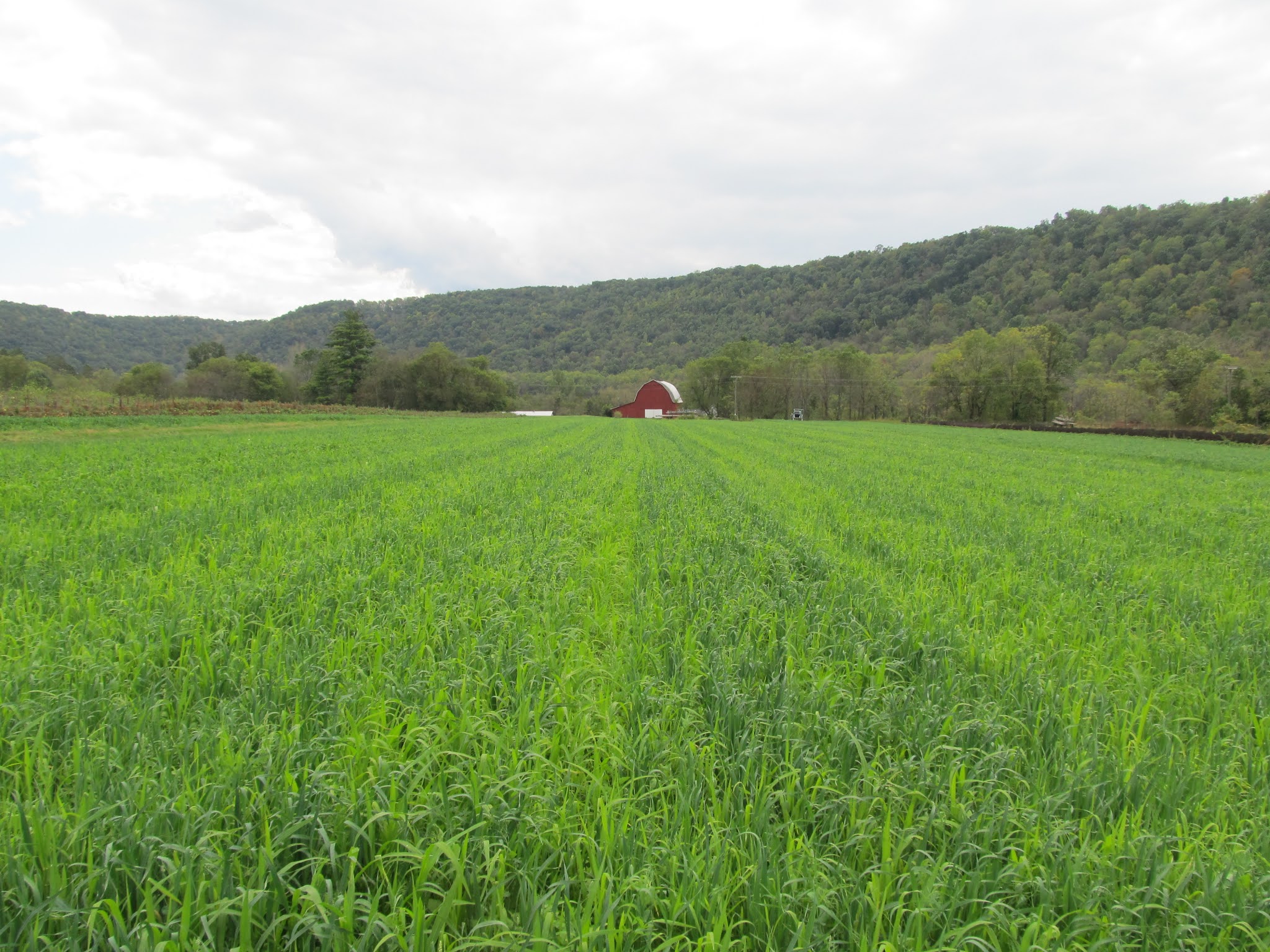
Fields put "to bed" with a cover crop to hold the soil in
place over the winter and build fertility in the soil.

In addition to harvest, this is also the time of year when we are preparing to put fields “to bed” for the winter and preparing them for next year’s crops!  Once we’ve taken the final crop off a field for the current season, we need to consider what will be planted in that field next year.  This impacts our decisions about compost and mineral applications as well as figuring out the most appropriate cover crop to plant on the field.  Cover crops are an important part of managing our land, both for fertility but also to prevent erosion and loss of our precious topsoil over the winter.  This week we received four pallets of cover crop seeds from Albert Lea seeds, so as soon as the fields dry out this will become a top priority.

Beauty Heart Radishes as far as you can see!
Despite the challenges, we love this time of year!  The cool working conditions are a welcomed relief from the hot days we’ve worked through over the summer.  Weed seeds germinate more slowly which means our late planted crops can grow faster than the weeds and dominate.  We’re still cultivating and hand weeding, but very soon the weed pressure will lessen.  The cool to cold temperatures of fall also impact the crops in different ways.  The green color of kales, spinach and other greens intensifies and crops such as red lettuce and red mustard produce deep gorgeous leaves.  The cool weather also causes flavors to be more balanced and sweet.  Crops such as radishes and arugula mellow out and, in our opinion, taste much better than when grown in the heat of the summer.  Fall brassicas including cabbage, cauliflower, broccoli and Brussels sprouts will benefit from the cool temperatures and you’ll be able to taste the difference when you eat them!  While many farms start to wind down in late September or October, we’ll continue to go strong and our harvests won’t be done until the very end of November or possibly December!  For those of you who have been with us for years, you know there are still a lot of seasonal favorites remaining to experience this season.  For those of you who may be joining us for the first year, get ready for some hearty fall boxes!  Many longtime members dread the point in the year when they have to return to shopping for produce at the grocery store.  However, if you play your cards right this window of “grocery store shopping” can be pretty minimal.  Now is the time to be preserving things for winter.  We’ve had a great response this year to our “Produce Plus” offerings.  There is still time to freeze peppers and make some tomato sauce to stockpile for winter use!  As we move into fall, there will also be opportunities to stock up on root crops and other vegetables that can store well into winter, even after CSA deliveries are finished.

This year's leeks...coming soon! 
We hope you enjoy eating through this transition point in the season as well.  Tomato season isn’t over yet and peppers are in their peak.  Instead of pairing tomatoes and peppers with zucchini and cucumbers, we can transition to tasty dishes made with fall root crops, winter squash, leeks and potatoes.  It’s another transition in our seasonal eating journey as we follow Mother Nature’s lead.

This will be the first year in many that we will not be hosting our annual Fall Harvest Party.  Late September can be a magical, beautiful time to visit our valley.  However, due to the pandemic precautions we’ve implemented on our farm this year, we’re going to have to settle for connecting through social media and our weekly email connections.  Please know we miss seeing you in person and look forward to opening our farm to you again in a future season.

Wednesday, September 2, 2020

September 3, 2020 - This Week's Box Contents, Featuring Watermelon!

Cooking With This Week's Box

Yellow Onions: Sweet and Sour Watermelon Rind Stir-Fry (see below); Sweet Corn & Zucchini Pie

Italian Garlic: Sweet and Sour Watermelon Rind Stir-Fry (see below); Tomato Galette;  Baked Feta Pasta with Cherry Tomatoes, Basil & Garlic; Egyptian Spinach Soup

Green and Silver Slicer Cucumbers OR Green and/or Italian Zucchini: Sweet and Sour Watermelon Rind Stir-Fry (see below); Sweet Corn & Zucchini Pie; Chocolate Chip Zucchini Brownies; Watermelon & Cucumber Salad with Feta

Chocolate Sprinkles, Valentine Red Grape, Mountain Honey Red Grape or “Glitter” Yellow Grape Tomatoes: Baked Feta Pasta with Cherry Tomatoes, Basil & Garlic


Jalapeno Pepper: Sweet and Sour Watermelon Rind Stir-Fry (see below); Mexican Corn Dip with Cream Cheese & Jalapenos


Red Seedless Watermelon: Sweet and Sour Watermelon Rind Stir-Fry (see below); Watermelon & Cucumber Salad with Feta

Orange and/or Red Italian Frying Peppers: Sweet and Sour Watermelon Rind Stir-Fry (see below); Spanish Tortilla with Peppers; Mexican Corn Dip with Cream Cheese & Jalapenos


Sweet Corn: Sweet and Sour Watermelon Rind Stir-Fry (see below); Sweet Corn & Zucchini Pie; Sweet Corn Risotto; Mexican Corn Dip with Cream Cheese & Jalapenos

Edamame: Sweet and Sour Watermelon Rind Stir-Fry (see below)

Egyptian Spinach: Egyptian Spinach Soup

Sliced watermelon rind
Was it just me or did August come and go like a flash of lightening?!  Despite the fact that nights and mornings are getting chilly, the celeriac and parsnips are almost ready to dig and we started harvesting winter squash last weekend, lets not forget we still have a few more weeks of summer remaining!   What better way to embrace this season than by featuring watermelon!  I never really thought about doing anything with watermelon other than cutting it up and eating it, but I found some interesting ways to use it when I did some research in preparation for this week’s feature article (see below).  This week I challenge you to try a recipe that may seem a bit “out there,” but is really quite tasty!  Our first recipe is for Sweet and Sour Watermelon Rind Stir-Fry (see below).  This was my first time using watermelon rind and I was really surprised by its texture and flavor which are more like a vegetable than a fruit.  Plus, stir-fry is always a good way to incorporate a lot of vegetables into one meal.

Tomato Tart
photo from foodieinnewyork.com
This week I want to feature a few recipes that were posted in our Facebook Group.  For those of you who are not yet signed up for our private Facebook group, you are missing out!  There has been a lot of great interaction this year and some fabulous recipe ideas have been shared!  We have a few more weeks to embrace fresh tomato season before the first frost.  This recipe for a Tomato Tart was recommended by one member.  This tart has a custard-gruyere cheese filling under the tomatoes.  Another member recommended this Tomato Galette recipe that includes slices of garlic and cheese held together by a flaky galette pastry.  This recipe for Baked Feta Pasta with Cherry Tomatoes, Basil & Garlic also looks quite tasty.  The recipe calls for 2 pints of “cherry” tomatoes, but there is only one pint of small tomatoes in your box. I would recommend either halving the recipe (to yield 2 servings), or use one pint of small tomatoes and substitute diced larger tomatoes.  I’d recommend a variety that is more “fleshy” such as marsalato or black velvet.  In this recipe, the tomatoes are roasted or baked with a block of feta cheese so the sweet acidity of the tomatoes mingles with the salty cheese.

Before we bid farewell to zucchini for the season, consider this member-recommended recipe for a crustless Sweet Corn & Zucchini Pie.  Of course you could also go the sweet route with these Chocolate Chip Zucchini Brownies!  If you receive cucumbers instead of zucchini this week, consider making this refreshing Watermelon & Cucumber Salad with Feta.  This is a super easy salad to make with simple, bright flavors of mint, basil and lime to complement the fruity watermelon and cucumbers.  You could even serve this along with Sweet Corn Risotto for a light dinner.

Mexican Corn Dip with Cream Cheese & Jalapenos
photo from theanthonykitchen.com
Sweet peppers are one of my favorite crops, especially the red and orange Italian frying peppers included in this week’s box.  I’d like to recommend using them in this recipe for a Spanish Tortilla with Peppers.  This is an egg and potato dish made in a skillet, similar to a frittata.  Serve it for any meal of the day, either hot or at room temperature.  You could also use either the red or orange Italian Frying peppers and/or green bell peppers along with a jalapeno and corn to make this Mexican Corn Dip with Cream Cheese & Jalapenos to serve with tortilla chips.  

This week we’re picking our final crop of edamame.  If you don’t use it in this week’s Sweet & Sour Watermelon Rind Stir-Fry recipe, consider making this simple recipe for Edamame and Sea Salt which we featured in a past newsletter.  The other recipe that comes from our archives and deserves mentioning is Egyptian Spinach Soup.  I mentioned this recipe several weeks ago, but it really is the recipe to make with Egyptian Spinach which is a pretty unique green.

Prosciutto Wrapped Melon with Mint & White Balsamic Vinegar
photo by Scott Phillips for finecooking.com
As we round out this week’s box, we’ve found a use for every item in the box aside from the melon!  Keep the flavors and prep simple this week, but enjoy these Prosciutto Wrapped Melon with Mint & White Balsamic Vinegar.  The salty prosciutto is a nice balance to the sweet, juicy melon and the vinegar serves to heighten your senses to all these flavors!

Have a great week, a Happy Labor Day and I’ll see you back here again next week for more summer recipes and a few glimpses of fall!—Chef Andrea


Featured Vegetable....I Mean Fruit: Seedless Watermelon

By Chef Andrea

This week we’re featuring one of the few fruits we grow at HVF—seedless, personal-sized watermelons.  This is a challenging crop to grow, but if you know Farmer Richard you know he likes a good challenge!  The burning question you may be asking is “How do you produce seeds to grow a seedless watermelon?”  The answer to this is more detailed than I can explain, but if you’re interested in learning more about the details of this process, you can find information at Watermelon.org.

The challenges of growing this crop start with sourcing seed.  Since we specifically want to grow smaller melons, the selection of untreated or organic seed for seedless watermelons is pretty limited.  We don’t have a lot of varieties to choose from and the seed is pretty expensive.  We also have to create a “perfect” environment for the seeds in order to get them to germinate.  We water and preheat the greenhouse flats a day before planting the seeds.  Once the seeds are planted, we cover the greenhouse table with a cover to keep the flats nice and warm.  Yes, we baby these seeds along because we want them to grow so we get a return on our investment in the seed!  If we’ve paid attention to these details, we can hope to see sprouts within a week. The other challenging aspect to growing seedless watermelons is pollinating them.  The plants themselves are sterile which means they cannot self-pollinate.  We plant “pollinator” watermelon plants in the rows of seedless watermelons.  These plants do produce watermelons, but they are seeded and are not delectable.  They are, however, excellent pollinators that take care of pollinating the plants we do want to produce fruit!

Watermelon Sushi, photo from watermelon.org
While it is most common to just cut the watermelon and eat it, there are many other ways you might use watermelons in a variety of ways in recipes.  I have to admit that up until this year my experience with other “non-traditional” recipes was limited to watermelon drinks and watermelon-tomato salad.  As I started my research I found an extensive collection of recipes at Watermelon.org.  There are recipes for drinks such as Watermelon Green Tea and a Watermelon Ice Cream Soda Float!  They also have recipes for salads such as a Watermelon Caprese Salad and Thai Watermelon Salad.  I was also intrigued to find recipes for Watermelon Barbecue Sauce and Watermelon Chutney.  They even have a recipe for Watermelon Sushi!  These are just a few of the hundreds of recipes on this site specifically dedicated to watermelons!

Watermelon Rind Kimchi, photo from watermelon.org
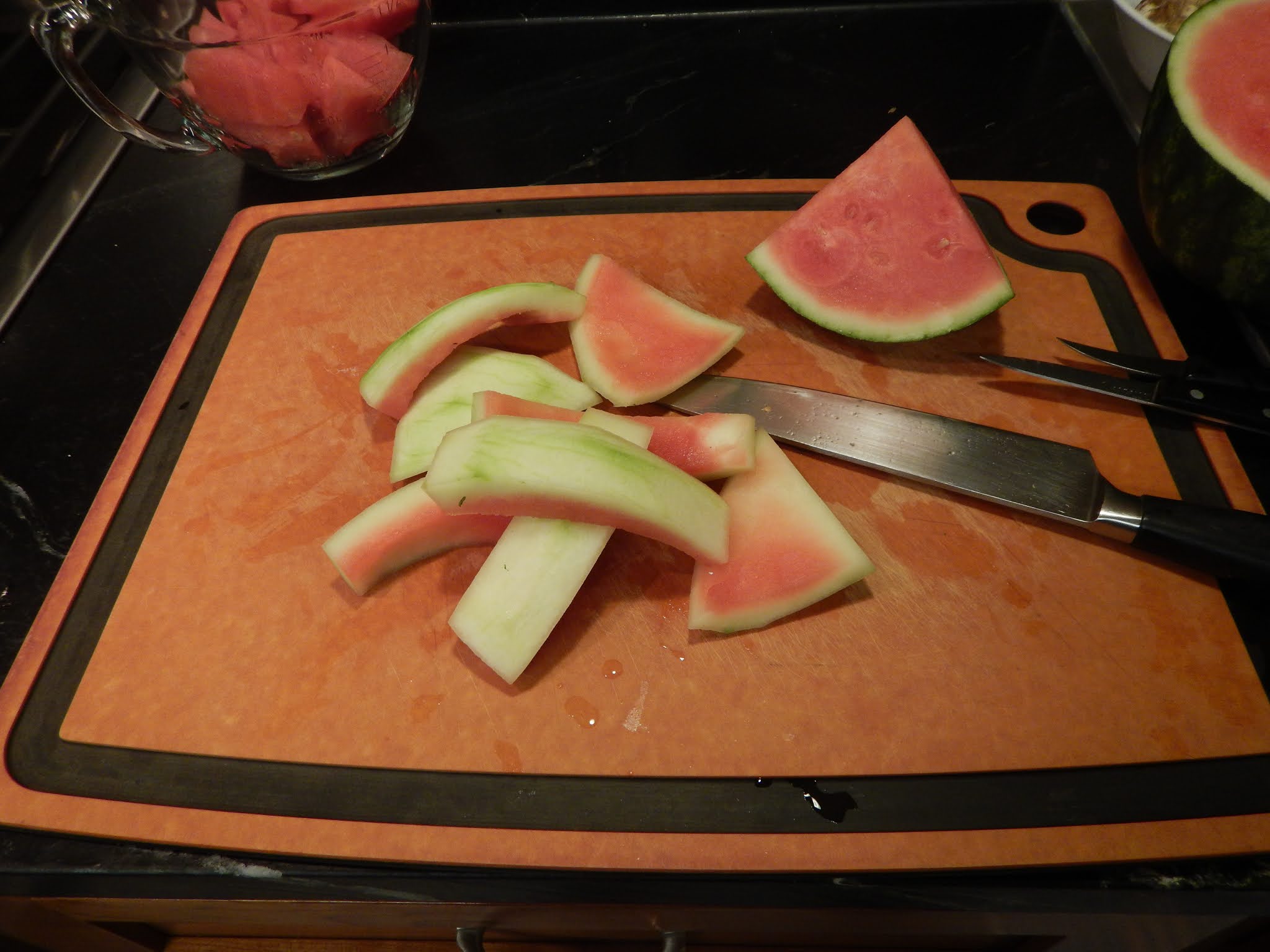
Lets talk about the watermelon rind for a minute.  I have never been excited about making Watermelon Rind Pickles and I really didn’t know you could do anything with it beyond pickling.  As I looked around at other recipes, I realized there are many other ways you could use the rind of watermelon in ways that treat it more like a vegetable than a fruit.  You can use it to make Watermelon Rind Coleslaw, Watermelon Rind Kimchi, Watermelon Relish and so much more!  I found a recipe for Watermelon Rind Stir-Fry and another for Watermelon Sweet and Sour Dipping Sauce.  I liked portions of both, but didn’t like the entire recipe so I decided to create my own recipe for Sweet & Sour Watermelon Rind Stir-Fry for this week’s featured recipe.  The end result--I actually really like stir-fried watermelon rind!  The rind is actually more like a vegetable and less like a fruit.  It has the texture of a carrot when cooked and is very mild in flavor.  To prepare watermelon rind for use, you first need to cut away the red flesh.  You also need to use a paring knife or vegetable peeler to remove the thin outer green skin.  The part of the rind you want to use is the white portion.  It is important to note that each watermelon variety may have differing amounts of usable rind because some have a thick rind and others are very thin.  Nonetheless, in the spirit of embracing the concept of reducing food waste and maximizing your food dollars, I’d encourage you to try utilizing the rind!

Whether you choose to try something new or stick with the old method of just eating it as is, we hope you enjoy these sweet, little seedless watermelons.  


Sweet & Sour Watermelon Rind Stir-Fry


Yield:  6 servings

Sweet & Sour Sauce:
2-3 cups cubed seedless watermelon
1 ½ Tbsp toasted sesame oil
3 Tbsp rice vinegar
1 ½-2 Tbsp soy sauce, plus more to taste
1 tsp salt, plus more to taste

Stir Fry:
1 pound ground pork (optional)
2 Tbsp sunflower oil or other high heat oil
2-3 cloves garlic, minced
1 ½ Tbsp fresh ginger, minced
1 medium onion, small diced
2 cups sliced watermelon rind
2 cups sliced zucchini
1-2 sweet peppers, sliced
¼-1 jalapeño, minced (amount to your tolerance)
1 cup raw sweet corn (from about 2 ears of corn)
½ cup shelled edamame
Freshly ground white pepper, to taste (optional)
Freshly ground black pepper, to taste 
Steamed Rice, for serving
1 cup chopped cilantro, for serving
  1. First prepare the sauce.  Puree the seedless watermelon cubes in a blender.  Pour the puree into a small mixing bowl.  Add the remaining sauce ingredients and stir to combine.  Set aside.
  2. Prepare all the vegetables for the stir-fry before you start cooking.  Once everything is prepared, heat a wok or medium to large skillet over medium-high to high heat.  Add the oil and once hot, add the ground pork (if using).  Cook the ground pork until thoroughly cooked through, then add garlic, ginger and onion.  If you choose not to include the pork, simply preheat the oil and then add the garlic, ginger and onion.  Stir-fry for 1-2 minutes more and then add the watermelon rind, zucchini and sweet peppers.  Continue to keep the vegetables moving as they cook and keep the heat on medium-high to high.  Stir fry for 5-6 minutes or until the zucchini and watermelon rind are tender but not fully cooked.
  3. Next, add the jalapeño, sweet corn, shelled edamame, white and black pepper, and sweet and sour sauce.  Stir to combine.  Bring the sauce to a rapid simmer and cook for 5-7 minutes or until the sauce thickens just a bit.  Taste and adjust the seasoning with additional salt and soy sauce to your liking.  
  4. Remove from heat and serve with steamed rice and fresh cilantro.
Recipe developed by Chef Andrea