Showing posts with label Pollinator packs. Show all posts

Thursday, June 1, 2023

2023 Pollinator Packs!

Pollinator Packs:  Supporting our Pollinator Creatures Since 2016!
By Andrea Yoder


Eight years ago we had an idea to publish a series of educational articles entitled “The Silent Spring Series.”  These articles are available on our blog and we encourage you to take some time to read them.  You’ll find links to each article in the series at the conclusion of this article.  This idea was preceded in May 2015 by the White House’s release of the “National Strategy to Promote the Health of Honey Bees and Other Pollinators,” an important groundbreaking step towards acknowledging and mobilizing action around our rapidly declining pollinator populations within North America.  However, the report was not considered complete by many individuals in conservation circles who raised concern about the impact pesticide use was/is having on our declining pollinator and wildlife populations.  Over the course of the summer of 2015 we reported more in-depth about the impact the use of these chemicals was having on our environment, human health and the health of our pollinator populations.  As the articles started to stack up, the topics got heavier and heavier!  As we neared the end of the series, we found ourselves asking “But what can we do to take positive action?”  As we sat around the kitchen table and discussed how we were feeling, we found ourselves brainstorming.  Out of this brainstorm session the idea to introduce Pollinator Packs was born!  

Pollinator Garden at Harmony Valley Farm
In 2016 we planted our first Pollinator Packs to share with our CSA membership.  This is our way of investing in positive change to benefit our own farm and the areas where we work and live, but we wanted to bring all of you along in the effort as well!  This is where the “C” in CSA comes into play.  We don’t make any money on these pollinator packs, rather we invest our time and resources to put them together for you.  But it’s not about making money.  It’s about coming together as a community to support positive changes and make an impact where we can.  As we partner together as a community on this project, we’re able to broaden the reach and multiply the impact.  Not only do we have some very nice, well-developed pollinator habitat areas on our farm and around the fields where we grow your vegetables, but now many of our CSA members have their own gardens and spaces that are supporting pollinator populations in their communities as well! 

Rattlesnake Master,
Harmony Valley Farm

 So this year I’d like to put out a request to anyone from our CSA community who is willing to contribute.  Later this season I would like to compile an article that reports on the positive changes happening in your/our communities.  We want to know how your pollinator gardens are growing and developing since we introduced this concept back in 2016.  Send us pictures of your plants and spaces, but also let us know what creatures and wildlife these plants have attracted and supported.  Have others in your community or friends and family members seen what you are doing and started to ask questions?  My vision is to share these stories and reports with our CSA membership, but also to send the article out into the world to be shared with others as a way of encouraging them to take responsibility and invest in similar projects.  Of course, in a world that is full with quite a lot of “bad news,” it would be nice to have some positive contributions! 

Now on to this year’s packs.  We always try to plant a variety of native wildflowers and grasses that will bloom across the season so as to provide a steady supply of food.  We also try to balance some easy to establish plants with ones that are a bit more unique and sometimes a challenge to start.  This year Richard went crazy when he was ordering and ordered a lot of different things! (Ok, I’ll take responsibility for contributing to that list as well).    While every seed does not germinate and take off, we had more plants than would fit into our Standard Pollinator packs.  Thus we planted two different packs this year--Standard Pollinator Packs & Enhancement Packs.  We've included the photos and diagrams below to assist you in identifying your plants.  If you position your pack as it is positioned in the picture, your pack will match the diagram and make it easy for you to identify each plant.  

All of the seeds we used were sourced from Prairie Moon Nursery.  If you click on the name of the plant below, it will take you to their website where you can get more information about how and where to plant these packs, how to care for them, etc. Please note, we did have to make a few substitutions to some packs.  Thus, your pack may differ slightly from the contents below.  See your "What's In the Box" email from the week of June 1/2/3 or June 8/9/10 for details about substitutions.

 STANDARD POLLINATOR PACK CONTENTS:

Standard Pollinator Pack Diagram

Blue Ridge Buckbean, Harmony Valley Farm

Blue Ridge Buckbean

Rose Milkweed

Smooth Blue Aster 

Purple Lovegrass 

Silky Wild Rye 

Wild Bergamot 

Brown-Eyed Susan 

Butterfly Weed 

Lance Leaf Coreopsis 


ENHANCEMENT POLLINATOR PACK CONTENTS:

Enhancement Pollinator Pack Contents Diagram

Wild Lupine, Harmony Valley Farm

Wild Lupines 

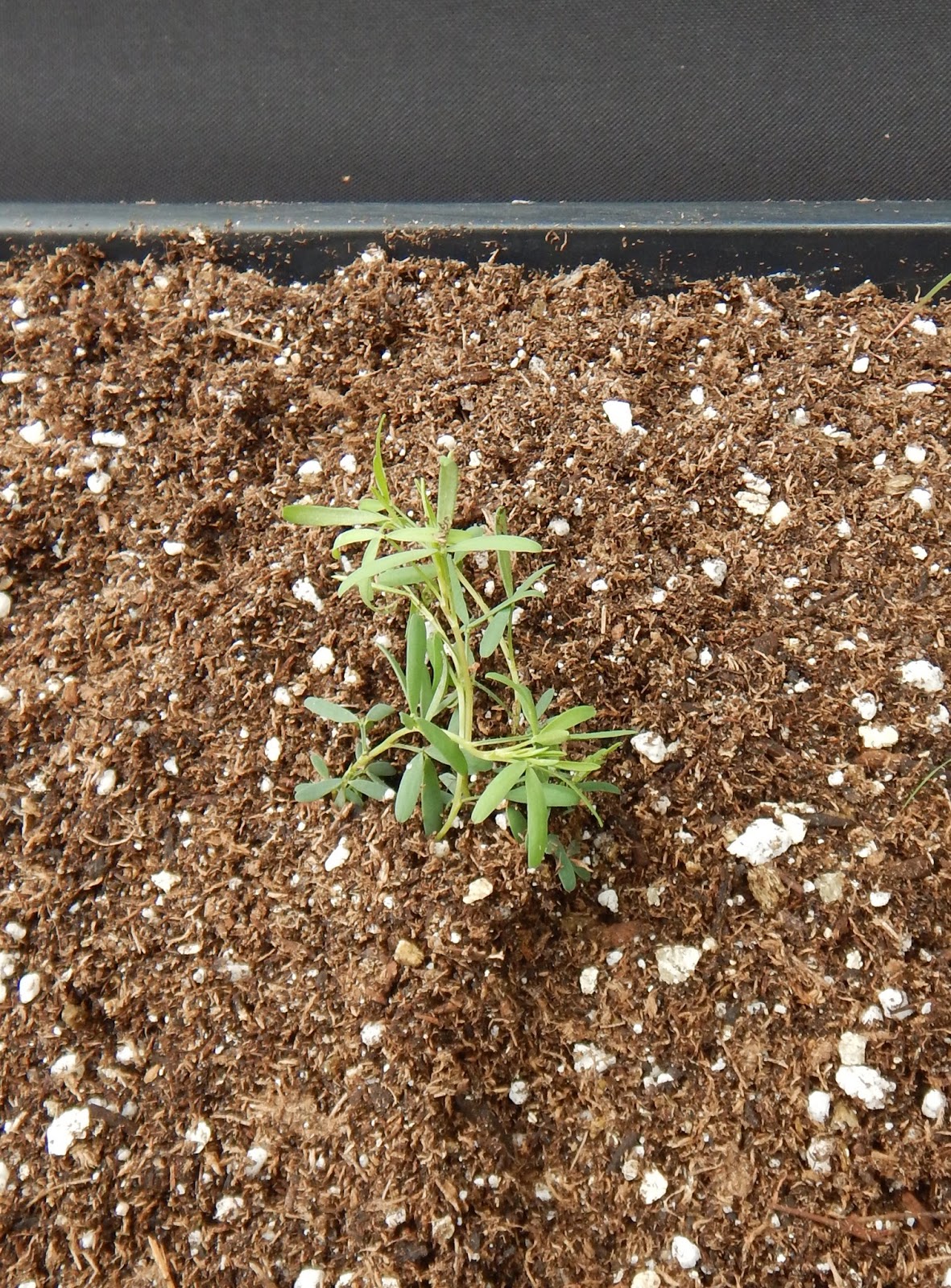
Partridge Pea 

Prairie Dropseed 

Silky wild Rye 

Blue Wild Indigo

Side Oats Grama  


Silent Spring Series, Part 1--Introduction 

Silent Spring Series #2—The Rise of Neonicotinoids 

Silent Spring Series #3—The Rise of Neonicotinoids, Part 2

Silent Spring Series #4—Glyphosate, Roundup’s Best Friend,Part 1

Silent Spring Series #5—Reflections on the Precautionary Principle 

Silent Spring Series #6—The Challenge 


Wednesday, May 6, 2020

Pollinator Packs!

Back in 2015 we published a series of newsletter articles we entitled “The Silent Spring Series.”  If you’re interested in reading these information-packed articles, you can find them all on our blog.  Basically the series took a look at the impact the use of agro-chemicals is having on our environment, ecosystem and our bodies.  The topic is pretty heavy and as we worked our way through the series we felt like we needed to create some light at the end of this very long tunnel.  We needed something positive to move the needle back to a point of hope.  We decided to plant pollinator packs, a garden pack with 9 different plants.  We started the seeds, transplanted them into the trays and delivered them to CSA members in the spring so everyone could use them to plant pollinator gardens in their own yard, on a patio space, in a community space or anywhere else they could think of where they would flourish, grow and serve to attract and support pollinator creatures (bees, butterflies, birds, wasps, etc).  We only intended to do it once, but it was so well-received, we get requests for them every year!

So, for those of you who already have an established pollinator garden, perhaps you’d like to add a few new plants to your space.  If you are just starting out, no worries!  We’ve included some plants in the pack that are easy to establish and will bloom in the first year!  The germination of wildflowers is sometimes inconsistent, so when we were putting the packs together we had to vary the contents a bit depending on the plants we had available to use.  So, the list below includes all of the plants you might have in your pack.  We’ve linked to Prairie Moon Nursery, the company we sourced our seeds from.  Their website had a lot of great information about native pollinator plants, etc.  Please use this resource to identify the plants in your pack and learn more about the preferred growing conditions, when they bloom, etc.  Thank you for doing your part to support our pollinators and enhance our environment!


Friday, January 24, 2020

The 2020 CSA Season is Unfolding!


By Richard & Andrea

Harvesting curly willow earlier this week
When winter sets in we always feel like we have “all this time” to tackle our projects, brainstorm, lay out plans, etc.  Here we are, approaching the end of January and believe it or not we’ll be packing our first CSA boxes of the 2020 season in less than 100 days!  We’re thankful to see the days getting longer—it’s still light outside at 5 pm when the crew is heading home!  Sign-ups are rolling in as are shipments of seeds.  This week our winter crew was in the field trimming curly willow as we take advantage of appropriate conditions to get the willow out of the field while it’s above zero degrees and the snow is not too deep.  We’ll spend the next few weeks trimming and bundling it in the greenhouse before we need to prepare that house for growing transplants.  Yes, we’ll be setting up our first greenhouse to start planting onions and celeriac next month!  It’s exciting to see another CSA season starting to unfold!

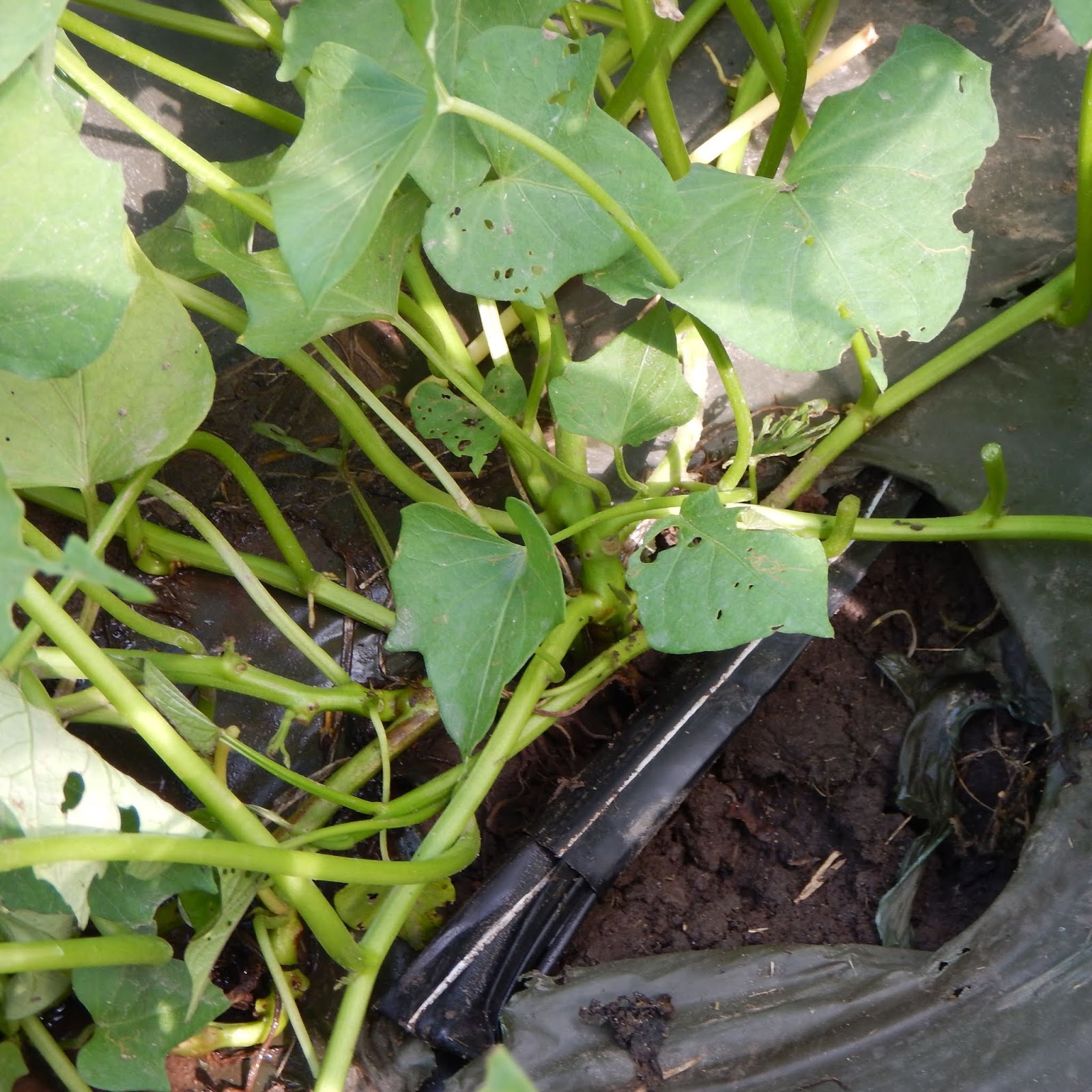
Drip tape line used to deliver nutrients to sweet potato plants.
As farmers, weather is always on our minds, so we might as well tackle this topic and get it out of the way!  There is some evidence that El Niño is finally turning to La Niña, which typically means less moisture and maybe even a bit of drought.  Since you just never know what you may get, we thought it prudent to update our irrigation permits and make sure our equipment is prepared and working well.  Whether we need irrigation as a means of delivering water to a crop or not, we use buried drip irrigation lines to deliver nutrients, microorganisms and trace minerals to our crops.  This year we are excited to expand our use of “sap analysis” to determine the specific nutrient needs of individual crops.  Sap analysis is kind of like a blood test for plants that allows us to better understand the plants’ nutritional needs at different points in growth.  Last year we saw some dramatic results when we used sap analysis to help us determine what support some of our crops needed in order to thrive.  We are planning to use sap analysis more proactively this year so we can be more aware of deficiencies and do what we can to correct them before they become a big problem.

As for crop planning, we’re laying out the plan and getting all the parts and pieces in place.  Sweet potato plants have been ordered, all 18,000!  We’ll be growing our two favorite orange varieties, Burgundy and Covington, and are also going to try a new variety called Bayou Belle.  We had better luck growing the white-fleshed Japanese sweet potatoes last year, so we’re going to expand that part of the planting a little bit.

Diana radishes, freshly washed!
We continue to appreciate the color and nutrition we get from our line-up of purple vegetables.  The color purple represents anthocyanins, plant compounds that play an important role in our physical health.  We’ll be doing one planting of the beautiful Amethyst beans and are considering growing the sweet and tasty purple tomatillos again this year.  Last year we also tried Diana radishes for the first time.  This is a spring radish that is shaped like a traditional red radish, but it has purple on the top and white on the root end.  We received positive feedback about this variety and we liked the way it looked in the field with regards to disease resistance, etc.  We have secured seed for our new favorite purple cauliflower, Purple Moon, and have our fingers crossed that we’ll get the Purple Majesty potato seed we have on order.  Lastly, we have to try a new bright magenta napa cabbage named “Scarrossa.”  We don’t typically grow napa in the fall, but that’s the recommendation for this variety so watch for this around October.

Fresh baby ginger with greens
We have been reviewing the results of our end of season survey that closed the fourth of January. We asked members for their input on which specialty produce items we should grow this year.  It’s clear that ginger is high on the list along with lemongrass!  We can’t make any promises at this point, but know we are trying to get some ginger “seed”.  Our supplier has closed ordering for now, but we’re on the list for an opportunity to purchase seed when they open ordering again sometime in February.  Wish us luck!  The other crop that had a lot of support was Egyptian Spinach.  This is a unique vegetable that grows in the heat of the summer when other greens struggle.  It is packed with nutrients and you just feel really good when you eat it!  It is a little challenging to grow, but we’re willing to give it a try!

Summer 2019:  Richard sampling and selecting
French Orange melon seeds
We continue to look for a personal-sized, yellow seedless watermelon, but there just isn’t anything available.  What about the French Orange Melons?  Good question.  For those of you who know the sweet, delicious, aromatic, one-of-a-kind French Orange melon, you may remember the sad story about how the producer has decided to drop the seed.  Richard has been working on saving seed for this melon for several years now.  This is not a quick or easy process.  The original seed was a hybrid.  When we plant the seed from melons produced from the original seed, we get a variety of results.  The sizing, color and characteristics of the melon are not always a direct reflection of the original seed.  As such, it takes several years of selecting the seed from the melons that most resemble the original set of characteristics and eliminate the off-types.  We feel like we are at a pretty good place with the quality of the seed we produced in 2019 and we finally have enough volume of seed that we can put in two nice sized plantings for actual production and harvest.  Richard will continue to carefully select seed and plant a separate seed production plot each year in an effort to refine our seed stock for this variety.  Wish us luck—we’re really hoping for a much better melon season than in 2019.  One of the problems we experienced last year was fewer pollinators.  We think the cold, late spring may have caused a decreased population of pollinator creatures.  It’s easy to take these little creatures for granted, but when something affects their population and they don’t show up, the results can be very dramatic!

Our crew happily putting together our first pollinator packs in 2016.
Speaking of pollinators, we are going to be planting pollinator packs again this year!  This is a project we started back in 2016.  In 2015 we published a series of newsletter articles we entitled “The Silent Spring Series.”  If you’re interested in reading these information-packed articles, you can find them all on our blog.  Basically the series took a look at the impact the use of agro-chemicals is having on our environment, ecosystem and our bodies.  The topic is pretty heavy and as we worked our way through the series we felt like we needed to create some light at the end of this very long tunnel.  We needed something positive to move the needle back to a point of hope.  We decided to plant pollinator packs, a garden pack with 9 different plants.  We started the seeds, transplanted them into the trays and delivered them to CSA members in the spring so everyone could use them to plant pollinator gardens in their own yard, on a patio space, in a community space or anywhere else they could think of where they would flourish, grow and serve to attract and support pollinator creatures (bees, butterflies, birds, wasps, etc).  We only intended to do it once, but it was so well-received, we get requests for them every year!  So, for those of you who already have an established pollinator garden, perhaps you’d like to add a few new plants to your space.  If you are just starting out, no worries!  We’ve included some plants in the pack that are easy to establish and will bloom in the first year!  Our order is nearly finalized and here is the list of seeds we ordered for this year’s packs.  Please note, the packs only hold 9 plants, but we’re ordering more than 9 different things just in case something doesn’t germinate very well and we can’t include it in all packs.  Here’s what we’re looking forward to:

Anise Hyssop, photo from Prairie Moon Nursery
Wild Bergamot, photo from Prairie Moon Nursery
Lance-Leaf Coreopsis, photo from Prairie Moon Nursery
New England Aster, photo from Prairie Moon Nursery
Brown-Eyed Susan, photo from Prairie Moon Nursery
Prairie Sage, photo from Prairie Moon Nursery
Lead Plant, photo from Prairie Moon Nursery
Little Bluestem Grass, photo from Prairie Moon Nursery
Blue Wild Indigo, photo from Prairie Moon Nursery
Leafy Prairie Clover, photo from Prairie Moon Nursery
Purple Coneflower, photo from Prairie Moon Nursery
Butterfly Weed, photo from Prairie Moon Nursery

We are looking forward to a great season and packing boxes for you and your families.  Once again we hope to strike a balance between supplying the staple items (onions, garlic, carrots, broccoli) and longtime favorites (sweet corn, tomatoes, green beans, strawberries) with some interesting and unusual selections to bring a little extra variety to your meals and challenge you, just a bit, to step out of your vegetable comfort zone and experience something new.  You never know, you just might discover a new flavor or vegetable you didn’t even know you liked!

In closing, we would like to share an excerpt from a note we received from a CSA family when they signed up for their second year with our farm.  Here’s what they shared:  “This past year was our first year getting a CSA share and it is not an understatement to say that it has changed our lives.  Thank you for doing what you do!  We love you guys!”  Thank you so much to all of you who send us notes like these.  We hope you understand how meaningful it is for us to read these and we also hope you understand that we think of you as we make our plans, select the varieties and pack your boxes each week.  Cheers to an awesome 2020 CSA season!

Wednesday, May 9, 2018

Pollinator Packs…Doing Our Part


By Farmers Richard & Andrea


This week is our first of two deliveries for our Pollinator Packs.   These are a garden pack of nine different native plants including grasses and flowers that have been carefully selected by Richard.  These plants are beneficial for our environment for many reasons including providing habitat and food sources for a variety of species that provide pollination services, help control pests, and contribute to keeping our ecosystem healthy and in good balance.  The idea for these Pollinator Packs came about back in 2015.  In May 2015 the White House released the National Strategy to Promote the Health of Honey Bees and Other Pollinators.  Many individuals felt this was a groundbreaking step towards acknowledging and mobilizing action around rapidly declining pollinator populations within North America.  The importance of setting a national strategy to guide the protection, restoration, and enhancement of pollinator habitats is largely undisputed among scientists and others operating within conservation circles.  However, this national plan failed to address a selection of key considerations that appeared to have been left out of the national plan.  Primarily, questions surrounding pesticide use—including that of glyphosate and systemic insecticides like neonicotinoids, which have been directly linked to the decline of bee and other wildlife populations. 

As organic farmers, we do not use these agrochemicals, but felt it was important that we fully understand the impact these chemicals are having on our pollinating creatures as well as our environment and human health.  So, we launched a series of newsletters that we called “The Silent Spring Series.”  Over the course of six articles, we sifted through a variety of resources, journal articles, etc in an effort to educate ourselves about some of these agrochemicals and the direct impact their use is having on the people, creatures and environments where they are being used.  Sarah Janes Ugoretz authored these articles and fearlessly attacked these difficult topics.  She reviewed the research and eloquently presented her findings in a way that we were all able to understand.  We encourage you to take a moment to go back and read this series of articles as the information contained in them is very important to understand for our own health as well as the health of our environment, etc.  Links to each of these articles are as follows: 


About half way through this series, the content was feeling pretty heavy and a bit depressing.  We started asking ourselves, “What can we do?”  Sometimes these problems seem so grand and out of our control that it’s hard to know where to start, but we know that even small, individual efforts can collectively create great change and can make an impact.  So the final article in our series focused on the future.  Our goal with these articles was to leave our members with a sense of empowerment and some motivation.  Empowerment in the sense that, if we’ve done our jobs well, our members would walk away with a deeper understanding of the issues surrounding the use of agrochemicals and the depth of their impact.  As a result of being better informed, our hope is that our members would then be motivated to look at ways they could bring about positive changes within their own circles. 

We have extensive plantings of native grasses and flowers on our farm that we’ve established because we want to provide habitat and a food source that will attract and support a wide variety of beneficial creatures including bees, wasps, birds, butterflies, etc.  These creatures help to support a healthy, balanced ecosystem on our farm, they aid our efforts in controlling pests in our vegetable crops, assist with pollinating our flowering crops such as squash, melons, cucumbers, etc and they are a joy to watch and observe.  We know how to grow plants, so we thought perhaps we could grow these Pollinator Packs to share with our members.  In this way we are able to expand the benefit these plants can offer beyond our own valley and into the neighborhoods where our members live, work and play. 

So that is how Pollinator Packs came to be!  We didn’t plant them last year and we had quite a few members asking for them, so we decided to do them again this year.  We’re offering these, free of charge, to our CSA members and encourage each of you to consider where you might be able to plant these in your community.  Some members have larger garden areas and are able to plant several packs while others are more limited in their space and do something as simple as plant them in pots on their balcony or patio.  Every little bit helps and we guarantee you’ll enjoy watching these plants become established, grow and come back year after year.  Of note, all of the plants in the pack are perennials.

This year the contents of the packs are different from two years ago and will be a good complement to the previous selections.  Some of the flowers may not bloom until next season, so don't get discouraged if you don't see flowers this year.  We purchased all of the seed from Prairie Moon Nursery, so if you’d like more information about any of these plants or others you can visit their website.  They have a lot of interesting and valuable information to share.   

If you did not request a Pollinator Pack(s) for this week’s deliveries, it’s not too late.  We still have plenty of packs available and will be delivering them again next week.  If you’d like to join in on the fun, please email Kelly at csa@harmonyvalleyfarm.com and let her know how many packs you’d like us to send with next week’s deliveries. 

Here’s a little more information about the plants in this year’s pack as well as a diagram and pictures to help you identify each one:  

Diagram of plants in your pack

Side Oats Grama


Side Oats Grama:  This is an interesting grass that produces tiny flowers during its summer bloom time in August and September.  When the seed heads dry, they have an oat-like appearance.  It is a food source or larval host for at least five types of skipper moths.  It grows to about 2 feet high. 


Great Coneflower


Great Coneflower:  This is a large plant that can grow up to 6 feet tall and produces yellow flowers in June & July.  It does best in full to partial sun.


Smooth Blue Aster


Smooth Blue Aster:  This plant has smooth leaves with a tough stem that sometimes has a shady blue appearance.  It stands 4 feet tall and produces beautiful blue flowers over a long time from August through October.  It does best in full to partial sun.


Purple Coneflower


Purple Coneflower:  This plant is also known as Echinacea purpurea and has a wide range of medicinal uses. It grows to a height of 4 feet and produces purple flowers from July-September.  This plant is very attractive to bees, so get ready to see some action!  It does best in full to partial sun.


Silky Wild Rye


Silky Wild Rye:  This is a common woodland grass.  It is a thicker grass than the others in our pack and actively grows during spring and fall when soil temperatures are cool.  It grows to a height of 3 feet and does best in partial sun to shady areas.


Blue Sage


Blue Sage:  This is an easy, beautiful plant to grow in areas that are a bit more dry.  It grows to a height of 5 feet and produces blue flowers in August and September that are very attractive to butterflies and bees.  Because of its height, it has a tendency to flop over, so it benefits from being in close proximity to other plants that can provide some support or you may want to tie it to a stake to keep it upright.  If you brush up against the leaves, you’ll pick up the typical scent of sage. 


Blue-Ridge Buckbean


Blue-Ridge Buckbean:  This is a legume also sometimes referred to as Carolina Lupine.  This plant blooms early in the season in May and June when it produces bright yellow flowers.  It grows to a height of 4 feet, does well in full to partial sun and can thrive in drier soil.


Purple Prairie Clover


Purple Prairie Clover:  This flowering plant has a shorter stature growing to just 2 feet tall.  It produces purple flowers in July, August and September.  It does well in full to partial sun and drier soil.


Blue Grama Grass


Blue Grama Grass:  This is a drought-tolerant grass that will form a larger clump.  It actively grows during the summer when the soil is warm and only grows to a height of 12 inches.  It forms attractive blue seed heads in late summer to early fall.