Showing posts with label lemongrass. Show all posts

Wednesday, September 13, 2023

September 14, 2023 - This Week's Box Contents Featuring Lemongrass


Cooking With This Week's Box

Sausage & Broccoli Raab Rigatoni Pasta
Phot from www.familystylefood.com
Baby Arugula:  

Broccoli Raab:

Lemongrass:  
20 Minute Vietnamese Lemongrass Beef (See Below)
Refer to this week’s Vegetable Feature below for a long list of recipe ideas!

Porcelain Garlic:  

Sweet Corn:  

Orange Carrots:  

Mini Sweet Peppers:  

Jalapeño Pepper:  

Red and/or Orange Italian Frying Peppers:  

Large Tomato Variety:  

Leeks:  
Beet Greens Pesto Pizza with Roasted Beets
Photo from www.ohmyveggies.com

Cauliflower:   

Green Top Red Beets:  

The nights and mornings have had a bit of a chill to them over the past week, which reminds me to savor the final few days of summer. All too soon we’ll be seeing the first frost settling into the valley…. but before that happens, we still have a lot of summer left to enjoy when it comes to vegetables!  This week we’re featuring lemongrass, a unique vegetable we grow every few years.  I only included one very simple feature recipe this week for 20 Minute Vietnamese Lemongrass Beef (See Below).  However, if you take a minute to refer to this week’s Vegetable Feature article (keep scrolling down), you’ll find a list of other recipes and use ideas for lemongrass.  We still have a lot of lemongrass remaining in the field, so we’ll be including it in boxes again…just in case there are multiple recipes you want to try!

This week we've introduced leeks to the mix of vegetables.  While typically thought to be a fall vegetable, they actually pair nicely with some of the late summer selections including sweet peppers and tomatoes.  So scattered throughout the list this week I included a variety of recipes using leeks.  Perhaps you want to kick off the weekend with this Heirloom Tomato, Corn and Leek Quiche or Hash Browns with Leeks & Peppers.  We will be including leeks in the next few boxes, so there will be plenty of opportunities to try a variety of recipes!

Beets are back in the box and just in time to accompany baby arugula!  It's time to resume green salads and this Beet Salad with Arugula and Balsamic Vinaigrette looks delicious!  I also included a link for  Sweet Corn and Arugula Panzanella.

I'm going to close out here, but before I do I'll give you a little glimpse into what's coming soon.  Richard brought a few gorgeous heads of lettuce in this week... a foreshadowing to the next two weeks.  We also have a crop of baby spinach coming on line along with some salad mix (hopefully).  Allison and I checked the jicama yesterday and took a peak under the plastic.  They are getting bigger and it shouldn't be too much longer before we start the harvest!

Have a great week and I'll see you again next week!---Andrea

Vegetable Feature: Lemongrass

by Andrea Yoder

Lemongrass in the field
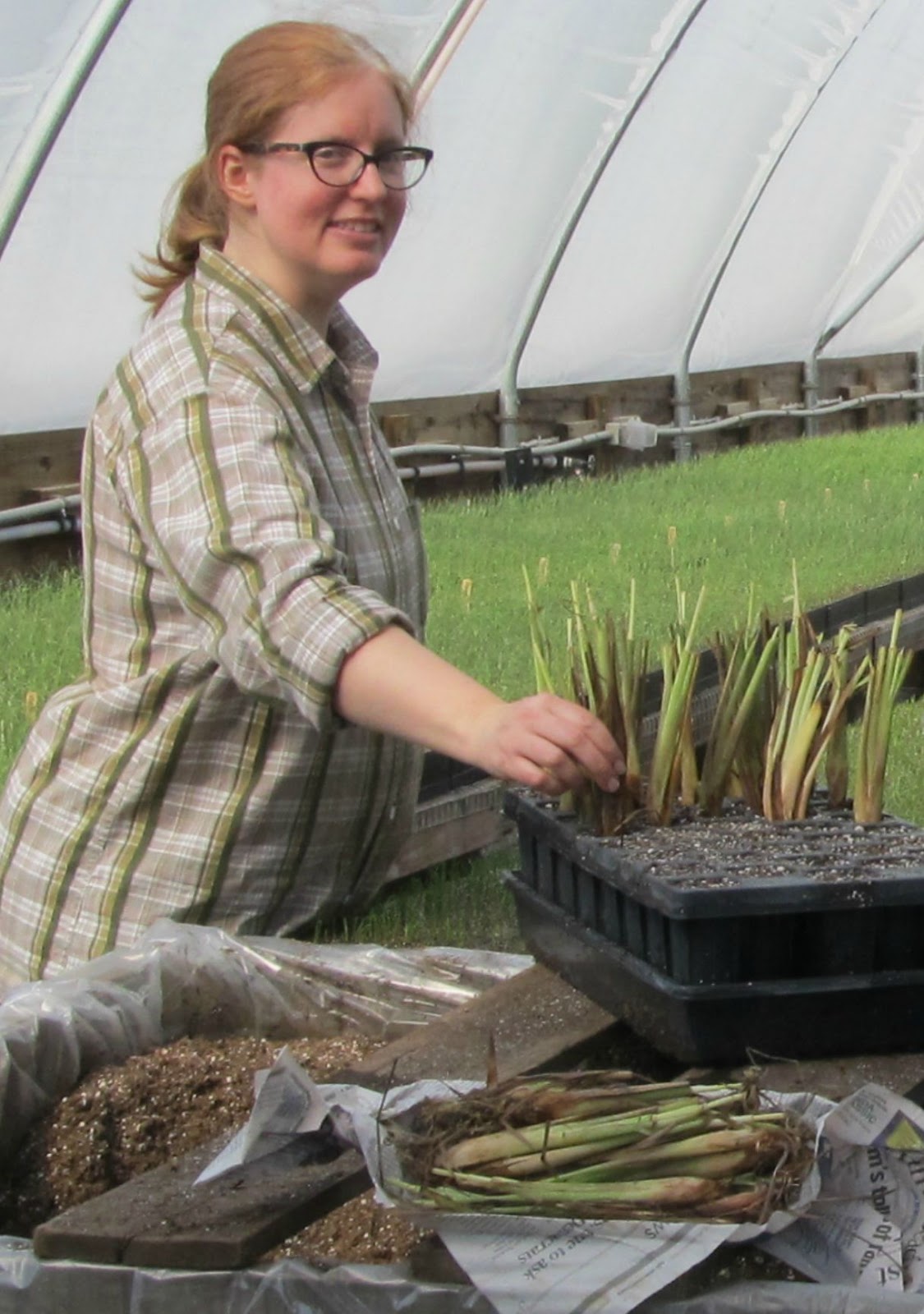
This week we are featuring lemongrass, one of the unique crops we cycle into our growing plan every few years. Lemongrass is a tropical plant native to southeast Asia, considered an herb by many for its fragrance and the way it enhances dishes with its subtle flavor.  Despite the fact that Wisconsin is far from being a tropical growing region, we are able to grow lemongrass as long as we plant it in the field after the last frost in the spring and harvest it before the first frost in the fall.  We start lemongrass early in the spring using either “seed” pieces of a lemongrass plant that we stick in potting soil or actual seeds. This year we planted lemongrass directly from seeds. We take care of the plants in the greenhouse until we’re well past the last frost in the spring, then we transplant them into the field.   We choose to plant it on beds covered with plastic mulch which helps trap heat and makes the plant feel like it’s growing in a tropical climate!  

Lemongrass bundled and ready for CSA boxes.
There are three parts to lemongrass and all parts of the plant may be used: the leaves, the middle stalk and the bulb.  The bulb contains the most refreshing lemon essence and only needs to be used in small amounts. The stalk has good flavor, but is not as intense as the bulb.  The leaves have a good lemon flavor followed by more of a “grassy” essence. When using the leaves, it takes about three times more product to achieve the flavor intensity of a bulb. You can make a bundle with the leaves and use it to infuse flavor into pasta, rice, soup, or curries during cooking. You can also steep the leaves in hot water to make tea. The middle section can be cut into sections a few inches in length. You’ll find this section to be tough but flavorful.  Add them to sautéed dishes, to marinades and to flavor soups; discard before eating.  You can also use the stalk as a skewer for cooking kabobs or chicken satay or as a stirring stick for refreshing beverages. The bulb is the most tender portion and can be sliced into thin pieces and added to soups, salads, marinades, and entrees where it can be eaten instead of discarded. The secret to cooking with the bulb or the stem is to pound it with the back of a knife to release the oils before using. This will help to release the fragrant oils.

Lemongrass pairs well with ginger, garlic, basil, chilies, coconut milk, cilantro, cinnamon, and clove. It is frequently used in Thai, Vietnamese, African, Indian, and even Mexican cuisine. Soups, curries, marinades, and teas are more common uses, but don’t limit the use of lemongrass to just these.   You can use lemongrass anywhere, a refreshing, crisp lemon taste is desired. You could even get adventurous and use it to make your own homemade curry paste using fresh chiles, ginger, etc. Additionally, lemongrass is often used in body care products. I’ve included a few links to recipes for body care including homemade salt scrubs and a lemongrass facial steam.

In addition to using lemongrass in its fresh form, it may also be preserved for later use. The leafy grass part of the plant is usually dried, either whole and intact or you can cut it into smaller pieces using kitchen shears. Once dried, the leaves may be used to steep in hot water to make tea, or you can grind the dried leaves into a powder. The powder may then be used to make tea or stir it into sauces, etc. You can also freeze the lower bulb of lemongrass. I just tuck them away in the freezer in a Ziplock bag. When you want to use a piece, remove it from the freezer and thaw slightly. 

While lemongrass provides great flavor, this grass also happens to be good for you! Lemongrass is rich in a substance called citral, traditionally distilled from the leaves and stalks. Citral has shown to be helpful in decreasing ailments such as muscle cramps and headaches. It is also a digestive aid. Studies have also shown that the components of the grass when boiled (in a tea for example) create multiple antioxidants that are believed to help prevent cancer. We hope you enjoy this tropical treat, both for its flavor and its health benefits! I’ve included a list of recipe ideas, as well as their links, below.  Hopefully, these will get your creative juices flowing!

Thai Basil Beef & Lemongrass Rice Bowls
Photo from www.halfbakedharvest.com
SAVORY RECIPES:
SWEET RECIPES:
BEVERAGES:
DRIED:
Coconut Lemongrass Chess Pie
Photo from www.food52.com
BODY CARE:

20 Minute Vietnamese Lemongrass Beef

Yield:  4 servings
1 pound ground beef (or pork or chicken)
3 stalks lemongrass, peeled and minced
1 shallot or small onion, finely diced
1 Tbsp garlic, minced 
1 Tbsp ginger, minced
2 Tsp cumin seeds, toasted and ground
¼ tsp turmeric, ground
1 Thai chili pepper, sliced thinly 
1 lime, zest and juice
2 Tbsp fish sauce
2 Tbsp brown sugar
1 Tbsp cilantro, chopped
1 Tbsp mint, chopped 
1 Tbsp basil, chopped
  1. Cook the ground beef in a large skillet over medium-high heat until cooked through, breaking it apart as it cooks, before draining off any excess grease.
  2. Add the lemongrass, shallot or onion, garlic, ginger, cumin, turmeric, and the chili pepper. Mix well and cook for 3 minutes.
  3. Add the lime, fish sauce, and sugar, mix well, taste and adjust the seasoning to taste.
  4. Mix in the cilantro, mint, and basil. Serve over rice, noodles, in sandwiches, lettuce wraps, quesadillas, tacos, etc.
Recipe sourced from www.closetcooking.com.

Wednesday, October 7, 2020

October 8, 2020 - This Week's Box Contents, Featuring Lemongrass!

Cooking With This Week's Box

Italian Garlic: Fiery Grilled Beef Salad (see below); Thai Style Chicken Soup (see below);  Vietnamese Lemongrass Chicken; Stir-Fried Napa Cabbage with Spicy Garlic Dressing


Variety of Large Tomatoes OR Orange Italian Frying Peppers: Fiery Grilled Beef Salad (see below); Carbonara with Leeks, Lemon & Bacon; Thai-Style Slaw—with or without Chicken 

Cauliflower OR Butterscotch Butternut Squash: 47 Best Cauliflower Recipes; Roasted Cauliflower Larb; Cauliflower Melts


Lemongrass: Fiery Grilled Beef Salad (see below); Thai Style Chicken Soup (see below); Vietnamese Lemongrass Chicken; Lemongrass Mojito; Thai Chicken Lettuce Wraps;  Roasted Cauliflower Larb


Green Boston, Mini Green Romaine, Greenleaf or “Hornet” Redleaf Lettuce: Fiery Grilled Beef Salad (see below); Thai Chicken Lettuce Wraps


Vietnamese Lemongrass Chicken
photo from gimmesomeoven.com
This week we’re featuring Lemongrass!  If you’ve never worked with fresh lemongrass, you’re in for a treat.  This is one of our tropical crops and is often used in cuisine from Southeast Asia including Vietnamese and Thai recipes.  So we’ll go to that part of the world for a little cooking inspiration, starting with this week’s featured recipes.  The first is for Fiery Grilled Beef Salad (see below).  This is a main dish salad that incorporates lemongrass into a sweet and spicy dressing that is used to dress the salad.  You can use some of this week’s lettuce as the base of the salad topped with grilled beef, slices of tomatoes, shredded carrots or even some diced sweet peppers.  The second recipe is for Thai Style Chicken Soup (see below).  This soup has a broth base that is enriched with coconut milk.  In addition to the aromatic lemongrass, this soup gets its flavor from leeks and ginger with a little heat from chili peppers.  If you have some Korean peppers or jalapenos from a previous week, either would work for this soup.  I also came across this recipe for Vietnamese Lemongrass Chicken which uses lemongrass to infuse flavor into a marinade for the chicken which is grilled.  Bouncing back to Thailand for a moment, I also want to mention this recipe for Thai Chicken Lettuce Wraps which were featured in our newsletter previously.  Lastly, if you have some lemongrass remaining use it to make a Lemongrass Mojito!

It looks like we’ll be able to harvest leeks for one more week, so keep collecting recipes to put them to use!  If you didn’t have a chance to read Last Week’s Leek Blog Post or see our featured recipes for leeks, we hope you’ll take a minute to do so.  I had forgotten about this recipe for Apple & Leek Quiche, a great weekend brunch item.  Another popular recipe from a past newsletter is this Carbonara with Leeks, Lemon & Bacon.  If you have been following this blog for several years you have probably heard me recommend this recipe before, but only because it’s so delicious!

Thai-Style Slaw--with or without Chicken
When it comes to cabbage this week, we’re all about the purple!  This week’s boxes will contain either purple Napa Cabbage, a gorgeous addition to our veg lineup, or standard purple cabbage.  If you receive the purple napa cabbage, we hope you’ll let us know what you think about it.  We think it’s gorgeous and want to plant more next year, but we’d value your input.  Use it to make Stir-Fried Napa Cabbage with Spicy Garlic Dressing.  This is a good recipe to use your Korean chili peppers in if you still have some.  You could also make this Thai-Style Slaw—with or without Chicken.  We featured this recipe in a previous spring newsletter which used a different cabbage.  It’s an adaptable recipe though, so I think the purple napa would be a good choice.  The recipe does call for snow or snap peas, which are obviously not in season!  I would recommend substituting some sliced sweet peppers or shredded carrots instead.  If you receive the more familiar purple cabbage, use it to make this Red/Purple Cabbage Slaw with Maple-Mustard Dressing.  This is a tasty fall slaw.

While we’re talking fall salads and slaws, I’ll mention Ali’s recipe for Best Broccoli Salad.  I really like this recipe because it has a creamy, yet light dressing and she uses tamari, almonds and pumpkin seeds as well as dried cranberries to jazz it up.  If you’re at a loss with what to do with broccoli this week, head over to thekitchn.com and check out their article entitled “Our 27 Best Broccoli Recipes."  Surely you’ll find something there such as this simple Broccoli & Feta Pasta Salad.  This is a nice dish to build upon, so feel free to add some diced sweet peppers or tomatoes to jazz it up!

Italian Panini with Broccoli Raab and Soppressata
photo from applegate.com
Now that we’ve talked salads, lets shift gears to sandwiches such as this delicious Italian Panini with Broccoli Raab and Soppressata!  I was first introduced to Soppressata, a spicy, dry, Italian salami, when I lived in New York and took a trip to Little Italy.  I was hooked and it is one of my favorite salami-type meats.  Pair it with the sweet and flavorful broccoli raab to make a warm, toasted panini sandwich!  Serve it with a vegetable salad or go crazy and make some Homemade French Fries!  This link includes instructions for making baked or fried French fries and also has some delicious flavor variations to offer.

Sweet Pepper Poppers
photo from findingzest.com
If you aren’t into sandwiches this week, maybe pizza sounds better?  If so, use your broccoli raab to make this Broccoli Raab, Potato and Rosemary Pizza.  Turn it into an appetizer dinner and make some of these Sweet Pepper Poppers or Mozzarella Stuffed Mini Sweet Peppers.

Now is the time of the season to fully embrace our brassica crops such as broccoli and cauliflower!  I came across a great collection of “47 Best Cauliflower Recipes” which includes Roasted Cauliflower Larb.  Larb is a Thai dish featuring a flavorful filling that is served in lettuce leaves.  This is a fitting recipe for this week as it uses lemongrass and lettuce leaves.  This is also a nice vegetarian alternative to the lettuce wrap recipes mentioned earlier.  I am also intrigued by this recipe for Cauliflower Melts.  These are tasty looking cheesy, open-faced sandwiches based on cauliflower!

I hope you enjoy another week of cooking these beautiful vegetables!  Before you know it we’ll be eating sweet potatoes and Brussels Sprouts!  Have a good week and I’ll see you next week! --Chef Andrea

Vegetable Feature: Lemongrass

By Chef Andrea

Lemongrass in the field!
Lemongrass is on our list of unique crops that we do not grow every year, but cycle into our growing plan every few years.  It’s been awhile since we have grown it, but we’ve had some members asking for it so we added it to this year’s lineup!  Despite the fact that we are far from the tropics, we accept the challenge of growing tropical plants such as ginger, sweet potatoes and lemongrass.  We start lemongrass early in the spring using “seed” pieces of a lemongrass plant that we stick in potting soil.  The seed piece puts down roots and the plant starts to grow new leaves that emerge from the center of the seed piece.  Once we’re well past the last frost in the spring, we transplant lemongrass into the field.  We choose to plant it on beds covered with plastic mulch which helps trap heat and makes the plant feel like it’s growing in a tropical climate!  Since it is a tropical plant, it will not survive a frost.  So last week, before the temperatures dropped into the 30’s, we dug the whole crop and tucked it away in our cooler that is held at a warmer temperature so we could pack it for you this week!

Lemongrass is considered an herb by many, and you’ll find it is very fragrant and aromatic.  There are three parts to lemongrass and all parts of the plant can be used;  the leaves, the middle stalk and the bulb.  The bulb contains the most refreshing lemon essence and only needs to be used in small amounts.  The stalk has good flavor, but is not as intense as the bulb’s and the leaves have a good lemon flavor followed by more of a “greens” taste.  When using the leaves, it takes about three times more product to achieve the flavor intensity of a bulb.  You can make a bundle with the leaves and use it to flavor pasta or rice while it is cooking.  Remove and discard the bundle when finished cooking.  You can also steep the leaves in hot water to make tea.  The middle section can be cut into sections a few inches in length.  You’ll find this section to be tough but flavorful.  Add them to sautéed dishes, to marinades and to flavor soups;  discard before eating.  You can also use the stalk as a skewer for cooking kabobs or chicken satay or as a stirring stick for refreshing beverages.  The bulb is the most tender portion and can be sliced into thin pieces and added to soups, salads and other entrees where it can be eaten instead of discarded.  The secret to cooking with the bulb or the stem is to pound it with the back of a knife to release the oils before using.

Starting lemongrass in the greenhouse this spring. 
Lemongrass combines well with ginger, garlic, basil, chilies, coconut milk, cilantro, cinnamon and clove.  It is frequently used in Thai, Vietnamese, African, Indian and even Mexican cuisine.  Soups, curries, marinades and teas are more common uses, but don’t limit the use of lemongrass to just these.   You can use lemongrass anywhere a refreshing, crisp lemon taste is desired.  You could even get adventurous and use it to make your own homemade curry paste using fresh chiles, ginger, etc.  Lemongrass can be stored wrapped in plastic and put in the refrigerator for up to two weeks.  You can also freeze it whole or cut it into smaller pieces and dry it for later use by hanging to air-dry or by using a food dehydrator.

While lemongrass provides great flavor, this grass also happens to be good for you!  Lemongrass is rich in a substance called citral, traditionally distilled from the leaves and stalks.  Citral has shown to be helpful in decreasing ailments such as muscle cramps and headaches.  It is also a digestive aid.  Studies have also shown that the components of the grass when boiled (in a tea for example) create multiple anti-oxidants that are believed to help prevent cancer.  We hope you enjoy this tropical treat, both for its flavor and its health benefits!

Fiery Grilled Beef Salad (Yam Neua)

Yield: 4 to 6 servings

Dressing:
¼ cup loosely packed chopped cilantro stems
2 Tbsp chopped serrano or jalapeño peppers
3 cloves garlic, roughly chopped
2 Tbsp coconut-palm sugar or golden brown sugar
1 ½ Tbsp Thai fish sauce (nam pla)
¼ tsp white pepper
½ cup fresh lemon juice

Salad:
1 lb beef steak (round eye, top sirloin, or flank steak)
1 large stalk lemon grass, tough outer leaves discarded, lower stalk trimmed to 4 inches and finely sliced
1 small red onion, cut in half and finely sliced
*½ lb small pickling cucumbers, peeled and finely sliced
1 tomato, cut in half and sliced into thin wedges
½ cup loosely packed fresh mint
A few leaves of lettuce to line the platter (optional)
  1. Combine all of the dressing ingredients in a blender or mixing bowl.  Blend well to dissolve the sugar.  Set aside.
  2. Build a hot charcoal fire or preheat a gas grill or broiler.  Grill or broil the meat slowly, several inches from the fire, to keep it juicy.  Cook until medium-rare, turning occasionally, about 5 to 8 minutes total.  Transfer to a cutting board.  Holding your knife at a 45-degree angle, cut the steak crosswise into very thin slices.
  3. Transfer the meat, with its juices, to a mixing bowl and toss with the remaining salad ingredients.  Add the dressing and toss to mix well.
  4. Arrange the lettuce leaves on a serving platter, if desired, and transfer the salad to the platter.  Serve warm, for best flavor, or at room temperature.
*For a seasonal substitution, use shredded carrots in place of cucumbers.  

Recipe borrowed from True Thai, The Modern Art of Thai Cooking, By Victor Sodsook with Theresa Volpe Laursen and Byron Laursen.  Yam neua is a Bangkok classic, served in homes as well as in cafés and restaurants all over the city.  


Thai-Style Chicken Soup

Yield: 4 servings

1 tsp oil
1-2 fresh red chilies, seeded and chopped
2 garlic cloves, crushed
1 large leek, finely sliced
2 ½ cups chicken stock
1 ¾ cups coconut milk
1 lb skinless, boneless chicken thighs, cut into bite-sized pieces
2 Tbsp Thai fish sauce
1 lemongrass stalk, split
1-inch piece fresh ginger root, peeled and minced
1 tsp sugar
4 kaffir lime leaves (optional)
¾ cup frozen peas, thawed
3 Tbsp chopped fresh cilantro
  1. Heat the oil in a large saucepan.  Add the chilies and garlic and cook for about 2 minutes.  Add the leek and cook for 2 minutes longer.
  2. Stir in the stock and coconut milk and bring to a boil over medium-high heat.
  3. Add the chicken, fish sauce, lemongrass, ginger, sugar, and lime leaves, if using.  Lower the heat and simmer, covered, for 15 minutes until the chicken is tender, stirring occasionally.
  4. Add the peas and cook for 3 minutes longer.  Remover the lemongrass and stir in the cilantro just before serving.
Recipe borrowed from The Soup Bible, Consulting Editor: Debra Mayhew

Thursday, September 24, 2015

Vegetable Feature: Lemongrass

by Andrea Yoder

Lemongrass-bulb,
stalk & leaves
Lemongrass is considered an herb, and is very fragrant and aromatic.  There are three parts to lemongrass and all the parts of the lemongrass can be used; the leaves, the middle stalk and the bulb.  The bulb contains the most refreshing lemon essence and only needs to be used in small amounts. The stalk has good flavor but is not as intense as the bulb’s and the leaves have a good lemon flavor followed by more of a “greens” taste.  When using the leaves, it takes about three times more product to achieve the flavor intensity of a bulb.  You can make a bundle with the leaves and use it to flavor pasta or rice while it is cooking.  Remove and discard the bundle when finished cooking.  You can also steep the leaves in hot water to make tea.  The middle section can be cut into sections a few inches in length.  You’ll find this section to be tough but flavorful.  Add them to sautéed dishes, to marinades and to flavor soups; discard before eating.  You can also use the stalk as a skewer for cooking kabobs or chicken satay or as a stirring stick for refreshing beverages.  The bulb is the most tender portion and can be sliced into thin pieces and added to soups, salads and other entrees where it can be eaten instead of discarded.  The secret to cooking with the bulb or the stem is to pound it with the back of a knife to release the oils before using.

Lemongrass Plant


Lemongrass combines well with ginger, garlic, basil, chilies, coconut milk, cilantro, cinnamon and clove.  It is frequently used in Thai, Vietnamese, African, Indian and even Mexican cuisine.  Soups, curries, marinades and teas are more common uses, but don’t limit the use of lemongrass to just these. You can use lemongrass anywhere a refreshing, crisp lemon taste is desired.  It is often a key to making some of your own homemade curries combined with fresh chiles, ginger, etc.  Lemongrass can be stored wrapped in plastic and put in the refrigerator for up to two weeks.  You can also freeze it whole or cut into smaller pieces and it can be dried for later use by hanging to air-dry or by using a food dehydrator.
Laurel with our lemongrass plantings
started in the greenhouse


While lemongrass provides great flavor, this grass also happens to be good for you!  Lemongrass is rich in a substance called citral, traditionally distilled from the leaves and stalks. Citral has shown to be helpful in aiding in the decrease of such ailments as muscle cramps and headaches, and well as aiding in digestion.  Studies have also shown that the components of the grass when boiled (in a tea for example) create multiple anti-oxidants that are believed to help prevent cancer.


Lemongrass Mojitos

Serves 2
2 lemongrass stalks
6 large fresh mint leaves
3 Tbsp sugar
6 Tbsp white rum
3 Tbsp fresh lime juice
Ice cubes
1 cup chilled club soda

  1. Cut the bottom 7 inches from each stalk of lemongrass.  Save the tops for garnish and thinly slice the stalks.  Combine sliced lemongrass, mint and sugar in a shaker; mash well with muddler or wooden spoon.  
  2. Add rum and lime juice to the lemongrass mixture; mash until all sugar dissolves.  Strain into 2 highball glasses.  Fill with ice; top with club soda.  Garnish with lemongrass tops.


Recipe originally published in Bon Appetit, November 18, 2009

Thai Larb

Chicken 
1 ½ pounds skinless, boneless chicken breasts, cut into 1-inch pieces 
½ cup coarsely chopped shallots 
2 Tbsp thinly sliced lemongrass 
2 kaffir lime leaves, thinly sliced 
1 small red Thai chile, thinly sliced 
1 garlic clove, thinly sliced 
2 tsp fish sauce 
1 tsp kosher salt 
3 Tbsp peanut oil or canola oil, divided 
8 small iceberg lettuce leaves
Cilantro, tender leaves and stems for garnish

  1. Combine first 8 ingredients in a food processor. Drizzle 1 Tbsp oil over and pulse until chicken is very finely chopped. 
  2. Heat remaining 2 Tbsp oil in a large heavy nonstick skillet over medium–high heat. Add chicken mixture and sauté, breaking up into small pieces with the back of a spoon, until chicken is starting to turn golden brown and is cooked through, about 6 minutes. 
  3. Place 2 lettuce leaves on each plate. Top leaves with chicken mixture, dividing evenly. Garnish with cilantro and spoon reserved dressing over.

Dressing 
⅓ cup fresh lime juice 
2 Tbsp fish sauce 
2 Tbsp (packed) light brown sugar 
½ tsp Sriracha sauce 

  1. Stir all ingredients in a small bowl to blend; set dressing aside. 

Recipe originally published in Bon Appetit, July 24, 2012

Thursday, June 4, 2015

Vegetable Feature: Cilantro

by Sarah Janes Ugoretz

This week we’re excited to feature cilantro, one of the most healthy herbs out there! Beyond its renowned fragrance and its bright, citrusy flavor, cilantro is a powerhouse when it comes to medicinal properties. In Sarma Melngailis’s cookbook, Living Raw Food, she cites some of cilantro’s unique nutritional properties including one of its most unique features in supporting chelation. This process refers to cilantro’s ability-as a “substance that has a great molecular surface area and a negative ionic charge”-to essentially remove various toxins, heavy metals, molds, yeast, and fungi from our bodies.  This is an especially important property for those of us who reside in urban areas and are exposed to a number of airborne pollutants on a regular basis. Beyond its work as a chelator, cilantro is also an excellent source of zinc, thiamin, dietary fiber, and vitamins A, C, E, and K--just to name a few.
Thought to have originated in Greece, cilantro’s culinary history spans millennia. According to Lynda Balslev, writing for a 2010 National Public Radio article, coriander seeds were found in 8,000 year old caves in Israel, are referred to in the Bible and in ancient Sanskrit texts, and were even sprinkled across the floor of King Tut’s tomb. It wasn’t until the 1600s that these seeds made their way to the Americas, but today, cilantro is widely used throughout the American Southwest, Latin America, and the Caribbean, as well as in parts of Asia and the Middle East. Here in the Midwest, you’re most likely to encounter cilantro in salsas or guacamole, but it is also an excellent addition to shakes, salads, and-as you’ll see in the accompanying recipe-in soups.
Outside of the U.S. and Mexico, cilantro often goes by other names--primarily, coriander, pak chi, or Chinese celery. Unlike most of Europe where the entire plant is referred to as coriander, in the U.S. we identify the seeds as coriander and the leafy part of the plant as cilantro. Though they come from the same plant, coriander seeds and cilantro have entirely different flavor profiles.
For storage purposes, cilantro keeps best if kept upright in a jar with water. Cover with a plastic bag and place the jar in the refrigerator. Keep in mind that you can use not only the leaves, but the stems as well since they are thin and tender enough to blend right in with any dish!

Spring Shiitake & Cilantro Soup
by Andrea Yoder
Serves 4-6

2 Tbsp Sunflower oil
⅔ cup green garlic, greens & bulb chopped finely
3-4 green onions, greens and bulb separated
1 Tbsp minced ginger
6 oz fresh shiitake mushrooms, sliced thinly (approx. 2 to 2 ½ cups)
1 ½ tsp salt
Freshly ground black pepper, to taste
Freshly ground white pepper, to taste (optional)
⅛ tsp crushed red pepper (optional)
4 cups chicken or vegetable stock
2 tsp soy sauce
2 tsp mirin or rice wine vinegar
⅔ cup asparagus, cut into ½-inch pieces
4 baby white turnips, tops removed, chopped finely
½ cup chopped cilantro
Toasted sesame or peanut oil, to taste

  1. Heat the sunflower oil in medium sauce pot over medium heat.  Finely chop the bulb or lower portion of the green onion.  Thinly slice the green onion tops and set aside to garnish the soup at the end.  When the oil is warm, add the finely chopped onion and the green garlic.  Sauté for 1-2 minutes and then add the ginger and shiitake mushrooms.  Sauté for 2-3 more minutes or until the mushrooms start to soften.
  2. Add the salt and season with black and white pepper and crushed red pepper if desired.  Add the chicken or vegetable stock, cover and return the soup to a simmer.  Simmer for 8-10 minutes.
  3. Remove the cover and add the soy sauce, mirin and asparagus.  Simmer for another 2-3 minutes.  Remove from heat and stir in the finely chopped turnip, cilantro and green onion tops.
  4. Adjust the seasoning to your liking with additional salt and pepper if needed. 
  5. Portion the soup into bowls and garnish with a drizzle of sesame or peanut oil.

Cocount Rice with Lemongrass & Cilantro
Recipe borrowed from Lorna Sass’ book, Lorna Sass’ Complete Vegetarian Kitchen
2 ½ cups water
1 stalk fresh lemongrass, cut into 1-inch pieces, or 2 tsp dried lemongrass, placed in a tea ball or tea bag
1 cup long-grain or basmati brown rice
½ cup unsweetened, grated coconut
¾ tsp salt
⅛ to ¼ tsp crushed red pepper flaces
¼ cup chopped cilantro
  1. In a heavy 2-quart saucepan, bring the water and lemongrass to a boil.  Add the rice, coconut, salt, and red pepper flakes.  Return to the boil, then reduce the heat and simmer, covered, until almost all of the liquid has been absorbed, about 45 minutes.  Turn off the heat and let stand, covered, until all of the liquid has been absorbed, about 10 minutes.  
  2. Remove the tea ball or pieces of lemongrass.  Stir in the cilantro as you fluff up the rice with a fork. 

Thursday, March 19, 2015

Survey Says!

 By Andrea Yoder
   It’s hard to believe our first CSA deliveries of the 2015 season are just 7 weeks away!  We’re looking forward to all the special spring vegetables including overwintered spinach, wild-harvested ramps, tangy sorrel, asparagus, and sweet overwintered parsnips.  Over the past 2 weeks we’ve enjoyed some sunny, beautiful days and welcomed warmer temperatures.  Our small year-round crew has been busy trimming the willow hedgerows & washing the last of our winter storage crops.  They’ve also worked very hard to get our first two greenhouses cleaned and sterilized.  The houses are filling up quickly and it’s refreshing to see the vibrant, new green sprouts.
Laurel & Andrea unpacking lemongrass & ginger
   Richard and I have been putting together our plans for the season.  Richard has been plotting out his field plan, planning which fields need to have minerals applied this spring, and making sure we have all the necessary supplies for the field crew to get to work when they arrive in just a little over two weeks!  I’ve been working on planting plans for greenhouse plantings and making sure we have all the seeds for the season.  There is a lot that goes into the decisions we make from year to year, including the feedback we get from you….our loyal members!  At the end of the 2014 season we asked for your feedback in the form of our end-of-season survey.  Over 600 members contributed their input and we really appreciate the information we gleaned from the survey.  We wanted to share some of the results we received and a little insight into how this impacts some of our decisions for the season.

Summer Vegetable Box
According to the survey results, 95% of members were “satisfied” or “very satisfied” with the box contents, overall value of their shares, and newsletter content.  The most important factors members consider when deciding whether or not to purchase a CSA share are Quality, Variety & Freshness.  This was true for not only vegetable shares, but also carried over into the fruit, cheese, & coffee shares as well.  We’re happy to see such a high rate of satisfaction and will continue to strive for producing and delivering a variety of high quality products this season.

Radish Seed Pods
 One of the challenges we face throughout the season is striking a balance with the contents of our CSA shares.  Given our long delivery season, we try to include a variety of vegetables to make your CSA experience interesting & exciting. We realize some members may be up for more of a challenge than others.  Those who are new to CSA prefer to focus on mastering their use of
more familiar vegetables such as green beans, carrots, broccoli & tomatoes.  We also find we have quite a few members who have been with us for 5 years or more and enjoy experimenting with new vegetables each year.   The feedback we received from our recent survey indicates that the majority of members are happy with the variety of the box contents.  There were some members who expressed that they would like to see some of the unusual crops we’ve grown previously included in shares again. We agree with you!  Based on member feedback several years ago we felt like perhaps members were getting tired of some of our more unusual crops.

Lemongrass
We didn’t want to stop growing them completely, but thought we’d try rotating them in and out of the growing plan and taking a year or two off from some of these.  Some of these crops include lemongrass, Portuguese kale, Egyptian spinach, jicama, radish seed pods and some of our specialty greens.   Based on feedback from the recent survey, it sounds like it’s time to bring a few of these crops back.  This year we’re planning on growing a small amount of lemongrass as well as Portuguese kale.  I myself have missed both of these vegetables and am really looking forward to making some of my favorite dishes this year!  We are also planning to try a few new interesting greens including one called “Amara.” This is a green I read about in a cooking magazine last year, but couldn’t find a source for the seed at the time.  It originates in Africa and is also known as Ethiopian kale.  I was excited to find it in one of the catalogs we received in January and quickly added it to our order.  They are supposed to be good in salads as well as cooked and are described as having “an excellent, rich flavor.”   For those who like to keep things interesting in the kitchen, we hope you’ll enjoy some of these interesting vegetables.  If you’re not as familiar with some of these less familiar vegetables, we hope you’ll give them a try.  We’ll be sure to give you recipes and information to guide you along the way.  Who knows…you just might discover a new “favorite” vegetable this year!
   We were pleased to receive quite a few comments related to the greens we included in the boxes.  Many of the members who commented on greens stated that they really enjoyed the variety.  For many years Farmer Richard’s mantra has been…. “Eat your greens every day!” Perhaps his efforts have paid off!  Some members expressed they’d like more salad mix, spinach and some of the heartier greens such as gold & rainbow chard and kale.  Salad mix and spinach do best in the spring and fall, so their season of availability is a bit more limited.  Other salad greens such as baby arugula, sauté mix and baby kale mix are more heat tolerant and have a longer season of availability.  We will do our best to include more of these items throughout the season and try to strike a balance with the selection of greens.

Harvest Party!
   One of the basic CSA concepts is that members have an opportunity to connect directly with the farm where their food is produced.  While there are many places to purchase and source food, one of the benefits of CSA is the transparency that comes along with your food.  We encourage our members to come and visit their farm so you can see for yourself where your food is produced.  We realize it’s not feasible for everyone to visit, so we try to bring the farm to you every week through our newsletters.  We put a lot of time and energy into producing weekly newsletters to accompany each of the shares and appreciate that 70% of survey respondents who received vegetable shares read the newsletter weekly.  About 63% of respondents who received fruit shares read the fruit newsletter with each delivery.  We also received quite a few positive comments from members who appreciate the variety of content within the newsletters.  Every year we brainstorm different topics that we’d like to include throughout the season.  If you have any suggestions for topics you’d like to read about, please send them our way so we can consider them as well.
   One comment we heard frequently throughout the survey was “more recipes!” We will continue to tap into our creative culinary minds to come up with simple, tasty and interesting recipes to feature in our newsletters.  Several members commented that they’d like to see more recipes shared by our members.  So would we!  If you have a recipe you’ve tried and found to be a hit with your family, please send it our way.  We’d love to try it in our kitchen and share it with other members.

Fruit Share
   Beyond our vegetable shares, we asked for feedback regarding the other shares we offer.  With regards to the fruit share, over 75% of members who received fruit shares and answered the survey expressed that they were “very satisfied” or “satisfied” with the variety & quality of the fruit selections last year.  Some members did comment that they were disappointed with the quality of some of the fruit selections last year and some members felt like the variety was greater in previous years.  Last season was a challenging year for many of the fruit growing regions we source our products from.  Due to weather challenges, there were times during the season when the supply of fruit was pretty limited and some selections we’ve received in previous years were crop failures last year.  With over 30 plus years of work in this industry, our fruit buyer, Rick, has developed many  good connections directly with the growers.  Even when the supply was tight and the challenge was high, Rick was able to secure fruit for our boxes.  When I met with Rick this winter I shared some of the survey feedback with him.  He was grateful for the feedback and will continue to work hard to meet the demands for both quality and variety.  He spent some time visiting growers on the west coast this past January.  He was able to meet some new folks and has his eye on a few interesting varieties we hope to include in the upcoming season.
   We continue to receive mixed feedback regarding the preferred size of the fruit share.  In 2014 we reduce the size and price of the fruit share based on feedback we had been receiving from members that there was just too much fruit in the shares.  Throughout the course of the season and in the survey results, some members expressed that they’d prefer to go back to the size of share we previously packed.  On the flip side, we continue to receive comments from some members that the share is still too large.  We did make the decision to continue with the same size share as last year, at least for the 2015 season.  We’ll reassess the share size in the fall before we make our decisions for the 2016 season.
   Thanks again to those of you who took the time to complete the survey.  We also appreciate the feedback we receive throughout the season through our conversations with members and email communication.  While we can’t accommodate every request or suggestion, we do value your input as to what is working as well as considering ways we might improve our CSA.  We’re looking forward to a new growing season and hope you’ll join us for another year of good food!