What’s In The Box?

Fennel: Please refer to last week’s newsletter and blog post about fennel. You’ll find two delicious recipes plus suggestions for other ways to use this unique vegetable.
Fresh Italian Garlic: This garlic was just harvested, so the layers of skin surrounding the cloves are still very fresh and will need to be pulled away to expose the fresh, juicy cloves inside.
Green Top Gold Beets: If you profess to not like beets, this may be the beet for you. Golden beets are more mild in flavor and sweeter than red beets….and as always, eat the greens too!
Sugar Snap OR Snow Peas: We still have one more planting of peas coming…they’re blooming right now. Don’t forget that all of our peas have edible pods. All you have to do is remove the string that runs on top of the pea and is connected to the stem.
Italian & Green Zucchini: Our first crop of zucchini is producing much better this week now that we have had some warm days! The Italian variety is lighter green with stripes and ribs. It is more firm and best for grilling.
Green OR Silver Slicer Cucumbers: Another heat-loving crop that really stepped up production with the heat this week! The silver slicer cucumbers have pale yellow skin, are a little smaller than the green cucumbers, and have a crisp texture with a fruity flavor.
Green Top Carrots: These are an older European “nantes” variety called “Mokum” that is known for being an early carrot with a sweet juicy flavor. The greens are edible too! Read on for suggestions about using the carrot tops!
Broccoli: The stems of broccoli are edible too. Just peel away a thin outer layer of skin and you’ll find a tender, juicy core that is delicious raw or cooked.
Amaranth Greens: Don’t be fooled…this is a cooking green, but the leaves are mostly deep burgundy red in color and sometimes have a touch of dark green! See this week’s vegetable feature below for more information about this cool vegetable!
Cooking with This Week's Box!
I recently picked up another cookbook entitled Six Seasons: A New Way With Vegetables by Joshua McFadden. In his book he divides the summer season into three different sections, early summer, midsummer and late summer. According to his system for seasonal distinction, we are still in early summer, as we transition from the tail end of spring into the first part of summer. Salad mix is done until fall and it’s time to switch to summer cooking greens and salads made with vegetables other than lettuce! There is quite a selection in this week’s box so cooking and eating is going to be very interesting this week!

Lets start with this week’s featured vegetable, Amaranth. If you’re new to this green, take a moment to read the vegetable feature in this week’s newsletter or on our blog. Our featured recipe this week is Spicy Amaranth Greens with Zucchini and Black-Eyed Peas. This dish is tasty on its own, or you can serve it over grits, polenta or rice. If you’re not into black-eyed peas, substitute another bean of your choosing or leave them out as well!

 We’re excited to be harvesting carrots again! This week we are delivering the carrots with
the green tops still attached to the root.
In the cookbook I mentioned earlier, McFadden likens cooking vegetables
to the whole nose-to-tail movement with meat whereby the user is challenged and
encouraged to use everything, leaf to root!
So, in the case of carrots and beets that still have their tops on,
we’re challenged to find a use for the greens and the roots. It’s actually like having two vegetables in
one, so why throw away half the package?!
“Ok, great Andrea, but what am I supposed to do with these carrot tops?” What else do we do with green things we’re
not sure what to do with? We make pesto
of course! At the Kitchn blog, there’s an article entitled “Not Just Rabbit Food: 5 Tasty Ways to Eat Carrot Tops.” One of the recipes they link to is for a Grilled Cheese with Roasted Carrots andCarrot Top Pesto. If you’re like Richard and appreciate meat,
you could add some crispy pancetta or bacon to this sandwich, or I’m sure
prosciutto would be tasty too. If the
grilled cheese sandwich concept isn’t grabbing your attention but you like the
pesto idea, there’s another version of CarrotTop Pesto from one of our past newsletters. If you aren’t sold on pesto, then consider Roasted Carrot and Black Bean Tacos with Cilantro and Carrot Green Chimichurri. Chimichurri is another great way to
utilize carrot tops.
We’re excited to be harvesting carrots again! This week we are delivering the carrots with
the green tops still attached to the root.
In the cookbook I mentioned earlier, McFadden likens cooking vegetables
to the whole nose-to-tail movement with meat whereby the user is challenged and
encouraged to use everything, leaf to root!
So, in the case of carrots and beets that still have their tops on,
we’re challenged to find a use for the greens and the roots. It’s actually like having two vegetables in
one, so why throw away half the package?!
“Ok, great Andrea, but what am I supposed to do with these carrot tops?” What else do we do with green things we’re
not sure what to do with? We make pesto
of course! At the Kitchn blog, there’s an article entitled “Not Just Rabbit Food: 5 Tasty Ways to Eat Carrot Tops.” One of the recipes they link to is for a Grilled Cheese with Roasted Carrots andCarrot Top Pesto. If you’re like Richard and appreciate meat,
you could add some crispy pancetta or bacon to this sandwich, or I’m sure
prosciutto would be tasty too. If the
grilled cheese sandwich concept isn’t grabbing your attention but you like the
pesto idea, there’s another version of CarrotTop Pesto from one of our past newsletters. If you aren’t sold on pesto, then consider Roasted Carrot and Black Bean Tacos with Cilantro and Carrot Green Chimichurri. Chimichurri is another great way to
utilize carrot tops.
Thank goodness it warmed up so we can actually feel like
it’s summer and enjoy our zucchini and cucumbers! How about a juicy burger on the grill (beef,
turkey or veggie….your choice) served with Baked Parmesan Zucchini and a simple Chili-Cucumber Salad. If there are any cucumbers left over, they
make a great snack with just a little salt or put them on toast with cream
cheese and fresh herbs. You could also turn them into a salsa such as the one
posted by one of our CSA members in our CSA Facebook Group. It’s a recipe for Fennel-Cucumber Salsa to serve with fresh bread, tortillas, or with
sautéed fish or chicken.
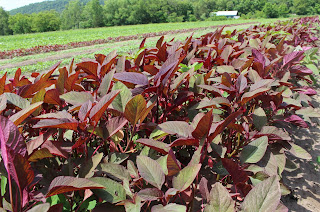 Amaranth is a stunning “green” that actually has dark, burgundy colored leaves. It is an ancient plant that was part of the diets of Aztec civilizations in Mexico up to 7,000 years ago. It was also an important staple food for the Incas of South America and the people of the Himalayan region of Asia. In these ancient cultures, amaranth was also used medicinally and in cultural rituals. It was held as a symbol of immortality and means “never –fading flower” in Greek. Like many other vegetables, amaranth was a multi-use vegetable. The seeds were used as a winter staple and the young leaves were eaten as a fresh vegetable. There are about 60 different varieties of amaranth, some grown to harvest seeds, others for the leaves, and several ornamental species. The variety of amaranth we grow is referred to as “Polish Amaranth”….and there’s a story to go with this name.
 Ok, enough
of the history and science of this vegetable.
Lets get serious and figure out how to use it! Amaranth is similar in flavor to spinach,
except better! You can prepare it
similarly to spinach or other cooking greens.
While amaranth may be eaten raw, the more mature leaves and stems are
best when cooked. The stems and leaves
are both edible, however the stems might need a little longer cooking time so
it’s best to separate the leaves from the stem. Amaranth greens may be steamed, sautéed,
added to soups, stews, wilted and stir-fried.
Amaranth pairs well with so many other summer crops including onions,
fresh garlic, zucchini, peppers, corn, green beans, basil, oregano and
tomatoes.
Ok, enough
of the history and science of this vegetable.
Lets get serious and figure out how to use it! Amaranth is similar in flavor to spinach,
except better! You can prepare it
similarly to spinach or other cooking greens.
While amaranth may be eaten raw, the more mature leaves and stems are
best when cooked. The stems and leaves
are both edible, however the stems might need a little longer cooking time so
it’s best to separate the leaves from the stem. Amaranth greens may be steamed, sautéed,
added to soups, stews, wilted and stir-fried.
Amaranth pairs well with so many other summer crops including onions,
fresh garlic, zucchini, peppers, corn, green beans, basil, oregano and
tomatoes.

Lets start with this week’s featured vegetable, Amaranth. If you’re new to this green, take a moment to read the vegetable feature in this week’s newsletter or on our blog. Our featured recipe this week is Spicy Amaranth Greens with Zucchini and Black-Eyed Peas. This dish is tasty on its own, or you can serve it over grits, polenta or rice. If you’re not into black-eyed peas, substitute another bean of your choosing or leave them out as well!
We’re going to have amaranth in the box again within the
next few weeks and when we do, I want to use it to make a recipe for Amaranth Leaves Rotti, an Indian flat
bread. In this recipe they recommend serving
the Rotti with a pickle, so I want to use the fennel this week to make the Indian Spiced Fennel Pickles mentioned in last week’s vegetable feature about fennel. This recipe makes 2 quarts, so I might cut
the recipe in half so I can use some of the fennel for another use. I think the fennel pickles might go well with
the rotti and some dal and you can store them in the refrigerator for up to 2
months. I admit I don’t have much
experience cooking food from India, so if anyone has another suggestion for
what to pair with the Rotti, please let me know. Otherwise, I’m going to try my combo and
we’ll see how it is!

The remainder of the fennel is going to be used to make the Fennel and Beet Salad with Honey LemonVinaigrette featured in our June 2007 newsletter.
This is a recipe I developed the first year I was at the farm because
Richard convinced me that beets and fennel are a seasonal pairing and go
together well. I really hadn’t used
fennel much before, but played around with it and came up with this salad which
remains one of our annual favorites!
 We’re excited to be harvesting carrots again! This week we are delivering the carrots with
the green tops still attached to the root.
In the cookbook I mentioned earlier, McFadden likens cooking vegetables
to the whole nose-to-tail movement with meat whereby the user is challenged and
encouraged to use everything, leaf to root!
So, in the case of carrots and beets that still have their tops on,
we’re challenged to find a use for the greens and the roots. It’s actually like having two vegetables in
one, so why throw away half the package?!
“Ok, great Andrea, but what am I supposed to do with these carrot tops?” What else do we do with green things we’re
not sure what to do with? We make pesto
of course! At the Kitchn blog, there’s an article entitled “Not Just Rabbit Food: 5 Tasty Ways to Eat Carrot Tops.” One of the recipes they link to is for a Grilled Cheese with Roasted Carrots andCarrot Top Pesto. If you’re like Richard and appreciate meat,
you could add some crispy pancetta or bacon to this sandwich, or I’m sure
prosciutto would be tasty too. If the
grilled cheese sandwich concept isn’t grabbing your attention but you like the
pesto idea, there’s another version of CarrotTop Pesto from one of our past newsletters. If you aren’t sold on pesto, then consider Roasted Carrot and Black Bean Tacos with Cilantro and Carrot Green Chimichurri. Chimichurri is another great way to
utilize carrot tops.
We’re excited to be harvesting carrots again! This week we are delivering the carrots with
the green tops still attached to the root.
In the cookbook I mentioned earlier, McFadden likens cooking vegetables
to the whole nose-to-tail movement with meat whereby the user is challenged and
encouraged to use everything, leaf to root!
So, in the case of carrots and beets that still have their tops on,
we’re challenged to find a use for the greens and the roots. It’s actually like having two vegetables in
one, so why throw away half the package?!
“Ok, great Andrea, but what am I supposed to do with these carrot tops?” What else do we do with green things we’re
not sure what to do with? We make pesto
of course! At the Kitchn blog, there’s an article entitled “Not Just Rabbit Food: 5 Tasty Ways to Eat Carrot Tops.” One of the recipes they link to is for a Grilled Cheese with Roasted Carrots andCarrot Top Pesto. If you’re like Richard and appreciate meat,
you could add some crispy pancetta or bacon to this sandwich, or I’m sure
prosciutto would be tasty too. If the
grilled cheese sandwich concept isn’t grabbing your attention but you like the
pesto idea, there’s another version of CarrotTop Pesto from one of our past newsletters. If you aren’t sold on pesto, then consider Roasted Carrot and Black Bean Tacos with Cilantro and Carrot Green Chimichurri. Chimichurri is another great way to
utilize carrot tops.
So we have a use for the carrot tops, but what about the
beet greens? Fried eggs are my go-to
“quick and easy but still good for you” dinner item and they go great with a
wide variety of vegetable combos. So
this week my vegetable-egg creation started with some sautéed onion and
garlic. Once the onion and garlic were
softened, add the chopped beet greens to the pan along with a few splashes of
red wine vinegar a few pinches of salt and some freshly ground black
pepper. Put a lid on the pan and let the
greens wilt down. Once they are wilted,
allow them to simmer briefly until nearly all the liquid is evaporated. Push the greens to the side of the pan and
add some butter to the pan to fry your egg in.
Put the beet greens on your plate and add some crumbled feta
cheese. The egg goes on top of the beet
greens and then you eat the whole mess with a few olives on the side and a
piece of buttered toast. So
delicious!
Golden Beets are so sweet and delicious that even people who
don’t usually like beets often like them!
If you don’t use your beets in the fennel and beet salad I mentioned,
then consider preparing them in a super-simple preparation such as this recipe
for Roasted Golden Beets with Rosemary and Garlic. Sometimes the most simple preparations
are the best!
 |
| Fennel Cucumber Salsa - photo from allrecipes.com |
Of course, we’ve nearly used up our onions and garlic by
now, but we still have broccoli and sugar snap or snow peas remaining. Lets turn these vegetables into a simple but
delicious Beef, Broccoli and Snow Pea Stir-Fry. You could throw a carrot or two into
the mix for a little color if you like.
Well, this week’s Cooking with the Box should give you
at least 2-3 main entrées and 1 sandwich idea along with a few salad options
and a few side dishes including a pickle to enjoy over the next few weeks. Add a little protein to some of the salads
and sides and you should be able to round out a pretty delicious week of eating
out of your CSA box! Of course, there
will likely be some leftovers to enjoy in your lunch or repurpose into snacks
or dinner for another night as well.
I hope you’ll stretch yourself a little this week and try
something new….perhaps this will be the week you tackle those beet and carrot
greens! Let me know how your creations turn out, or post in our Facebook Group and inspire another member!—Chef
Andrea
Featured Vegetable: Amaranth Greens

We actually purchased the seed for this year’s crop from Wild Garden Seeds (WGS), which is kind of funny because Richard is the one who actually gave them the seed originally! Some of you may have heard this story already, but for those of you who don’t know it the story goes like this. One day Richard was driving to town and saw a beautiful red amaranth plant growing in a garden along the way. He stopped and asked the people who lived there about this plant. They said their Aunt May brought the seed with her from Poland and they were happy to share it with Richard. So Richard collected some seed and started growing it, mostly as a baby green to mix into his gourmet salad mix. It didn’t do so well as a salad mix ingredient, but in later
years we found success growing it as a mid-summer bunching green used for
cooking. Since we aren’t in the business
of seed production, Richard passed the seed onto Frank Morton at WGS and he has
been maintaining this variety of amaranth.
Thanks Frank!
Amaranth greens have become an important part of our
seasonal diet because of their ability to grow in the heat of the summer when
other greens, spinach and lettuce do not thrive. Amaranth is able to adapt to variable
conditions with little impact from weather or disease. It is able to survive in extreme heat or
drought conditions because it is able to convert twice the amount of solar energy using the same amount of water as
most other plants.
While I’ve never sent a sample to the lab to test nutrient
levels, I think we can add amaranth greens to our list of HVF
“super-foods.” The leaves of this plant
are high in calcium, phosphorus, protein, vitamin C, carotene, iron, B
vitamins, and trace elements including zinc and manganese. Compared to spinach, amaranth leaves have
three times more vitamin C, calcium and niacin!
Of course we know vegetables that have rich colors like the magenta
leaves of amaranth are also packed with important phytonutrients and
antioxidants.

Amaranth is thought to have originated in Central and/or
South America, but has made its way around the globe. It can be found in Europe, Asia, and the
Americas, which means there are many options for finding ways to use this
vegetable. Season it with cumin,
coriander, oregano and serve it with black beans for more of a Mexican
approach. Stir-fry it with garlic,
onion, ginger and a drizzle of sesame oil for more of a Chinese influence. Mix it with pasta, tomatoes, oregano, basil
and Parmesan for an Italian flair, or take it in more in the direction of
Indian cuisine by choosing curry spices & lentils. When I was first introduced to amaranth ten
years ago, you could hardly find any recipes in cookbooks or on the
internet. That has changed a lot and now
I’m confident you will be able to find at least one way to prepare amaranth
that will become your “favorite” way to enjoy this vegetable. We have some tasty recipes from previous
newsletters available on our website as well.
We hope you enjoy this lovely green, for its aesthetics, nutrition,
history and flavor!


