
Cooking With This Week's Box
Salad Mix: Spring Salad with Rhubarb Vinaigrette
Welcome to this week’s Cooking With the Box article! We have a fun box of
vegetables for you this week, complete with whimsical kohlrabi and crazy,
curly garlic scapes! Lets get cooking! This week’s featured recipes are
focused on kohlrabi. I know this can be an intimidating vegetable at first
glance, but really it’s quite manageable. If you haven’t read this week’s
vegetable feature article yet, start there. Both of this week’s recipes
come from member suggestions! The first was contributed by our longtime
friend of the farm and CSA member, Marilyn Chohaney. Last year she stopped
by the farmers’ market looking for kohlrabi so she could make Kohlrabi
Custard (see below). “What? Custard made with kohlrabi?” Marilyn assured
me it was delicious and I promptly requested the recipe. Marilyn was
right! This is so easy to make and it’s quite tasty. I made it in
individual serving sized ramekins, but you can make it in a baking dish as
well. Next time I make it I might even try putting it in a pie crust,
maybe with a little crumbled bacon and a few green onions. Kohlrabi
custard may be served as a side alongside a main dish such as roasted
chicken, or you can turn it into a light lunch or dinner along with a
salad on the side. You can even gently reheat any leftovers for breakfast
or serve it for brunch!
The second recipe was recommended by Carol, a longtime Madison member. Carol and her family enjoyed this recipe for Kohlrabi Salad with Sesame Oil (see below) while visiting their daughter in New York last year. It comes from Fuchsia Dunlop’s book, Every Grain of Rice. This is such a simple salad to make and it’s an excellent accompaniment to rich dishes. I served it with Alexandra Stafford’s recipe for The Easiest Ribs You Will Ever Make. This is my go-to recipe for making pork spare ribs and the Kohlrabi Salad is an excellent accompaniment to the spicy, fatty pork. The kohlrabi recipe calls for Chinkiang vinegar which is also known as Chinese brown rice vinegar. It’s a specialty of the town of Chinkiang in eastern China and is made from fermented glutinous rice that is charred to give it a deep brown color. If you can find this type of Chinese brown rice vinegar in your area, give it a try! Unfortunately I could not find it so I simply substituted regular brown rice vinegar.
Lets talk about garlic scapes! This is such a fun vegetable and
to think we used to cut these off and leave them in the field!
They have a mild garlic flavor and are this week’s garlic
selection. Combine them with cilantro to make Dani Lind’s recipe
for
Garlic Scape & Cilantro Pesto. This is a good condiment to have on hand this week. You can mix
it with pasta for a quick meal, use it as a spread on sandwiches or
toast, serve it with fish, spread it on tacos or mix it into scrambled
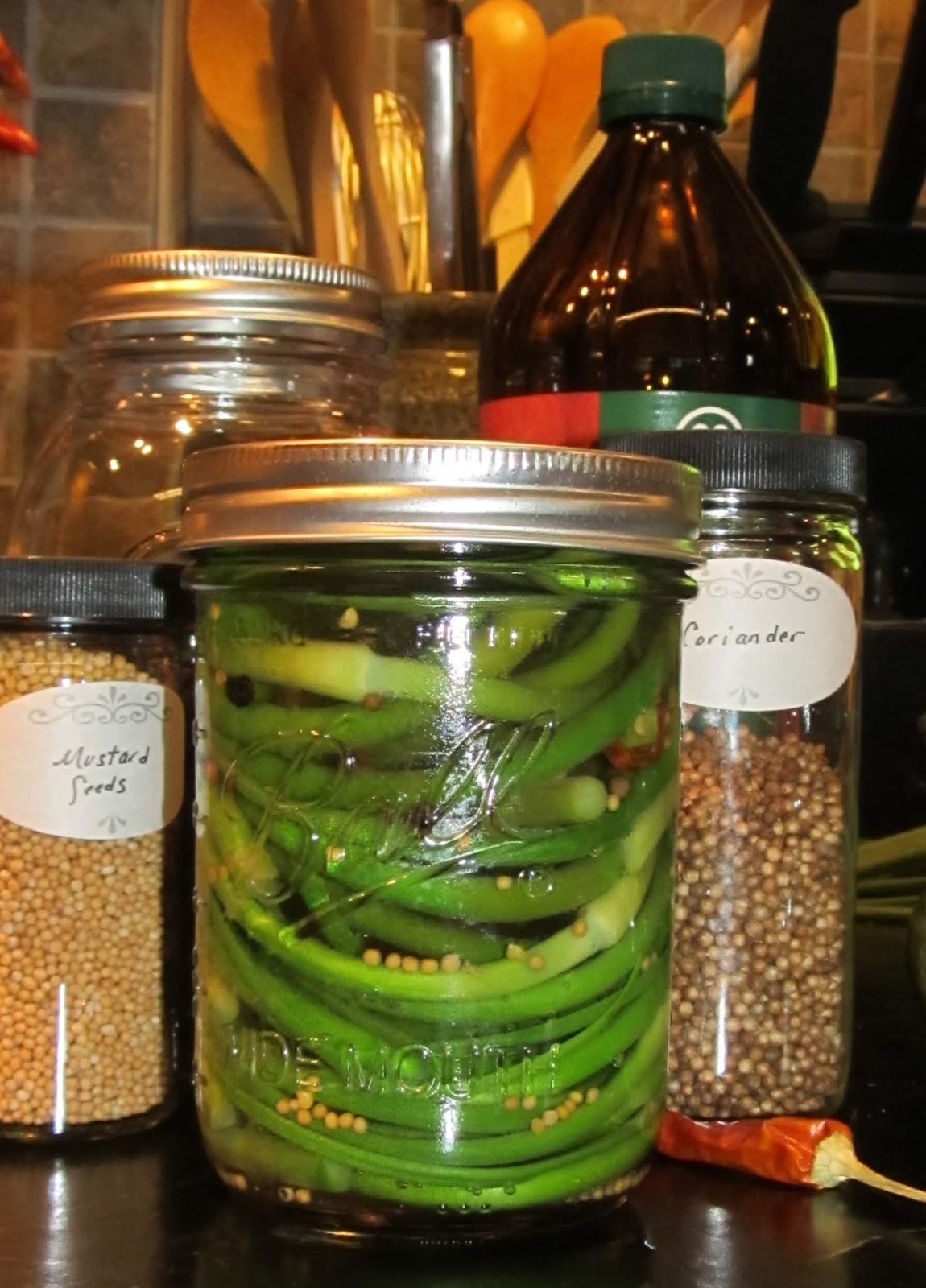
eggs! I also recommend making a jar of
Pickled Garlic Scapes. This is a good way to preserve garlic scapes and they are tasty
served as a little garnish with many different things including grilled
meat, rice dishes, sandwiches, etc.
Over the past few years Swiss chard has become one of my favorite greens. It’s packed full of nutrients which means it’s also packed with flavor! This week’s tender little baby Swiss chard is tender enough that you could add it into a salad along with some of this week’s Little Gem head lettuce, but it may also be cooked. I am planning to make this recipe for Swiss Chard & Black Bean Enchiladas with Chipotle Rhubarb Sauce. This recipe serves 2 and makes good use of several vegetables in this week’s box including the Swiss chard, rhubarb, garlic scapes and onions. The recipe doesn’t call for it, but it seems like a bit of fresh cilantro when you serve the enchiladas would be fitting. Since we mentioned rhubarb, perhaps now would be a fitting time to talk about the fact that rhubarb may be used for more than just pie and baked goods! Take advantage of the sourness and tartness of rhubarb to use it in savory recipes. It functions similarly from a taste perspective to tomatillos and tamarind, so it’s a good addition to sauces, chutneys, barbecue and even stir-frys! Every spring I go to Naturally Ella’s blog and use her collection of Rhubarb Recipes That Are Not Pies. She has a lot of good recipe suggestions in this collection including this recipe for Curried Lentils with Rhubarb Chutney. This is the perfect recipe for this week as it uses not only rhubarb, but also green onions, garlic (garlic scapes) and cilantro. I also really like her recipe for Noodles with Kale and Spicy Rhubarb Sauce. While we don’t have kale in this week’s box, this would be a great way to put those kohlrabi leaves to use!
If you’re looking for a light lunch option, check out this recipe for
Herby Spring Pasta Salad with Lemon Vinaigrette. This salad is packed with a variety of herbs including dill
along with asparagus and peas. This is one of those recipes where
you can improvise a little bit. If you don’t have every herb in
the list, use what you have. If you don’t have frozen peas, use
chopped garlic scapes or diced radishes from last week’s box
instead!
Before asparagus and pea vine slip away for another year, I need to make this recipe for Fettucine with Pea Vine Cream Sauce that I created for the newsletter back in 2015! I often forget about past recipes because I’m always looking at new ones, but this is a delicious pasta dish and the flavor of the pea vine really comes out nicely in the cream sauce. One of my favorite ways to use pea vine is by extracting the flavor into soup. Here’s another simple pea vine recipe from our archives for Miso Pea Vine Soup.
Frittatas are a great way to feature any vegetable, and here’s a
combination for
Asparagus and Dill Spring Frittata that I’ve never tried before! This is going to be on the
menu for Sunday brunch served with a
Spring Salad with Rhubarb Vinaigrette.
Last year was the first year I got brave enough to try cooking lettuce. I’d seen recipes before but always thought “no way that can be good.” Well, I was wrong! Lettuce is actually good in soups, grilled and stir-fried. So, if you’re tired of salads and want to try something different, use this week’s lettuce to make Asian Chicken with Little Gem Lettuce!
Ok friends, that’s a wrap for this week! I really hope you’ve been enjoying all of the spring vegetable selections we’ve been sending your way. The official start of summer is just around the corner and we have more vegetables coming up very soon. The cutest little zucchini have started to push out from the blossoms, beets will be coming in just a few weeks, we have some pretty little Sweetheart cabbages that are starting to form heads, and these are just a few things you have to look forward to! Have a great week!—Chef Andrea
Potato Onions: Kohlrabi Salad with Sesame Oil (see
below); Swiss Chard & Black Bean Enchiladas with Chipotle Rhubarb Sauce; Curried Lentils with Rhubarb Chutney; Herby Spring Pasta Salad with Lemon Vinaigrette; Fettucine with Pea Vine Cream Sauce; Asian Chicken with Little Gem Lettuce
Garlic Scapes: Kohlrabi Salad with Sesame Oil (see
below); Garlic Scape & Cilantro Pesto; Pickled Garlic Scapes; Curried Lentils with Rhubarb Chutney; Fettucine with Pea Vine Cream Sauce; Miso Pea Vine Soup; Asian Chicken with Little Gem Lettuce
Asparagus: Herby Spring Pasta Salad with Lemon Vinaigrette; Fettucine with Pea Vine Cream Sauce; Asparagus and Dill Spring Frittata
Little Gem Head Lettuce: Asian Chicken with Little Gem Lettuce
Cilantro:
Garlic Scape & Cilantro Pesto; Curried Lentils with Rhubarb Chutney; Noodles with Kale and Spicy Rhubarb Sauce
Rhubarb: Swiss Chard & Black Bean Enchiladas with Chipotle Rhubarb
Sauce; Curried Lentils with Rhubarb Chutney; Noodles with Kale and Spicy Rhubarb Sauce; Spring Salad with Rhubarb Vinaigrette
Purple or Green Kohlrabi: Kohlrabi Custard (see
below); Kohlrabi Salad with Sesame Oil (see below); Noodles with Kale and Spicy Rhubarb Sauce
Baby Swiss Chard: Swiss Chard & Black Bean Enchiladas with Chipotle Rhubarb
Sauce

|
| The Easiest Ribs You Will Ever Make photo from alexandracooks.com |
The second recipe was recommended by Carol, a longtime Madison member. Carol and her family enjoyed this recipe for Kohlrabi Salad with Sesame Oil (see below) while visiting their daughter in New York last year. It comes from Fuchsia Dunlop’s book, Every Grain of Rice. This is such a simple salad to make and it’s an excellent accompaniment to rich dishes. I served it with Alexandra Stafford’s recipe for The Easiest Ribs You Will Ever Make. This is my go-to recipe for making pork spare ribs and the Kohlrabi Salad is an excellent accompaniment to the spicy, fatty pork. The kohlrabi recipe calls for Chinkiang vinegar which is also known as Chinese brown rice vinegar. It’s a specialty of the town of Chinkiang in eastern China and is made from fermented glutinous rice that is charred to give it a deep brown color. If you can find this type of Chinese brown rice vinegar in your area, give it a try! Unfortunately I could not find it so I simply substituted regular brown rice vinegar.
|
| Pickled Garlic Scapes |
Over the past few years Swiss chard has become one of my favorite greens. It’s packed full of nutrients which means it’s also packed with flavor! This week’s tender little baby Swiss chard is tender enough that you could add it into a salad along with some of this week’s Little Gem head lettuce, but it may also be cooked. I am planning to make this recipe for Swiss Chard & Black Bean Enchiladas with Chipotle Rhubarb Sauce. This recipe serves 2 and makes good use of several vegetables in this week’s box including the Swiss chard, rhubarb, garlic scapes and onions. The recipe doesn’t call for it, but it seems like a bit of fresh cilantro when you serve the enchiladas would be fitting. Since we mentioned rhubarb, perhaps now would be a fitting time to talk about the fact that rhubarb may be used for more than just pie and baked goods! Take advantage of the sourness and tartness of rhubarb to use it in savory recipes. It functions similarly from a taste perspective to tomatillos and tamarind, so it’s a good addition to sauces, chutneys, barbecue and even stir-frys! Every spring I go to Naturally Ella’s blog and use her collection of Rhubarb Recipes That Are Not Pies. She has a lot of good recipe suggestions in this collection including this recipe for Curried Lentils with Rhubarb Chutney. This is the perfect recipe for this week as it uses not only rhubarb, but also green onions, garlic (garlic scapes) and cilantro. I also really like her recipe for Noodles with Kale and Spicy Rhubarb Sauce. While we don’t have kale in this week’s box, this would be a great way to put those kohlrabi leaves to use!

|
| Herby Spring Pasta Salad with Lemon Vinaigrette photo from withfoodandlove.com |
Before asparagus and pea vine slip away for another year, I need to make this recipe for Fettucine with Pea Vine Cream Sauce that I created for the newsletter back in 2015! I often forget about past recipes because I’m always looking at new ones, but this is a delicious pasta dish and the flavor of the pea vine really comes out nicely in the cream sauce. One of my favorite ways to use pea vine is by extracting the flavor into soup. Here’s another simple pea vine recipe from our archives for Miso Pea Vine Soup.

|
| Asparagus and Dill Spring Frittata photo from food52.com |
Last year was the first year I got brave enough to try cooking lettuce. I’d seen recipes before but always thought “no way that can be good.” Well, I was wrong! Lettuce is actually good in soups, grilled and stir-fried. So, if you’re tired of salads and want to try something different, use this week’s lettuce to make Asian Chicken with Little Gem Lettuce!
Ok friends, that’s a wrap for this week! I really hope you’ve been enjoying all of the spring vegetable selections we’ve been sending your way. The official start of summer is just around the corner and we have more vegetables coming up very soon. The cutest little zucchini have started to push out from the blossoms, beets will be coming in just a few weeks, we have some pretty little Sweetheart cabbages that are starting to form heads, and these are just a few things you have to look forward to! Have a great week!—Chef Andrea
Vegetable Feature: Kohlrabi
By Chef Andrea

There are many words you may hear in reference to kohlrabi. It’s
often likened to an object from space, sent to us by aliens, bearing
resemblance to Sputnik.
Bon Appetit magazine referred to
it as “the poster child for local, seasonally-focused means of sourcing
produce,” which is not far from the truth! The adjectives I favor
myself are simply that kohlrabi is a unique, whimsical vegetable that is
fantastically versatile! It’s a member of the Brassica family, and
the name is derived from “khol” meaning stem or cabbage and “rabi” meaning
turnip. But it doesn’t resemble cabbage or turnip in appearance,
rather it has its own unique identity. While many people think
kohlrabi is a root vegetable, it is actually a swollen stem that develops
above ground! The stems and leaves shoot up from the bulbous lower
portion. As with other vegetables in this family, kohlrabi is rich
in vitamin C, potassium, fiber and B vitamins along with antioxidants and
other valuable nutrients.
So lets go back to that poster child comment. It’s true, kohlrabi
holds an important place in our local growing season. It matures
more quickly than cabbage, beets and carrots, thus giving us some variety
to offer aside from more greens in late spring and early summer!
While you may find kohlrabi in your local food co-op or in a conventional
grocery store from time to time, it really hasn’t become a mainstream
vegetable. So, the way most people will source kohlrabi is obtaining
it directly from the farmer who grew it, thus at farmers’ market or in a
CSA box!

|
| Purple and Green Kohlrabi with Garlic Scapes |
One of the characteristics I appreciate about kohlrabi is that most of the
plant is edible. The bulb is the part of the plant most commonly
eaten, but the leaves are also edible and should not be overlooked.
The leaves have a thicker texture more similar to kale or collard
greens. They are best eaten cooked and can be substituted for
collard greens or kale in many recipes. I usually strip the leaves
off the main stems before using. The bulb does need to be peeled
before eating as the outer skin is fairly tough. I find it easiest
to cut the bulb in half or quarters and then peel the skin away using a
vegetable peeler or paring knife as if you’re peeling an apple. Once
the skin is peeled away you’ll find a solid, crispy, juicy, tender flesh
inside with a sweet, mild cabbage flavor.
The Kitchn has a nice resource to show you how to easily cut
kohlrabi.
To store kohlrabi, separate the stems and leaves from the bulb.
Store both leaves and the bulbs in a plastic bag in the
refrigerator. The leaves will keep for about 1 week, and the bulbs
will last up to several weeks if stored properly.

|
| Kohlrabi Curry |
Kohlrabi is delicious eaten both raw and cooked. The simplest way to
eat it is to peel the bulb and munch on slices plain or with just a touch
of salt, a little lime juice and some chili powder. It can also be
shredded and used in slaws with a variety of dressings or sliced and added
to sandwiches or salads. Don’t limit yourself to only eating this as
a raw vegetable though. It is also delicious when lightly sautéed,
stir-fried, braised, roasted, grilled and baked. Over the years we’ve
featured a variety of kohlrabi recipes in our newsletters, which are
archived on our website. If you ask Farmer Richard what his favorite
way to eat kohlrabi is, I guarantee he’ll always say “Creamy Kohlrabi
Slaw!”
Kohlrabi is quite delicious when cooked. You can use both the leaves
and bulb in stir-fry or just simply sauté them in butter. The bulb
is also excellent roasted. Just toss it with oil, salt and pepper
and roast it in the oven until the pieces start to get golden brown on the
outside. Because it is higher in moisture it will never get as dry
as potatoes do when you roast them. Rather, roasted kohlrabi is
tender and succulent. Kohlrabi may also be used in a variety of
other preparations including soup, puree, “fries,” curries and so much
more!
I hope you have fun using this unique vegetable and hopefully you too will
find it’s beauty, flavor and uses to be “out of this world!”
Kohlrabi Custard
Serves 5-6 as a side dish

2-3 medium to large kohlrabi, trimmed, peeled and quartered
2 large eggs
4 oz Neufchatel (or cream) cheese, softened
½ cup milk
¼ cup cornstarch
1 tsp hot sauce (optional)
1 tsp salt
Freshly grated nutmeg, about ⅛ tsp
Freshly ground black pepper, to taste
¾ cup grated Parmesan cheese
-
Add the kohlrabi quarters to a large pot of boiling water and cook till slightly softened, about 5 minutes. Drain, cool slightly, then place in a food processor. Purée until the kohlrabi is finely chopped. Pour into a quart measure. You should have around 3 cups of puréed vegetable.* (see note below)
-
Preheat the oven to 375°F. Butter a 9-inch square baking dish or 5-6 individual-sized ramekins. You will need to put the baking dish or ramekins in a larger baking dish and fill the outer dish with enough water to come about half way up the dish or ramekins that will hold the custard. This will create a more gentle heat distribution to bake the custard.
-
In the food processor, blend the eggs, milk, Neufchatel cheese, cornstarch, salt, nutmeg and pepper. When blended, add the kohlrabi purée and a ½ cup of Parmesan cheese. Stir well to combine. Taste for seasoning and adjust with additional salt and pepper as needed. Pour the custard mixture into the prepared baking dish or ramekins. Place the dish(es) into the larger pan and fill halfway with hot water.
-
Place into the center of the preheated oven. Bake for about 20 minutes if you’re using ramekins or 30 minutes if you’re using a baking dish. After 20-30 minutes, sprinkle the rest of the Parmesan cheese on top of the custard. Return the custard to the oven and bake another 20-30 minutes, or until the custard is set firmly and lightly browned.
Marilyn Chohaney, one of our longtime Madison CSA members, shared this
recipe with me last year. Her note that came with the recipe says
that it is “Really good!” Marilyn is right! This custard is
best served warm or slightly warmer than room temperature. It also
reheats well, so don’t be afraid to eat leftovers for breakfast!
*Note from Chef Andrea: I used 2 medium sized kohlrabi which
yielded 1 ½ cups puréed kohlrabi. This is only about half of what
Marilyn recommends using. However, I followed the recipe without
adjusting any other ingredient quantities and the custard turned out just
fine even with less kohlrabi. You’ll still get good kohlrabi flavor,
the overall recipe will just yield a little less. Use what you have!
Kohlrabi Salad with Sesame Oil
Yield: 6-8 appetizer servings

1 kohlrabi (about 14 oz or 2 medium)
1 ¼ tsp salt
2 Tbsp finely sliced spring onion greens
For the sauce:
1 tsp light soy sauce
1 tsp finely chopped garlic (may substitute garlic scapes)
1 tsp Chinkiang vinegar (may substitute brown rice vinegar)
¼ tsp sugar
1 tsp toasted sesame oil
-
Peel the kohlrabi and cut it into very thin slices. Cut the slices into very thin slivers. Place in a bowl, add the salt and mix well, scrunching with your hand to squeeze the salt into the kohlrabi shreds. Set aside for at least 10 minutes.
-
Drain off the water that will have emerged from the kohlrabi and squeeze the slivers as dry as possible. Add all the sauce ingredients, mix well, then serve with the spring onion greens scattered on top.
For a Sour-And-Hot Variation: Add 2 tsp more vinegar than the
recipe above, as well as 1 ½ Tbsp chili oil to the sauce.
This recipe comes from Fuchsia Dunlop’s latest cookbook,
Every Grain of Rice. Here’s an excerpt from the introduction to this recipe:
“Kohlrabi is known in some parts of China, rather poetically, as a ‘jade
turnip,’ on account of its luminous green flesh. It is an underrated
vegetable that sparkles in this simple Sichuanese appetizer. I like
to serve it alongside richer dishes at the start of a meal, or as a fresh,
zesty complement to a bowlful of noodles if I’m rustling up to a quick
lunch for one or two. The recipe and its variations were taught to
me by Chef Zhang Xia ozhong of Barshu restaurant.”


