Wednesday, May 3, 2023

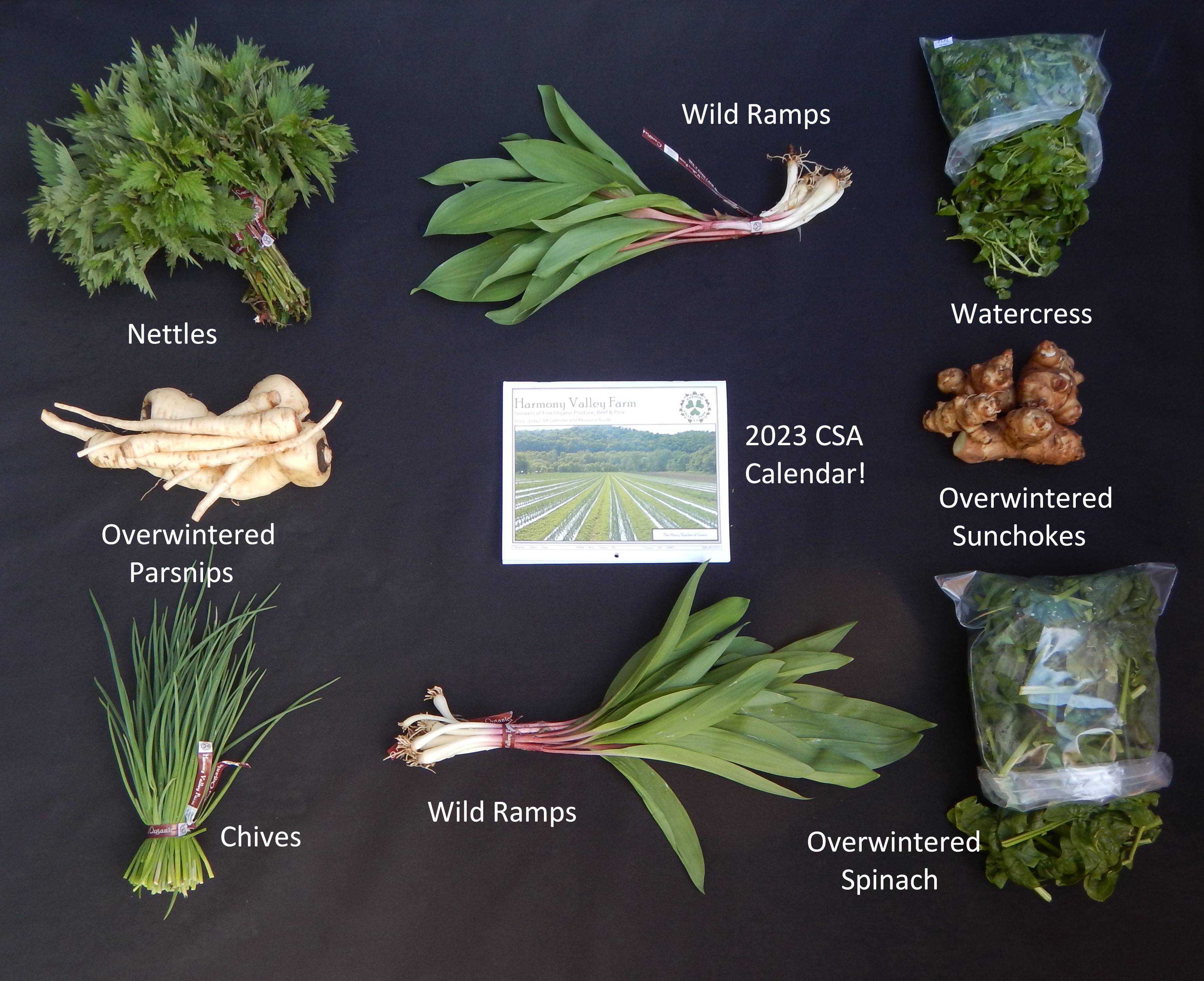
May 4, 2023 - This Week's Box Contents Featuring Nettles and Ramps


Cooking With This Week's Box

Wild Ramps:  
Photo from: www.growforagecookferment.com
Italian Nettle & Ramp Soup (See Below)

Nettles:  
Italian Nettle & Ramp Soup (See Below)

Watercress:  


Overwintered Spinach:  

Overwintered Parsnips:  

Overwintered Sunchokes (aka Jerusalem Artichokes):  

Chives:  

Welcome to the 2023 “Cooking With the Box!”  My name is Andrea and I am a trained professional chef and have 16 years of experience in seasonal cooking and eating!  While I enjoy an afternoon of leisurely cooking, I also understand the need at times to be able to put a healthy, vegetable-centric meal on the table with limited time. So I try to keep the “chef-y,” complicated recipes to a minimum and focus more on recipes of easy to moderate skill and time investment that incorporate multiple vegetables from your CSA box.  Each week I will share a recipe or two that incorporates our featured vegetable(s) for the week along with this collection of “Cooking With the Box” recipes.  The purpose of this article is to give you a starting point for planning how you are going to use every single item in your CSA box. Some weeks you may find a recipe you want to make, while in other weeks you may find inspiration that will lead you to your own recipe idea or an adaptation. Either way, I hope this is helpful and I hope you have fun creating some delicious food this year! If you are not already a member of our private Facebook Group, I encourage you to join. It’s another great resource for sharing recipes & ideas as well as asking questions.

Ok, with that introduction laid out, lets get into this week’s Cooking With the Box!  First of all, I’d like to share this week’s featured recipe for Italian Nettle & Ramp Soup (See Below).  Feel free to adapt this recipe to your liking. Leave out the beans and add some pork sausage for one variation, or make a batch of ramp pesto and use it to garnish the soup.  While this recipe incorporates both of this week’s featured vegetables, I also gave you a list of other recipes using these ingredients. Additionally, I provided links to several really good recipe collections where you’ll find many different ideas for how to use both ramps and nettles.

Overwintered parsnips are naturally sweet, so I often like to incorporate them into baked goods where I can take advantage of their sweetness as an opportunity to reduce the amount of sugar in the recipe! This week you’ll find a recipe for Parsnip & Orange Spiced Cake  and Hearty One-Bowl Parsnip Muffins.  As for overwintered sunchokes, consider Heidi Swanson’s recipe for Sunchoke and Cashew Stir-Fry or try these Smashed Sunchokes with Thyme Butter.  

Overwintered spinach leaves are generally more thick, yet tender and flavorful.  Use it to incorporate some greens into your dinner plan for the family with either of these main dish recipes for Creamy Spinach Chicken Casserole and Mushroom and Spinach Lasagna.  Pizza is one of those concepts that you can bend and adapt however you want to in any season of the year! If you’re up for a piece of the pie, consider making this Asparagus and Watercress Pizza or this Spring Onion and Chive Pizza with Genius Cream Sauce!

I hope you have a great week and enjoy cooking with fresh, green vegetables again!  Hopefully, we’ll have some asparagus to share with you next week.  Green garlic and red radishes will be here soon along with sorrel! Start gathering your recipes, it’s going to be a fun ride!

---Chef Andrea 
 

Vegetable Feature: Nettles & Ramps

by Andrea Yoder

This week we’re featuring two of our favorite wild-harvested spring vegetables.  The first is Stinging Nettles, which we both wild harvest and plant in the field. They need to be handled carefully, especially before they are washed and cooked.  They have little fibers on the stems that contain several compounds including formic acid, which will give you a “stinging” sensation if you touch them with your bare skin. “Why are you giving me a vegetable that will sting me?!  Are you trying to kill me?!”  No, quite the contrary!

Nettles are very nutrient dense and help our bodies wake up after a long winter through their ability to purify blood and cleanse our bodies. They have anti-inflammatory and antihistamine properties. They are high in protein, carotenoids, chlorophyll, iron, calcium, magnesium, zinc, potassium, selenium and vitamins B, C, D and K. Wow—that’s a lot of nutritional goodness!  Nettles give us that jump start we need in the spring and, they also taste great! Cooking destroys the stingers so you can safely handle them with bare hands.  They have a rich flavor similar to spinach, but even better!  

As for handling nettles, many of the stingers are removed with vigorous washing, which we’ve already done for you.  Even though we’ve washed them, I would still recommend you handle them carefully and avoid touching them with bare hands prior to cooking.  Some people are more sensitive to their sting than others, which is why we put them in a plastic bag to make it easier to get them home without touching them. You can use the bag as your “glove” to hold the bottom of the bunch while you remove the twist tie prior to washing them in a sink of water. While you are washing them, bring a pot of water to a boil. Transfer the nettles from the sink to boiling water using a pair of tongs. Boil for 2-3 minutes, then transfer to a bowl of ice water to cool them. Now you can handle them with your bare hands.  

The lower portion of the stems may be tough, so only use the leaves and tender upper stem portions. You can pluck or cut these off the main stem after they are cooked. Alternatively, you can hold each stem (with your gloved/bagged hand) and use a pair of scissors to snip the tender leaves off the main stem before you cook them. Check out this blog post we did on May 10, 2018, which demonstrates these processes and includes pictures. 

Nettle leaves are perishable, so it is best to cook them shortly after you receive them. The cooking water makes a beautiful tea, so don’t discard it.  You can drink the tea either hot or cold and mixed with honey and lemon. The water can also be used to cook pasta, rice, etc. Nettles grow in other areas of the world with similar climates to ours, such as areas of Scandinavia, the United Kingdom, Italy, and other parts of Europe as well as Turkey, Russia, and parts of Asia. Thus, you will find nettles incorporated into a wide variety of preparations from different cultures. Nettle soup is a widely popular way to use nettles, as well as dishes that incorporate eggs, grains and pasta.  They pair well with eggs, dairy, mushrooms, beans, asparagus, and other spring greens.

The second part of our feature is Wild Ramps! We forage for ramps in wooded areas where they grow on north-facing hillsides. They have a very short season lasting, at most, 3-4 weeks.  Their flavor is kind of oniony-garlicky, but honestly the best way to describe it is simply rampy.  They resemble a green onion, except they have tender, delicate lily-like leaves. Ramps grow in the woods and, while they can be replanted to establish new patches, it takes a long time for them to multiply. Many, us included, are concerned about the sustainability of ramps. Thus, it’s important to be mindful when harvesting them.  Ramps grow in clumps and we’re careful to only take about half the clump while leaving the other half undisturbed.  We also replant thousands of bulbs every year in an effort to ensure healthy ramp populations for many years to come!  If you’d like to learn more about our harvest practices, please read our blog post from April 20, 2017. 

Ramps may be eaten raw or cooked and both the leaves and lower bulb are edible. Eaten raw they can be quite pungent, but the flavor mellows with cooking. Ramps are often used in pasta and egg dishes, but can also be made into pesto, ramp butter and even added to baked goods. Ramps pair well with cream, cheese, bacon, and other spring vegetables including mushrooms, asparagus, nettles, and spinach. The leaves are the most perishable part and should be used within a few days. To store ramps, wrap the bunch in a damp paper or linen towel and keep them in the refrigerator. 


Italian Nettle & Ramp Soup

Yield:  4 Servings

1 bunch ramps
¼ cup olive oil
Pinch of dried crushed red pepper
1 can (15.5 oz) chopped & peeled tomatoes
1 bunch fresh nettles
Salt and freshly ground black pepper, to taste
6 cups chicken or vegetable stock
1 Tbsp balsamic vinegar
1 can (15 oz) chickpeas or cannellini beans
2 cups cooked short grain rice or small pasta

Serving Suggestions:
Extra-virgin olive oil
Lemon wedges
Grated Parmesan cheese

  1. Clean the ramps and separate the leaves from the white lower portion.  Finely chop the white bulb and set the leaves aside.  Prepare the nettles by using kitchen shears to snip the leaves off the main stem.  Discard the thick stem and set the nettle leaves aside until needed.
  2. In a medium stock pot, heat ¼ cup olive oil over low heat.  Add the finely chopped ramp and sweat just until softened.
  3. Add the crushed red peppers, tomatoes, nettles, 1 tsp salt, freshly ground black pepper, 6 cups stock and balsamic vinegar.  Bring to a simmer and cook for 15-20 minutes or until nettles are softened, stirring periodically.  
  4. While the soup is simmering, finely slice the ramp leaves.  After the soup has simmered for 15-20 minutes, remove from heat and stir in the ramp leaves.  
  5. Carefully blend the soup at this time using either an immersion blender or transfer the soup to a blender.  Return the blended soup to the pot and heat over low heat.  
  6. Stir in the chickpeas or cannellini beans and cooked rice.  Simmer briefly, then taste.  Adjust the seasonings to your liking by adding additional salt, pepper and/or balsamic vinegar as needed.  Serve hot with a drizzle of olive oil, lemon wedges and parmesan cheese if desired.  
If you happen to have some ramp or nettle pesto on hand, that is a great garnish as well!
Recipe adapted from an original recipe featured at www.foragerchef.com.

Spring—The First Stop On Our Seasonal Eating Adventure!

By Andrea Yoder

Richard de Wilde, Our Founding Farmer

Welcome to the start of the 31st Harmony Valley Farm CSA season! My name is Andrea, and I am one of the owners of Harmony Valley Farm along with Richard de Wilde and Rafael Morales Peralta. For those of you who may be new to our farm, let’s start with a brief introduction.  Richard is our founding farmer and is often described as a “pioneer in organic farming.”  He has been farming since the early 70’s, even before organic certification was an option!  Over the years he has continued to push the envelope of possibility and continues to implement new strategies and systems to adapt, grow and respond to changes in the marketplace and climate changes while continuing to evolve our farm to become stronger and more resilient. He envisions the continuation of Harmony Valley Farm well into the future, hence his decision to create a path to ownership for others. And that’s where Rafael and I come into the picture!

Andrea Yoder, Co-Owner
This will be my 17th growing season at Harmony Valley Farm. I originally came to the farm as the seasonal farm chef shortly after graduating from The Culinary Institute of America. Prior to pursuing a career in culinary arts, I trained and worked as a dietitian at the University of Virginia. I am fortunate to be able to blend my interests in nutrition and culinary arts here at the farm as we strive to grow vegetables that are nutrient dense and taste great! Every week my mission is to provide you with resources to guide you along the way and help you to find success with every box! I create and share recipes and cooking ideas with the intention that you will find the inspiration you need to create delicious, nourishing meals! Rafael has been working with us for over ten years.  He loves operating tractors and machines, figuring out ways to kill pests and weeds, and is innovative in coming up with ways to upgrade our farming systems for greater efficiency, productivity and resilience.  He is quickly downloading Richard's
Rafael Morales Peralta, Co-Owner
forty-plus years of farming expertise, which is no small task! Introductions would not be complete without mentioning our talented farm crew of nearly fifty individuals.  Each person at Harmony Valley Farm brings their own unique skills and talents to the table and contributes in their own way toward our collective success. Most of our crew members have been working with us for 10-20 years and we could not do what we do without them! 

We often describe the experience of eating out of a CSA box as “A Seasonal Eating Adventure,” which is exactly what it is! It’s a different way of eating in which we let nature guide us, partaking of the gifts each season brings forth.  Spring can be a challenging time of year to eat a seasonal midwestern diet, especially in some years such as we’re experiencing right now!  Over the past month, we’ve had nice, warm, sunny days along with cold, blustery days with snow and rain, including 10 inches of heavy, wet snow just a few weeks ago!  Overall, we’re running about two weeks or so behind where we’d like to be, and yet we know that Mother Nature will continue to provide for us.  Spring is a season of creativity where we have to think outside the box.  It’s too early for carrots, tomatoes, sweet corn, green beans and broccoli, so what are we going to eat?  Thankfully, we have perennial spring crops such as chives, sorrel, asparagus, and rhubarb. We also rely on wild-harvested vegetables such as ramps, nettles, and watercress. Over the years Richard has learned some useful strategies for how to overwinter some crops in the field including overwintered spinach, sunchokes and parsnips. We plant them in the fall, store them in the field over the winter and harvest them in the spring. So while these may be less common vegetables, if you’re willing to commit to eating seasonally I guarantee you’re going to be fueling your body with just what it needs for this time of the year in our climate. 

Green Garlic
While we are getting creative with the crop line-up, you have an opportunity to get creative in the kitchen as well! This may be a good time to remind you, “Never Be Intimidated by a Vegetable!”  If you encounter a vegetable along the way that is new or less familiar to you, don’t worry.  Use the resources we provide you each week to guide you and apply knowledge you have about other vegetables that may be similar. Some vegetables may require a little more preparation than others, but you may be surprised by how many vegetables actually qualify as nature’s fast food and require very little preparation.

Asparagus just starting to poke through!

Once the season starts and the vegetables start coming in, the offerings will change week to week. Asparagus spears are already starting to emerge in our current fields as we invest in planting a new field that we hope to start harvesting in 2-3 years. Richard just brought a few pieces of green garlic in from the field and it’s clear they’ll be ready for boxes very soon as well!  Rhubarb, sorrel, radishes, baby arugula are all very near on the horizon.  When you take a moment to list everything coming our way, it’s clear that spring is bountiful in its own right!

We are sincerely grateful that you’ve committed to supporting our farm through your membership in our CSA program this year and we will do our best to reciprocate the support back to you in each box we pack.  Together we will make this journey through the seasons, and I know we will both be stronger, more connected, and more deeply nourished in body, mind, and soul at the end of the season. Enjoy the ride!

Thursday, March 16, 2023

March Farm Update


March 9, 2023--The garlic is up!
By Andrea Yoder

We are only seven weeks out from the first CSA delivery of the 2023 season and the official first day of spring is coming up next Monday, March 20!  Every year as we head into winter it feels like spring is so far away, but then the piles of winter squash and sweet potatoes on my kitchen counter dwindle, the carrots in my crisper drawer start to sprout little roots and the last heads of cabbage make their way into a pot of soup or stir-fry.  And that’s when the craving for fresh, green vegetables sets in!  Ramps, asparagus, overwintered spinach, watercress—basically my body wants anything fresh and green!  For those of you who are feeling the same, know that we’ll be delivering those first CSA boxes before you know it!

In the weeks since our last update, quite a lot has happened around the farm.  We’ve had a few snow storms, we’ve had a few rainy days, we’ve seen single digit mornings, we’ve seen temperatures in the 40’s, and amidst the varied weather we’ve enjoyed some sunny, clear skies as well! We reached capacity in our first greenhouse and did our big annual cleaning in the second house.  On Wednesday we moved all of the onion plants to the next house so we have room to continue planting!  Before this week is finished we hope to finish planting the rest of the shallots and leeks as well as the first crop of head lettuce, celeriac, wild flowers and possibly even some broccoli and cauliflower.  

Onion Seedlings....moving up to their
second stop on the journey to the field!
While most of our winter work is done in the greenhouses or packing shed, we did sneak in a little field work over the past few weeks.  When we see temperatures in the 40’s that often triggers the catkins on the pussywillow to open up.  So we took advantage of frosty mornings over the past two weekends to trim the curly willow and pussywillow trees in our field hedgerows.  Over the next few weeks we’ll turn them into decorative willow bunches that we’ll send as a choice item with the first few CSA deliveries in May.  Rafael and Richard also spent some time in the garlic field pulling back the row cover.  Their initial report is that the garlic looks good!  It’s up and you can see the rows of green sprouts.  We do need to do a little forking in some places to loosen the mulch, but overall we’re pleased with how it looks right now.

In the packing shed our small crew has stayed busy washing and packing orders for our wholesale partners.  Our supplies of burdock root, horseradish, fall-dug sunchokes and black radishes are dwindling, but we’re thankful everything has been storing well!  In early April we’ll be looking for some dry weather to dig our overwintered parsnips and sunchokes as well as more horseradish.  When you live in a northern climate, root vegetables are an important key to seasonal eating.  We’re thankful for their storage potential that bridges the gap between the end of one growing season and the start of the next. 

Winter is also a busy time in the office. Richard and Rafael have been ordering supplies, working on permits, laying out field plans and other bits and pieces of details like crew responsibilities, vehicle responsibilities and assignments, changes to fertigation protocols, etc.  Kelly has been hard at work processing CSA orders and has been doing a fabulous job!  We still have quite a ways to go before the trucks are filled, so keep those orders coming!  We have plenty of room at all sites in all locations and on all delivery days!  We’re also working on putting together this year’s CSA calendar, revising site guides and putting together all the parts and pieces for the new season!

The pace of our farm will be picking up very soon, so we’ll savor these final few official days of winter!  In just a few weeks our field crew will be returning and they’ll bring their energy of rejuvenation with them!  We hope you are coming out of winter and entering into spring rejuvenated and refreshed as well!  Stay tuned for more updates as we head back to the fields and resume our harvest schedule as we head into the month of April! 

Thursday, February 16, 2023

February Update: Diversity & Cover Crops

February 13, 2023: 
Snow cover on the fields has melted away!
By Andrea Yoder

The winter months seem to always go by quickly as we whittle away at our list of things that need to be done before spring rolls around and we return to the fields.  Winter is the time when we lay out detailed plans for crop production so that once we’re in the thick of it, we simply execute.  Ok, it’s not always that straightforward and we often need to tweak the plan to work with Mother Nature, but thinking through the majority of the details in advance gives us a good solid base for what we intend to do during the season.  It helps us source seeds and supplies, so we have what we need in advance, and helps to keep us on track with timely field prep, plantings, etc. once the busyness of the season sets in.  This month Richard and Rafael have been working on our field plan, which is the process of literally laying out the plans for where we intend to plant every crop.  We need this plan for ourselves, but we’re also required to submit this plan to MOSA with our annual application to maintain our organic certification.  This is a big task and there are many factors that go into the decision making when deciding what to plant in each location as well as when.  In fact, Richard and Rafael started to lay the foundation for these  decisions late last summer and into the fall as we were planting our end of season cover crops, the topic for today’s discussion!    

February 13, 2023:   
Winter kill cover crop in foreground
If you’ve been with our farm for the past few years or more, you likely know that cover crops are something we invest in very heavily and they contribute greatly to the health of our fields and crops.  I have always been intrigued by human nutrition, but human nutrition is directly related to plant nutrition so by default I am also very intrigued by what it takes to grow healthy plants that are packed with nutrients!  Cover crops are plants that we seed in between vegetable crops.  We’ve known for many years that they help to prevent soil erosion and contribute greatly to soil fertility.  Earlier this week the snow cover on many of our fields melted away.  As I drove through our valley I could see various shades of brown and green plant covers on our fields.  This sight, in addition to recent crop planning conversations I overheard between Richard and Rafael, got me thinking more about cover crops.  You see, when I first came to Harmony Valley Farm, there were just a few basic cover crop mixes.  You had your blend of oats and peas, a winter kill mix.  This means it likely won’t survive our Wisconsin winters   and all of the growing benefits will be realized in the fall.  We also had a mix of rye and vetch which is a cold hardy blend that will survive the winter and continue to grow in the spring.  Each blend contained a grass and either a legume or a pea.  Legumes and peas help to take nitrogen from the air and store it in nodules on the root of the plant. If you are planting cover crops in the fall and know that you need to plant an early season vegetable crop in a field, you would choose to plant the oats and peas that will winter kill.  If you know you will be planting a mid to late season vegetable crop in a field the following year, you may choose to plant the cold hardy mix that will survive the winter and continue to grow in the spring. But as I thought about our cover crop regimen in recent years, I’ve noticed that Richard keeps adding different seeds and the cover crop blends have become much more complex and diverse!  “Richard, What’s Up?!”  

Nitrogen nodules on the roots of Austrian
Winter peas
I thought you may find this little bit of Richard farming history to be of interest. I asked Richard to remind me of when he started using cover crops in his farming practices to which he answered (with a little smile) “Well, it dates back to the early 70’s.”   That was his way of telling me that he’s always used cover crops, even before it was a thing on organic farms!  His inspiration came from Rudolf Steiner, an early contributor to the philosophies of biodynamic farming.  As a beginning farmer, Richard studied Steiner’s philosophy.  One of his unique perspectives was the idea of “Solar Capture.”  We know plants need sunshine to survive and thrive, but what they are really doing is capturing the solar energy and converting it to carbon which can be stored.  Steiner’s philosophy was that, as farmers, to maximize solar capture was the equivalent to putting money in the bank!  Every day of sunshine affords you the opportunity to capture sunlight, but in order to do this you need a plant.  Richard took that concept and applied it to a Midwest growing season.  Let say that we have on average about 240 days out of the year when there is the potential for sun to shine down on a plant that is not covered in snow.  Our longest season vegetable crops are about 120 days from planting to maturity.   That’s only 50% of what is available to us, which is where cover crops come into play.  If we plant a cover crop in that soil, we can stay in the game and continue to bank solar energy.  This concept is what supports the urgency in late summer and early fall to prioritize seeding cover crops as soon as possible after we finish a vegetable crop.  Every day you wait is one day lost!

Field of Crimson Clover
Thankfully, in recent years more farmers and players in agriculture have joined us on the cover crop bandwagon.  With this growing interest, we’ve also seen some very interesting research demonstrating that the interplay between beneficial microbial communities in the soil and cover crop plants is far more complex than we fully understand!  Each plant interacts with and supports different soil microbes, so by adding diversity to the plantings you also increase the diversity of microbial communities!  We are learning more and more about the benefits of these microbial communities which are essential for nutrient uptake and increasing nutrient bioavailability in the soil, amongst many other benefits!  We’ll save the detailed research and intricacies of how this works for another discussion, but know that Richard has taken these findings to heart and has been applying these principles to our ever evolving cover cropping practices.  We now have a two-sided page of potential cover crop mixes, each customized with components to meet a different need.  Each carefully crafted mix is designed to maximize solar capture, extract nitrogen from the air, form an extensive root system to hold soil in place, and add additional organic matter back to the soil in the form of the plant residue that will eventually be worked back into the soil.  This is one of the most efficient ways to put fertility on a field and, while it’s not completely “free,” it is a great way to extract resources from the air and atmosphere and deposit them exactly where you want and need them!  

Our mixes now contain a diverse blend of grasses along with different nitrogen-fixing plants which may include not only vetch and peas but also lentils and a variety of clovers.  Richard has created different blends for different points in the season.  If we’re planting cover crops in August or September in a field that we know we will want to plant a vegetable crop in early the following year, we’ll plant a mix that will winter kill, but includes things that will be able to get closer to maturity in the 2-4 months or so that we have before we see a hard frost.  If we’re planting cover crops in that same time frame of August to September, but we know we will not need to plant a vegetable crop in that field early in the spring, we’ll take advantage of those additional solar capture days and plant a mix that will include cold hardy plants that will survive the winter and resume growth in the spring.  The grass portion of this mix typically includes different rye varieties that will maximize the growth of in the spring.  Just before they form a seed head we’ll cut the crop and bale it so we can use it to mulch vegetable fields.  In this case we add yet another benefit of having the cover crop! 

Early November Cover Crop Seeding
Our most diverse mixes now may include up to 6-8 different plants!  We’re still planting oats and peas, but now this mix also includes Japanese millet, Crimson clover, Frosty Berseem clover, balansa clover, lentils and sorghum sudangrass.  We continue to plant cover crops until about the first of November, but we use plants that establish a root system more quickly and seed it twice as thick since we’re running out of time and the nights are getting cooler which slows the growth rate.  We know that there are huge benefits and gains to having even a small plant in the soil, so we do what we can to get something growing!  It can be quite a task to manage this level of diversity and customization, but when we pull it off it’s quite remarkable!  This winter we are researching specialized equipment to seed and cover seed under and between rows of an actively growing vegetable crop.  As soon as the crop is harvested, the cover crop seed is already established and will immediately take over capturing the sun.

I have to say, I’m quite proud of Richard, Rafael, Silvestre, Angel and the other crew members who contributed in a variety of ways to ensuring our fields were “put to bed” for the winter with a blanket of some type of cover crop or plant matter.  All vegetables are not created equally and it is the details such as these that move the needle from “good” to “superior!”  We strive to grow superior vegetables in every aspect, from appearance to flavor to nutrient value.  We see the benefits in the fields, but hopefully you are seeing and tasting the benefits as well!  

Thursday, January 26, 2023

It All Starts With A Single Seed!

By Andrea Yoder

New shipments of seeds for 2023! 
While spring may feel like it is a long ways off, we are only three short weeks away from initiating our first plantings in the greenhouse for our 2023 growing season!  January has been a busy month for us and one of our major tasks has been securing our seed supply for this year.  It doesn’t matter how many growing seasons I’ve been through, I still am in awe of how nature can take a small amount of seed that I can hold in the palm of my hand and turn it into thousands of pounds of food!  As farmers, we hold the utmost respect for the intelligence held within each seed.   Our job is to help each seed obtain its highest level of potential by providing for it and the plant it becomes as it grows and develops into the food we all need to nourish our bodies.  Every year we source seed for over 75 different crops and are able to produce tons of vegetables from our modest 100 tillable acres of land.  While we’re still compiling our production numbers from last year, I can tell you that we produced about 709 tons of produce in 2021!  That is a lot of food! Sourcing the seeds to produce this much food is no small task and usually takes us about two weeks to complete. We finalized our orders earlier this month and the seeds have already started to arrive.  So we thought we’d kick off this year by offering you a little insight into our process for managing our seed purchases and inventory along with some seed stats and a glimpse into some of our plans for the crops we’ll be growing this year!

As certified organic growers,
we do not plant any GMO seed.
We source our seeds from a variety of companies, but as organic growers we focus on those that offer either certified organic seed or untreated seed.  When available, we purchase certified organic seed and undergo a sometimes very extensive seed audit at our annual organic inspection. As we are ordering seeds we document our seed search to demonstrate that we’ve checked with at least three sources and have purchased organic seed as a priority.  We are also required to keep all of our seed tags and have a thorough record of where our seeds come from, when they are being planted, etc.  We maintain all that data in a seed database which comes in handy when our organic inspector hands us a list of 20 different seeds that he wants to review to ensure they meet the standards for organic production.  As organic producers, we never use seeds that are genetically modified or have any type of a chemical seed treatment.  Additionally, most of our suppliers stand behind “The Safe Seed Pledge,” a statement created by a coalition of seed companies that reads as follows:

“Agriculture and seeds provide the basis upon which our lives depend.  We must protect this foundation as a safe and genetically stable source for future generations.  For the benefit of all farmers, gardeners and consumers who want an alternative, we pledge that we do not knowingly buy or sell genetically engineered seeds or plants.  The mechanical transfer of genetic material outside of natural reproductive methods and between generations, families or kingdoms poses great biological risks, as well as economic, political and cultural threats.  We feel that genetically engineered varieties have been insufficiently tested prior to public release.  More research and testing is necessary to further assess the potential risks of genetically engineered seeds.  Further, we wish to support agricultural progress that leads to healthier soils, genetically diverse agricultural ecosystems and ultimately healthy people and communities.”

We purchase our seeds from four main companies along with a handful of other suppliers that offer some unique items and specialty crops.  We have been working with Seedway, Osborne Seeds, High Mowing Organic Seeds and Johnny’s Selected Seeds for many years.  They all have a strong reputation for distributing quality seed that is tested for disease and germination potential.  These are important factors for us as we are looking to source the highest quality seed for the best outcomes!  This month we purchased over $70,000 worth of seeds!  In addition to these purchases, we will plant some of the seed we already have in inventory from previous years.   If stored properly, many seeds will remain viable for several years.  In many cases we like to have a little extra seed on hand just in case something unexpected comes up and we need it in short order.  We also tend to buy a little extra seed for varieties that we highly value and for which there are not suitable substitutes.  From time to time a seed producer may have a crop failure and seed may not be available for 1-2 years.  If that happens, we are covered!

Sugar Ann snap peas have been a customer 
favorite for many years!
Over the years we have trialed a lot of different varieties and have come to know which varieties do best on our farm.  There are some varieties that we plant year after year because they produce a superior product.  Sweet corn is one of these crops. There are literally hundreds of varieties of sweet corn we could grow, but not all varieties will thrive in our region.  We are fortunate to be able to work with Phil Timm from Seedway.  He is our seed rep for the company and is very knowledgeable.  Over the years he has made some excellent recommendations for sweet corn varieties that will do best for us and he has hit the nail on the head with nearly every recommendation!  Every year we order our sweet corn seed early to make sure we can get our favorite varieties with names like “Fantastic” and “Awesome.”  Sugar Ann peas are another variety that are hard to beat and have proven to be a superior Sugar Snap Pea year after year.  We always make sure we order early as this variety has been sold out some years!  

2022 Cilantro Field
Before we make the final purchasing decision, we have to take some time to consider whether we want to duplicate our planting plans from the previous year or if we need or want to make changes.  Once we have an idea of what we want to accomplish, then we evaluate the varieties we’ve been planting.  This is also when we consider availability, take a look at any new varieties on the market and take into account any carryover inventory we may have available from the previous year.   Once we have all this information we can figure out how much seed we need to order.  Every crop is different and has to be figured individually.  For example, cilantro is one of our top three major crops and we plant it weekly starting in the spring for a total of 20-22 plantings per year.  In 2021 we planted 360 pounds of cilantro seed, which is quite a lot of seed.  This is the part of the equation that always amazes me as that 360 pounds of seed produced 53,000 pounds of cilantro!  Baby Bok Choi is another one of our top three crops.  Bok choi seed is very small and while we plant it weekly just like cilantro, we only planted 6.39 pounds of seed to produce 72,656 pounds of bok choi!  Is anyone else amazed by the multiplication potential here?!  

Marmalade Kabocha Squash 
(photo sourced from johnnyseeds.com)
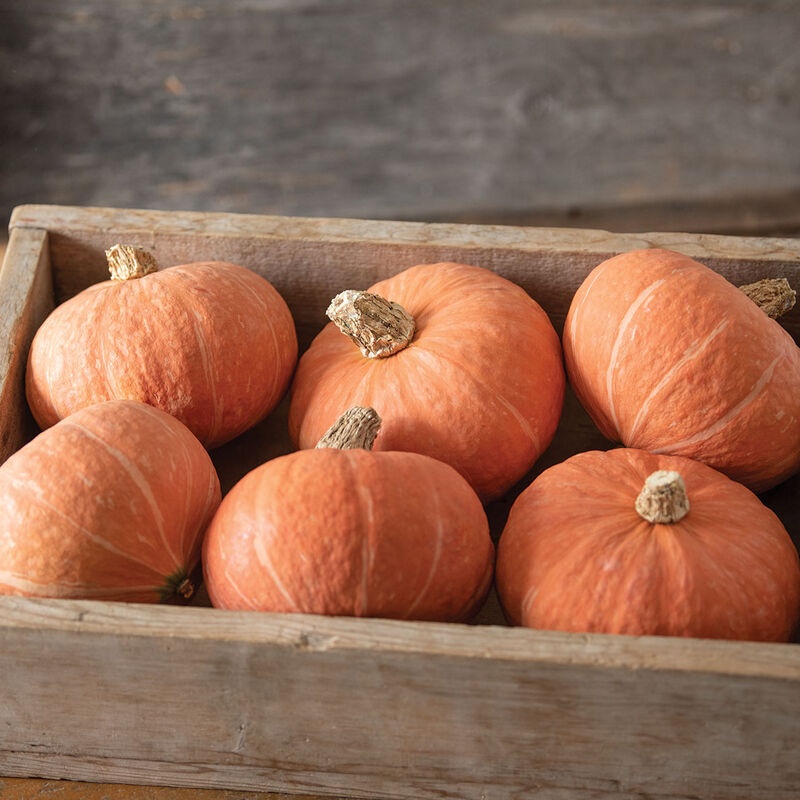
Looking ahead to our upcoming growing season, we have a few fun things we’re planning to plant in addition to our staple items like carrots, broccoli, green beans, tomatoes, sweet corn, etc.  This year we’re planning to plant jicama and lemongrass which are on our list of crops we choose to plant once every few years.  If you have never had freshly harvested jicama, you are in for a treat!  We are also on the search to find a tasty kabocha squash to replace Sunshine, a variety we grew previously.  Sunshine had excellent flavor and sweetness, but it succumbed to disease in challenging growing conditions which subsequently impacted its shelf life.  The last few years we grew it we threw away such a large percentage that went bad and made it hard to justify growing them. This year we’re going to give “Marmalade” a try.  This is a small, coral-colored kabocha variety available from Johnny’s Seed.  They describe it as “….ideal for small family dinners and tucks nicely into CSA boxes….Vibrant color option for late fall, with improved storage life compared to Sunshine.”  Evidently we weren’t the only growers who experienced the shortened shelf life of Sunshine!  We are also trying a cute little green buttercup squash (similar to kabocha) called “Bon Bon.”  It’s described as being “Tasty, uniform and high-yielding,” and weighs in at 4-5 pounds which fits nicely in a CSA box!
Sugar Magnolia Peas
(photo sourced from osborneseed.com)

We are also planning to grow a few new purple vegetables.  We know some of you love purple colored vegetables more than others, but we know that the purple color comes from the presence of a powerful class of plant compounds called anthocyanins.  These compounds function as antioxidants in our bodies and provide a whole host of health benefits.  The first in this class that we hope to share with you is the Sugar Magnolia Pea.  This variety produces dark purple pods with bright green peas that are described as being “…sweet and delicious.  A real stunner!”  The plant for this pea does grow 6-7 feet tall, so we’ll have to trellis the plants to keep them off the ground and make them easier to pick.  We also ordered some “Purple Majesty” potato seed.  We have grown this variety at least one time in the past and our recollection is that it was not only a very tasty potato, but it held its color much better than most purple or blue varieties that turn gray when you cook them.  Lastly, we are trying a new purple sweet potato called “Purple Splendor.”  This looks to be a gorgeous potato with purple skin and dark purple flesh that is described as follows:  “Cooked flesh is on the dry side with notable sweetness.”  We’ve purchased purple sweet potatoes in the grocery store and loved the flavor and sweetness, but have not been able to find plants to grow them.  Hopefully we’ll see favorable outcomes with this variety this year!  
Artemis Cherry Tomatoes
(photo sourced from osborneseeds.com)

Our tomato and pepper line-ups are pretty solid and consistent, but we do have a few new varieties to add to the mix this year.  While we usually focus on grape tomatoes and haven’t grown cherry tomatoes for many years, we were drawn to the “Artemis” cherry tomato from Osborne Seeds.  They are supposed to be bright red and are described as “….Supersweet red cherry consistently our favorite for flavor.”  Sounds like a winner! We are also trying the “Round of Hungary” pimento pepper.  We grew pimento peppers previously, but it’s been awhile.  This is a dark red pepper that has a flattened shape with ribs.  It’s a sweet pepper that is good for stuffing.   

We have our work cut out for us over the next few weeks leading up to our first greenhouse plantings.  We need to give our seed storage cooler its annual “top to bottom” cleaning before we put the new seeds into their storage location.  We will be washing and sterilizing our greenhouse flats, thawing the potting soil and need to take care of a few repair projects before we start preparing the nursery greenhouse.  If you’ve already signed up for your 2023 CSA shares, we thank you and are excited to have you on this year’s journey with us!  If you are yet to sign up for your 2023 CSA shares, I want to remind you to do so before February 28 so you can take advantage of our Early Bird Sign-Up Offer!  We have a great season of vegetables ahead of us and look forward to growing for you and your family this year!

Wednesday, December 28, 2022

Time to Wrap Up 2022 and Get Ready for CSA 2023!

By Richard de Wilde

It’s time to wrap up another year and move into the next!  While we’ve already been planning and planting for the 2023 growing season, this is the time of year when we simultaneously reflect on where we’ve been as we lay out plans for the year ahead.  We look back on 2022 and are grateful for all the things we were able to accomplish on our farm, the families we were able to feed, the tons of vegetables our fields produced and the 45 plus families our farm supported through bi-weekly paychecks.  Overall, it was a pretty good year and we close out 2022 knowing we did the best we could, learned new things and will come back ready to do a better job in 2023!  Before we officially close out the year, we wanted to share a bit of our reflections with you as well.  

Row covers laid out for
frost protection spring 2022
You know farmers like to talk about the weather and I am known to check the weather multiple times a day, so let’s start there.  We have come to accept that weather challenges are now the norm, and we continue to find ways to be resilient as we navigate whatever hand we are dealt! Looking back at our 2022 growing season, we started the year with the latest spring ever in my 40 plus years of farming.  Not only was it a cold, late spring, but it was one of the windiest springs as well!  It is not uncommon to for us to use row covers for heat gain in the spring, but this year we found ourselves using more than usual to protect some of our vulnerable early spring crops and transplants from a late frost.  It’s very difficult to put out covers in high winds, but there were times when we had no choice but to struggle through the process as the window of opportunity to get the cover on before the temperatures dropped was pretty narrow.  We also had to use more hoops under the covers to prevent abrasion injury to the plants and had to secure the covers in place with extra sandbags.  In fact, we had to fill over 1,000 more sandbags just to secure covers on the most essential crops!  

Manuel, one of our head irrigation guys--doing
his rounds to check for leaks in irrigation systems
(Summer 2022)
Once the season got going, we switched from cold to very hot temperatures!  Our late summer months were characterized by very dry, drought-like conditions.  While dry periods can be very intense and demanding as we try to get enough water to plants to keep them alive and producing, we actually prefer dry conditions over wet.  We had to invest a lot of crew time into irrigation, but thankfully we were able to keep all of the crops in the game.  One plus to having dry conditions is decreased disease pressure.  Humid conditions, especially in our valley, breed leaf disease which affects the health of the plant in the field, and, by default, production yields are usually lower.  When disease pressure is low, yields are high, and harvests are typically more efficient.  

Brussels Sprouts plants in early summer
All in all, 2022 was as good as we can expect.  We had some crop losses, as we will every year, but thankfully we did not experience any devastating losses.  As with every growing season, we had some shining star crops (such as our fall Brussels sprouts!) and some crops we’d prefer to forget (Parsnips).  We were prepared to put out covers when we needed to, had equipment ready to irrigate when it was necessary, and did the best we could to prepare for weather events to minimize the impact.  We had a very productive fall and left our fields in good condition as we tucked them away for the winter.  Most of our fields went into winter with an established cover crop in place and we were able to execute fall applications of minerals as well.  We planted garlic, horseradish and sunchokes which means we’ve already made significant investments into another year!  Our strawberry field looked great going into winter with a nice rye straw mulch cover.  We also mulched the garlic field and covered it with row cover for the winter.  Our overwintered spinach field is covered and fenced to keep the deer from nibbling on it over the winter.

Last year we acquired 40 acres of new land that we were able to certify for organic production.  Some of this land we were able to purchase, and the remainder is leased.  Any time we acquire new land there is likely some work that needs to be done before we can put a crop on it, but thankfully we were able to put much of it in production by the end of the season.  We spent a lot of time this fall trimming trees around the fields, which yielded greater access to the sun and gave us a year’s supply of firewood along with enough brush piles to create several tons of biochar for next year!  We still have a lot of improvements to make on this new property, but have made significant headway in a relatively short period of time.  Our hope is to secure better resources for irrigation options for this land which will offer us more flexibility in what we can plant on this property in future years.

After weather, the next topic of conversation in many business circles these days is likely something around the topics of inflation and the economy as well as labor. These are big topics for us as well and linger at the forefront of our minds as we try to forecast what the new year will hold.  As we reflect on this past year, it will come as no surprise to you that we are still experiencing obstacles in the supply chain that have made it difficult at times to source supplies, fertilizer, etc.  Thankfully, we did ok without too many issues, and we were able to get the majority of what we needed.  We tried to order early to allow for delays and did our best to manage tight inventories.  We’ve always tried to take advantage of volume discounts when purchasing supplies but have pushed the limits on this over the past 1-2 years in an effort to get the best pricing possible in the face of very steep increases in the cost of supplies.  In 2022 Andrea invested in a 5-year supply of the twist ties we use to bunch vegetables and purchased 3-4 years’ worth of other supplies in order to bump up to the next level of volume discounts.  Thankfully we have appropriate storage space to keep these supplies clean and in good condition, so they’ll be just like new when we take them out for use in 2025!  

Black gold....the potting soil we use to 
grow transplants in the greenhouse
Part of being able to weather the inflation is by trying to continue to take advantage of any discounts available to us by paying in advance for seeds, supplies, fertilizer and fuel.  We already purchased and accepted delivery on the potting soil that we’ll need to produce transplants in the greenhouse and by doing so we were able to secure 2022 pricing!  We are closing out 2022 in a pretty good place financially despite experiencing inflated input costs ranging from as little as 3% to as much as 43%!  

But our biggest challenge for 2023 appears to be labor!  The majority of our farm crew is comprised of seasonal workers who come on H2A visas.  Over the past few years, they have been contributing more by offering suggestions for new production improvements and by building their skills so they are able to achieve record setting harvest metrics!  We have one of the very best crews we could hope for!  They are dependable, skilled, efficient, timely, willing and eager to learn, and are overall very respectful, pleasant, positive people to work with.  Our situation is unique in that the Department of Labor (DOL) sets our wage rates because we participate in the H2A visa program.  The DOL has generally raised the wage by 3% per year for many years.  However, this year they are requiring an 11% raise for Wisconsin H2A employers!  The wage rate will be increasing by about $2 per hour to $17.43 per hour, in addition to our obligation to provide housing, transportation and visa expenses.  Our crew members work hard doing physical labor that many others cannot and do not want to do, but someone has to do this work or we don’t have food to eat!  

Most of our vegetables are harvested by hand, 
including bunched herbs, greens, radishes and more!
Farmworkers deserve a raise and should be compensated fairly for the work they are doing.  However, as employers we are faced with an extreme challenge as labor represents about 40% of our expenses and is by far the largest expense, we incur in vegetable production.  We also hope to hire two individuals to fill two vacant support positions, one in the packing shed and one to assist with office work.  One of these positions remained vacant for the entire of 2022, which was not ideal.  We could really use the help to assist with record keeping, social media management, and other office-related tasks that are necessary to help us meet the requirements for government programs and general good business practices.  

Harvesting ginger in early November
As we look ahead to 2023, we do so with optimism.  Yes, we face challenges, but we also know that the work we do is important and valued by you, our CSA members and our community of eaters.  We take pride in being the best growers in the Midwest and we are committed to continuing to offer our CSA members a level of freshness, quality and variety that is not readily available.  We also remain committed to supporting you by providing community, transparency and dependability.  Local food systems are essential to the sustainability of both farms and eaters.  Participating in CSA is one of the most economical ways to purchase food as the value you receive is nearly always greater than the price you pay.  That’s part of the relationship we share—you take care of us and we take care of you.  We plan to continue our unique potato, squash, tomato and pepper varieties as well as abundant sweet potatoes and sweet corn that prove to be member favorites year after year!  We are also planning to continue growing our carefully selected variety of edamame and hope to grow baby ginger for you again.  We are in the midst of ordering our seeds right now and are contemplating growing some special dried beans, globe artichokes or something else of interest that catches our eye and will keep things interesting.  

We are now accepting CSA Sign-ups for the 2023 CSA season and hope you will be joining us for a spectacular year of vegetables!  You’ll find current pricing and a list of all of our CSA pick up locations on our website.  Speaking of website, we are currently working on a new website which we hope to take live early in 2023!  Not only will we have a fresh, new look, we’ll also be able to offer you the convenience of signing up online along with the option to pay using a credit card.  We are also planning to enhance our vegetable resources to help you when you may have questions or need a little help learning about a new vegetable.  

Enjoy the final days of 2022 and we will see you in the new year!