Cooking With This Week's Box
Baby Ginger:
 |
| Caramelized Onion and Mushroom Tart Photo from Food52.com |
Instant Pot Dynamite Cold Tonic (See Below)
Red & Yellow Onions:
Orange Carrots:
Broccoli:
Missouri Garlic:
Sweet Potatoes:
 |
| Sesame Brussels Sprouts Soba Bowl Photo from naturallyella.com |
Brussels Sprouts:
Tat Soi:
Asterix Potatoes:
Black Futsu Pumpkins:
 |
| Pasta with Smoky Pumpkin Cream Sauce photo from epicurious.com |
Red Daikon Radish:
Green Savoy Cabbage:
Baby White Turnips:
Hello!
Even as we approach the end of the season, we still have exciting new crops to share with you. Year after year, I still get excited when we harvest baby ginger in November. I was telling Richard how much I love baby ginger and his response was “Do you think our members like it as much as you do?” Well, I don’t know, but I certainly hope so! If you are not familiar with baby ginger, please take a moment to read this week’s vegetable feature article. At the end of the article I included a few more recipe ideas including links to some of the recipes we’ve featured in past newsletters. For this week’s featured recipes, I turned to my longtime blogger friend, Heidi Swanson. The first recipe this week is for Ginger-Coconut Sweet Potatoes (See Below). This has been one of my favorite recipes from her blog, 101cookbooks.com, for many years. It’s super easy to make and is usually well-received by all, unless of course someone doesn’t like coconut. I’ve made it for dinner on just any old regular day, but I’ve also included it in holiday feasts. The second recipe, Instant Pot Dynamite Cold Tonic (See Below) is also from Heidi’s blog. If you don’t have an Instant Pot, don’t worry. You can do the same thing in a regular crock pot or just on the stove. I would recommend covering the pan if you are doing it on the stove and just bring the mixture to a simmer, don’t let it boil. You can cook it to your liking. The longer you cook it, the more flavor you’ll extract. This makes a nice, warm beverage to enjoy on a cold day. You may choose to make it if you feel like you’re starting to come down with something, or just to prevent a cold from developing! If you’re doing some traveling with the upcoming holidays, you may want to make some of this tonic to build up your immunity before and during your travels.
 |
| Cabbage Ginger Noodles Photo from naturallyella.com |
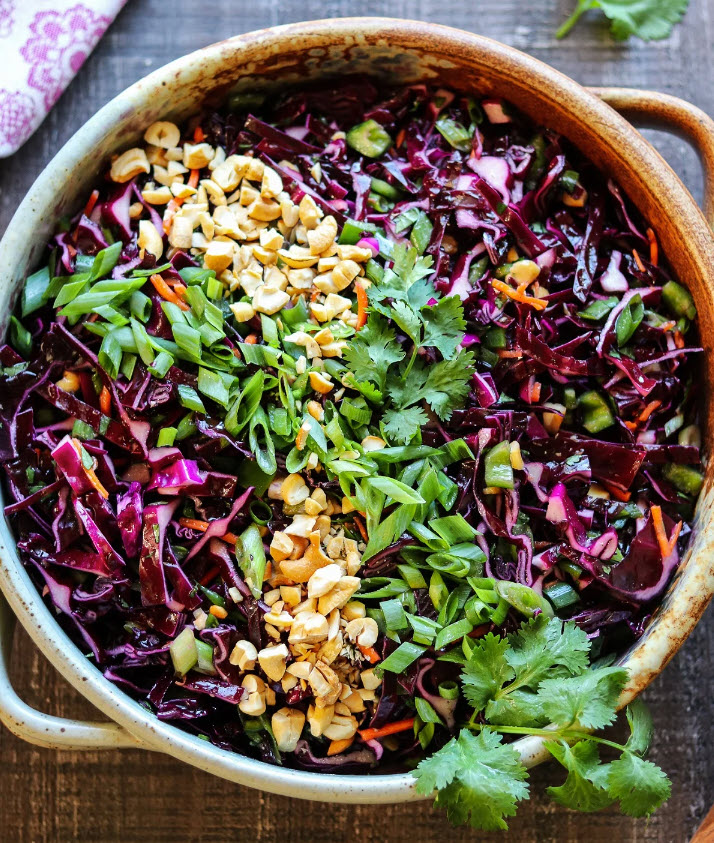
Throughout the rest of the recipe suggestions for this week I’ve included other recipes that include ginger, such as Chopped Thai Satay Salad with Peanut Ginger Dressing and Cabbage Ginger Noodles which make good use of the green savoy cabbage in this week’s box!
We are happy to be able to deliver tat soi as a fresh green this late in the season. Remember, tat soi may be used interchangeably with spinach and bok choi such as in this recipe for Red Lentil Masala with Spinach.
Thanksgiving is coming up soon, which for most households means mashed potatoes! This week’s Asterix potatoes are a great option for making mashed potatoes. If you still have some of last week’s Purple Viking potatoes, the two make very delicious, light and fluffy mashed potatoes when combined. I also like using Asterix potatoes when I make root mash, which may include sweet potatoes, carrots, or whatever root you may have.
Speaking of Thanksgiving, this is a great time of year to collect vegetable recipes! Food52.com always has some good recipe collections in honor of this holiday, so check them out as you plan your meals over the next few weeks!
I will plan to see you back in this space in two weeks as next week is a meat delivery only. We will have one more vegetable box before Thanksgiving and then we’ll come back after the holiday to wrap up the season! I hope you are able to find some inspiration with this week’s recipe selections and as always, be sure to share what you’re cooking in our Facebook Group!
Chef Andrea
Vegetable Feature: Baby Ginger
by Andrea Yoder

This week we’re featuring Fresh Baby Ginger, a tropical plant we have been growing for about a decade! Our growing season is much different than Hawaii and other ginger-producing regions, however it is possible to grow ginger in this climate! Ginger is actually a rhizome, which is a stem that grows horizontally underground. It produces roots to anchor it and sends up shoots to grow into foliage above ground as it grows and expands. The ginger we produce is actually referred to as baby ginger as we don’t have enough warm days, even when grown in the greenhouse, to produce fully mature ginger.
 Baby ginger is different than fully mature ginger, which is what you have likely purchased if you’ve bought ginger from the store. Baby ginger has a very thin skin with some pink coloring, especially at the points where the stems have grown from the main rhizome. This is very different from the thick, brown skin you are likely most accustomed to seeing in the store. Due to its thin skin, baby ginger is more perishable and should be used within about a week for optimal quality. It is best to store it at room temperature as it can get rubbery in the refrigerator. When you cut into a piece of baby ginger, you will notice it is more tender, juicy and has a bright and perhaps a bit milder flavor than some fully mature ginger that can be quite spicy. In many ways, young ginger versus fully mature ginger is very similar to the differences you experience with using fresh garlic harvested in late June versus mature garlic that has been cured.
Ginger is used as both medicine and food. As a medicine, it has anti-inflammatory properties, can sooth a whole host of gastrointestinal maladies, and helps to boost the immune system. When used in cooking, you will find it is a common, if not staple, ingredient in many Asian cultures. It is often paired with garlic and scallions in Chinese stir-fry or combine it with chiles, lemongrass and a variety of other ingredients to make Thai curry pastes. Ginger has a spicy, warm flavor which also makes it an excellent ingredient to pair with other warming spices and rich, comforting foods such as sweet potatoes, winter squash, mushrooms, broccoli, etc. It can be used extensively to make beverages, teas, baked goods, stir-fry, salad dressings, vegetable dishes, curries, and much much more!
To use baby ginger, simply cut a piece from the main chunk and peel if necessary. As I mentioned above, it’s best to use baby ginger within about a week. If you do not think you’ll be able to use all your ginger within a week, consider preserving it for later use. There are several options for ways to preserve ginger. First, consider making a ginger syrup that you can keep in the refrigerator to use as a base to add to beverages or just eat a spoonful each day for an immune boost. You can also turn fresh ginger into pickled ginger. Traditional Japanese Pickled Ginger that is commonly served with ginger is made with baby ginger. The pink hue of pickled ginger comes from that pink color you see on the skin of baby ginger. This is also the preferred form of ginger to use as it’s more tender and delicate compared to fully mature ginger. Pickled ginger is very easy to make and will keep for up to six months in the refrigerator. Lastly, you can freeze fresh ginger. Just wash it well and cut it into smaller pieces, about the amount you may want to use at a time. Place the clean ginger pieces in a freezer bag and freeze it raw. When you have a recipe that calls for fresh ginger, pull a piece of the frozen ginger out and let it rest at room temperature for a few minutes. The ginger may be a little soft once fully thawed, but that doesn’t really matter. Just chop it up and use it wherever you need “fresh” ginger!
We’ve come to appreciate this crop over the years and hope you enjoy this little taste of the tropics! I couldn’t stop myself as I was looking at different ginger-centric recipes, so I just decided to compile a list of recipes you may choose to make with your fresh baby ginger.
 |
| Triple Ginger Cookies Photo from 101cookbooks.com |
Heidi Swanson’s Ginger Recipes Collection
Lemon Ginger Coconut Date Balls
 |
| Homemade Chai Tea Photo from marthastewart.com |
Ginger Sesame Soba Noodles with Cedar Plank Salmon
Cranberry & Ginger Bourbon Smash
Honey Candied Ginger and Ginger Syrup
Ginger-Coconut Sweet Potatoes
 |
| Photo from 101cookbooks.com |
2 ½ pounds sweet potatoes
⅓ cup coconut milk
1 Tbsp fresh ginger, grated
1 Tbsp maple syrup
½ tsp sea salt
⅓ cup raw, unsweetened grated coconut
2 Tbsp olive oil or melted butter
⅓ cup toasted macadamia nuts or hazelnuts, chopped
- Preheat your oven to 350°F. Butter or oil medium-sized casserole dish. Set aside
- Place sweet potatoes in a baking pan with about ½ inch of water in the bottom. Place in the oven for somewhere between an hour and an hour and a half, or until each is baked through. Times vary greatly depending on the size of your sweet potatoes—in the end you should be able to cut through the center flesh as if it were soft butter.
- Remove the potatoes from the oven, let them cool for a few minutes, and cut each sweet potato in half. Scrape out the flesh. You should have about three cups of sweet potatoes. In a food processor, puree the sweet potatoes with the coconut milk until well-combined and smooth. Stir in the ginger, maple syrup and salt. Let it set for a few minutes, stir again and taste-adjust the seasoning if you need to—this is your chance to get the right amount of salt and ginger in the sweet potatoes before they go in the oven.
- Spoon the sweet potato mixture into the baking dish, sprinkle with coconut, drizzle with olive oil or butter and bake uncovered until warmed through and the coconut has turned golden. This will take approximately 30-40 minutes. Remove and sprinkle with the toasted nuts just before serving.
Note from Chef Andrea: This has been one of my longtime favorite Heidi Swanson recipes that I found on Heidi’s blog, 101cookbooks.com almost 10 years ago! We originally published it in our newsletter back in 2013, but it’s good enough to bring back to the forefront for those who may not have been with us in 2013! It is easy to make for every day meals, but is also a great addition to a Thanksgiving feast. Sometimes I also add a little bit of orange zest and juice for a bit of a fruity variation.
Instant Pot Dynamite Cold Tonic
Yield: 6 cups
6 cups water
3 Tbsp honey, plus more to taste
2 cinnamon sticks
1 tsp dried turmeric
3 dried chiles de arbol
3-inch knob of fresh ginger, thinly sliced (about ½ cup)
- Combine all of the ingredients in the Instant Pot.
- Secure the lid and select Manual to pressure cook on High for 5 minutes. Allow to natural release for up to 25 minutes or quick release after 15 minutes for a slightly weaker tonic. Strain and transfer to glass jars. Serve warm, sweetened with a bit more honey if you like.
Recipe borrowed from Heidi Swanson’s blog, 101cookbooks.com. Here’s what Heidi has to say about this recipe: “This head-clearing, sniffle-blasting cold tonic is the color of Tang, with flavor like a stick of ginger dynamite. If you need to jolt a cold out of your body with brute force, consider starting here!”