Wednesday, June 8, 2022

June 9, 2022 - This Week's Box Contents Featuring Cilantro


Cooking With This Week's Box

Potato Onions:  

Spinach:  

Asparagus:  

Green Garlic:  

Hon Tsai Tai:  
Savory Miso Oatmeal with Greens & Jammy Egg (substitute hon tsai tai for kale)

Pea Vine:  

Sorrel:  

Baby White Turnips:  

Mini Green & Red Romaine Lettuce:  

Cilantro:  
Red Lentil & Coconut Milk Soup with Spinach, Rice and Spiced Yogurt (See Below)

Baby Bok Choi:  

Sauté Mix: 

This week crops in the fields have really started to change and grow.  We are still heavy into spring greens with this week’s box, but that will be shifting pretty soon.  This is our final week for green garlic, hon tsai tai, pea vine and asparagus.  Next week we are planning to start harvesting strawberries, kohlrabi, broccoli and zucchini!  Our first crop of beets are still small, but we’ll be including them in your boxes within the next few weeks along with fennel.  Every moment of the season gives us something to enjoy and something else to look forward to!  


Spinach Quesadilla Photo from naturallyella.com
Lets dive into this week’s box starting with the featured vegetable, cilantro!  The featured recipe this week, Red Lentil & Coconut Milk Soup with Spinach, Rice and Spiced Yogurt (See Below), is a recipe I adapted from a Deborah Madison recipe.  The ingredient list for this recipe is a little long, but it comes together pretty quickly.  You just need to have a little patience while it simmers and the red lentils soften.  This soup is very flavorful with an interesting combination of spices that provide a nice background flavor for the soup.  This is also a very nutrient-dense soup as fresh cilantro and spinach is blended in towards the end of preparing this soup.  You can eat the soup on its own, but it becomes a more substantial dish when served with hot cooked rice and a dollop of the spiced yogurt.  While the recipe calls for spinach, you can use any cooking green in this recipe such as pea vine, bok choi, sauté greens, chard, amaranth, kale or even tat soi.  The versatility of this recipe makes it a great CSA greens recipe as you can prepare it at any time of the year with whatever greens are available!  I also think it would be good garnished with some fresh chopped tomatoes in the summer or maybe add some sweet peppers in late summer/early fall.  I hope you enjoy it as much as we did!

While we have a lot of greens in this box, there are many different ways you can put them to use.  The mini heads of romaine lettuce are the perfect size for making Korean Steak and Noodles Lettuce Cups and Grilled Thai Chicken Lettuce Wraps.  The bok choi can be used to make these tasty Soba Noodles with Mushrooms & Bok Choi or use it to make Stir-Fried Bok Choy with Peanut Sauce, a recipe that would pair nicely with these Cilantro Pesto Chicken Skewers.

Mixed Greens Spread photo from twistsandzest.com
For those of you who are into smoothies, I have to mention the Frosty Sorrel and Banana Smoothie recipe one more time.  This is one of my personal favorite spring recipes, but others have offered a lot of positive feedback on this recipe over the years and again this spring.  It’s a great way for kids and adults to enjoy greens!  Some members also posted in our Facebook Group that they used last week’s pea vine in smoothies, so I had to give it a try this week.  It is so delicious!  Mild flavored, fresh and invigorating are the words that come to my mind.  Both sorrel and pea vine are packed with vital nutrients and energy that you can really feel when you eat them, especially if you start your day off with them in a smoothie!  Go ahead, give it a try!  By the way, how are you doing with that challenge I posed last week to try to incorporate more vegetables into breakfast?  If it’s going well and you want to try something a little outside of the box, consider making Armenian Cold Yogurt & Sorrel Soup or  Savory Miso Oatmeal with Greens & Jammy Egg.  These savory recipes are actually appropriate for any meal of the day, breakfast included!  The oatmeal recipe calls for kale, but you could easily substitute hon tsai tai, sauté mix or even turnip greens.

Alright, I’m going to wrap it up for this week.  As always, let us know what you’re cooking by posting your creations in our private Facebook group.  We have new members joining every week and it’s a great way to engage with a like-minded community!  Have a good week—Chef Andrea 


Vegetable Feature: Cilantro

by Andrea Yoder

Cilantro is a very important crop on our farm and is one of our top “bread and butter” crops that we supply to our major wholesale distributors in this region.  Last year we planted 370 pounds of cilantro seed starting in April and planting nearly every week through the end of August.  This strategy allows us to move right from one crop into the next as we harvest cilantro starting in mid to late May through October or the first part of November.  Over the course of the season we will end up planting 16-18 acres of cilantro total!  Each crop has the potential to yield as many as 18,000 to 24,000 bunches!  Some of our experienced crew members can make more than 100 bunches of cilantro an hour when they are harvesting.  That is a lot of cilantro and, as you can see, it’s a big deal for us!

Our first crop of cilantro this spring
Cilantro, also sometimes called coriander, is used extensively in a wide variety of cultures and cuisines across the globe ranging from Mexico to Asia.  While we often think of it as an herb which is used more sparingly as an accent to other foods, don’t be afraid to use cilantro in more bold ways where it is a main ingredient.  With many herbs, recipes tell you to pick the leaves off the stems and only use the leafy part.  I am an advocate for using stems as well, especially for herbs with tender stems such as cilantro.  There’s a lot of flavor in those stems, so it seems like such a waste to throw them out!  

Cilantro is often used in salsas, fresh vegetable salads and as a condiment for tacos, curries, soups and more.  It’s also a delicious ingredient to incorporate into spreads and sauces such as chimichurri (with cilantro in place of traditional parsley), pesto, vinaigrettes, etc.  You can also incorporate it into smoothies and green drinks because of its contributions to health related to detoxifying the body. 

Cilantro in harvest totes,
ready to be washed & packed!
Some people love cilantro, others are learning to like it and some have an aversion to it because to them, it tastes like soap.  This latter group is actually a pretty small subset of the population.  To them, a natural chemical compound in cilantro has an unpleasant soapy taste.  If you experience this, we’ll let you take a pass on eating this vegetable.  But for everyone else, eat your cilantro as it has some valuable health benefits!  It is an excellent source of zinc as well as vitamins A, C, E and K.  It also works as a chelator and detoxifier for our bodies removing toxins, heavy metals, molds, yeast and fungi.  It’s on the green cleaning team, which is why it’s a common ingredient in green smoothies and drinks!

For the longest shelf life, we recommend you remove the twist tie and wash your cilantro in a sink of clean, cold water.  If you have a salad spinner, use it to remove excess water from the cilantro before storing it in a plastic bag or container.  If you don’t have a spinner, just blot or shake off as much excess water as you can.  Before storing, remove any damaged or spotty leaves.  It may also be helpful to put a dry paper towel in the bag or container you’re storing it in.   For best results, use within 7-10 days.


Red Lentil & Coconut Milk Soup with Spinach, Rice and Spiced Yogurt

Yield:  6 servings 

2 Tbsp butter, coconut oil, or sunflower oil
1 cup minced green onion and/or green garlic (see note)
1 ½ tsp ground turmeric
1 tsp ground cardamom
½ tsp ground cinnamon
Pinch of hot red pepper flakes
2 cups red lentils, rinsed
6 cups water or vegetable stock
2 bay leaves
3 cloves
Sea salt and freshly ground pepper, to taste
6-8 ounces (4-6 cups) spinach or other seasonal greens, roughly chopped 
¾ cup chopped cilantro (stems and leaves)
One 15-ounce can coconut milk
Juice of 1 large lime or lemon, or to taste
Steamed rice, 6 servings (optional)
Spiced Yogurt (recipe follows)


Spiced Yogurt
½ cup plain yogurt
½ tsp ground turmeric
½ tsp ground paprika
¼ tsp ground cumin 
¼ tsp freshly ground black pepper
A pinch of salt

  1. Place a 4 quart saucepot on the stove with medium heat.  Add the butter, coconut oil or sunflower oil and heat until it just starts to shimmer.  Add the minced green onion/green garlic and sauté for 2-3 minutes.  Next, add the turmeric, cardamom, cinnamon and red pepper flakes.  Stir to combine and sauté for about 30 seconds more.  Immediately add the lentils and 6 cups of water to the pan.  Increase the heat to medium high and bring the soup to a rapid simmer.  Add the bay leaves, cloves and 1 ½ tsp salt.  Cover and adjust the heat to hold it at a simmer.  
  2. Simmer for 10-20 minutes or until the lentils are soft and breaking down.  Remove from the heat and carefully extract the bay leaves and cloves.  Stir in the chopped cilantro and spinach or other greens until they start to wilt down in the hot soup.
  3. Now it’s time to puree the soup using either a stand blender or an immersion blender.  If using a stand blender, carefully transfer the soup to the blender.  You may need to work in batches depending upon the size of your blender.  You may choose to blend it completely smooth, or blend it a little less and leave some of the texture of the greens in the soup.  
  4. Return the soup to the pan and put it on the stove over low heat.  Stir in one can of coconut milk along with lemon or lime juice.  Taste the soup and season with salt and black pepper as needed.  You may also need to add more lemon or lime juice until the flavor is balanced to your liking.  Heat the soup just enough so it is hot, but do not cook it too much more or the greens and cilantro will lose their fresh flavor.
  5. Prepare the spiced yogurt by putting all the spices, a pinch of salt and the yogurt in a small bowl.  Mix until well combined.  
  6. To serve, put a portion of hot, cooked rice in each bowl and ladle the hot soup over it.  Serve with a dollop of spiced yogurt.

Note:  This is a great CSA “greens” recipe that may be adapted over the course of the season to include whatever seasonal greens are available.  Some options may include spinach, bok choi, pea vine, nettles, chard, amaranth, kale or tat soi.  While this version of the recipe calls for green onions and/or green garlic, you may substitute whatever type of onion is available throughout the season.  You may wish to create some variations of your own along the way such as adding some fresh chopped tomatoes as a garnish in the summer or sautéing some sweet peppers along with the onion in late summer.  Have fun with it!

Recipe inspired by and adapted from Deborah Madison’s recipe for Yellow Pea and Coconut Milk Soup with Spinach, Rice and Spiced Yogurt as published in her book, Vegetable Soups From Deborah Madison’s Kitchen.

Wednesday, June 1, 2022

June 2, 2022 - This Week's Box Contents Featuring Pea Vine


Cooking With This Week's Box

Asparagus:  

Rhubarb:  
Rhubarb Braised Beef with Rhubarb Kimchi

Green Garlic:  

Green Top Red or Diana Radishes:  

Hon Tsai Tai:  

Pea Vine:  
Green Curry with Pea Vine & Rhubarb (See below)
Pea Vine Cream Cheese (See Below)

Baby White Turnips:  

Photo from 5boysbaker.com
This week’s box of vegetables is packed with all kinds of possibility!  What am I saying?  Every box is packed with possibility!  I have to admit I have some seasonal favorite recipes that I look forward to every year such as Pea Vine Cream Cheese (see below) and White Turnip Salad with Miso Ginger Vinaigrette.  I also know we have some members who look forward to making this Sesame Soy Hon Tsai Tai & Chicken Salad every year.  With specialty greens such as pea vine and hon tsai tai, you have to seize the moment and make your favorites because they are only available for 1-3 weeks at most!  This week we are featuring the delicate Pea Vine.  While I have my favorite recipes from past years, I was also excited to create a new way to use pea vine.  This week’s featured recipe for Green Curry with Pea Vine & Rhubarb (See below) was a recipe I came up with as Richard and I were doing our Sunday afternoon tour through the fields to check on crops.  I wanted to challenge myself to use both pea vine and rhubarb in the same recipe in new ways.  

We are excited that our rhubarb field is producing so well this year and we’re able to include it in your boxes for a third week!  I went kind of crazy finding new recipes and ways to use rhubarb in hopes that perhaps you’ll find a new favorite rhubarb recipe.  If you want a simple recipe, try this Rosemary Lemon Rhubarb Spritzer.  If you’re up for a bit more fancy recipe, try either the Cardamom Crème Brûlée Tarts with Roasted Rhubarb or Rhubarb Braised Beef with Rhubarb Kimchi.  If you need something in between, go for the Rhubarb Raspberry Bread Pudding.  If none of those appeal to you, invite a few friends to hang out with you on the patio and use the rhubarb to make these Rhubarb and Rose Ramos Gin Fizz cocktails!

What are you going to do with those pretty little, pristine baby white turnips?  Well, I often don’t get past sautéing them with butter, salt and pepper.  They are so tasty on their own they don’t need much added to them!  That being said, two of my favorite recipes from past years include Turnip Greens Pesto Pizza and of course the White Turnip Salad with Miso Ginger Vinaigrette.  I also found this recipe for Radish & Turnip Hash with Green Garlic.  This is the perfect CSA Box recipe for this week and will be on the menu for Sunday brunch!  

Photo from thekitchn.com
Speaking of brunch, if you are not already including vegetables in your breakfasts throughout the week, I challenge you to find some creative ways to do so.  It’s a great way to start your day and will help you successfully eat through the CSA box each week.  Try something like the  Radish & Turnip Hash with Green Garlic or Tartine Style Roasted Asparagus and Spring Onion Croque Monsieur.  If those recipes require more time than you have in the morning, just keep it simple and add vegetables to scrambled eggs.  This week’s box has lots of options for doing this including asparagus, green onions, green garlic, spinach, arugula, turnip tops, radish tops or pea vine!  You can also blend some greens into a smoothie or spread Pea Vine Cream Cheese on a bagel.   See what you can come up with and share your ideas with us in our private Facebook Group.  I can’t wait to see how you start your day!

Ok, that’s a wrap for this week.  As we turn the page on the calendar to June, we have a lot to look forward to.  Of course, June is the month for strawberries, but we’re also looking forward to kohlrabi, salad cabbages, garlic scapes and the first zucchini & cucumbers!  Have a good week and I’ll see you next time.

Chef Andrea 


Vegetable Feature: Pea Vine

by Andrea Yoder

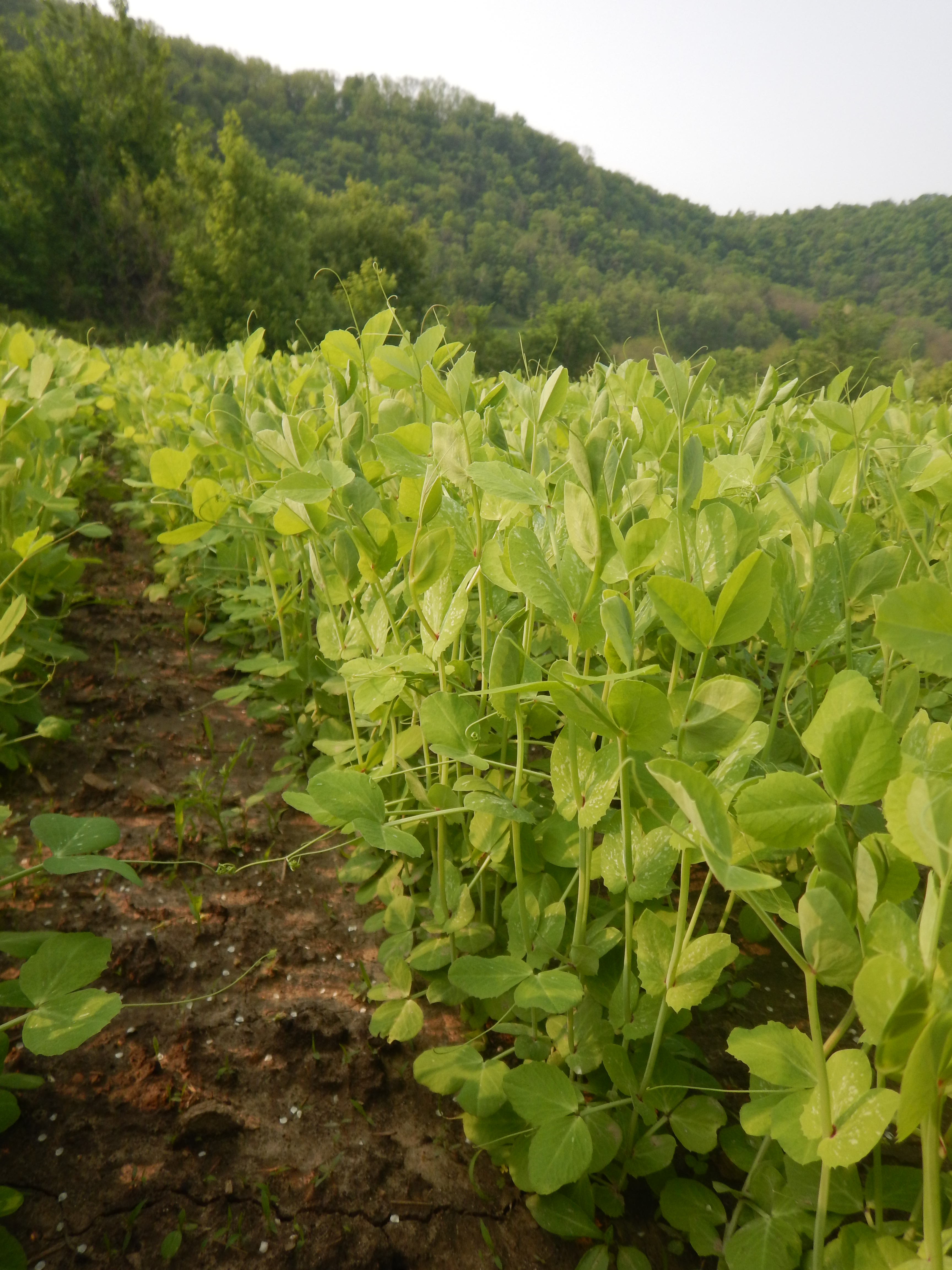
This week we continue our spring leafy greens extravaganza with pea vine!  This is another unique green that holds a very specific spot in our seasonal greens line up.  Pea Vine is an immature pea plant that is harvested before the vine starts to develop blossoms.  It is more of a delicate green with a mild, sweet pea flavor.  It may be eaten raw or lightly cooked and is packed with nutrients that will leave you feeling invigorated!

Pea Vine in the field
Unless you go to a regional food co-op that carries our products, you will seldom find pea vine in the grocery store.  You may find pea shoots that are more like a sprout.  While our pea vine is still an immature plant, it is more developed than pea shoots.  The tendrils and leaves are tender, but the main stem of the plant can sometimes get tough depending on how mature the plant is at harvest.  Most of the upper stem is still tender while the mid to lower portion may be a little more coarse.  In past years we’ve had members comment that the pea vine is “stringy.”  There are several ways to deal with this issue and still extract full flavor and benefit from the pea vine.  The first option is to pick the tender leaves, tendrils and thin stems off the main stem.  You can use those in salads, lightly cook them, or add them to fresh beverages like smoothies or green juice drinks.  Do not throw the stem away as it still has flavor that can be extracted!  Simmer the stems in hot broth, sauces, or soups to extract the flavor, then discard the stems. 

Another alternative is to use pea vine in some way where you blend or chop the leaves and stems in a food processor or blender.  This is not only a quick way to prepare pea vine, but it also maximizes the yield and benefit you get from this green.  I typically still discard the lower few inches of the bunch if that portion of the stem is more tough, but I utilize the remainder of the plant.  If it is chopped very finely using a blender or food processor, you can turn it into pesto, add it to smoothies, incorporate it into soups, or make Pea Vine Cream Cheese (one of our favorite farm recipes!).  

If you are using pea vine in sauces, soups or broth, I recommend rough chopping the pea vine into smaller pieces and adding it to hot broth or a sauce base.  Let the pea vine simmer briefly to extract the flavor, but don’t overcook it or you’ll lose the bright pea flavor.  When I say simmer briefly, it only takes a few minutes to wilt the pea vine in a hot liquid or a hot pan if you are using the leaves.  The stems may take a few minutes more.  Once you’ve infused the flavor of the pea vine into the sauce or broth, you can strain it out to remove it.  If you’d like to extract just a little more flavor, blend the mixture before straining it.  

Pea vine goes well with cream, butter, cheese, pancetta, prosciutto, bacon and ham, eggs, lemon, lime, mint, parsley, chives, spring onions, green garlic, radishes, asparagus, and mushrooms.  You may use it in fresh salads, pasta, or rice dishes, brothy soups like miso soup or a ramen bowl, or creamy soups.  This week I decided to turn it into a green curry dish, inspired by Thai cuisine, but by no means an authentic Thai recipe!  Sometimes Thai recipes call for tamarind, a tropical ingredient with a sweet and sour flavor.  While we can’t grow tamarind in Wisconsin, we can get the same effect with rhubarb!  In this recipe rhubarb is cooked in coconut milk and then the hot mixture is blended with raw pea vine.  The cooking time once the pea vine is added is minimal which helps to maintain the bright, subtle flavor of peas.

Store pea vine loosely wrapped in a plastic bag in the crisper drawer of your refrigerator until ready for use.  Wash it in a sink of cold water before using.  If you are going to sauté it in oil or use it in a fresh greens salad, shake off the excess moisture or put it in a salad spinner first.


Green Curry with Pea Vine & Rhubarb

Yield:  6 servings

2 Tbsp Sunflower Oil
16 oz Chicken Breast*
3-4 pieces Green Garlic or Green Onions
1 Tbsp Fresh Ginger, minced
1 ½ cups Asparagus, cut into bite-sized pieces
1 cup Baby White Turnips, medium dice
1 jar (4 oz) Green Curry Paste
2 cans (13.5 fl oz) Coconut Milk
2 cups Rhubarb, medium dice
1 bu Pea Vine
2 Tbsp Soy Sauce
1-2 Tbsp Maple Syrup
Salt and Black Pepper, to taste
Cooked Jasmine or Basmati Rice or Rice Noodles

*Note:  If you prefer to make this dish vegetarian, substitute firm tofu or mushrooms in place of the chicken.
  1. Place coconut milk in a medium saucepan over medium heat.  Stir in the green curry paste then add the rhubarb.  Bring the mixture to a simmer and cook until the rhubarb is soft, approximately 10-15 minutes.
  2. Remove from heat and set aside for a moment.  Roughly chop the washed pea vine and place it in a blender or food processor.  Depending upon the size of your machine, you may need to work in two batches.  Carefully pour the hot coconut milk mixture over the pea vine.  Blend until the mixture is smooth.  If you have a powerful blender that is able to process the pea vine and rhubarb into a smooth mixture, you may choose to use it just as it is.  If your mixture is more coarse than you like it, pour it through a strainer.  Set the coconut milk mixture aside.
  3. In a large sauté pan, heat oil over medium high heat.  Add chicken and cook until browned on one side, then stir to release the pieces from the bottom of the pan and brown the other side.  
  4. Finely mince the lower white portion of the green garlic or green onions.  Thinly slice the green tops and set aside.  Once the chicken is browned, add the minced white portion of the green garlic/onions and ginger to the pan with the chicken.  Sauté for another 2-3 minutes.  
  5. Add the quartered turnips and asparagus.  Sauté for 2-3 minutes, then add the coconut milk mixture along with soy sauce, 1 Tbsp maple syrup, salt, and pepper.  Bring to a gentle simmer and cook until the vegetables are tender and the chicken is thoroughly cooked.  Remove from heat and adjust seasoning to your liking with additional salt, pepper, soy sauce and/or maple syrup.
  6. Serve over hot cooked rice or rice noodles.
  7. Garnish with the sliced green garlic or green onions.
Recipe by Andrea Yoder


Pea Vine Cream Cheese

Yield: 2 cups

4 cups pea vine, roughly chopped and packed (approximately 1 bunch)
3 Tbsp sunflower oil
2 Tbsp apple cider vinegar
1 tsp salt
8 oz cream cheese, softened
½ cup green onion, minced
  1. Roughly chop one bunch of pea vine and put it in the bowl of a food processor.  Add the oil, vinegar, and salt.  Pulse the food processor a few times to start chopping the pea vine.   Continue to run the food processor until the pea vine is processed to a very fine texture.  
  2. Cut the softened cream cheese into cubes and add it to the food processor.  Process briefly, just enough to gently incorporate the cream cheese into the pea vine mixture.  
  3. Scrape the cream cheese mixture into a bowl.  Fold in the minced green onion.  Refrigerate the cream cheese mixture for 1-2 hours or overnight to allow the flavors to develop before you use the cream cheese.
**Note**  Any extra cream cheese mixture can be used in a variety of ways.  A few ideas include:  Spread it on your morning bagel;  Serve it with grilled chicken breast;  Spread it on a grilled flat bread and top with raw, fresh vegetables for a raw pizza.

Recipe by Andrea Yoder

Late Spring Farm Update

By:  Richard de Wilde

2022 Cilantro Planting #1
Ok, I promised Andrea this would not be a farmer “whining” about the weather.  So, this is a report about what we and our crew have done with the hand Mother Nature has dealt us.  The facts only. Unlike last spring which was record-setting cold and dry, this spring was record-setting cold and wet.  This spring we set a new record for my 40 plus years of vegetable farming as the latest first planting date which was April 20.  We are now harvesting those first planted radish, greens, white turnips, and very soon dill and cilantro.  In fact, we have accomplished a total of 6 plantings for our line up of these crops that we plant every week.  

Row covers protecting strawberries and melon plants from frost

Because of the cool spring, we have made extensive use of row covers for heat gain and to protect plants from wind.  Row cover is spun bonded polyester.  It is light weight and transmits 85% of the sunlight.  Under the covers, the temperature is on average 4 degrees higher both day and night.  After several weeks you can really see a difference in the rate of crop growth and, unfortunately, weed growth as well.  

Zucchini plants thriving underneath a row cover
to protect from frost and promote heat gain

So, our heat-loving summer plants, i.e., zucchini, cucumbers, tomatoes, melons, watermelons, and winter squash were all safe in the greenhouses during the cold weather in April, and then in early May we had 4 days of unseasonably hot weather with temperatures in the 80’s and 90’s!  Those heat-loving crops thrived and made quantum leaps in maturity overnight, literally!  So, it is only the 10th of May and Andrea says the zucchini and cucumbers must get transplanted before they get too big and “leggy.”  Despite some cold days and nights in the forecast, we gambled and put them out in the field.  We immediately covered them with row cover draped over wire hoops that we put over the beds with a string strung between them to help float the row cover above the plants. Putting giant blankets on fields requires a lot of sandbags to hold them in place and is most easily accomplished with low wind speed.  But that was only the beginning as we were still faced with the threat of low temperatures and even frost almost daily.  Despite the forecast, we kept planting.  The tomatoes went next and were also hooped and covered.  Then the eggplant, our first melon planting and watermelons, all with covers for protection.  We still had the whole winter squash crop remaining and the plants were getting very tall, so we put them out as well along with some basil and covered it all.

First crop of tomatoes nicely mulched with rye straw
We had the extra covers on hand, but by this time we had run out of sandbags!  Not only did we have a lot of covers out in the field, but we have also been having record-setting wind speeds this spring!  We rushed to fill over 1,000 more sandbags!  We checked covers daily and replaced them as needed, adding additional sandbags to keep them in place.  We think the danger of frost is passed now, but only after it “nipped” our first bean planting, which was not covered.  Thankfully, the covers did their job, and all those warm-weather crops survived the frost!  The investment of time and resources paid off.

This week we will plant our third crop of beans and sweet corn.  Sweet potato slips from North Carolina are scheduled to arrive on Thursday morning and we have plans to plant them Thursday afternoon.    We have peas to trellis and started staking the first crop of tomatoes.  Peppers are also going out to the field this week.  Aside from our second planting of melons and more basil, this will complete the plantings of our summer transplant crops.

Early variety of strawberries with 
blossoms!
Due to the cold start to the season, it looks like strawberries will be delayed a bit.  However, the plants are full of blossoms and there are even some thumbnail sized berries!  In addition to laying out covers, transplanting, etc., we have also been harvesting vegetables for our early CSA boxes, we have spread 90 4’x 5’ bales of mulch for tomato and pepper crops and Luis, Nestor and Joel have done an excellent job of cultivating!  Thanks to these guys, the sunchokes, horseradish and potatoes are 4-6 inches high and weed free.  

Thankfully, we’ve had time to stay on top of hand weeding and the crew has gone through all the parsnips and beautiful carrots as well as kohlrabi, broccoli, cauliflower, and Kale.  All these crops are looking good, and the kohlrabi is already the size of a 50-cent piece!  Last weekend we finished planting ginger in the cold frame greenhouse, so we have that to look forward to harvesting in late October or early November!


Did I mention that we have a fantastic crew?  They never hesitate to stay late to finish a job and are ready to start again the next day.  Andrea’s right, we have nothing to whine about.  We’re positioned for a great season!
Using the Kult to cultivate weeds in the rows of parsley plants

Wednesday, May 25, 2022

May 26, 2022 - This Week's Box Contents Featuring Greens


Cooking With This Week's Box

Welcome to week 4 of our CSA season and the last week of May!  The month of May has been interesting, to say the least.  In one month we’ve had temperatures in the 90’s and just this last week we woke up to frost in the valley!  Despite an unusual spring and the uncertainty of the weather, Mother Nature still delivers and we continue to have food  on our tables.  This week we’re not featuring one particular vegetable, but rather a category of vegetables that we’re loosely calling “greens.”  As I mention in this week’s vegetable feature article  (See below), we have long been advocates for “eating your greens every day!”  The good news is, greens are nature’s fast foods.  They are quick and easy to cook and versatile in their use.  This week’s featured recipe is for Marilyn’s Stir-fry Sauce (See below).  Marilyn is a longtime CSA member and shared this recipe with me several years ago.  It’s a great sauce that can be made in advance so you can make a quick stir-fry on the fly using any seasonal greens or vegetables you have available.  It’s called creative cooking, following your instinct and using what you have available to you at that moment.   So get creative with your vegetable combinations and use up some of those greens in this week’s box!


Following along with our theme of “Eat Your Greens…Every Day,”  I also included recipe suggestions for using radish tops as well as the unique hon tsai tai.  There are many ways you can eat and enjoy radish tops, but I like this recipe for Radish top Pasta with Chickpeas and Parsley.  While Hon Tsai Tai and Shiitake Potstickers do take a little time to assemble, but they are fun to make and very tasty! 


In addition to a lot of green-centric recipes this week, I’ve also included a recipe for Rhubarb Cheesecake and Sparkling Rhubarb Lemonade as well as Cheesy Baked Asparagus with Gruyere Cheese, Garlic & Bacon and Sheet Pan 30-Minute Sticky Apricot Chicken and Asparagus.   These spring vegetables won’t be around for very long, so enjoy them while they are in season!


Looking ahead to next week, we’re hoping our first crop of Baby White Salad Turnips will be ready.  We’re also hoping to start harvesting cilantro soon, along with more head lettuce from the field. Before I close out this week, I want to thank everyone who has been participating in our private Facebook Group.  There have been some awesome suggestions, shares and interaction since the start of deliveries.  It’s really fun to see what everyone is cooking up!  If you aren’t part of our group yet, we encourage you to join so you don’t miss out on the fun!

Have a good week—

Andrea 


Vegetable Feature: Eat Your Greens. . . Every Day!

by Andrea Yoder

Hon Tsai Tai
For those of you who have been with us over the years, you know that spring is the time for green leafy vegetables (hereafter referred to as “greens”).  Five of the nine vegetables in this week’s box fall into this category of greens.  They include baby arugula, sauté mix, mini head lettuce, hon tsai tai and radish tops.  Root vegetables that are harvested with their green tops are bonus vegetables!  We have long been advocates for regularly including greens in our diets.  We know they are packed with valuable nutrients that keep us healthy and contribute to our overall wellness, but they have other attributes that are worth mentioning as well.  For starters, there are so many different kinds of greens in the world and many of them grow in our climate.  Greens such as this week’s hon tsai tai are important to our seasonal lineup of vegetables because they thrive at a certain time or in certain growing conditions.  Hon Tsai Tai thrives during the cool of the spring and grows quickly thereby providing us with something to eat while we wait for some of the other vegetables to grow and mature.  Amaranth is another example of a green selected for a specific time slot.  It grows in the heat of the summer when other greens are stressed by the heat and are a challenge to grow.  In addition to nutrition, variety and seasonality, greens are also delicious and many of them are quick cooking which is why I like to call them “Nature’s fast food!”  Read on and I’ll explain.

Head Lettuce starting in the tunnel Greenhouse
Many people are intimidated by greens and think they are time consuming or hard to cook.  My job this week is to help you move past intimidation, because no one should ever be intimidated by a vegetable!  For starters, there are some basic cooking principles that can help you figure out the best way to prepare and use your greens.  The first question might be “Do I eat this raw or cooked?”  We’ll usually tell you in the newsletter, but you can often determine this for yourself.  Take a little piece of a leaf and eat it.  If it feels tough, chewy or fibrous, it probably should be cooked.  If you find the green to be strong flavored or bitter, cooking will help to mellow the flavor.  If the green you are eating is tender, and well-balanced in flavor it is most likely appropriate for eating raw, but may also be cooked.  Most greens can be used interchangeably with others of similar texture.  For example, if you have a recipe that calls for chard, you could substitute beet greens.  If you have a recipe for cooked spinach, you can likely substitute other tender greens such as hon tsai tai, nettles or amaranth.
Lacinato Kale 
The cooking technique you choose is most often determined by the nature of the green, its flavors and texture.  Appropriate ways to cook more tender greens include wilting, sautéing, and stir-frying.  Wilting greens is very easy and employs the moisture that is clinging to the greens after washing them.  Simply add moist greens to a hot pan, add a splash of liquid and cover the pan to produce some steam.  It won’t take long for the greens to wilt down.  You can also wilt greens just by adding them to a hot soup, broth or sauce.  Sautéed greens are a good stand-by method for true “fast food.”  Start with a little bit of oil in a sauté pan over medium heat.  Add base ingredients of your choosing (onions, garlic, mushrooms, etc.) and cook for just a few minutes until they are tender.  Add your greens and any other ingredients you may choose to flavor them (soy sauce, miso, ginger, etc.).  Sauté just until the greens have wilted down and you’re done!  Cooking techniques such as those described above may take as little as 3-5 minutes or up to 10 minutes to complete.  Don’t walk too far away from the pan while they are cooking or you risk overcooking them!

Red Radishes in the field, don't
forget to eat the green tops too!
Hardier greens such as kale and collards will require a little more prep and cooking time.  You can eat these greens raw and they actually make delicious salads.  The key to a delicious kale salad is to cut the kale into small, bite-sized pieces and allow enough time to “marinate” the kale leaves.  Dressing the salad in advance allows the vinegar and oil in the dressing to break down the kale leaves and softens them without cooking them.  If you are cooking them, you’ll want to make sure you use some source of moisture—added water, broth, stock, tomato juice, etc and allow time for the greens to soften.  
As we wrap up this discussion I want to circle back to my comment that greens are “Nature’s Fast Food.”  While some greens such as collards and kale do require a little longer cooking time, most greens can be turned into a meal pretty quickly as they are quick cooking and/or may simply be eaten raw.  I use this attribute to my advantage when I need to put a healthy meal on the table quickly, which is most days!  In less than 10 minutes I can sauté greens and serve them with a fried egg on top or mix them into scrambled eggs, hot rice or pasta, hot beans or soups.  I can also use greens to make a quick stir-fry.  In the time it takes to cook rice, I can stir-fry greens and other seasonal vegetables along with protein such as beef or chicken.  Add a quick sauce such as the recipe featured in this week’s newsletter and you can sit down to a nutritious meal in little time.  

For greens that may be eaten raw, the key to quick preparation is to invest a little time in advance to make sure the greens are washed, cleaned and ready to go.  I also like to keep a simple vinaigrette or salad dressing in the refrigerator.  If I have clean greens and a vinaigrette, I can create a salad very quickly.  In fact, it can become a main dish by adding protein such as cooked chicken, beef, tofu, nuts or seeds.  

We hope you enjoy incorporating more greens into your daily meals and hopefully these tips have helped you see how to use them to your advantage, both so you don’t miss out on their valuable nutrients, but also for the ways they can help make your meal prep quick and painless so you can eat well in the midst of a busy life. 

Marilyn's Stir Fry Sauce

Serves  8-10

This is an all-purpose stir-fry sauce which goes well with a vegetarian meal as well as with chicken, pork, shrimp or beef.  It keeps well in the refrigerator in a tightly closed jar, which is why the proportions in this recipe allow enough for two meals.

This sauce is added after the vegetables and meats are stir-fried.  The final mixture is then brought back just to a boil before serving.

All the ingredients can be purchased at a good grocery store.  The toasted sesame oil is needed for flavor, and can be reduced (but not omitted) to lower the fat content.  The minimal alcohol involved is used to bring out flavors prior to its evaporation.  

2 Tbsp toasted sesame oil 
2 tsp minced fresh garlic
2 tsp minced fresh ginger root
2 cups (14.5 oz can) chicken or vegetable stock
3 Tbsp soy sauce or tamari
2 Tbsp brown sugar
2 Tbsp lemon juice
2 Tbsp cornstarch
3 Tbsp rice wine or cooking sherry (dry cocktail sherry)
  1. In a small saucepan, heat sesame oil.  Add garlic and ginger and stir fry for 15-30 seconds over medium heat to bring out the flavor.  Add chicken stock, soy sauce, brown sugar and lemon juice.  Bring just to a boil, stirring all the time.  
  2. In a small bowl, dissolve the cornstarch in the rice wine, then whisk this into the sauce.  Heat until the sauce thickens and reaches a full boil.  Continue to stir the sauce as it thickens.  Simmer just below boiling for 30 seconds.  Remove from heat and set aside.  
  3. Any portion of sauce that you are not using right away should be cooled and then poured into a quart jar.  Store it in the refrigerator until needed.  

This recipe was shared by Marilyn Chohaney, long time CSA member and friend of the farm!  It may be used to make your own custom stir-fries utilizing any combination of seasonal vegetables available throughout the year.  During this time of year you can make some tasty stir-fries using green garlic, scallions, asparagus, radishes, greens, baby white turnips, etc.  In the summer you may use peppers, zucchini, white onions, chard, fresh garlic and broccoli.  As you can see, there is no recipe with exact quantities and ingredients.  This is a loose concept that you can vary and play with throughout the season.  You may choose to make a vegetable only stir-fry, or you can add protein of your choosing.  Garnish your stir-fry with toasted cashews or almonds, sesame seeds, or even fresh cilantro.