Friday, March 18, 2022

Pandemic Year Number Three! COVID Procedures for 2022

July 2020: 
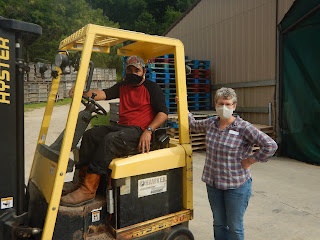
Leonardo & Andrea....with Masks!

By Richard de Wilde

As we prepare for another CSA delivery season, it’s hard to believe we are in the third year of the pandemic.  We continue to navigate the pandemic, adapting as needed as we try to make the best decisions about COVID precautions for ourselves, our crew and you, our customers.  Personally, I have become comfortable wearing a mask indoors and in stores.  I anticipate having a mask handy the rest of my life!  We prefer to use the washable, reusable cloth masks and while they may not be the top-of-the-line disposable kind currently being recommended, they have worked well for us.  Thankfully they have prevented us from contracting COVID as well as avoiding colds and influenza!  We will forever continue good sanitation practices including frequent hand washing which we did before the pandemic!  

April 2021: 
Planting Strawberry plants...
with masks!
As with the last two years, we are starting another delivery season with a bit of uncertainty as to what the year will hold with respect to the pandemic.  Based on the CDC’s Community Risk Tool, the risk in all of our delivery areas is presently rated at “Low!”  While I hope the risk stays low, a new variant was recently discovered, and some are predicting another spike in COVID cases as it spreads across the country.  I guess only time will tell how this variant plays out.  Here on the farm, we have chosen to continue the COVID precautionary procedures we implemented at the start of the pandemic.  Keeping our workers safe and healthy has always been a priority.  At various times throughout the pandemic, we have also been required to follow guidelines set out in Emergency Orders specific to employers of migrant workers that have been issued by the Wisconsin Department of Workforce Development.  While we were required to follow these procedures by law, it wasn’t really a big deal as we had already implemented 80-90% of the requirements before they issued the order!  Another emergency order went into effect on March 1, 2022, and will expire on July 28, 2022.  So, here at the farm we will continue the majority of our pandemic-related practices including wearing masks in the workplace while indoors, in vehicles, and in outside situations where it is not possible to maintain a 6-foot distance.  We will also continue to clean frequently touched surfaces daily in the workplace as well as in the housing we provide for our workers.  This includes facilities as well as all of our trucks and vehicles!  Additionally, this will be the third year that our H2A crew will quarantine upon arrival from Mexico to make sure everyone is in good health.  

With the start of our CSA deliveries only seven weeks away, we realize we need to make plans for the Pandemic-Related Procedures for CSA pick ups this year.  Before we get into the details, I want to start by extending a “Thank You” to all our members who responded to the “end of the season” survey we sent out last December.  The main focus of the survey was to gather your thoughts about pandemic related procedures as it pertains to our CSA sites.   Since we closed the survey on January 15, 2022, the pandemic has continued to be a dynamic situation with ever-changing CDC guidelines and the evolution of new variants.  We knew this would be the case when we asked the survey questions, nonetheless this information has been helpful in guiding us as we make some important decisions for the 2022 season.   Before we go on, I want to share a summary of the survey results.

  • Total Responses:  664 
  • 50% of respondents support continuing to implement our 2021 precautionary pick-up procedures.  Additionally, 30% favored continuing these procedures, but with modifications.  
  • 74% of respondents support continuing to require masks be worn at the pick-up sites.
  • 77% of respondents think we should continue to implement physical distancing at the sites including asking that only one member enter the site at a time.
  • 60% of respondents support the continued use of the large plastic bags in the CSA boxes to facilitate a quick pick up at the sites.
  • 77% of respondents voted to bring back the Swap box for 2022.  
  • 84% of respondents would like to see more Choice items offered at sites in 2022.
  • 20% of respondents want to continue bringing their own pens for the checklist.
So, what pandemic-related procedures will we be implementing at our sites this season?  Well, based on our understanding, COVID is presently diminishing, but by no means gone! In fact, it will probably be with us in one form or another forever. So it behooves all of us to continue to minimize the risk of exposure.  We understand that many of you are tired of COVID restrictions, and some are resistant to vaccinations. We realize there is a spectrum of beliefs, and we respect everyone’s personal points of view.  We also ask that each of you come to the table with a willingness to be respectful of each other as a community and offer compassion and understanding to those who may hold a belief different from your own.  We believe CSA pick-up sites are already a low-risk way to source food, but we want to continue to offer an environment where all members can feel comfortable.  We also can’t forget that we do have some individuals in our membership who are high risk based on a variety of health situations.  Respect has always been an important part of building a strong CSA community and therefore we ask that everyone please respect the precautionary measures we are requesting you follow at our CSA pick up-sites.  In my mind, it’s not too different from taking your shoes off when you visit a friend’s house, and they ask you to leave your shoes at the door.  We also now know that the risk of contracting COVID on a touch surface is not as great as was thought originally.  Rather, there is a greater chance of spreading and contracting COVID by airborne transmission.  With all this in mind, here are our thoughts for Pandemic-Related Procedures for CSA Pick Up in 2022.  
2020 & 2021:  
Plastic Liner Bag in the CSA Box

The Plastic Liner Bag in the Vegetable CSA Box
:  While the use of the plastic bag in the CSA box has helped us facilitate a quick, in-and-out CSA pick up over the past two years, we have decided to discontinue using them for 2022.  We plan to return to our pre-pandemic method of packing the CSA vegetables directly into the CSA box.  Even without the use of the bag, we feel a quick CSA pick up is possible if each person makes a concerted effort to enter, transfer the contents of their box and exit the site.  We do ask that you do not take the entire box home with you!  We would like for each member to bring your own reusable bag, box or a cooler and transfer the contents of your box to that container to transport them home.  One of the benefits of using the plastic bag was that more of the boxes stayed at the CSA sites and were returned to the farm the following week in good condition so they could be reused.  We want to continue to minimize our waste by being able to reuse the waxed produce boxes, however we can only do that if they are clean and appropriate to hold food (i.e., no pet hair, footprints, etc.).  Additionally, we are committed to decreasing the use of plastics where we can this year and this seems like a good place to start.  

If you have a stack of the CSA box liner bags from the past two years and are looking for a way to reuse/recycle them, we do have an option we can share with you.  First, please do not return them to your CSA sites this spring as we are not able to accept them for reuse on the farm.  Rather, we suggest you donate them to Community Hunger Solutions (CHS).  This is an organization we work with locally.   (CHS) which helps us distribute excess or number 2 produce from our farm to food pantries in our area.   They have a need for those CSA bags and would love to reuse them.  If you are willing to contribute to the cost of shipping, you may send your bags directly to CHS for reuse.  Here’s how it works.  
  1. Only send them clean, dry bags that are still in good condition (no rips, tears, mold, etc.) and have not been used for non-food items.
  2. Fold them up neatly so they are flat and put them in a shipping box. 
  3. Send them directly to CHS at the following address:
Community Hunger Solutions (CHS)
c/o Vernon Economic Development Association
1201 N Main St, #5
Viroqua, WI  54665

Masks:  We are continuing to ask that all members please wear a face mask when you go to the site to pick up your box.  It is a small, simple act that helps minimize the risk of exposure to anyone in a shared space.  The peace of mind this provides other members is a small price to pay for wearing a mask for the 5-10 minutes (or less) it will be on while you pick up your CSA box!

Swap & Choice Boxes:  We had over 75% of respondents vote to bring back both the Swap Box this year and to offer more Choice items on the side (E.g., basil, eggplant, etc.).  This is a pretty high percentage, so we have chosen to take your advice and offer a swap box as well as more choice items this year.  For those of you who may not be familiar with these terms, here’s the deal.  The Swap box is a box at the site that members can use to share any produce items from their box that they may not care for or have a use for in a given week.   If another member wants the item and has a use for it, they can take the item out of the Swap box.   Choice items are those that may be packed on the side in a given week.  If it’s an item you like, you’re welcome to take a portion home with you.  

Whether you use the Swap box or take a Choice item is up to you. If you pass on both, you will still receive more in value than you pay for over the course of the season. 

Physical Distancing: We will also continue to implement physical distancing at the sites.  This means we ask that you give any other member picking up at the same time their own personal space.  This may mean you need to move off to the side to unpack your box or wait a moment for another member to finish and exit the site.  Please be patient and courteous.

Farm Events & Camping!

2018 Strawberry Day Field Tour
While we’re not quite ready to return to our usual pre-pandemic style of hosting farm events, we do feel we can offer a safe, low-risk, fun opportunity to visit the farm this year.  We’ll have more details coming later, but we are planning on offering U-Pick Strawberry Day on Saturday, June 18 and a Pick Your Own Pumpkin Day on Sunday, September 25.  We will not be hosting a potluck and likely will not be doing wagon tours to the fields, but we will have space for you to enjoy your own picnic and will provide the option of a self-guided walking field tour.  We will also continue to offer the opportunity to camp in our valley any time of the year!  We have two lovely meadow campground areas and simply ask that you RSVP in advance.

So, that’s it in a nutshell!  We will remind you of the pandemic related procedures which will be clearly outlined in the Welcome Packet you receive in late April prior to the start of deliveries.  We consider these to be small requests and hope everyone will follow them respectfully.   If you have feedback to share with us, we welcome you to do so.  If you have other thoughts or perspectives you would like to share, we welcome your feedback and we’re happy to engage in conversation.  Now, with that behind us lets move forward and have an awesome 2022 CSA Season!

Thursday, February 17, 2022

February Farm Update: It’s Planting Time!

A bin of potting soil in the foreground and 
empty greenhouse tables ready to be filled!
February always seems like the month that sneaks in and out so quickly.  It’s here and gone before we know it and that’s probably because we’re too busy to notice!  Our small winter crew has had their hands full as they’ve continued to balance washing vegetables and packing wholesale orders while also moving forward on our winter cleaning and repair projects.  While we still have several more weeks of winter remaining, the pace of the farm is starting to pick up and we thought we’d share a little glimpse into what we’ve been up to this month!

Regardless of the number of years of farming that are behind us, the day we plant the first onion seeds in the greenhouse in February is always an exciting day!  Well, today’s the day!  As I finish up this article, Gerardo and Moises are filling flats and preheating them on the tables in the greenhouse.  Simon is in the packing shed working with the precision of a scientist to hot-water treat some of our onion seeds.  This afternoon Simon will transition to the greenhouse and together, this powerhouse team of three will start planting green onions!  Why is this so exciting?  Because these onions will be ready to go to the field in about eight short weeks.  Those weeks will go fast, but trust me, spring is just around the corner!

Winter crew doing the "top to bottom" cleaning 
in our Nursery greenhouse.
Before we can plant the first seeds, there are a lot of parts and pieces to the puzzle that have to be laid out.  Last week the crew spent several days cleaning the greenhouse from top to bottom, including washing all of the tables and every supply we use to set everything up.  Once everything is in place, we all clear out and then fog the building with a peracetic acid mist with the intention that any lingering plant disease that may have been present with last year’s crops is killed.  Disease prevention is just part of maximizing the potential of every seed and every crop.  This is also the reason we invest time to hot-water treat some of our seeds, in particular those that are most likely to carry plant disease on the coating of the seed.  Ana and Antonia have also been hard at work washing and sterilizing all of our harvest containers, seed storage totes and they’re working on the greenhouse flats now.  As you can see, we do a lot of cleaning in the winter!

Simon setting up the "Seed Sterilizer" 
apparatus to hot-water treat seeds.
Last fall we had been warned that some seeds may be in short supply and/or there may be problems getting seeds delivered in a timely manner.  All of the issues with the supply chain from packaging to labor to import issues apply to seeds as well, however given the time sensitive nature of what we do with them we wanted to do everything we could to secure our supplies early.  We hustled and completed most of our seed orders by the end of November.  Thankfully, we’ve received the majority of what we need for this season.  We’re still waiting on some things to come through, but the quality of what we’ve received appears to be good and right now there are no major deficits with varieties or supply that we can’t overcome or correct.  We still have more seeds to receive, so we’ll keep our fingers crossed that the remainder come through by their assigned back order dates!

Labor is a huge part of what we do and when spring rolls around we’re going to need many more hands on deck to get everything accomplished!  We’re actively recruiting for a few key positions that are currently vacant including two on-farm positions for Office Support as well as Packing Shed Support.  These positions have a variety of responsibilities, all of which help us keep all the little details organized and help us run at maximum efficiency!  If you know of anyone in our area who may be interested, please send them our way!  We also have openings on our delivery teams in both the Twin Cities as well as Madison.  So, if you know of anyone who resides in these areas who may be interested in a part-time, seasonal job, please encourage them to apply!  Of course, we’ll need a lot more hands in the fields as well so we’ve been lining things up for the return of our H2A crew members.  Richard and Rafael have already started making “to-do” lists for things that need to be done once we can return to outside work and they’re working on some training topics for this spring.  There’s always something to learn and ways to improve!

This year could be a drought year, so Richard has been hard at work setting up all of our irrigation needs.  This includes securing permits with the DNR as well as making sure we have all of the necessary supplies, pumps, etc.  Rafael has been working in the shop doing some maintenance and repair projects, building a running gear for a new harvest wagon, and a whole host of other random projects!  Richard and Rafael have been getting their daily dose of fresh air working together to keep our goats, ducks and chickens fed and cared for as well as checking in on the cows every day.  In addition to all of that, they are laying out the plans for where all the crops will go this year as well as making sure we have all the supplies we’ll need in the field.  Any day now we’re hoping to receive shipments of row covers and rolls of mulch and drip tape that we use on some of our fields.  They are also working on laying out plans for some new fields we’ll be farming this year and they’ve spent some time strategizing about how these pieces of land will be best managed.  And at the end of the day, I think they both do a little bit of field work in their dreams throughout the night!  

Late summer CSA box
Kelly has been working diligently to receive and process all of the CSA orders coming in.  Our sign-ups have been going pretty well and we’re around 45% of the way to full capacity.  That means we have PLENTY of room to accept more CSA members and sign-ups!  We do appreciate receiving your sign-ups early before the start of the season as it helps us better plan and have more time to process your order.  The closer we get to the first delivery, the busier we get!  We’d also like to ask for your help as we recruit new members for this season.  We have a pretty high retention rate from year to year, however every year some people don’t return for a variety of reasons like relocating or retiring and spending more time traveling and gardening!  Your “word-of-mouth” advertising is the strongest way we have to reach people.  So, if you’ve enjoyed your CSA experience we’d appreciate it if you’d share that with your friends, neighbors, co-workers, or simply leave a review for us!  


We have also found that neighborhood social media platforms are a great way to share information about CSAs and we have tools to help you do that very easily.  Send us a quick email and we’ll provide you with any resources that will make this easy for you!

We continue to keep our finger on the pulse of the pandemic.  While we have not made any final decisions as to what we will be implementing for pandemic precautions at our sites this year, we will be assessing that and making some decisions very soon.  We really appreciate the input we received from many of you in response to the survey we did at the end of December/early January.  The focus of the survey was getting your input on the pandemic and the precautionary measures you’d like to see in 2022.  Of course we realize the pandemic is a moving target, so we’ll try to look at the overall big picture of where we are before we start the season and will continue to do our best to make decisions that are in the best interests of our members as well as our crew.
2021 HVF Crew Picture.....with face masks.  What will 2022 hold?

As we move through the rest of February and welcome in the month of March, rest assured we’re doing everything we can to get ready for an awesome 2022 CSA season.  We’re already starting to crave spring greens, as I’m sure some of you are as well.  Enjoy the remainder of winter, cook up the last of the sweet potatoes and winter squash, and we look forward to sending those first spring CSA boxes your way in May!  

Friday, January 21, 2022

Reflections on Value As We Celebrate the 30th Year of CSA at Harmony Valley Farm!

By Andrea Yoder

Strawberry Day 2011:  Farmer Richard in the field
discussing the details of farming with CSA kids

2022 will be our 30th year of CSA deliveries.  Folks, that is a reason to celebrate!  Over the course of the past 29 years we’ve watched young families join our CSA, raise their children on CSA vegetables and farm visits, send those kiddos off into the world with a value (and palate) for “real” food with connection to the place from which it came.  We’ve received reports from these families about how appalled these kids are when they get their first exposure to dorm food at college, “Can you believe they served me asparagus in September and didn’t even know where it came from!?”  Many of those kids have now grown into lovely adults with their own families, careers, contributions to society and their own CSA memberships.  

CSA Vegetable Shares
at a Pick Up Site

While times may have changed, the basic concept of CSA has not.  It continues to be a model that feeds and enriches communities, builds relationships and connection, and serves both farmers and eaters at a time when support and nutritious food is paramount.  There really is something to connecting members of a community to the agriculture that produces their food.  It was important 30 years ago and it’s important now.  In fact, it may be one of the most important contributors to our business that has allowed us to even reach this milestone!  Perhaps CSA could also stand for “Community Sustained Agriculture!”  So before we go any further, we want to say “Thank You” for coming along with us on this journey, whether you’ve been with us for 30 years, 3 years or you are looking forward to your first year with our farm in 2022.  This is not our accomplishment alone, it is a reflection of the strength of the CSA model and its ability to remain sustainable over time.  It’s evidence that changing “Me” to “We” makes a difference and is a key component to a sustainable, resilient food system that can withstand the test of time.

Packing CSA boxes in 2018

It’s no secret that the world around us is shifting and changing.  These changes are catalyzed by a variety of factors but the largest one being the global pandemic we’ve all been living with for nearly two years now.  I think for many people it’s been a time to pause and really think things through, to figure out the “whys” behind actions and decisions, to consider the pieces of life that one is grateful for and to imagine a better future.  When all the noise around us is tuned out, what really matters?  What are our core values?  What do we want to invest our time, money and energy in?  

The past two years have brought a lot of uncertainty for our society, and we too have faced that uncertainty at the beginning of the past two growing seasons.  With the onset of the pandemic, we didn’t know what was going to happen.  All of our plans for crops and markets were in place, but when the world shut down we didn’t know if we’d be able to grow, have employees, or even who we were growing for or if we’d even have any customers to feed!  We kept on going and, thankfully, there were many mouths to feed!  As our industrial food system began to fracture, the need for local producers rose to the forefront and our phone was literally ringing off the hook.  We kept moving forward, doing what we do best, growing food for our community.  Our mission didn’t change even if our policies and appearances did.  The basic human need to have access to food hasn’t changed, despite the changes in the world over the past 30 years.  


2021 Harmony Valley Farm Crew

But two years later, we still enter this year with a bit of uncertainty.  Our CSA membership more than doubled back in the Spring of 2020.  We were thankful to have a very high retention rate for 2021, allowing us to attain higher levels of efficiency, defer the costs of the overhead to operate a CSA program over more shares, and most importantly to have the opportunity to grow healthy food for the members of our community.  What will this year hold?  Will our members value their CSA shares as much this year as they did two years ago when the pandemic first started?  Are people tiring of cooking at home and ready to return to the convenience of prepared foods, eating out, etc?  Of course, we want every member to believe in CSA as much as we do!  We want CSA to impact every person and family in positive ways and for each person to realize CSA is so much more than just a box of food.     

CSA Box Contents, September 2018

My job is not to convince anyone of anything.  I’m simply here to lay it all out and bring attention to it.  I’ll leave it up to you to decide if and how CSA fits your personal values for this new year.  So on that note, there are two ways to approach the word “Value.”  As a verb, we can say, “The value of a Weekly CSA share is $1,110.”  In terms of dollars, that is what it will cost you to purchase 30 CSA boxes for 2022.  Is it really worth the expenditure?  Well, let me tell you what last year’s boxes looked like.   In 2021, the cost of a Weekly Vegetable share was $1,050.  Each year we have a CSA member who gathers price comparison data each week from a food coop as well as a natural foods grocer.  Last year’s price comparison data demonstrated that if the contents of the CSA share were purchased at either of these retail stores, an individual would have paid 27-43% more than our actual cost of the share.  That translates to $280-$450 more dollars of produce delivered than was actually paid for.  How is this possible or sustainable?  This is where it pays to go direct, which reduces the costs associated with distribution.  As a CSA member you also share in both the risks and the bounty of each and every growing season.  When we have a productive year, you benefit!  Even in a challenging year where we may have crop losses, members typically still receive a value of produce greater than what they paid for because we have flexibility with what we pack in the box.  We are able to cover the loss of one vegetable by packing something different that is available.  

CSA Box Contents, August 2021

But the conversation about value doesn’t just stop with the dollars conversation.  As a noun, the word “value” means “a person’s principles or standards of behavior;  one’s judgment of what is important in life.”  We always encourage CSA members to look beyond just the dollar value of the produce received, but this is where you have to reflect on what is important to you personally.  Here are a few points to consider.  First of all, based on last year’s boxes, a CSA member who received our weekly vegetable share received over 85 different vegetables!  That doesn’t even account for the fact that within some general selections, such as winter squash or head lettuce, we sent more than one variety.  We have heard from members over the years that they value the wide diversity of foods they eat simply because they show up in their CSA box, including things they would never have selected for themselves or thought they didn’t like. When it’s in their kitchen they are more likely to try it and sometimes even find they really like things they didn’t think they liked!  We also know that consuming a diet with a wide variety of plant foods is beneficial for your health and we’ve had members tell us they eat far more vegetables when they are participating in a CSA than they do when they make their own selections at a grocery store or farmers’ market.  

Wild Rice & Butternut Squash Salad 
with Tat Soi (November 2021)

Having a refrigerator full of vegetables doesn’t do you any good unless you eat them, which is why we also feel it’s important to provide support and resources for you with each week’s deliveries.  In 2021 we provided more than 54 recipes in our weekly newsletters over the course of the delivery season.  But we didn’t stop there!  Each week we provided additional links to even more recipe ideas on our blog with the weekly “Cooking With the Box” article.  On top of these resources, I also received calls and emails from members from time to time who had specific cooking or preparation questions and utilized the option to tap into my culinary expertise.  That’s right, you can pick up the phone and call me.  Ask me any question and I’ll do my best to answer you.  I have been cooking seasonally now for over 15 years and am a professionally trained chef.  I do my best to combine my culinary skills and insights with day-to-day practicality in the recipes and resources I provide.  Of course, you can also reach out to other CSA members too if you choose to be a member of our private Facebook Group created and facilitated solely for the purpose of sharing recipe ideas, asking questions and engaging in communication with other members!

While these are tangible resources that come along with each CSA share at no additional cost, there are some other less tangible benefits that add value to your experience with eating out of a CSA box.  Some of these values may not be as obvious to you until you spend a little time reflecting on your own experiences.  As you consider the value you get from your CSA experience, here are a few reflective questions you may ask yourself:

How has my health or the health of my family members changed since I/we started participating in a CSA?

How have my eating practices changed since starting to participate in a CSA?  Do I prepare more of my own meals and buy less prepared foods, take out, etc?  Have I incorporated more vegetables into my day, including even breakfast?  Do I enjoy eating my own food more than the prepared foods or restaurant meals I previously purchased?

Has participating in a CSA changed the way my family members interact?  Do we spend more time together preparing meals and/or eating together?  What benefits have my children received as a result of CSA?  Do they simply eat more vegetables now?  Are they more likely to try new foods and experience new flavors?  Have we been able to use CSA as a way to teach our children and each other about different cultures, different things in nature, seasonality, etc?

Do I appreciate the transparency of knowing where my food came from and who worked to grow it?

Lorenzo & Ascencion
Working in the Tomato Field

Is it important to me that the dollars I spend on food support a local economy?  

Is it important to me that the farm that produces my food also has extensive food safety practices to ensure my food is safe and wholesome to eat?

Do I value knowing that my farm invests in caring for the health of the soil and plants so the food I am eating is nutrient dense?

Do I want my food dollars to support a growing system that is safe and regenerative for the environment, promotes biodiversity and supports pollinating creatures?

How do I feel about the people who work to produce my food?  Do I care if they are treated fairly, paid fairly, have a safe working environment and are respected?

If CSA has been a valuable part of your life, we would love to hear your thoughts and experiences.  Your stories are our connection to you and they fuel our work on days that may be less than ideal and are what will keep us going for another 30 years!

If you’ve already signed up for your 2022 CSA share, thank you for your commitment!  We are grateful for the opportunity to grow for you this year and hope you’ll share your experiences with others in your circles who may be interested in participating in a CSA.  Every year we have some members who do not return, for a variety of reasons, but also welcome new members.  For our CSA program to continue into the future for another 30 years, we need to continue to maintain our membership.  Honestly, the most effective "advertising" we've observed over the years is simply when members share their experiences with others!

HVF Co-Owners:  Rafael, Richard & Andrea
If you are still considering whether or not you want to participate in our CSA this year, we hope you’ll weigh your options with a broad view and perhaps a bit of reflection about the value CSA can offer you beyond just the box of vegetables.  But rest assured, we have learned a few things over the past 29 years and we are pretty good at what we do!  With our experience to back us and the humility to know we'll never stop learning and improving, we'll do everything we can to make sure that box of vegetables will not disappoint! 


Wednesday, December 15, 2021

December 16, 2021 - This Week's Box Contents, Featuring Horseradish!


Cooking With This Week's Box

Horseradish Whips:  
Prepared Horseradish (See Below)
Fresh Horseradish Roasted Potato Salad (See Below)
Norwegian-Style Cod (See Below)

Red and Yellow Onions:  

Italian and/or Porcelain Garlic:  

Covington Sweet Potatoes:  

Potatoes (Russets, German Butterball, Gold Carola or Asterix):  

Tetsukabuto Squash: 
Kohlrabi or Heart of Gold Squash:  

Orange Carrots:  

Red Beets: 

Celeriac:  

Beauty Heart Radishes:
Photo from halfbakedharvest

Scarlet Turnips:  
Root Vegetable Casserole (Freezer Friendly) 
Cornish Pasties (Meat Hand Pies) 


Green Savoy Cabbage:  


Hello Everyone—

This is it, the 30th vegetable box of the 2021 CSA Season!  Can you believe it?!  We’ve gone all the way from ramps and asparagus to fresh sweet corn and tomatoes and now we’re wrapping up the season with a box full of storage vegetables to carry you into a new year!  Thank you for journeying through another CSA season.  I truly hope you’ve enjoyed the meals you’ve created and perhaps you’ve gathered some new recipes to add to your collection of favorites!

We’re going to wrap up this season with a bold feature vegetable—horseradish!  My top suggestion is the same every year we put this item in the box.  I think the easiest thing to do is make Prepared Horseradish (See Below) that you can keep in your refrigerator and use as needed.  But this week I challenged myself to find some other interesting recipes and included this Fresh Horseradish Roasted Potato Salad (See Below) and Norwegian-Style Cod (See Below).  

Root vegetables is the name of the game for the next few months, so here’s a few recipes I wanted to share with you.  First, if you don’t know what to do with celeriac, check out this article entitled 26 of the Best Celeriac Recipes.  Make a big pot of Classic Beef Borscht and put those red beets to use!  I think it’s time to switch from cold sandwiches for lunch to these Cornish Pasties (Meat Hand Pies).   They are easy to make and you can put nearly any root you have in them!

Photo from allthatjas.com
I also wanted to highlight a few recipes that were shared in the Facebook Group lately.  I can’t wait to try this recipe for Palestinian Style Stuffed Savoy Cabbage Rolls.  I’m also looking forward to trying this Polish Kohlrabi Soup.  Thank you to everyone who participates in the group.  I love seeing what you’re cooking and it’s exciting to find new recipe resources!

Finally, as I sign off for the winter, I want to wish you a winter full of rejuvenation, rest and good health.  Keep eating your vegetables, every day.  They are our nourishment, but they are also our daily medicine.  If you feel like you need a little extra immune boost, maybe garlic is what your body needs.  I have this recipe for Raw Honey Garlic Lemon Shot and also this 
Garlic-Honey Toddy for Cold & Flu Season tucked away and plan to pull them out with the first sniffle!

Ok, that’s a wrap!  We look forward to growing for you again in 2022, so don’t delay.  Take care of that 2022 CSA Sign up in January or February and you’ll earn our Early Bird Coupon to use for a future HVF purchase!  Have a great winter and I’ll see you back her in 4 short months!

--Chef Andrea 


Vegetable Feature: Horseradish

by Andrea Yoder

Description: Horseradish is a bold, pungent vegetable that has the power to make you cry, take your breath away and open every nasal passage you have—that is if you work with and/or eat it in large quantities.  The powerful plant compounds in horseradish that make you do all those things are also the compounds that give horseradish its peppery flavor, have the ability to attack cancer cells and boost our immune systems. 

Harvesting Horseradish
Growing Information: Horseradish is a perennial that we plant in the fall from seed pieces that are taken from cuttings when the previous crop is harvested.  A nice seed piece is a straight piece usually about 8-10 inches long with the diameter of a fat pencil or a thin marker.  Seed pieces grow off the main horseradish root which is the most saleable portion of the plant on the wholesale market.  Any pieces that are smaller than is needed for wholesale or seed are called whips.  Whips are usually thrown away, but this is actually the part of the root I prefer to work with for several reasons.  First of all, I think the skin is thin and tender enough on these pieces that you don’t need to peel it.  The less you have to handle horseradish, the better!  I also think the whips are a more manageable size to deal with instead of a big root.  This week your box contains a 4 ounce bundle of horseradish whips.  

Richard in the Horseradish field
Preparation & Use: Horseradish is intended to be used in small quantities, as a condiment or an accompaniment to enhance foods.  It may be freshly grated or chopped and added to foods, however once you start cutting, grating or chopping horseradish you release the volatile oils that give horseradish its bite.  This is when you need to make sure you have adequate ventilation to decrease the chances of your eyes tearing up.  Also, make sure you wash your hands after handling horseradish so you don’t accidently get these peppery oils in your eyes.  While many recipes tell you to grate the horseradish on a box grater, this is difficult to do with the smaller whips.  My recommendation is to just cut the whips into 1-2 inch pieces and chop them finely in a food processor.  You could also use a blender, a hand chopper or a basic chef’s knife.  

When using fresh horseradish, it’s important to chop or grate it as close to when you’re going to eat it as the volatile oils will dissipate into the air and disappear.  Once it’s chopped, you either need to eat it right away or stabilize the oils so the flavor and spice remains.  Often times you’ll see a recipe that calls for “Prepared Horseradish.”  This refers to horseradish that is pre-chopped/grated and stabilized in a vinegar solution which sets the flavor and prevents it from dissipating.  This week I’ve included a recipe for prepared horseradish.  You can keep prepared horseradish in the refrigerator for several weeks in a sealed jar before it will start to lose its pungency.  This can be super handy to have as you can just take a teaspoon or two as needed for different recipes without having to chop it fresh every time.  
Horseradish Whips

Horseradish goes well with rich and fattier foods such as salmon, beef, sausage and ham.  It also goes well with more acidic foods such as tomatoes, apples, lemons and other citrus.  It’s a good accompaniment to bland foods that give it a base, but make horseradish look and taste good—foods such as sour cream, cream, butter, seafood, potatoes and root vegetables.    

Lastly, if you don’t like spicy things or don’t think you’ll like horseradish, just start small.  Stir a little bit of freshly chopped horseradish into mayonnaise and spread it on a sandwich or make horseradish cream and drizzle it lightly over roasted root vegetables.  

Storage: On the internet you’ll see references that say horseradish should be eaten within 1-2 weeks…..my friends, I think that’s wrong.  Your horseradish whips will store much, much longer than 1-2 weeks if you keep them in a bag in the refrigerator.  To give you a frame of reference, we harvest horseradish the latter part of October.  In many years, we’ve held horseradish in cold storage for months and sell it all throughout the winter!  Don’t be afraid of a little fuzzy white mold on the surface either.  It’s not uncommon to see this after extended time in the refrigerator.  If you see that happening, but the integrity of the root is still good, just wash it off. 


Prepared Horseradish

Yield:  1—half pint jar 

3 oz fresh horseradish whips
4 Tbsp distilled white vinegar
¼ tsp salt
Sugar, pinch
  1. Cut the horseradish whips into chunks and place them in the food processor.  Pulse to grind.  It will be a bit dry, something like coconut.  Add the vinegar, salt and sugar.  
  2. Have a clean and sterilized jar with a lid and canning ring available nearby.
  3. Add the vinegar, salt and sugar.  Blend to combine well.
  4. Pack the horseradish into the jar and refrigerate.  
Recipe adapted from The Kitchen Ecosystem by Eugenia Bone.


Norwegian-Style Cod with Horseradish

Yield:  2-4 servings

2 Tbsp butter
2 tsp vegetable oil
1 pound cod fillet
1 tsp salt
½ cup freshly grated horseradish
  1. Heat the butter and oil in a large cast-iron skillet over medium-high heat until the butter begins to brown.  Throw down ½ tsp of salt into the hot pan and immediately place the fish over it.  Sprinkle the top of the fish with the remaining ½ tsp of salt.  Cover the skillet (if your skillet does not have a lid, use a lid from another pot or just a piece of aluminum foil) and cook over medium-high heat until the fish begins to look opaque, about 4 minutes.
  2. Remove the lid, and with a spatula as long as the fillet, carefully flip the fish.  Sprinkle the horseradish over the fish and lower the heat to medium.  To be sure the fish doesn’t burn, it’s a good idea to check that there is enough fat remaining in the pan;  add a bit more butter if necessary.  Re-cover the pan and continue to cook 3 to 4 minutes more, until the fish is flaky but still moist.  Using the large spatula, carefully transfer the fish to a platter.  Serve immediately.
This recipe comes from Darra Goldstein’s book, Fire & Ice:  Classic Nordic Cooking.  


Fresh Horseradish Roasted Potato Salad


Yield:  4 servings 

1 pound potatoes, cut into ¾” cubes
1 pound sweet potatoes, cut into ¾” cubes
1 tsp salt, plus more to taste
Freshly ground black pepper, to taste
1-2 Tbsp olive oil
3 Tbsp sour cream or crème fraiche, plus more if needed
1-2 Tbsp freshly grated horseradish
1 handful fresh dill, chopped or 2 Tbsp dried dill
  1. Preheat the oven to 400°F.  In a large bowl, combine both kinds of potatoes, 1 tsp salt, freshly ground black pepper, and olive oil.  Stir or toss to coat well.  Pour onto a sheet pan and spread out into a single layer.  Roast on the middle rack, turning every so often until nicely caramelized, about 30-40 minutes.  
  2. When the potatoes are done, remove them from the oven and let cool for about five minutes.  In the meantime, grate the horseradish into the sour cream and stir.  Pour over the potatoes and combine well.  Adjust for salt and pepper and dill.  Serve immediately at room temperature or eat it chilled.
Recipe borrowed from food52.com.

Wednesday, December 1, 2021

December 2, 2021 - This Week's Box Contents, Featuring Shallots!


Cooking With This Week's Box

Shallots:
Roasted Beets with Shallot & Mustard Vinaigrette (See Below)
Butternut Squash, Shallot and Coconut Milk Soup (See Below)
Roasted Garlic Potato Soup
Photo from familystylefood.com
How To Cut Shallots

Italian Garlic:

Burgundy Sweet Potatoes:

German Butterball or Red-Gold Potatoes:

Autumn Frost or Butterkin Squash: 

Orange Carrots:

Red and/or Gold Beets:
Fresh Ginger Cookies
Photo from allrecipes.com

Brussels Sprouts:

Baby Ginger:

Kohlrabi:

Red or Purple Daikon Radishes:

Can you believe it?  We’re down to the last two deliveries of the 2021 season.  Think back on all the different vegetables and delicious meals you’ve enjoyed over the past seven months!  I haven’t counted yet, but I’m sure you’ve enjoyed 60-70 different vegetables, or more!  But we’re not done yet!  This week’s box was a tricky one for us to pack.  Simon came to me on Monday and said “Andrea, we have a problem.”  I went to look at the sample box he was packing and saw what the problem was.  Three of the vegetables didn’t even fit in the box!  It’s a good day when you have so much bounty it doesn’t all fit in the box!  Ok, lets get started cooking!

This week’s featured vegetable is a quiet, subtle one, Shallots.  This week’s featured recipes include Roasted Beets with Shallot & Mustard Vinaigrette (See Below) and Butternut Squash, Shallot and Coconut Milk Soup (See Below).  Both of these are simple, nourishing recipes where shallots don’t stand out as the main attraction, but rather lay a gentle foundation of flavor.  You can also put those shallots to use in this recipe for Brussels Sprouts Risotto Ottolenghi.  I’ve never made risotto with Brussels Sprouts, but any Ottolenghi recipe I’ve ever made has been excellent, so guess we’d better give this one a try!


I was reminded of a few favorite recipes from past newsletters and thought I’d pull them out and highlight them for you this week.  Some of you may remember them from past years, but in case you aren’t familiar with them I recommend you check them out.  This recipe for Ginger Coconut Sweet Potatoes is one of my all-time favorite sweet potato recipes, especially using baby ginger.  I also really enjoy this very flavorful Peanut & Sweet Potato Soup.  A member in our Facebook group recently reminded me of this delicious recipe for Chai Spiced Squash Bread.  I also included the recipe for Kohlrabi Custard that was shared with us by a longtime member several years ago.  It’s a nice, cozy, silky dish that really accents the flavor of the Kohlrabi.

Speaking of the Facebook Group, there’ve been a few recipe recommendations that popped up recently that caught my eye.  You have one more chance to use your fresh ginger to make these Fresh Ginger Cookies!  I’ve added this recommended recipe for Butternut Squash Pancakes to the winter brunch list!  Of course you can use Butterkin or Autumn Frost Squash in place of butternut.  

Ok friends, it might take you a little longer to get to the bottom of the CSA box this week, but that’s ok.  Take a little extra time and attention to make sure your vegetables are stored properly and you’ll be eating them well into the new year!  As always, please share your recipe and meal ideas in our Facebook Group.  We love to see what everyone else is cooking and eating!  Have a good week—Chef Andrea


Vegetable Feature: Shallots

by Andrea Yoder

Description:  Shallots are similar in appearance to an onion, but they are not “just another onion.”  The variety we grow has a rosy pink skin with thin, purple layers on the inside.  Shallots are both strong and delicate at the same time.  We like to describe it as elegant and sophisticated, meaning the flavor remains bold, but balanced and soft around the edges.  It’s kind of hard to explain, but pay attention when you start to use them and I think you’ll understand what I’m talking about!  

Preparation & Use:  Shallots are a key ingredient in many French sauces such as Hollandaise, Béarnaise, and Bordelaise as well as vinaigrettes. Shallots really shine in these applications, not so much as the main event, but rather for the flavorful foundation they lay for these preparations.  The flavor of the shallots infuses into the sauce and while you can’t specifically taste the shallot, you would know if it were missing.  Shallots may be eaten both raw and cooked.  When cooking, keep the heat gentle so as not to burn them.  They do have a natural sweetness to them that can turn bitter if you burn them.  That natural sweetness also makes them a great candidate for roasting and caramelizing!  They are tasty incorporated into egg dishes, braised meats, sliced thinly and added to fresh vegetables, and incorporated into marinades.  Crispy fried shallots also make a delicious garnish for soups, sautéed greens, and mashed roots. 

Storage:  Shallots store well throughout the fall and winter if kept in a cool, dry, well-ventilated location.  If you notice a sprout starting to shoot up, just remove it and use the remainder of the shallot.


Roasted Beets with Shallot & Mustard Vinaigrette

Yield:  4 servings

For Roasting the Beets:
4 medium to large raw beets, peeled and cut into small wedges
Photo from irenamacri.com
½ tsp ground cumin
2 Tbsp olive oil
½ tsp salt

For the Vinaigrette:
2 small or 1 medium shallot, finely chopped
1 Tbsp wholegrain mustard
1 clove garlic, grated or finely diced
4 Tbsp red wine vinegar
8 Tbsp olive oil
1 Tbsp water
¼ tsp salt
Pinch, freshly ground black pepper

To Serve:
¼ cup toasted almonds or other nuts, finely chopped
2 Tbsp chopped cilantro or parsley
  1. Preheat the oven to 400°F.
  2. Peel the beets and trim the ends.  Cut them into small wedges.
  3. Transfer the beets to a bowl and toss with olive oil, cumin and salt.  Transfer onto a flat baking sheet lined with parchment paper or lightly greased with olive oil.  Roast for 45 minutes, or until tender.  Rotate the tray and stir the beets about halfway through the cooking time.
  4. In the meantime, prepare the dressing by mixing all the of the vinaigrette ingredients in a bowl.  Set aside to marinate at room temperature.
  5. Once cooked, transfer the beets to a large plate and drizzle all over with the shallot dressing.  You can use half, to begin with, and serve the rest on the table.  Garnish with nuts and chopped herbs.
Recipe borrowed from https://irenamacri.com/recipes.


Butternut Squash, Shallot & Coconut Milk Soup

Photo from food52.com
Yield:  4-6 servings

2 Tbsp coconut oil
½ cup chopped shallot
½ cup chopped scallion, white and greens kept separate*
1 cup peeled potato, chopped
1 Tbsp fresh ginger, peeled and minced
Pinch of cayenne pepper
1 bay leaf
Kosher salt and freshly ground black pepper, to taste
3 ½ cups vegetable broth
3 cups butternut squash, peeled and chopped
¼ to ½ cup coconut milk, plus more, for drizzling (optional)
Chopped fresh cilantro, for serving
  1. Heat the coconut oil in a medium saucepan over medium heat.  Add the shallot and scallion whites (if using) and cook, stirring, until tender, 3 to 4 minutes.  Add the potato, ginger, cayenne, bay leaf, ½ tsp salt and a few grinds of pepper and cook, stirring, until the potatoes are well coated, 2 to 3 minutes.  Pour in the broth and bring to a simmer.
  2. Add the butternut squash and simmer until the potatoes and squash are tender, about 20 minutes, adjusting the heat as needed to maintain a simmer.  Remove from the heat, discard the bay leaf and let cool at least 5 minutes.  Carefully puree until smooth using either an immersion blender or a blender.  
  3. Stir in the coconut milk and reheat the soup if necessary, adjusting the consistency with water and seasoning with additional salt and pepper as needed.
  4. Serve hot, sprinkled with chopped cilantro and scallion greens and a drizzle of coconut milk if desired.
*Chef Andrea Note:  Scallions are not typically available as a seasonal ingredient in the Midwest at the time of year when we may typically make this soup.  It would be appropriate to either substitute an additional ½ cup of chopped shallot or yellow onion in place of the scallions.

Recipe borrowed from www.foodnetwork.com