Friday, January 24, 2020

The 2020 CSA Season is Unfolding!


By Richard & Andrea

Harvesting curly willow earlier this week
When winter sets in we always feel like we have “all this time” to tackle our projects, brainstorm, lay out plans, etc.  Here we are, approaching the end of January and believe it or not we’ll be packing our first CSA boxes of the 2020 season in less than 100 days!  We’re thankful to see the days getting longer—it’s still light outside at 5 pm when the crew is heading home!  Sign-ups are rolling in as are shipments of seeds.  This week our winter crew was in the field trimming curly willow as we take advantage of appropriate conditions to get the willow out of the field while it’s above zero degrees and the snow is not too deep.  We’ll spend the next few weeks trimming and bundling it in the greenhouse before we need to prepare that house for growing transplants.  Yes, we’ll be setting up our first greenhouse to start planting onions and celeriac next month!  It’s exciting to see another CSA season starting to unfold!

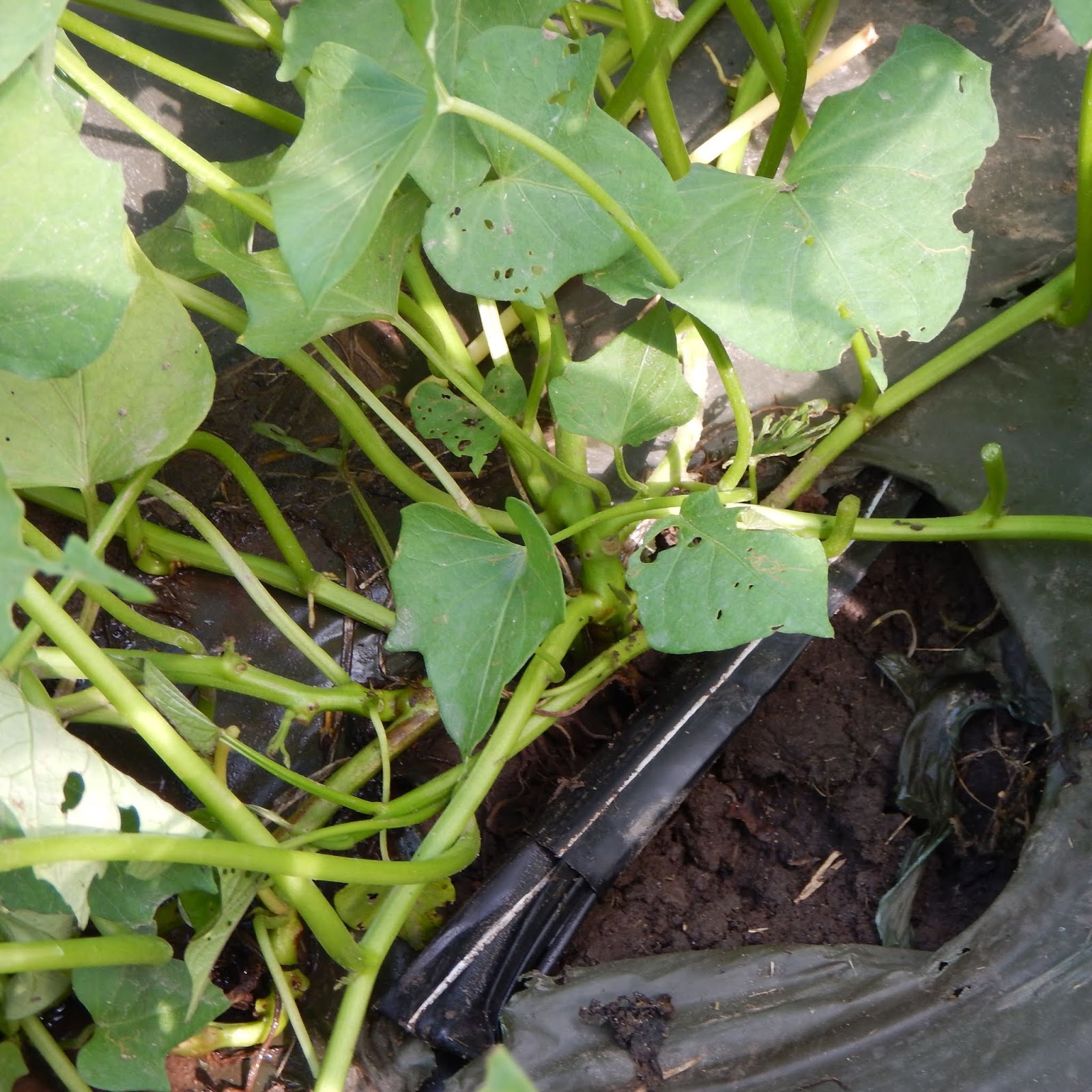
Drip tape line used to deliver nutrients to sweet potato plants.
As farmers, weather is always on our minds, so we might as well tackle this topic and get it out of the way!  There is some evidence that El Niño is finally turning to La Niña, which typically means less moisture and maybe even a bit of drought.  Since you just never know what you may get, we thought it prudent to update our irrigation permits and make sure our equipment is prepared and working well.  Whether we need irrigation as a means of delivering water to a crop or not, we use buried drip irrigation lines to deliver nutrients, microorganisms and trace minerals to our crops.  This year we are excited to expand our use of “sap analysis” to determine the specific nutrient needs of individual crops.  Sap analysis is kind of like a blood test for plants that allows us to better understand the plants’ nutritional needs at different points in growth.  Last year we saw some dramatic results when we used sap analysis to help us determine what support some of our crops needed in order to thrive.  We are planning to use sap analysis more proactively this year so we can be more aware of deficiencies and do what we can to correct them before they become a big problem.

As for crop planning, we’re laying out the plan and getting all the parts and pieces in place.  Sweet potato plants have been ordered, all 18,000!  We’ll be growing our two favorite orange varieties, Burgundy and Covington, and are also going to try a new variety called Bayou Belle.  We had better luck growing the white-fleshed Japanese sweet potatoes last year, so we’re going to expand that part of the planting a little bit.

Diana radishes, freshly washed!
We continue to appreciate the color and nutrition we get from our line-up of purple vegetables.  The color purple represents anthocyanins, plant compounds that play an important role in our physical health.  We’ll be doing one planting of the beautiful Amethyst beans and are considering growing the sweet and tasty purple tomatillos again this year.  Last year we also tried Diana radishes for the first time.  This is a spring radish that is shaped like a traditional red radish, but it has purple on the top and white on the root end.  We received positive feedback about this variety and we liked the way it looked in the field with regards to disease resistance, etc.  We have secured seed for our new favorite purple cauliflower, Purple Moon, and have our fingers crossed that we’ll get the Purple Majesty potato seed we have on order.  Lastly, we have to try a new bright magenta napa cabbage named “Scarrossa.”  We don’t typically grow napa in the fall, but that’s the recommendation for this variety so watch for this around October.

Fresh baby ginger with greens
We have been reviewing the results of our end of season survey that closed the fourth of January. We asked members for their input on which specialty produce items we should grow this year.  It’s clear that ginger is high on the list along with lemongrass!  We can’t make any promises at this point, but know we are trying to get some ginger “seed”.  Our supplier has closed ordering for now, but we’re on the list for an opportunity to purchase seed when they open ordering again sometime in February.  Wish us luck!  The other crop that had a lot of support was Egyptian Spinach.  This is a unique vegetable that grows in the heat of the summer when other greens struggle.  It is packed with nutrients and you just feel really good when you eat it!  It is a little challenging to grow, but we’re willing to give it a try!

Summer 2019:  Richard sampling and selecting
French Orange melon seeds
We continue to look for a personal-sized, yellow seedless watermelon, but there just isn’t anything available.  What about the French Orange Melons?  Good question.  For those of you who know the sweet, delicious, aromatic, one-of-a-kind French Orange melon, you may remember the sad story about how the producer has decided to drop the seed.  Richard has been working on saving seed for this melon for several years now.  This is not a quick or easy process.  The original seed was a hybrid.  When we plant the seed from melons produced from the original seed, we get a variety of results.  The sizing, color and characteristics of the melon are not always a direct reflection of the original seed.  As such, it takes several years of selecting the seed from the melons that most resemble the original set of characteristics and eliminate the off-types.  We feel like we are at a pretty good place with the quality of the seed we produced in 2019 and we finally have enough volume of seed that we can put in two nice sized plantings for actual production and harvest.  Richard will continue to carefully select seed and plant a separate seed production plot each year in an effort to refine our seed stock for this variety.  Wish us luck—we’re really hoping for a much better melon season than in 2019.  One of the problems we experienced last year was fewer pollinators.  We think the cold, late spring may have caused a decreased population of pollinator creatures.  It’s easy to take these little creatures for granted, but when something affects their population and they don’t show up, the results can be very dramatic!

Our crew happily putting together our first pollinator packs in 2016.
Speaking of pollinators, we are going to be planting pollinator packs again this year!  This is a project we started back in 2016.  In 2015 we published a series of newsletter articles we entitled “The Silent Spring Series.”  If you’re interested in reading these information-packed articles, you can find them all on our blog.  Basically the series took a look at the impact the use of agro-chemicals is having on our environment, ecosystem and our bodies.  The topic is pretty heavy and as we worked our way through the series we felt like we needed to create some light at the end of this very long tunnel.  We needed something positive to move the needle back to a point of hope.  We decided to plant pollinator packs, a garden pack with 9 different plants.  We started the seeds, transplanted them into the trays and delivered them to CSA members in the spring so everyone could use them to plant pollinator gardens in their own yard, on a patio space, in a community space or anywhere else they could think of where they would flourish, grow and serve to attract and support pollinator creatures (bees, butterflies, birds, wasps, etc).  We only intended to do it once, but it was so well-received, we get requests for them every year!  So, for those of you who already have an established pollinator garden, perhaps you’d like to add a few new plants to your space.  If you are just starting out, no worries!  We’ve included some plants in the pack that are easy to establish and will bloom in the first year!  Our order is nearly finalized and here is the list of seeds we ordered for this year’s packs.  Please note, the packs only hold 9 plants, but we’re ordering more than 9 different things just in case something doesn’t germinate very well and we can’t include it in all packs.  Here’s what we’re looking forward to:

Anise Hyssop, photo from Prairie Moon Nursery
Wild Bergamot, photo from Prairie Moon Nursery
Lance-Leaf Coreopsis, photo from Prairie Moon Nursery
New England Aster, photo from Prairie Moon Nursery
Brown-Eyed Susan, photo from Prairie Moon Nursery
Prairie Sage, photo from Prairie Moon Nursery
Lead Plant, photo from Prairie Moon Nursery
Little Bluestem Grass, photo from Prairie Moon Nursery
Blue Wild Indigo, photo from Prairie Moon Nursery
Leafy Prairie Clover, photo from Prairie Moon Nursery
Purple Coneflower, photo from Prairie Moon Nursery
Butterfly Weed, photo from Prairie Moon Nursery

We are looking forward to a great season and packing boxes for you and your families.  Once again we hope to strike a balance between supplying the staple items (onions, garlic, carrots, broccoli) and longtime favorites (sweet corn, tomatoes, green beans, strawberries) with some interesting and unusual selections to bring a little extra variety to your meals and challenge you, just a bit, to step out of your vegetable comfort zone and experience something new.  You never know, you just might discover a new flavor or vegetable you didn’t even know you liked!

In closing, we would like to share an excerpt from a note we received from a CSA family when they signed up for their second year with our farm.  Here’s what they shared:  “This past year was our first year getting a CSA share and it is not an understatement to say that it has changed our lives.  Thank you for doing what you do!  We love you guys!”  Thank you so much to all of you who send us notes like these.  We hope you understand how meaningful it is for us to read these and we also hope you understand that we think of you as we make our plans, select the varieties and pack your boxes each week.  Cheers to an awesome 2020 CSA season!

Wednesday, December 18, 2019

December 19, 2019 - This Week's Box Contents, Featuring Horseradish!


Cooking With This Week's Box


Horseradish Whips: Lemon Horseradish Butter (see below); Prepared Horseradish (see below); Food52 Editor’s Picks--Horseradish; Roasted Garlic & Horseradish Mashed Potatoes; Fire Cider


Festival or Heart of Gold Squash: Maple Butter Roasted Acorn Squash with Pecans


We have officially reached the end of another year of eating out of a CSA box—can you believe it?!  It doesn’t seem possible, but as I spent some time reflecting on the season as I wrote this week’s newsletter article the food memories started flooding my mind.  While this will be my final “Cooking With the Box” article this year, I’m confident HVF vegetables will continue to be part of your weekly cooking repertoire well into the new year because this week’s box is packed full of storage vegetables!  We’re kicking off this week’s cooking chat with horseradish, this week’s featured vegetable.  I hope you’ll take a moment to read more about horseradish in this week’s “What’s In the Box” email/newsletter where you’ll learn that horseradish is intended to be a complementary ingredient as opposed to the main star of the show.  One of this week’s featured recipes is for Lemon Horseradish Butter (see below).  This is a good way to preserve horseradish as you can freeze the butter in smaller portions and pull it out when you’re ready to use it.  Slice and melt it over a hot grilled steak or salmon, on toast, or cooked vegetables.  I also included a recipe for Prepared Horseradish (see below) which is the form many recipes call for.  Check out Food52 Editor’s Picks--Horseradish for a list of over 20 recipes including horseradish.  One of my all-time favorite ways to use horseradish is in Roasted Garlic & Horseradish Mashed Potatoes.  We used to make big pots of these potatoes at a restaurant I worked at in New York while I was in culinary school.  You could apply this same recipe to a nice root mash as well.  The last horseradish suggestion I have for you is to make a batch of Fire Cider.  This is a tonic of sorts thought to be good for boosting immunity throughout the winter.  In addition to horseradish, this recipe also calls on the healing powers of garlic and onions as well as cayenne pepper, turmeric, etc.

Grandma Delilah's Chocolate Carrot Bundt Cake
photo from rudyanddelilah.com
Moving on, lets talk carrots.  I know you’ve received a lot of carrots over the past few deliveries, but hopefully you have a safe place to store them so you can use them well into the winter!  While carrots are not referred to as a “superfood,” I think they should be. They are also so versatile in their use and can be part of our diets in any meal.  In our Facebook Group last week a member shared this recipe for Indian Carrot Dessert.  Wow, this looks so delicious!  I also want to try this recipe for Vegan Carrot Waffles.  While I haven’t done this recently, Richard and I like to pull out the waffle iron on Sunday morning for a leisurely brunch and by now you know I like to sneak vegetables into as many meals of the day as possible!  I also came across this Carrot Asiago Bread.  This is a savory quick bread courtesy of Martha—as in Stewart.  I like this idea because it is faster to make than yeast bread but would be a great accompaniment to a winter salad, soup or stew.  Lastly,  check out Grandma Delilah’s Chocolate Carrot Bundt Cake.  This looks sinful, but perhaps it isn’t since it contains carrots?!

Spicy Beauty Heart Radish and
Carrots with Tahini
photo from thingsimadetoday.com
Lets tackle a few more roots, like beauty heart radishes and golden turnips!  Personally, I like to eat beauty heart radishes raw and this Beauty Heart Radish and Sesame Seed Salad is one of my favorite, simple radish salads.  If you find the bite of the radish to be a bit much for your senses, consider cooking it.  You could try these Spicy Roasted Beauty Heart Radishes and Carrots with Tahini or Root Vegetable Gratin with Gruyere.  Now this root vegetable gratin recipe is written for sweet potatoes, celeriac and parsnips.  Perhaps you have all of these vegetables in your fridge right now, but if you don’t, do not worry—start substituting!  One of our members posted a meal she made that included Scalloped Beauty Heart Radish.  This recipe is made in a similar way and I never would have thought to include beauty heart radishes in this dish, but why not!  As for turnips, if it takes you all winter to work your way through the turnips in your crisper drawer, that’s just fine, they should keep.  Pull them out on a snowy winter night and make this dish of Roasted Turnips, Apples and Rosemary Chicken Thighs.  I also found this collection of Country Living’s 20 Turnip Recipes.  Surely there’s at least one suggestion in this list that will appeal to you!

Sunchoke Latkes with Poached Eggs
photo from naturallyella.com
Before we move on from root vegetables we need to chat about sunchokes.  One of our market customers told me she made some delicious Sunchoke Pickles.  You’ll need to cut this recipe in half as it calls for 2 pounds of sunchokes and there are a little over one pound in your box.  I also want to try this recipe for Sunchoke Latkes with Poached Eggs.  This recipe calls for sunchokes, potatoes and parsnips, but you could sub in another root vegetable for any of these if you would like.   Lastly, check out this recipe for Sunchoke and Cashew Stir Fry.  It does call for corn and fresh chile peppers.  Unless you have some frozen corn and/or jalapenos from this past summer, my suggestion would be to substitute finely chopped carrots and siracha.

It’s always sad when we come to the last of our sweet potatoes, but before they’re all gone, there are a few more things I want to make.  I don’t think I’ll ever get tired of sweet potato fries and I think this recipe for Sweet Potato Fries with Maple Mustard Dipping Sauce sounds delicious!  Serve these up with a burger and a side of Pina Colada Cole Slaw!  If you aren’t into pineapple, try this Carribean Cole Slaw with mango instead.

Mexican Sweet Potato and Quinoa Casserole
Photo from fitfoodiefinds.com
I also want to try this Mexican Sweet Potato and Quinoa Casserole.  Another nice warm, winter dinner option and a good candidate for leftovers!  While I’m not usually into squash soups, I do like this one for Butternut Squash and Sweet Potato Soup.  The addition of the sweet potatoes adds a nice richness to the soup.

Festival squash is very similar to acorn, except it tastes MUCH better!  While this recipe for Maple Butter Roasted Acorn Squash with Pecans calls for acorn squash, you can substitute the festival squash.  Serve this for weekend brunch or dinner alongside this French Onion Quiche.  And last, but not least, check out this recipe for Bacon Onion Jam!  Use it as a spread on toast with cream cheese or as the base for a pizza or flatbread along with roasted butternut squash.  These are just two simple ideas and I’m sure you can come up with more!

That’s it.  We’ve reached the bottom of the last box of the season and it’s time for me to sign off for a few months.  I look forward to cooking with you in a new decade!  See you in 2020!—Chef Andrea

Vegetable Feature: Horseradish Whips


by Andrea Yoder

Richard in the horseradish field
While horseradish is not a radish, it is in the Brassica family along with radishes.  The vegetables in the Brassica family are known for their strong, pungent flavors and they are powerhouses for valuable plant compounds that are beneficial for human health.  While many sources say that horseradish can’t be or isn’t consumed in quantities large enough to get much nutritive gain, I’d counter with the consideration that it isn’t always the amount of a food you are eating.  Rather, including small amounts of powerful foods periodically over time will result in a cumulative positive effect on your health.  With that in mind, lets explore horseradish a little further.

Pepper Crusted Salmon Cakes with Horseradish Sauce
photo from food52.com
Horseradish is a bold, pungent vegetable that has the power to make you cry, take your breath away and open every nasal passage you have—that is if you work with it and/or eat it in large quantities.  However, the same plant compounds in horseradish that make you do all those things are also the compounds that give horseradish its peppery flavor that wakes up our taste buds.  These compounds also have the ability to attack cancer cells and boost our immune systems.  Horseradish is intended to be used in small quantities, as a condiment or an accompaniment to enhance foods.  It goes well with rich and fattier foods such as salmon, beef, sausage and ham.  It also goes well with more acidic foods such as tomatoes, apples, lemons and other citrus.  It’s also a good accompaniment to bland foods that give it a base, but make horseradish look and taste good—foods such as sour cream, cream, butter, seafood, potatoes and root vegetables.  Prime rib and/or roast beef is often served with a creamy horseradish sauce.  Horseradish is a key ingredient in the classic ketchup based cocktail sauce served with poached shrimp.  If you’re into Bloody Marys, you’ll know horseradish is part of this drink recipe as well.  These are just a few examples of how and where you might use horseradish.  On the recipe website, Food52.com, they have an “Editor’s Picks” list for horseradish that contains over twenty recipes using this vegetable. A few of my favorites from this list include Pepper Crusted Salmon Cakes with Horseradish Sauce, Sour Cream Biscuits with Horseradish, Chives & Bacon, Horseradish and Crab Appetizer and Horseradish Parsnip Apple Slaw.

Horseradish Whips
This week your box contains a bag with 4-5 ounces of horseradish whips.  While the root and leaves are both edible, we only harvest and eat the roots.  Horseradish is a perennial plant that is typically planted in the fall from seed pieces that are taken from cuttings when the previous crop is harvested.  A nice seed piece is a straight piece usually about 8-10 inches long with the diameter of a fat pencil or a thin marker.  Seed pieces grow off the main horseradish root which is the most saleable portion of the plant on the wholesale market.  Any pieces that are smaller than is needed for wholesale or seed are called whips.  Whips are usually thrown away, but this is actually the part of the root I prefer to work with for several reasons.  First of all, I think the skin is thin and tender enough on these pieces that you don’t need to peel it.  The less you have to handle horseradish, the better!  I also think the whips are a more manageable size to deal with instead of a big root.  On the internet you’ll see references that say horseradish should be eaten within 1-2 weeks…..my friends, I think that’s wrong.  Your horseradish whips will store much, much longer than 1-2 weeks if you keep them in the bag in the refrigerator.  To give you a frame of reference, we harvest horseradish the latter part of October.  In many years, we’ve held horseradish in cold storage for months and sell it all throughout the winter!  Don’t be afraid of a little fuzzy white mold on the surface either.  It’s not uncommon to see this after extended time in the refrigerator.  If you see that happening, but the integrity of the root is still good, just wash it off.  If you do decide to discard some/all of your horseradish, do heed caution that you may not want to put it in your own compost pile or the like.  Any chunks of horseradish that don’t fully degrade may grow under the right conditions.  If you’re not careful you just might plant horseradish in your own back yard and if you do so unintentionally, it will be with you for years to come!

Horseradish Apple Parsnip Coleslaw, Photo from food52.com
Back to the whips.  Once you start cutting, grating or chopping horseradish you’ll release the volatile oils that give horseradish its bite.  This is when you need to make sure you have adequate ventilation to decrease the chances of your eyes tearing up.  Also, make sure you wash your hands after handling horseradish so you don’t accidently get these peppery oils in your eyes.  Some recipes might tell you to grate the horseradish on a box grater.  This is kind of hard to do with whips because they’re so skinny.  My recommendation is to just cut the whips into 1-2 inch pieces and chop them finely in a food processor.  You could also use a blender.  Little blenders like The Bullet or Ninja can be useful for smaller quantities, or just use a hand chopper.  Last but not least, you could chop the whips finely with a chef’s knife.  As soon as you start chopping horseradish the pungent oils will start to volatilize.  If you are going to serve a dish with freshly grated horseradish, you’ll want to chop it just before serving.  If you chop horseradish in advance and don’t do anything to stabilize the oils, the majority of the flavor will dissipate and the horseradish won’t be very spicy or flavorful.  Often times you’ll see a recipe that calls for “Prepared Horseradish.”  This refers to horseradish that is pre-chopped/grated and stabilized in a vinegar solution which sets the flavor and prevents it from dissipating.  This week I’ve included a recipe for prepared horseradish.  You can keep prepared horseradish in the refrigerator for several weeks like this before it will start to lose its pungency.  This can be super handy to have as you can just take a teaspoon or two as needed for different recipes without having to chop it fresh every time.

Lastly, if you don’t like spicy things or don’t think you’ll like horseradish, just start small.  Stir a little bit of freshly chopped horseradish into mayonnaise and spread it on a sandwich or make horseradish cream and drizzle it lightly over roasted root vegetables.  You just might find you like that little bit of kick and flavor it adds!

Lemon Horseradish Butter


Yield:  1 ½ cups (One 8-inch log)
Roots, by Diane Morgan

1 or 2 horseradish whips, cut into small chunks
Freshly grated zest of 1 lemon
1 tsp fine sea salt
1 cup unsalted butter, at room temperature
2 Tbsp minced fresh flat-leaf parsley
  1. In a food processor fitted with the metal blade, process the horseradish until finely grated.  You will need about 1 - 1½ Tbsp grated horseradish, depending on how strong you want the butter. Scatter the lemon zest and salt over the top and pulse once or twice until evenly distributed.  Add the butter and process until smooth, creamy and well combined.  Add the parsley and pulse just until evenly distributed.
  2. Lay a long sheet of parchment paper or plastic wrap on a work surface.  Using a rubber spatula, spread the butter into a long, rough log about 1 ½ inches in diameter.  Wrap the parchment snugly around the log and, using your palms, roll the log back and forth to shape it into a smooth, uniform cylinder.  Twist both ends like a candy wrapper to seal them closed.  Refrigerate for up to 3 days or store in the freezer for up to 3 months.
This recipe was borrowed from Diane Morgan’s book, Roots.  Here are some of her suggestions for how to use this butter:  “Grill a steak or a piece of fish and finish it with a slice of this horseradish butter.  Roast some fingerling potatoes and dab them with the butter.  Put it on a humble baked potato to dress up.  Soften the butter, spread it on crostini, and top it with a slice of smoked salmon for an instant appetizer.  Having this kind of homemade food on hand takes cooking from good to great.”

Note from Chef Andrea:  When I make flavored butter like this, I like to roll it into smaller logs that are 2-3 inches long.  This is just the right amount for our household to thaw and use within a few days.   If you don’t want to take the time to roll logs, you can also just freeze 2-3 oz portions in small storage containers.  You can’t slice the butter as nicely as you can with a log, but once it’s thawed it’s easy to spread on bread, vegetables, etc.

Prepared Horseradish


Yield:  1—half pint jar

3 oz fresh horseradish whips
4 Tbsp distilled white vinegar
¼ tsp salt
Sugar, pinch
  1. Have a clean and sterilized jar with a lid and canning ring available nearby. 
  2. Cut the horseradish whips into chunks and place them in the food processor.  Pulse to grind.   It will be a bit dry, something like coconut.  
  3. Add the vinegar, salt and sugar.  Blend to combine well.
  4. Pack the horseradish into the jar and refrigerate.  
Recipe adapted from The Kitchen Ecosystem by Eugenia Bone.

The Last CSA Box of the Decade! Reflections on 2019 and Our Vision for 2020

By:  Farmer Richard and Chef Andrea

This is it.  The last CSA box of the decade!  At this point in the season it’s always helpful for us to take a step back and evaluate.  So here’s our 2019 CSA year in review.  Over the course of our 30 week season we delivered over 70 different vegetables and a handful of fruits!  That doesn’t even take into consideration the fact that we had 8 different varieties of potatoes, about 10 different varieties of winter squash, several different types of onions and six different types of head lettuce.  If you have a long road trip coming up over the holidays we challenge you to make a list of all the vegetables you can remember eating out of your CSA boxes over this past season and see how close you can get to 70.  “Eat a variety of fruits and vegetables” they tell us.  Well we have that recommendation covered, and then some!

Healthy strawberry blossoms from June 2019.
Every season has opportunities and challenges.  We weren’t sure how we were going to pull off the first few boxes of the season when spring turned out to be wet, cold and late!  Mother Nature throws us curveballs for sure, but she always manages to keep us fed.  She came through for us with a perfectly timed ramp season and we were able to deliver two solid weeks of ramps with two bunches per box.  We followed up ramps with a nice run of asparagus harvest that extended for 5 ½ weeks.  Just when we were fretting about what we’d put in the box when some of our spring crops were lagging about a week behind schedule from when we needed them, the head lettuce in our greenhouse tunnel was ready to pick and the field crops followed right behind very nicely.  We delivered over 6 different varieties of head lettuce this year as well as salad mix for about 2-3 weeks in the spring and another 4-5 weeks in the fall.  Strawberry season was late this year and, unfortunately, the season ended very abruptly when we got hit with rain that super-saturated the berries and caused the quality to drop quickly.   While that was a disappointing way to end the season, the berries we picked earlier were delicious and at the peak of the season we had a week where we packed 2 quarts AND 2 pints in every box!

Garlic Harvest 2019
Once the season gets going, it’s seems to just fly ahead at full speed.  No sooner than we had finished strawberry season, the garlic field called out for our attention.  We were so thankful to FINALLY have a good crop of garlic after several disappointing garlic harvests.  Every box this year contained garlic in some form!  Our onion crop started out looking really good too, but some mid summer rains, heat and winds changed the trajectory of that crop very quickly.  When the tops started to show signs of disease and toppled over, we had to get them out of the field at a fast pace to avoid losing them.  Thankfully though, we had enough to reach the end of the year.

Sweet corn ready to be harvested in August 2019.
Sweet corn was another summer crop that afforded us some wins and some losses.  Our first and last plantings of the season were sparse and disappointing due to weather related field conditions.  While we would’ve liked to have picked more sweet corn, we did have some pretty fantastic tasting corn and managed to have about four weeks of harvest overall.  This year was not a blue ribbon tomato season either.  Our first crop was hit with disease early on and it felt like we had barely even started picking them when the vines started to die and we had to abandon the crop.  The effects of high humidity and heat created the perfect conditions for leaf disease despite our best efforts.  Thankfully, our second crop fared much better and we were able to get about 12 weeks of tomatoes overall.  Tomatillos, on the other hand, produced very nicely this year and we were able to include them in four boxes which is more than we’ve done in past years.

Our crew putting up stakes for tomatoes in June 2019.
We win some, we lose some, but we always have food on the table and this is what CSA is all about.  This is our guarantee to you as we share in the bounty and the loss of every growing season.  We all eat our way through the different parts of the year, with an opportunity to be acutely aware of the impact rain, temperature, storms and sunshine are having on our food supply.  We have a diversified farming operation and some weeks you may not have noticed that we were having challenges with some crops.  This is because we are able to divert product from our wholesale markets sometimes to pack it in CSA boxes instead.  However, we can only do that to a certain point as our business needs to remain financially viable.

CSA box assembly line!
We do believe our CSA offers members a good value.  Over the course of the season we track the value of our box contents and it’s always interesting to see just how many dollars of produce we actually deliver in a season.  After this week’s box is packed, the total for the season for all 30 boxes, based on our market prices, will total about $1,300.  Compare this to our weekly share price of $1,050 and you’ll see that you received a value that is about $250 greater than what you paid!  Please note, this is just the value of the vegetables.  This does not include the value of communications, newsletters, recipes and other resources you receive with every delivery.  This also does not include the value of having a connection with our farm and an open invitation to visit and have a transparent look for yourself to see just where your food comes from.  We mention this as a reminder that participating in CSA is a much different model for sourcing your food than going to the grocery store each week and there are just some things CSA represents and provides that will never be matched in the same way by a grocery store.  We do have a “secret shopper” who visits three different retail grocery stores each week to compare prices and selections available in these stores to the contents of our box.  However, it isn’t always an apples to apples comparison.  On average, there are about two items in every box that are not available in the retail stores and often the selections are not sourced from a local grower.  The other point we’d like to make is that organic options for these vegetable selections are not always available while in contrast, every single item you receive in your CSA box is certified organic.

Squash Harvest 2019
In less than two weeks we’ll roll over into a new year.  Once our final week of deliveries is completed we’ll turn our full attention to planning and preparing for the 2020 growing season.  Our 2020 CSA sign up form is now available on our website.  We’ve decided to continue our 2019 prices and share offerings for the 2020 season.  We’ve added one new site each to the Twin Cities and Madison.  We’re very happy to be partnering with TwinTown Fitness in Minneapolis to offer CSA pickup at their gym for both gym members and the general public.  In Madison we’re excited to be partnering with Sitka Salmon Shares to offer a CSA pickup at their facility located in the recently renovated Garver Feed Mill.  We are still looking to add a few more sites to our Madison area on either Thursday or Saturday to provide access to some underserved areas.  If you have any suggestions or are interested in hosting a CSA site in 2020, please let us know!

Hon Tsai Tai field 2019
Many of you are aware that CSA membership across the nation has been on the decline over the past 10 years or so.  We’ve watched the number of boxes we’re packing on a weekly basis drop from about 1,100 to about 600-650 boxes per week.  This has contributed to a financial strain on our business as we strive to keep our farm financially viable.  We remain hopeful and steadfast in our belief that CSA is a unique and valuable model both for farmers and for eaters.  This is why we keep coming back year after year and continue to explore ways we can do what we do while continuing to push ourselves to learn, research and farm better each and every year.  We are beyond grateful for all of you who are dedicated to CSA as well and appreciate your notes of encouragement and continued support.

As we look to the next season our reality is that we need to not only reverse this downward trend, but we need to increase our membership significantly.  We know word of mouth is by far the most effective way to recruit new members and connect with the community.  If CSA has had a positive impact on your lifestyle, we hope you’ll share your experiences with your friends, family members, colleagues, or anyone else who might be interested!  We do have a referral program, so encourage anyone who’s signing up for the first time to include your name on the referral line of their sign up form so we can send you a referral coupon as our way of saying “Thank you so much!”

Our happy crew cleaning ramps
for CSA boxes this spring.
We are also exploring some ways we can connect with our community in 2020.  In particular we are interested in pursuing some creative collaboration with some of our talented food bloggers, cookbook authors, chefs, etc in the region.  If you work, or play, in this space and are interested in collaborating with us to brainstorm some fun ways we can work together, please send us an email or give us a call!
In closing, we have one more small request.  If you have not already done so, we ask that you take a few minutes to complete our end of season CSA survey.  We sent an email with a link to the survey last week and will be resending that link on Thursday, December 19.  If you’d be willing to offer us some feedback and input, we’d really appreciate hearing from you.  We do read each and every comment.

As we sign off for 2019 we want to say one huge, final THANK YOU!  Our members are the reason we get up each morning and whether you realize it or not, you are an important part of what we do.  We hope you enjoy the holiday season and don’t forget to spend a little time out in the natural world.  We’ll see you in four short months.  Until then, I leave you with visions of fresh, green ramp leaves; the scent of sweet, sun-ripened strawberries; and the memory of fragrant, sweet juice from a French Orange melon running down your chin.

Wednesday, December 4, 2019

December 5, 2019 - This Week's Box Contents, Featuring Rutabagas!

Cooking With This Week's Box


Rutabaga: Finnish Rutabaga Casserole (see below); Rutabaga & Apple Salad (see below); Norwegian Mashed Rutabagas (see below)

Happy December!  As we roll into the home stretch of the 2019 CSA season, I am reminded that seasonal eating can be a lot of fun!  This week we’re featuring rutabagas—and if you just groaned or moaned, I want you to know I heard you!  Just kidding.  Over the past few weeks we’ve eaten quite a few rutabagas as I trialed some new recipes and this week I have three simple recipes to share with you.  The first is for Finnish Rutabaga Casserole (see below).  While I made this for Thanksgiving, my understanding is that this is actually a traditional Finnish dish often served at Christmas alongside ham.  You can make it with rutabaga only or you can do a mix of rutabaga and potato.  The next recipe is for Norwegian Mashed Rutabagas (see below).  In Norway they cook rutabagas with carrots to make a simple mash.  Really, you can make root mash with any combination of vegetables.  Rutabagas and carrots go really well together and make a pretty root mash, but also one that has a hint of sweetness.  If you wanted to add some potato or sweet potato to the mix, you might be veering from tradition but I guarantee it would still be delicious.  The last recipe, Rutabaga & Apple Salad (see below), comes from a blog written by an American now living in Norway.  I don’t know if this is a traditional recipe, but it is so delicious!  When Richard sat down to eat dinner his first comment was “What a beautiful salad!”  As we started eating it, we both commented “Wow, this really tastes good!”  I am going to add this to my lineup of winter vegetable salads.  It’s crispy, crunchy, slightly sweet and very simple.  While rutabagas won’t win the prize for being the most flashy vegetable, they have a lot of potential to create some tasty meals.  If none of these recipes appeal to you, you might want to check out Dishing Up the Dirt where you’ll find 11 more delicious recipes to utilize rutabagas.

Apple Turnip Quiche
Turnips are another underappreciated root vegetable, but how can you not appreciate this week’s gorgeous sweet scarlet turnips!  I’ve likely shared this recipe for Apple Turnip Quiche before, it’s one of my favorites and I make it quite frequently throughout the winter.  This recipe is credited to The Birchwood Café and I have to say, my homemade versions are just as good as the piece I ate at the café!  This quiche is delicious served for breakfast, brunch, lunch or dinner.  There are several other winter recipes that rotate through my kitchen from December through March.  Chicken Pot Pie with Biscuit Topping is one of them.  I use whatever root vegetables I have available, typically carrots, parsnips, celeriac and either turnips or rutabagas.  Sweet scarlet turnips are always my first choice because they look so pretty in this dish.  I had never heard of pasties until I moved to Wisconsin.  Last year I decided to give them a try and we featured this recipe for Cornish Pasties in our December newsletter.  They are very easy to make, leftovers reheat well and they are simple but tasty.  Again, use whatever root vegetables you have available.

Ok, there’s one more underappreciated root vegetable in this week’s top 3 lineup—Celeriac.  One of my favorite winter dishes to make with celeriac is Wild Rice and Celeriac Gratin.  I also like this recipe for Braised Chicken with Celeriac & Garlic.  In both of these recipes the flavor of the celeriac is present, but subtle.

Ethiopian Spiced Cabbage, Carrots & Potatoes
photo from thewanderlustkitchen.com
We’re nearing the end of green vegetables, but do still have a small amount of kohlrabi and some green savoy cabbage that we tucked away for this month’s deliveries.  I am looking forward to making Andrea Bemis’ recipe for Kohlrabi & Chickpea Salad.  This is a great salad to enjoy during the winter.  This creamy vegetable salad includes toasted sunflower seeds and raisins to add a bit of crunch and sweetness to accompany the kohlrabi and chickpeas that provide the base of this salad.  If you have green savoy cabbage piling up in your refrigerator, consider trying a dish from another country such as this Ethiopian Spiced Cabbage, Carrots & Potatoes.  Of the nine ingredients in this recipe, 5 of them are vegetables in this week’s box.  This recipe is super simple, vegetarian and can be the base of a nice weeknight dinner when served with lentils and Ethiopian flat bread.  The unique part of this recipe is that it uses Berbere spice.  Berbere is a unique Ethiopian spice blend that has a lot of spices including chiles, garlic, fenugreek, cinnamon, allspice and a variety of other components.  You can find this in the bulk spice section of most co-ops, so just get a little bit for this recipe—it’s what makes Ethiopian food Ethiopian food!

Bombay Carrot Salad with Cashews & Raisins
photo from feastingathome.com
Every week needs a pizza and this week’s seasonal combo is Carrot Pizza with Fontina & Red Onion.  This recipe uses carrots to make a creamy “sauce” to spread over the crust.  I’m not sure what this would look like with the purple carrots.  I might recommend using the orange ones for this recipe.  If anyone does try it with purple carrots, please post a picture in the Facebook Group!  I do think it would be fine to use the purple carrots, or a combo of both colors, in this Bombay Carrot Salad with Cashews & Raisins.  This salad, paired with Garlicky Lentil Soup, would make a tasty, nourishing winter meal.

One of the things I love about food is how it can take you to other parts of the world.  We started off this week’s discussion with recipes from Finland and Norway.  Our carrot salad took us to Bombay and we had a taste of Ethiopia just ahead of that.  While we’re in Africa we might as well explore this Peanut and Sweet Potato Soup.  This is a Deborah Madison recipe we featured back in 2014.   If you aren’t into African flavors, maybe you’d prefer this Thai Red Curry Soup with Sweet Potatoes & Squash.  This is one of the easiest Thai curry recipes—great for a quick weeknight dinner.

Sweet Potato and Molasses Muffins
with Maple Cashew Frosting
photo from dishingupthedirt.com
I’m sure we all enjoyed our fair share of Thanksgiving pies, cakes, desserts, etc, so no dessert recipes this week, but a little something sweet to wrap up this week’s article.  These Sweet Potato and Molasses Muffins with Maple Cashew Frosting are courtesy of Andrea Bemis from Dishing Up the Dirt.  They are a healthy version of decadent—no guilt.

Ok, one more thing to share and I have no idea how this recipe ties together with anything I’ve shared this week.  I just think this idea for Roasted Red Onion Flowers is super fun and I really want to try it.  Just look at how beautiful they are!  So if you have a stash of red onions on your counter, give these a try.  They’ll go great as a side dish with nearly anything.
And on that random final note….Have a great week!—Chef Andrea

Vegetable Feature: Rutabagas


by Andrea Yoder


Nature has a way of giving us what we need in its appropriate season.  As we move into the winter months, we no longer have the luxury of eating fresh veggies out of the field.  Instead, we turn to foods that store well and in preparation for the long, cold months we stock our root cellars full of vegetables that can survive the winter.  Not as many people these days have a root cellar, but you can use your crisper drawer for a similar purpose!  Rutabagas, along with turnips, are two of the best storing root crops and the stars of this week’s “Weed Em’ & Reap” newsletter article.  Take a moment to read more about these two underappreciated vegetables and you’ll quickly learn they have been an important part of winter diets in northern regions for a long time!

When you are ready to use your rutabagas, trim off the neck on the top.  Cut the vegetable lengthwise in halves or quarters so it is more manageable to handle.  Trim off the exterior skin using a paring knife,   You’ll find the flesh to be a beautiful golden color, firm and crisp.  When cooking rutabagas, less is often more.  Don’t try to make rutabagas fancy, that’s just not their style.  This week’s recipes reflect tradition and feature dishes from both Finnish and Norwegian culture.  Rutabagas can be eaten raw, boiled, stir-fried, roasted, baked and braised.  Elizabeth Schneider wrote, “There is really just one way not to cook it:  in lots of water for a long time….”  Perhaps this cooking method is responsible for turning up many noses over the years.  If you overcook rutabagas, they will quickly go from tender, sweet and delicious to mushy, strong flavored and stinky.  Rutabagas are also often used in soups, gratins, roasted root mixes, and root mashes, but can also make a really nice winter salad or stir-fry.  Rutabagas pair well with butter & cream (big surprise), ginger, lemon, nutmeg, parsley, sage, thyme, apples, pears, other root vegetables, bacon and other smoked and roasted meats.

Rutabagas should be stored in a cold environment with moisture to keep them from dehydrating.  If stored properly they can be preserved for months.  If you notice your roots starting to get floppy or soft, just soak them in a bowl of water in your refrigerator and they’ll spring back to life.  Don’t let them shrivel up in the crisper drawer this year, give them a try!  You just might find you like them and will miss them come spring!

Finnish Rutabaga Casserole (Lanttulaatikko)


Yield:  6 servings

6 cups peeled & diced rutabaga OR 3 cups rutabaga and 3 cups peeled & diced potatoes
¼ cup dry bread crumbs
¼ cup heavy cream
½ tsp ground nutmeg
1 tsp salt
2 eggs, beaten
3 Tbsp butter
  1. Preheat the oven to 350°F.  Butter a 2 ½-quart casserole and set aside.
  2. Cook the rutabagas and/or potatoes together in salted water to cover, just until soft and tender.
  3. Drain and mash with a potato masher.  Soak the bread crumbs in the cream and stir in the nutmeg, salt, and beaten eggs.
  4. Blend mixture with the mashed rutabagas and potatoes.  Turn into the casserole dish.  Dot the top with butter.  Bake for 1 hour or until the top is lightly browned.
This recipe was borrowed from Beatrice Ojankangas’ book, Homemade:  Finnish Rye, Feed Sack Fashion, and Other Simple Ingredients From My Life In Food.  Beatrice grew up in rural northern Minnesota, the oldest of ten children.  In addition to a lifetime of experience cooking for her family, she also has an extensive list of accomplishments as a food writer and recipe developer.  While she comes from Finnish descent, she also lived in Finland for a short while. During this time she researched and collected recipes that she compiled and published as, The Finnish Cookbook.

Mashed Rutabagas (Kålrabistappe)


Yield:  4-6 servings

1.5 pounds rutabaga (kålrabi)  
8 oz carrots (2-3 medium) 
1 qt water
1 Tbsp plus 1 tsp salt (or to taste) 
¼ cup whipping cream
2 Tbsp butter
¼ tsp black pepper
¼ tsp nutmeg
  1. Peel and cut rutabaga and carrots into pieces (large dice).  Place the vegetables into a pan and cover with a quart of water seasoned with 1 Tbsp salt.  Bring the water to a boil and cook the rutabagas and carrots just until tender and soft. Drain, reserving 1 cup of the cooking water.
  2. Mash the rutabagas and carrots by hand using a potato masher.  
  3. Stir in cream, butter, pepper, and nutmeg. If needed, add the additional teaspoon of salt and maybe a dash of the reserved liquid, to taste.
This recipe was adapted from one originally printed in the Oct. 21, 2016, issue of The Norwegian American.  It was submitted by Lillian Laila Owren of Kristiansand, Norway.

Rutabaga & Apple Salad (Kålrabi Salat med Epler)


Yield:  Makes a large bowl (7-8 cups)

1 medium or several small rutabaga (about 1 pound)
2 tart apples, cored
¼ red cabbage (about 2 cups, sliced thinly)
½ cup hazelnuts, whole
Salt and freshly ground black pepper, to taste
Vinaigrette:
⅓ cup oil (neutral vegetable oil or hazelnut oil)
¼ cup apple juice
2 tsp Dijon mustard
1 ½ tsp apple cider vinegar
1 Tbsp honey
  1. Peel and cut the rutabaga into matchsticks by hand or with a mandolin. Cut the apples into matchsticks as well. Thinly slice the red cabbage. Place rutabaga, apples and cabbage in a serving bowl.  Season with salt and freshly ground black pepper and toss to combine.
  2. Place the hazelnuts in a large frying pan over medium-high heat to toast. Shaking once and a while to prevent burning. When starting to turn a golden brown remove from the pan. (I like to add the skins and all, but you can remove the skins if you wish by rubbing the hazelnuts between your palms or in a tea towel.)  Roughly chop the nuts and add to the salad.
  3. Combine all the ingredients for the vinaigrette in a small bowl and whisk well. Pour over the salad and gently mix until everything is covered. Serve immediately.
This recipe was borrowed from northwildkitchen.com, a blog written by Nevada Berg.  Nevada grew up in Utah, but now lives in the beauty of Norway where she enjoys foraging, exploring, and cooking. The pictures and stories on her blog are beautiful!